
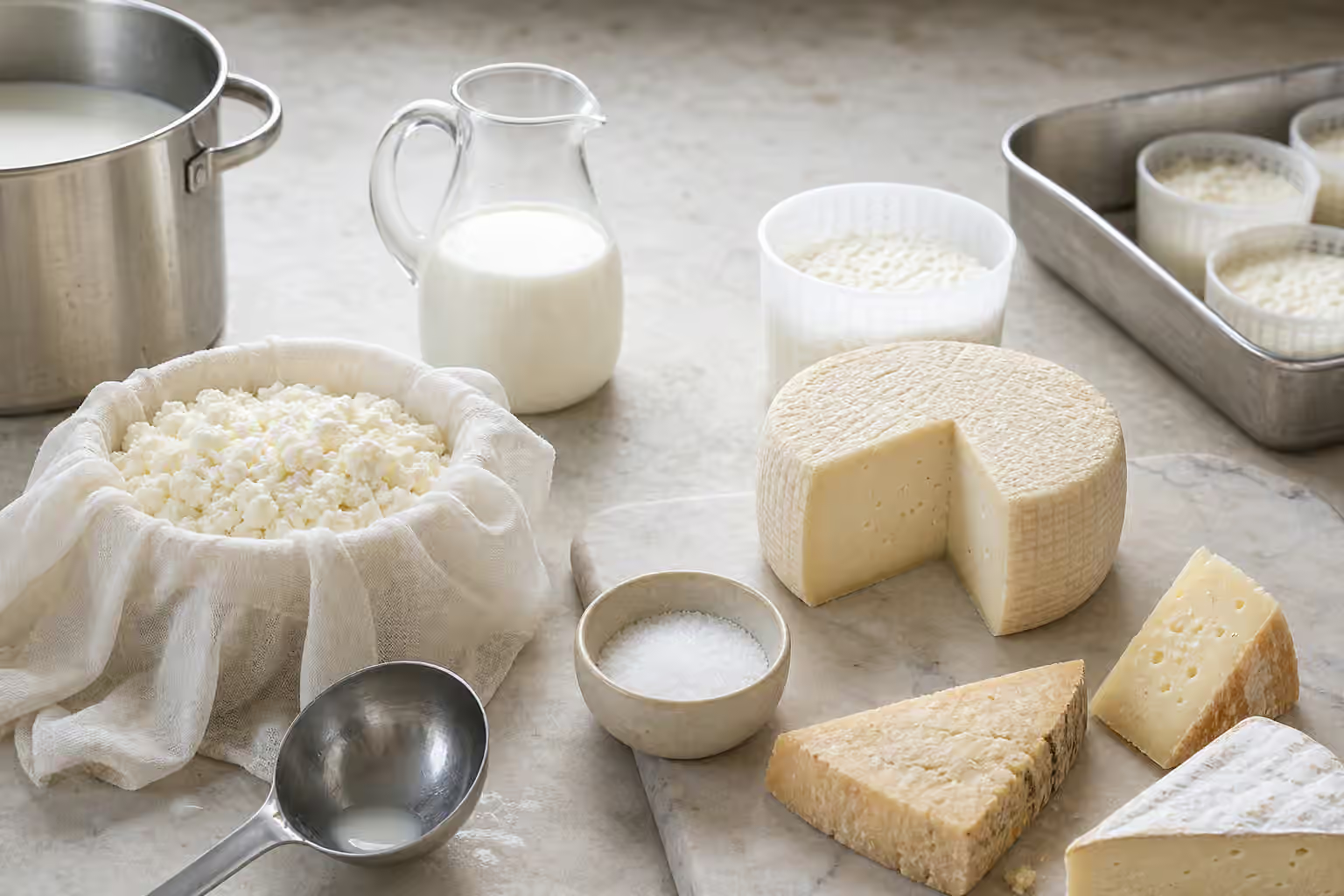
Cheese begins as milk, but it does not become cheese by accident. It becomes cheese because the cheesemaker decides how much water to remove, how much acid to build, how firm the curd should become, how much salt the cheese needs, and what kind of surface the cheese will carry into age. Every finished wedge is a record of those decisions.
That is the useful way to think about cheesemaking if you are not trying to run a dairy. You do not need to memorize every vat temperature or culture name to understand why mozzarella pulls into strands, why cheddar breaks into dense slices, why Brie ripens from the rind inward, or why Parmesan-style cheeses are dry enough to grate. Cheese is milk organized into structure. Once you see the structure forming, the cheese counter gets easier to read.
If you already use Cheese Types as a shopping map, this guide explains how those types come into being. It connects the quiet clues from Milk Types in Cheese , the surface lessons from Cheese Rinds , and the patient flavor changes described in Cheese Aging . The goal is not to turn a table cheese into a chemistry lecture. The goal is to taste with a little more context.
Milk Is the Starting Material, Not a Blank Slate
Milk brings fat, protein, sugar, minerals, water, and its own flavor. Cow milk often starts broad and buttery. Goat milk can feel bright and clean. Sheep milk tends to feel dense and sweet because it usually carries more solids. Those tendencies are only the beginning, but they matter because the cheesemaker cannot make a delicate fresh goat cheese and a long-aged alpine wheel from the same starting point without changing nearly everything else.
Season, feed, breed, and handling also matter. Milk from animals grazing spring pasture may taste different from milk produced on winter feed. Very fresh milk may carry aromas that disappear after transport and chilling. Some cheesemakers use raw milk, while others use pasteurized milk for consistency, safety, or regulation. The choice affects the microbial starting point, but it does not decide quality by itself. Careful pasteurized milk can make beautiful cheese. Carefully handled raw milk can make beautiful cheese. Careless milk makes trouble no matter what label sits on it.
Before anything dramatic happens, the cheesemaker is already making choices. The milk may be warmed. Its fat level may be adjusted. Starter cultures may be selected for a bright fresh cheese, a sweet alpine cheese, a tangy goat cheese, or a slow-ripening wheel. This is the first lesson of cheesemaking: flavor does not appear only at the end. It is guided from the first warm vat.
Cultures Turn Milk Into a Living System
Most cheese depends on bacteria that eat lactose, the natural sugar in milk, and produce lactic acid. That acid changes the milk in several ways at once. It makes the environment less friendly to many unwanted microbes. It changes how proteins behave. It gives young cheese its clean tang. It also sets up the texture that later steps will either protect or transform.
Fresh cheeses show this relationship clearly. In a simple lactic cheese, acid does much of the work. The milk slowly thickens into a delicate curd, which is then drained until it becomes spoonable, spreadable, or sliceable. The result can taste like yogurt, cream, lemon, grass, or fresh milk, depending on the milk and culture. This is why fresh chevre and fromage blanc can feel so direct. There is not much rind, pressing, or long aging between you and the original milk.
Other cheeses use acid as one part of a larger structure. The cultures begin flavor development, but the curd also needs rennet to set firmly. The cheesemaker watches acidity closely because timing affects everything that follows. Too little acid and the curd may not drain or age properly. Too much acid and the finished cheese can become brittle, sour, or harsh. Good cheesemaking often looks calm from the outside, but it is full of quiet timing.
Rennet Sets the Curd
Rennet is the ingredient that helps milk proteins gather into a firm gel. It can come from animal, microbial, or plant sources, depending on the cheese and producer. Its job is not to add a strong flavor. Its job is to create a curd strong enough to cut, stir, drain, and shape.
When rennet is added to warm cultured milk, the milk seems still for a while. Then it changes. A soft gel forms, and the vat begins to hold together. Cheesemakers test the set by touching or lifting the curd to see how cleanly it breaks. This moment matters because the firmness of the set influences moisture. A weak curd can shatter and lose fat. An overly firm curd can be harder to handle. The goal is a curd that can be cut into the size and texture the final cheese requires.
For a high-moisture cheese, the curd may be cut larger and handled gently. For a hard aged cheese, the curd may be cut much smaller so whey can escape more efficiently. This is one reason a bloomy-rind cheese and a grating cheese feel so different. Their futures diverge long before they reach the aging room.
Cutting, Stirring, and Heating Decide Moisture
Curd is a network holding water, fat, protein, minerals, and developing flavor. Cutting the curd opens that network and lets whey drain away. The size of the cut is one of the cheesemaker’s strongest tools. Large curds hold more moisture. Small curds give up moisture more quickly. A soft cheese wants one kind of water balance; a hard mountain wheel wants another.
After cutting, many cheeses are stirred. Stirring keeps curds from knitting too early and helps them release whey evenly. Some curds are cooked by raising the vat temperature. Heat firms the curd and drives out still more moisture. This is part of why alpine-style cheeses can become elastic, smooth, and long-lasting. Their curds are cooked and worked in ways that build a firm, resilient paste.
Moisture is not only a texture issue. It is also a shelf-life and flavor issue. A wet cheese can feel lush, but it may ripen quickly and demand gentle storage. A dry cheese can age for months or years, concentrating salt and savory flavor as water leaves. The storage habits in How to Store Cheese make more sense once you remember that every wedge is still managing moisture after it leaves the dairy.
Draining, Shaping, and Pressing Give Cheese Its Body
Once the curds have the right moisture and acidity, they need to become a cheese rather than a loose mass. Some are ladled gently into molds so their own weight drains them. This is common in delicate soft cheeses, where preserving a tender curd matters more than forcing a tight structure. Others are scooped, stacked, milled, pressed, or turned repeatedly to build a denser body.
Cheddar is a useful example because its name refers not only to a flavor family but also to a make process. In traditional cheddaring, slabs of curd are stacked and turned so acidity develops while whey drains. The curd is then milled into pieces, salted, and pressed into a compact form. That process helps explain cheddar’s sliceable density and its ability to age into sharp, savory depth.
Pressing is not always about brute force. It is about knitting curds into a stable shape. A lightly pressed cheese may keep small openings and a supple texture. A heavily pressed cheese may become tight, smooth, and durable. Eye formation in cheeses such as Emmental or certain alpine styles involves gas produced by specific bacteria, but even those holes depend on curd structure, temperature, and rind behavior. Nothing in cheese happens alone.
Salt Is Structure, Seasoning, and Protection
Salt is easy to underestimate because it tastes familiar. In cheese, it does several jobs at once. It seasons the paste, slows or steers microbial activity, pulls moisture, strengthens texture, and helps the surface behave. A cheese without enough salt can taste flat and may ripen unpredictably. A cheese with too much salt can become blunt, especially when aged and moisture has concentrated its flavor.
Salt can be mixed directly into curds, rubbed onto the surface, or introduced through brine. Feta and many fresh cheeses carry brine as part of their identity. Alpine wheels and washed rinds often meet brine at the surface. Blue cheeses need salt to balance intensity and manage moisture. Hard grating cheeses rely on salt as part of their long aging stability.
This is why cooking with cheese requires attention. A young melting cheese may bring gentle salt and smooth texture. A hard aged cheese can season a whole dish with a small handful. When Cooking with Cheese warns that aged cheese behaves more like seasoning than bulk, this is the reason. Time removes water, but it does not remove salt.
Rinds Are Built, Not Added Later
Some cheeses have no real rind because they are eaten young. Others grow a rind because the surface is encouraged to bloom, dry, wash, or protect itself. A bloomy rind develops when specific molds grow across the outside, creating that white coat on Brie-style cheeses. These cheeses ripen from the outside inward, which is why a wedge can be firmer in the center and softer near the rind.
Washed rinds are handled differently. Their surfaces are bathed with brine or another wash during aging, encouraging bacteria that create orange color, tacky texture, and savory aroma. Natural rinds form as wheels dry and age in contact with the cave environment. Waxed cheeses use a protective coating to limit drying. Clothbound cheeses breathe through fabric and fat, developing an earthy edge over time.
The rind is not packaging in the ordinary sense. It is part of the make. It controls moisture, shapes aroma, and influences how the paste changes. That is why rind decisions affect serving decisions later. A bloomy rind may belong in the bite. A wax coating does not. A natural rind may be delicious in one cheese and too gritty in another. The surface tells you how the cheese lived.
Aging Turns Structure Into Flavor
A young cheese can be wonderful, but aging changes the scale of flavor. Enzymes break proteins and fats into smaller, more aromatic compounds. Moisture slowly moves. Salt distributes. Rinds develop. Textures shift from soft to supple, from supple to firm, from firm to crystalline. The cheese becomes less like milk and more like broth, nuts, caramel, mushrooms, hay, fruit, or roasted onions.
Age is not automatically better. It is a direction, not a score. Some cheeses are designed for youth and lose charm when held too long. Fresh mozzarella, burrata, ricotta, and many lactic goat cheeses are best when their milk flavor still feels immediate. Other cheeses need time before they make sense. A young alpine wheel may be pleasant, while an older one may show the deep savory character people prize.
Affinage, the care of cheese during ripening, is its own craft. Wheels are turned, brushed, washed, monitored, moved, and tasted. Temperature and humidity influence how moisture leaves and how the surface develops. The home version in Affinage at Home is necessarily modest, but the principle is the same: cheese changes according to the environment you give it.
Why This Matters at the Counter
Knowing how cheese is made gives you better questions. Instead of asking only for a famous name, you can ask for a cheese that is cooked-curd and nutty, a bloomy rind that is ripe but not runny, a young goat cheese with bright acidity, or a firm sheep cheese that is savory without being too salty. You can connect texture to process and process to use.
It also helps you avoid disappointment. If you want a smooth sauce, you will look for moisture, fat, and melt-friendly structure rather than choosing the oldest wedge in the case. If you want a board that teaches contrast, you can place a lactic fresh cheese beside a cooked-curd alpine cheese and a washed rind, then taste how each make decision changes the result. If you want a cheese that stores well, you will understand why a hard aged wedge gives you more time than a fragile fresh cheese.
Cheesemaking is often described as transformation, but that word can make it sound mysterious. The transformation is specific. Milk is cultured, set, cut, drained, salted, shaped, surfaced, and aged. Each step removes some possibilities and opens others. By the time a wedge reaches your table, it carries the memory of all those choices. Taste slowly and you can usually find them.


