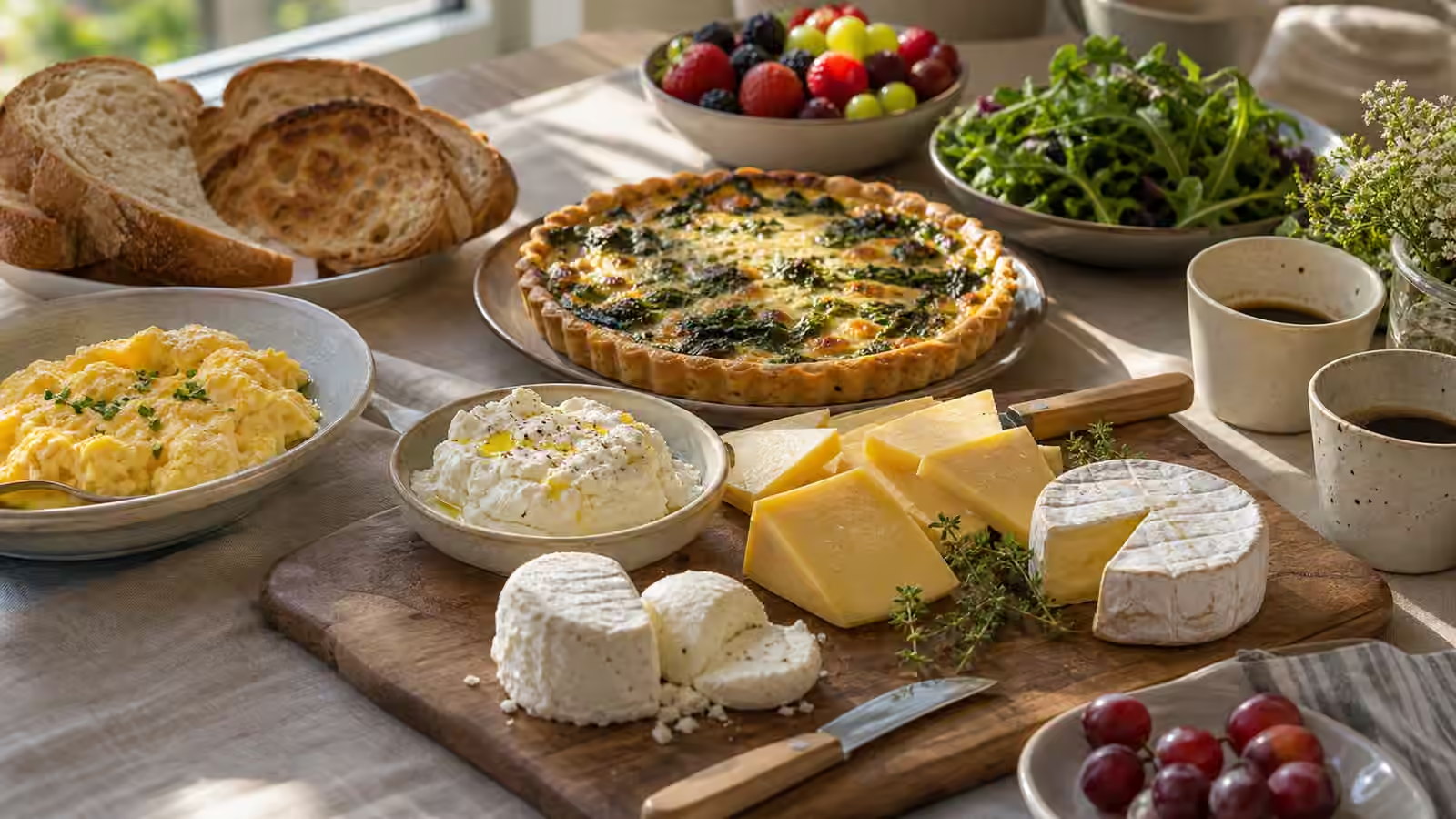
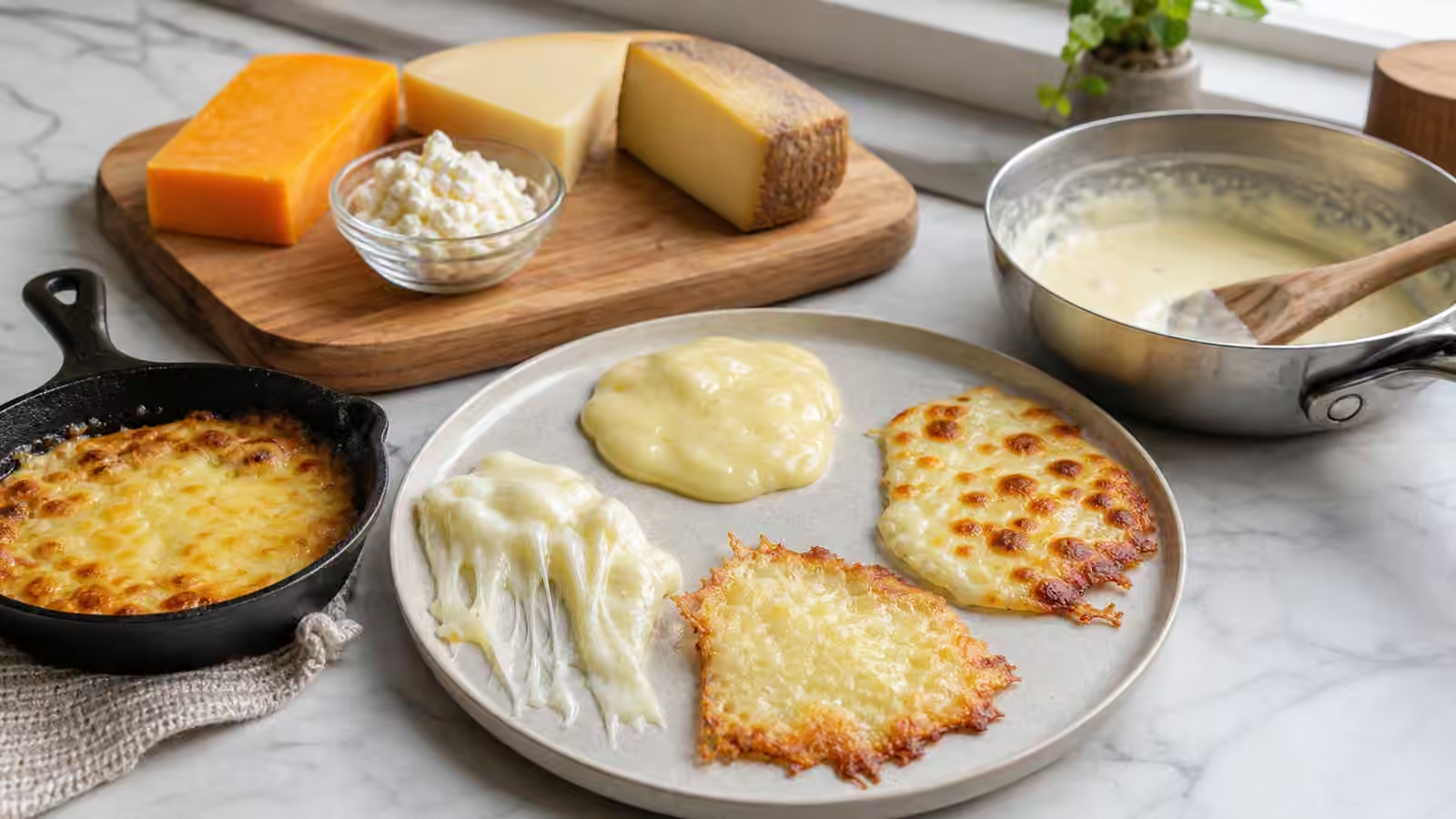
The shape of cheese changes the way it tastes. This sounds obvious when you think about a cloud of grated Parmigiano melting into pasta, but it matters just as much on a board, in a salad, or over a bowl of soup. A thick cube of aged cheese can feel salty and blunt. The same cheese broken into small nuggets may taste nutty and generous. Shaved thin, it may feel elegant and sweet. Grated finely, it becomes seasoning.
How to Cut and Serve Cheese explains how to portion whole wedges so each guest gets a fair bite of rind and paste. This guide narrows in on the next decision: what texture should the cheese have once it reaches the plate? The answer depends on moisture, age, salt, heat, and the role the cheese is playing.
Grating turns cheese into seasoning
Grated cheese has maximum surface area, which means it releases aroma quickly and melts quickly. That is why a small amount can flavor a whole dish. Fine grated hard cheese does not behave like chunks. It disappears into hot pasta water, clings to butter, thickens soup, and seasons vegetables. It is closer to a savory spice than to a separate piece of food.
This is especially true for hard aged cheeses. Parmigiano-Reggiano, Grana Padano, Pecorino, aged alpine cheeses, and very firm aged Gouda can all work this way, though they do not taste the same. Fine grating makes salty cheeses feel more integrated because the salt spreads across the dish. A large chunk of Pecorino may be too sharp on its own; a fine snowfall over beans or greens can be exactly right.
The tool matters because texture matters. A rasp-style grater makes feathery cheese that melts almost instantly and smells expressive. A box grater makes heavier shreds that keep more chew and can brown or melt in visible strands. Neither is better in every case. The rasp is excellent when cheese is a finishing accent. The larger grate is better when you want body, as in a sauce, casserole, or grilled sandwich.
Freshly grated cheese usually tastes livelier than pre-grated cheese because it has not spent time drying in tiny exposed pieces. It also behaves better in sauces because many packaged grated cheeses include anti-caking starches. Those starches are not evil, and sometimes they are useful, but they can change texture. If you are fighting a grainy sauce, the broader melting logic in Cooking with Cheese matters more than the grater, but fresh grating removes one source of uncertainty.
Shaving preserves delicacy
Shaved cheese is not just grated cheese with better manners. A shaving is thin enough to soften quickly but broad enough to keep the cheese visible. It lets a firm cheese sit on a salad, roasted vegetable, soup, or board as a distinct texture. You get aroma, salt, and a little bend before the cheese melts on the tongue.
Shaving works best when the cheese is firm enough to hold a clean sheet. Aged firm cheeses, young alpine cheeses, dry sheep milk cheeses, and some aged goudas are good candidates. The cheese should be cool enough to cut cleanly but not so cold that it tastes mute. A vegetable peeler can make excellent shavings from a wedge with a flat face. A cheese plane gives wider slices. A knife can work if you cut patiently and do not force the cheese into thick slabs.
The reason shavings feel different is proportion. A salad with grated cheese can taste seasoned all through. A salad with shaved cheese gives you small moments of cheese. The leaf, dressing, nut, fruit, or vegetable still has space. This is why shaved cheese is so useful with bitter greens, pears, roasted squash, asparagus, mushrooms, and warm grains. It adds richness without turning the dish into a cheese dish.
Shaving is also a good way to serve concentrated cheese to cautious eaters. Aged cheese in cubes can ask too much of the palate. Broad thin pieces feel less aggressive because each bite carries less mass. The aroma is still there. The salt is still there. The format makes the cheese easier to meet.
Crumbling gives salt in small bursts
Crumbled cheese works by interruption. It places little pockets of salt, tang, cream, or funk through a dish. Feta in a tomato salad, blue cheese on bitter leaves, fresh goat cheese over roasted beets, and aged cheddar broken into small rough pieces all use the same idea. The cheese does not coat everything. It appears, changes the bite, then steps back.
Not every cheese crumbles well. Some cheeses break because they are dry and aged. Some crumble because they are acid-set and fragile. Some are too elastic, too creamy, or too sticky to crumble neatly. Trying to crumble a cheese that wants to smear often leads to frustration and a messy plate. In that case, treat it as a spread, slice, or dollop instead.
The best crumbles are uneven. Perfect little cubes make cheese feel manufactured and can create hard, salty bites. Rough crumbles create variation. A larger piece gives creaminess or texture. A tiny piece seasons the surrounding food. With blue cheese, this variation is especially helpful because the veins can be salty and intense. Small crumbles let blue cheese support a dish without taking it over.
Crumbled cheese also changes how you pair. A large wedge of blue might want honey or a sweet drink. Crumbles of the same blue on roasted carrots may need only nuts and a little acid. The format reduces the pairing burden because the cheese arrives in smaller doses. Cheese Pairing Beyond Wine is useful here because intensity is not only about cheese choice; it is also about portion shape.
Breaking can be better than slicing
Some cheeses look best when broken. Aged cheddar, crystalline Gouda, Parmigiano, alpine wedges, and other firm cheeses often have internal fault lines. If you cut them into clean cubes, you hide their structure. If you break them along natural seams, you expose crystals, rough surfaces, and craggy edges that make the cheese more aromatic and easier to nibble.
Broken pieces also solve a serving problem. Thick slices of firm cheese can be awkward. They dry at the edges, stack badly, and sometimes feel too large. Rough nuggets invite people to take one piece without negotiating a wedge. On a board, they make aged cheese feel generous without requiring a large quantity.
The best tool for breaking is often a small stubby hard-cheese knife or the point of a sturdy paring knife. Insert the tip and gently twist instead of sawing. The cheese will tell you where it wants to split. This is not precious behavior. It is practical. A broken piece gives more surface area and a better range of texture than a smooth cube.
For very hard grating cheeses, breaking and grating can work together. Break a few irregular pieces for eating, then grate the smaller ends into a dish. A wedge does not have to serve one purpose from beginning to end.
Slicing belongs to gentle, sliceable cheeses
Slicing still has its place. Semi-soft cheeses, young Gouda, Havarti, Fontina, tomme-style cheeses, and many everyday cheddars are often best in slices because they are supple and mild enough to eat in larger pieces. A slice gives a clean cross-section and makes the cheese easy to put on bread, fruit, or a board.
The mistake is using slicing as the default for every cheese. A slice of triple-cream can collapse. A slice of blue can smear and look harsh. A slice of very aged cheese can feel like a salt tile. A slice of fresh mozzarella can be perfect because its pleasure is tenderness and milk. The method should follow the cheese.
Temperature matters here too. Cold cheese slices more cleanly, but cheese tastes better when it has warmed. For a tidy board, cut while the cheese is still cool, then let the pieces warm before serving. For a casual meal, cut as needed and accept a little softness. The right answer is the one that gives the best bite, not the neatest geometry.
Let the dish decide
Before you cut, ask what the cheese is supposed to do. If it should disappear into the dish and season it, grate. If it should stay visible but delicate, shave. If it should add little bursts of tang or salt, crumble. If it should show age and crystal, break. If it should sit neatly on bread or a board, slice.
This habit makes cheese feel less accidental. It also reduces waste because you stop forcing one wedge into one format. The broad heel of an aged cheese can become shavings for salad, broken pieces for a board, and fine gratings for soup. A piece of goat cheese can be sliced when firm, crumbled when cold, or spread when warm. A semi-soft cheese can be sliced for a board and grated coarsely for melting if its moisture supports it.
Good cheese service is often a series of small physical decisions. The knife, grater, peeler, and hand all change the experience. Once you notice that, a cheese board becomes more than a set of names. It becomes texture arranged with purpose.