Fresh cheese is cheese before age has had much time to speak. It is close to milk, high in moisture, quick to show its flaws, and often more useful than people give it credit for. A spoonful of ricotta can soften a bowl of pasta. A torn ball of mozzarella can make tomatoes feel complete. A slice of feta can sharpen a salad. A little chevre can turn toast, eggs, or roasted vegetables into something that tastes considered instead of assembled.
That immediacy is the pleasure and the catch. Fresh cheeses do not have the protective rind, deep concentration, or long storage window of an aged wheel. They are about water, fat, salt, acid, and texture. If you learn how those pieces work, the category becomes much easier to buy, store, and serve.
If you have been using Cheese Types as the broad map, fresh cheese is the first stop on that map. It includes cheeses that are barely set, cheeses that are stretched, cheeses that are drained into soft curds, and cheeses that are held in brine. They do not all taste alike, but they share a short path from milk to table.
Fresh does not mean simple
The word fresh can make the category sound plain, as if age is the only source of complexity. That misses what fresh cheeses do well. They show milk quality clearly. They show acid clearly. They show salt clearly. They make texture obvious because there is nowhere for a rubbery curd, a watery center, or a chalky finish to hide.
Ricotta is a good example. In careful versions, it tastes sweet, milky, and lightly grainy in a way that feels soft rather than sandy. In tired versions, it becomes wet, flat, and anonymous. Fresh mozzarella has the same honesty. A good piece should feel tender and elastic, with milkiness that opens as it warms. A poor one can feel like a cold eraser, technically cheese but emotionally absent.
Fresh cheese also changes fast once opened. This is why the storage habits in How to Store Cheese matter even more here than they do with a firm aged wedge. A cheddar can forgive a day of lazy wrapping. Burrata usually will not. Aged cheese often fades slowly; fresh cheese tends to collapse, sour, dry, or weep in ways you notice immediately.
Moisture is the real organizing principle
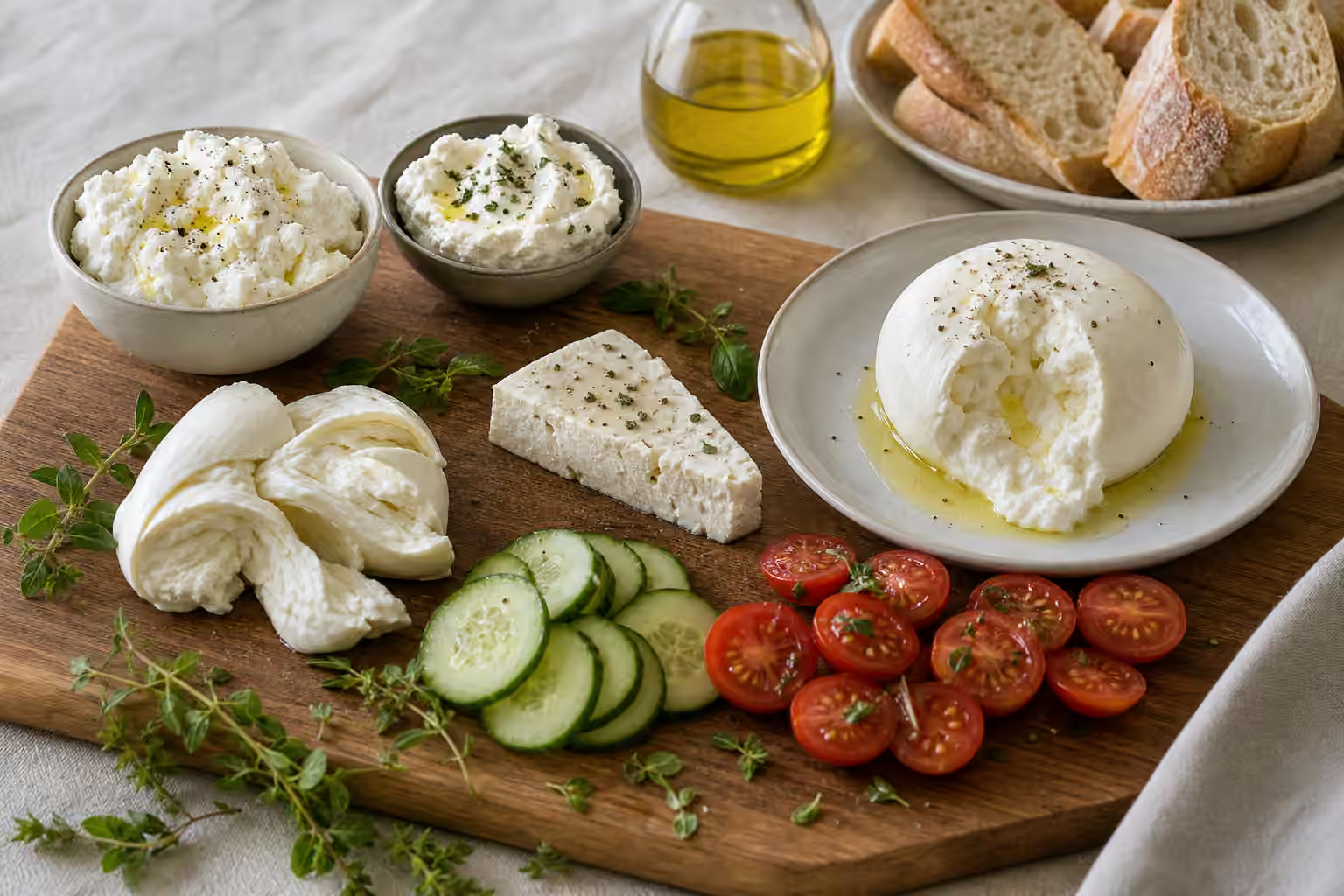
The easiest way to understand fresh cheese is by moisture. Very wet cheeses feel lush, spoonable, and fragile. Ricotta, cottage cheese, fromage blanc, quark, and stracciatella belong near this end of the spectrum. They need gentle handling and a clean purpose. They can disappear into pasta, sit under fruit, fill pastries, or become a quiet base for herbs and olive oil.
Stretched-curd cheeses such as mozzarella and burrata sit in the middle. They are moist, but their structure comes from heat and stretching. Mozzarella should tear and pull in soft layers. Burrata wraps a pouch of mozzarella around cream and shreds, so the first cut releases a richer center. These cheeses are often best served with foods that respect their gentleness: tomatoes, roasted peppers, basil, olive oil, bread, peaches, bitter greens, or a little anchovy.
Brined cheeses such as feta, halloumi-style cheeses, and many fresh sheep or goat cheeses move the conversation toward salt. Some are young and moist enough to feel fresh even when they are firmer than ricotta. The brine protects them, seasons them, and gives them a sharper voice. They can stand up to cucumbers, olives, herbs, grilled vegetables, beans, and lemon in a way that very milky cheeses cannot.
The point is not to force every cheese into a strict box. It is to ask what the cheese is carrying. Is it giving you cream? Is it giving you acid? Is it giving you salt? Is it giving you stretch? Once you answer that, the rest of the plate becomes easier.
Ricotta, chevre, and the value of clean acidity
Soft fresh cheeses often rely on acid for shape. Milk is warmed, cultured or acidified, and then drained until the curds hold together. The result can be delicate or dense depending on how much whey is left behind. This is why ricotta can be spoonable in one tub and almost sliceable in another, and why fresh goat cheese can be creamy, crumbly, or chalky depending on its make and age.
Acidity gives these cheeses lift. Fresh chevre with roasted beets works because the cheese cuts through the sweetness and earth of the vegetable. Ricotta with lemon zest works because the citrus wakes up the milk rather than covering it. A soft fresh cheese on toast often needs only salt, olive oil, and one clear accent, not a crowded pile of toppings.
Goat cheese deserves a little extra patience because it is often judged by one supermarket log. Fresh chevre can be bright and lemony, but it can also be creamy, grassy, mineral, or gently savory. Milk type plays a role, and the broader patterns in Milk Types in Cheese help explain why goat milk often feels cleaner and sharper than cow milk. But format matters just as much. A fresh goat button, an ash-coated disk, and a whipped goat cheese spread do not behave the same way on a plate.
When serving these cheeses, avoid drowning them. A wet jam, a heavy chutney, or too much honey can make the curd taste thinner by comparison. A better move is contrast with restraint: toasted nuts for crunch, herbs for freshness, roasted fruit for warmth, or good bread for structure.
Mozzarella and burrata need temperature more than decoration
Fresh mozzarella is one of the clearest examples of temperature changing flavor. Straight from the refrigerator, it can taste muted and feel too firm. Given a little time at cool room temperature, it loosens, smells more like milk, and becomes more tender. This does not mean leaving it out all afternoon. It means giving it enough time to stop being fridge-cold before it reaches the table.
Because mozzarella is gentle, people often try to make it interesting by adding too much. The better approach is to improve the things around it. Tomatoes should be ripe. Olive oil should taste good. Salt should be present but not harsh. Bread should have enough crust to give the cheese something to lean against. Basil, pepper, lemon zest, or chili can all work, but they should support the milk rather than compete with it.
Burrata is richer and more theatrical, but it asks for the same discipline. Cut it shortly before serving, because its creamy center begins to spread as soon as it is opened. Give it a shallow bowl or plate with a rim if you want to keep the cream from running into everything else on the board. Pair it with acidity, bitterness, or toast. Burrata with only soft accompaniments can feel heavy; burrata with tomatoes, grilled bread, bitter greens, or roasted peppers has somewhere to go.
In cooking, mozzarella and burrata are not interchangeable. Low-moisture mozzarella is designed for pizza and melting. Fresh mozzarella releases more water and can make a pizza soupy if the cook treats it like a dry shredding cheese. Burrata is usually better added after heat, not baked into submission. For the broader logic of melting and moisture, Cooking with Cheese is the useful companion.
Feta, brine, and salt as structure
Feta sits at the edge of the fresh cheese category because it is usually brined and can be held longer than the most delicate cheeses. Still, it belongs in this conversation because its appeal is not age concentration in the way an old cheddar or alpine cheese is. Its force comes from moisture, acid, sheep or goat milk character, and salt.
Good feta is not merely salty. It should have a clean tang, a satisfying break, and enough creaminess to keep the salt from feeling raw. Some feta crumbles dry and sharp. Some slices almost like a soft block and melts slightly on the tongue. Milk type, brine strength, and handling all matter.
The habit with feta is to use it as seasoning. That is useful, but it can also flatten the cheese into a garnish. Try serving it as a real piece sometimes: a slab with olive oil, oregano, warm bread, cucumbers, tomatoes, beans, or roasted peppers. When feta is the anchor instead of a sprinkle, you notice its texture and milk character more clearly.
Brine storage is part of the flavor. If feta arrives in brine, keep it covered in brine unless the maker or package gives different instructions. Once exposed to air, it dries and sharpens quickly. If it seems too salty, a brief soak in fresh water or milk can soften the edge, but do not treat that as a rescue for poor storage. It is better to buy an amount you can use while the cheese still tastes balanced.
Mascarpone, cream cheese, and quiet richness
Not every fresh cheese is tangy. Mascarpone and cream cheese show the creamy side of the family. They are high in fat, mild in flavor, and useful because they carry other ingredients without demanding attention. Mascarpone can make a dessert feel plush, but it can also soften polenta, enrich scrambled eggs off heat, or round out a pasta sauce. Cream cheese has more tang and structure, which is why it spreads cleanly and works well with herbs, smoked fish, pickles, and dense bread.
These cheeses teach a useful lesson: mild is not the same as boring. A mild cheese can create texture, bind flavors, and make sharp ingredients feel coherent. The danger is using it where a livelier cheese is needed. If a dish already has cream, butter, or soft starch, mascarpone may make it feel heavy. If a board already has three gentle cheeses, cream cheese will not add contrast. Fresh cheese works best when you know what role is missing.
Buying and serving fresh cheese well
Fresh cheese rewards small purchases. Buy it for a specific meal rather than as a vague future snack. Look for clean aroma, intact packaging, and curds or balls that look moist without sitting in cloudy neglect. At a cheese counter, ask when it arrived and how the shop likes to serve it. Those practical questions are more useful than asking for the fanciest option. The broader buying habits in How to Buy Cheese still apply: name the use, name the texture you want, and buy less than your ambition suggests.
At home, treat fresh cheese gently. Keep wet cheeses in their liquid when that is how they are sold. Keep brined cheeses submerged. Keep soft tubs clean by using a fresh spoon instead of dragging crumbs and oil back into the container. Let serving pieces warm just enough to taste alive, then return leftovers promptly and cleanly if they are still in good condition.
On a board, fresh cheese gives relief. It can sit beside an aged Gouda, a blue cheese, or a washed rind and make the whole plate easier to return to. It gives the palate a place to rest. But it should not be treated as blank space. Add salt when it needs salt. Add acid when it needs lift. Add crunch when it feels too soft. Add restraint when the cheese is already doing enough.
Fresh cheese is the part of the cheese case that asks for the least ceremony and the most attention. It will not wait politely for weeks. It will not hide bad storage behind a rugged rind. It will show you milk, water, salt, acid, and fat almost directly. That is why it belongs in the center of ordinary cooking and not only in summer tomato season. Learn its textures, serve it at the right temperature, and fresh cheese becomes less like a starter category and more like one of the most useful tools in the kitchen.