The wheel arrived in February, wrapped in cheesecloth and smelling like wet earth and fresh milk.
I’d ordered it from a small creamery in Vermont—a young cheddar wheel, six inches across and about three pounds, made from raw cow’s milk and pressed into a natural rind. The cheesemaker had aged it for two months before shipping, just enough for the rind to form and the paste to firm up. Everything after that was my responsibility.
“Treat it like a living thing,” she’d said on the phone. “Because it is.”
I was about to put a living thing in a converted wine fridge and try to keep it alive for ten months.
I did not feel qualified.
Why age cheese at home?
Most cheese you buy has already been aged—by someone who knows what they’re doing, in a cave or a temperature-controlled room designed for the purpose. You’re eating the finished product. The aging is invisible.
Home aging (called affinage) reverses this. You take a young cheese and guide it through the slow, invisible process that turns it from bland and rubbery into something complex, sharp, and deeply flavored.
There are practical reasons to try this: it’s a project with a tangible, edible result. It teaches you more about cheese than any amount of tasting. And if it works, the cheese you produce will be yours in a way that no store-bought cheese ever is—shaped by your cave conditions, your care, and your patience.
But mostly, I did it because someone told me I couldn’t.
“Affinage takes years of training,” a cheese-counter worker told me when I asked about home aging. “It’s not something you just do.”
He was partly right. Professional affineurs spend years learning the craft. But home aging a single wheel to learn the fundamentals? That’s absolutely something you can do—if you’re willing to accept that the first attempt might not be perfect, and that the learning is the point.
For the technical reference, see Affinage at Home.
Building the cave: the wine fridge conversion
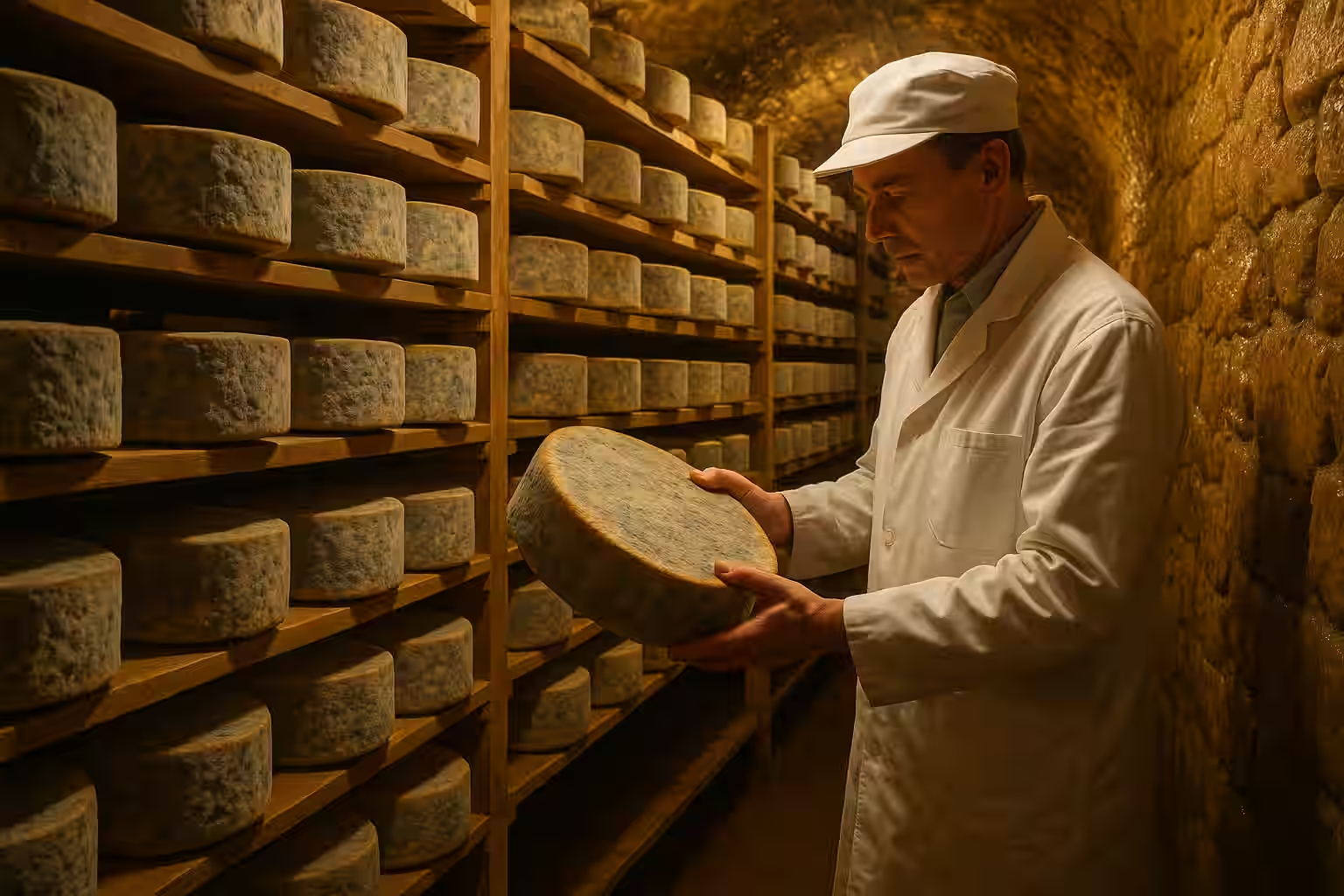
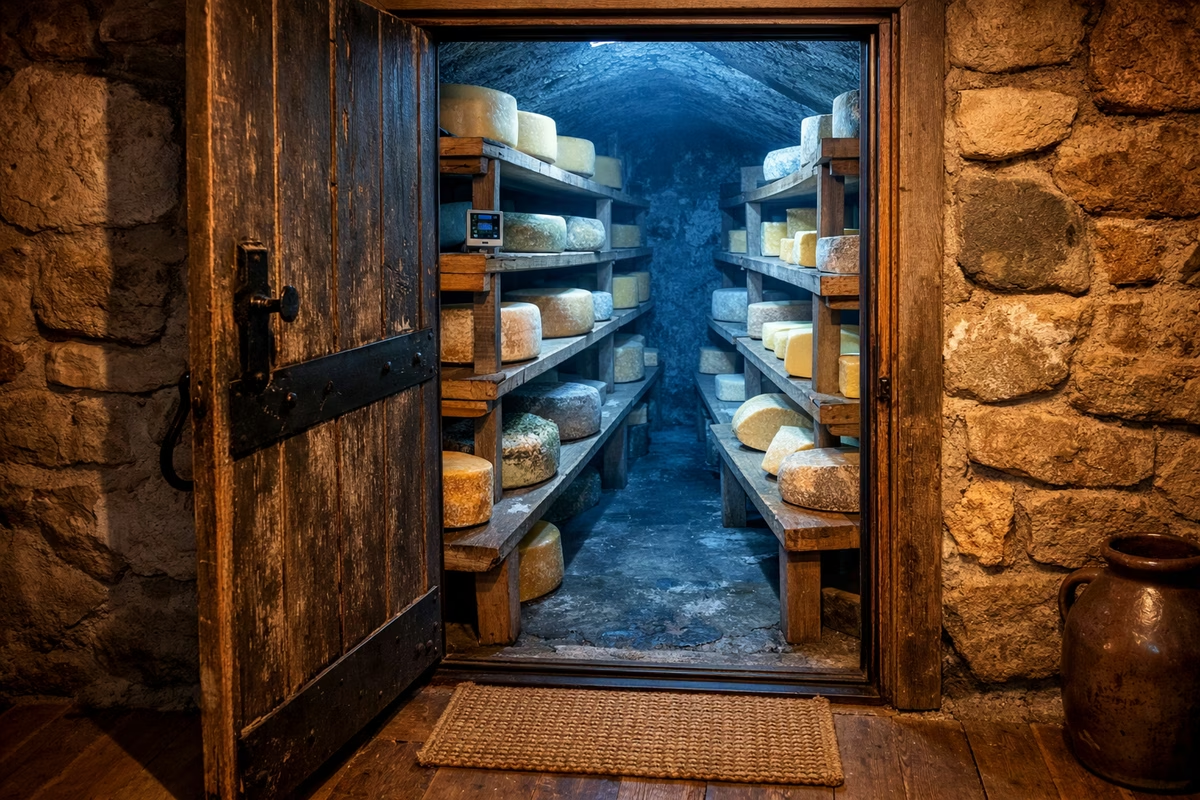
A cheese cave needs three things: cool temperature (50–55°F / 10–13°C), high humidity (80–90%), and gentle airflow. A regular refrigerator is too cold and too dry. A room-temperature closet is too warm.
A wine fridge hits the temperature range naturally—most are set to 55°F for white wine storage. The humidity and airflow need a little help.
What I used
- A small wine fridge (8-bottle capacity, thermoelectric, about $120 used)
- A digital hygrometer (to monitor humidity, ~$15)
- A small bowl of water (to raise humidity inside the fridge)
- A wooden cutting board (as a shelf for the cheese to sit on—wood breathes and absorbs moisture)
- Cheesecloth (for wrapping, if needed)
Setup
I removed the wine racks, placed the wooden board on the bottom shelf, set the temperature to 53°F, put the bowl of water in the back corner, and closed the door.
After 24 hours, the hygrometer read 78% humidity. Too low—I needed 85%. I added a damp cloth to the water bowl, which increased the evaporative surface. The next reading: 84%. Close enough.
The cave smelled like nothing. Slightly damp, slightly cool, like a cellar. Within a week, it would smell like cheese.
Month 1–2: The quiet beginning
The wheel went into the cave on February 14. I placed it on the wooden board, rind-side down, and closed the door.
For the first two weeks, I checked it daily. Not because anything was visibly happening, but because I was nervous. The hygrometer was stable at 83–86%. The temperature held at 53°F. The wheel sat there, looking the same as the day it arrived.
Then, around week three, I noticed the first sign of life: a thin, white fuzz on the rind. Not mold in the alarming sense—it was the beginning of a natural rind bloom, the same kind of beneficial mold (typically Penicillium candidum or Geotrichum candidum) that covers Brie and Camembert. On a cheddar-style natural rind, it would eventually be brushed away or absorbed as the rind developed.
I brushed it gently with a dry cloth, as the cheesemaker had instructed. “Brush the rind every week or two,” she’d said. “It controls the surface flora and encourages a smooth, firm rind.”
I flipped the wheel—another weekly task, to ensure even moisture distribution and prevent the bottom from getting too damp.
These two actions—brush and flip—became my rhythm for the next ten months.
Month 3–4: The first real changes
By month three, things were happening.
The rind was firming. What had been soft and slightly tacky was now dry to the touch, with a golden-brown color that deepened weekly. It looked like the rind of a cheese you’d see at a good cheese counter—rustic, natural, slightly cratered.
The weight was dropping. I weighed the wheel monthly. It had started at 3.1 pounds. By month three, it was 2.8. By month four, 2.65. This moisture loss—about 1–2% per month—is what concentrates the flavor and firms the texture. The cheese was shrinking itself into something more intense.
The smell was developing. The cave, which had been neutral, now smelled unmistakably of cheese: earthy, mushroomy, slightly tangy. The wheel itself had a more complex aroma—less milk, more earth.
At month four, I couldn’t resist any longer. I cut a thin slice from the edge—just a sliver, a taste.
It was… fine. Definitely cheese. Mild cheddar flavor, slightly crumbly texture, a hint of tanginess. Pleasant but unremarkable. Like a cheese that had potential but hadn’t decided what it wanted to be yet.
“Give it time,” I imagined the cheesemaker saying. So I sealed the cut edge with a thin layer of olive oil (to prevent it from cracking and drying out), put the wheel back in the cave, and closed the door.
Month 5–7: The middle miles
This was the hardest stretch. Nothing dramatic was happening. The rind continued to develop. The weight continued to drop. The weekly flip-and-brush became automatic—less a task and more a habit, like watering a plant.
But I was impatient. I’d look at the wheel every time I opened the fridge for something else and think: Is it ready? Is it better? Can I taste it again?
I didn’t taste it. I’d learned from wine (and from the four-month sliver) that tasting too early teaches you less than waiting.
During this stretch, two things went wrong:
The humidity drop
In May, the apartment got warmer. The wine fridge worked harder. Humidity inside the cave dropped to 72%. The rind started to look dry and slightly cracked.
I added a second bowl of water and draped a damp cheesecloth over the bowl to increase surface area. Within three days, humidity climbed back to 82%. The rind recovered—the cracks didn’t deepen, and new rind growth filled them in.
Lesson: monitor humidity weekly, especially during seasonal changes. A cheese cave is a micro-environment, and it’s sensitive to the room around it.
The unwanted mold
In July, I found a patch of blue-green mold on the bottom of the wheel—a spot I’d missed while brushing. It was small (about the size of a dime) and distinctly different from the white bloom I’d been managing.
I wiped it with a cloth dampened in salt brine (a tablespoon of salt in a cup of water—the standard remedy). The mold didn’t return.
A small spot of surface mold on a hard cheese is rarely dangerous—the interior of the wheel is inhospitable to most molds. But left unchecked, it can spread and affect the rind’s integrity. The salt brine dehydrates the mold and creates an environment it can’t regrow in.
Lesson: brush thoroughly, including the bottom, every time you flip.
Month 8–10: Something is happening
Around month eight, the wheel started smelling different. Richer. More layered. The earthy, mushroomy baseline was still there, but now there was a sharpness underneath—a tangy bite that announced itself when I opened the cave door. The rind was dark amber, hard, and slightly oily. The wheel weighed 2.3 pounds, down from 3.1—a 26% moisture loss.
At month nine, I tested it again. Another thin slice from the edge, the cut sealed with olive oil after.
The cheese had transformed.
The paste was firm, dense, and slightly crumbly—breaking into jagged shards rather than cutting cleanly. The color had deepened from pale yellow to warm gold. The flavor was sharp, tangy, with a crystalline crunch from calcium lactate crystals (the tiny, crunchy bits you find in aged Gouda and Parmigiano—a sign of extended aging and a texture I’d always loved but never understood until now).
Underneath the sharpness was depth: earthy, nutty, with a butterscotch sweetness that lingered for ten seconds after swallowing. It tasted like something that had been thinking about itself for a long time and had arrived at a conclusion.
I stared at the sliver. This was the same cheese I’d tasted at four months—the mild, unremarkable wheel that had “potential but hadn’t decided what it wanted to be.”
It had decided.
Month 12: The cut
December 14. Exactly ten months since the wheel entered the cave. I decided it was time.
I removed the wheel, set it on a cutting board on the kitchen counter, and studied it. The rind was dark, dry, and firm—a shell about 3mm thick that protected the paste inside. The wheel had shrunk to a compact 2.1 pounds. It smelled powerfully of aged cheese: sharp, earthy, sweet.
I took a chef’s knife and cut it in half.
The interior was stunning. A deep, warm gold, with the tiny white crystals visible throughout the paste like stars in a small sky. The texture was dense and slightly granular. A bead of oil glistened on the cut surface—the fat that had concentrated as moisture evaporated.
I cut a wedge, then a thin slice from the wedge. I placed it on my tongue and let it sit.
The flavor unfolded in stages. First: a sharp, tangy hit that prickled the sides of the tongue. Then: a wave of caramel sweetness, like toffee made from butter. Then: an earthy depth—mushroom, wet stone, something almost smoky. The crystals crunched faintly, like tiny fireworks of umami. The finish lasted fifteen seconds.
It was, without question, the best cheddar I had ever tasted.
Not because I’m a talented affineur. Not because the conditions in a wine fridge in a Brooklyn apartment are somehow ideal. But because the cheese was fresh, it was cared for, and it was mine.
I sat at the kitchen table with the wheel cut open in front of me and felt a feeling I recognized from other food projects—making bread, growing tomatoes, brewing beer—but more intense, because the timeline was longer. Ten months of flipping, brushing, monitoring, waiting. Ten months of a wheel in the dark doing invisible work. And now: this.
What aging cheese teaches you about eating cheese
You understand why aged cheese costs more. Time, space, weight loss, and monitoring all have costs. A wheel that loses 26% of its weight during aging means 26% of the original milk is gone—evaporated into the cave air. The cheese you’re buying is more concentrated, more labor-intensive, and more finite than the young version.
You taste structure, not just flavor. After aging your own wheel, you start noticing the rind, the texture, the crystal crunch, the moisture level in every cheese you eat. These structural elements become part of the tasting experience, not background.
You learn patience. Not as a virtue, but as a practical skill. Patience in affinage means checking the cave, making small adjustments, and not cutting the wheel open early. It’s active patience—the kind where you’re engaged, not just waiting.
You appreciate affineurs. A professional affineur manages hundreds or thousands of wheels simultaneously, each on its own timeline, each requiring individual attention. The skill required to do this well—to know when a specific cheese in a specific cave on a specific day is ready—is extraordinary. My one wheel gave me a window into that expertise.
The ending: the second wheel
The day after I cut the first wheel, I ordered a second one. This time, a Gruyère-style from a different creamery—a larger wheel, six months of age already, with instructions to continue for another six to twelve.
It arrived in January. It’s in the cave now, on the wooden board, next to a bowl of water and a hygrometer reading 85%.
I flip it every Saturday. I brush the rind every other week. I check the temperature and humidity when I walk past.
The cave smells like cheese again. The wheel is doing its slow, invisible work. And I’m learning, for the second time, that the best things I’ve ever eaten were the things I waited for.
Next steps
- Read Affinage at Home for the complete technical reference on home cheese aging
- Explore Cheese Aging: What Happens Over Time for the science behind the transformation
- See How to Buy Cheese for choosing wheels worth aging
- Try Cheese Types: A Comprehensive Guide to understand where your aged wheel fits in the broader cheese world
- Check Cheese Storage for keeping the finished product at its best after you cut it