A cheesemonger’s map of cheese
Here’s a number that might make your head spin: there are over 1,800 varieties of cheese in the world. One thousand eight hundred. That’s more than enough to make anyone freeze at the cheese counter, politely grab the first shrink-wrapped wedge they recognize, and shuffle away in quiet defeat. But here’s the thing—you don’t actually need to know all 1,800. You just need a map.
Think of “cheese type” as a shortcut, not a rigid box. When someone tells you a cheese is a “semi-hard alpine style,” they’re giving you three incredibly useful pieces of information all at once: texture (how it feels in your mouth), intensity (how loud or subtle the flavor is), and behavior (how it melts, how it ages, and how it holds up on a board). That’s a lot of intel packed into a few words, and once you learn to decode it, you’ll never stare blankly at a cheese case again.
Use this guide like a compass the next time you’re at the counter. Name a texture you want, choose an intensity you can serve confidently, and let the cheesemonger steer you to a specific wheel. You don’t need to memorize names or regions or milk percentages. You just need a handful of patterns, and honestly, these four will get you astonishingly far.
Fresh cheeses taste like milk and salt—clean, bright, uncomplicated. Soft-ripened cheeses taste like butter and mushrooms, with a luscious richness that feels almost indulgent. Alpine and aged cheeses taste like broth, nuts, and caramel—the kind of deep, savory warmth that makes you close your eyes mid-bite. And then there are the blues and washed rinds, which smell dramatic and often taste far gentler than you’d ever expect. They’re the loud friend who turns out to be a sweetheart once you actually sit down and talk.
Once you internalize these patterns, shopping becomes genuinely easy. You stop buying “a random brie” and start buying “a creamy, gentle cheese plus one chewy, savory cheese plus one bold accent.” And that, my friend, is how you build a cheese board that looks like you know exactly what you’re doing—even if you learned this five minutes ago.
The 30‑second decision
Let’s talk about practical decision-making, because sometimes you’re standing in a shop with three minutes before guests arrive and you need a framework that works fast. When you’re choosing cheese for other people—or for future you, raiding the fridge at midnight—ask yourself three quick questions.
First: soft or firm? Soft cheese is plush and spreadable, the kind of thing you smear on warm bread. Firm cheese is sliceable, satisfying, and holds its shape. Hard cheese is shavable and deeply savory—think thin shards that dissolve on your tongue. Second: gentle or bold? Fresh and young cheeses tend to be bright and clean, while aged cheeses lean nutty, brothy, and salty. Third: comfort or drama? Washed-rind and blue cheeses bring fireworks to the table. They’re exciting and memorable, but they’re best bought in smaller pieces and paired with intention.
Then do one more practical check and ask yourself how you’re actually going to serve this cheese. If it’s going on a board, you want contrast—a mix of textures and intensities that play off each other. If it’s destined for the kitchen, you care about melting behavior, salt level, and whether the cheese will break or stay silky under heat. And if you’re just snacking (no judgment, we’ve all been there), you care about sliceability and how the cheese behaves once it warms up to room temperature. Simple questions, but they’ll save you from buying the wrong cheese every single time.
Fresh Cheeses
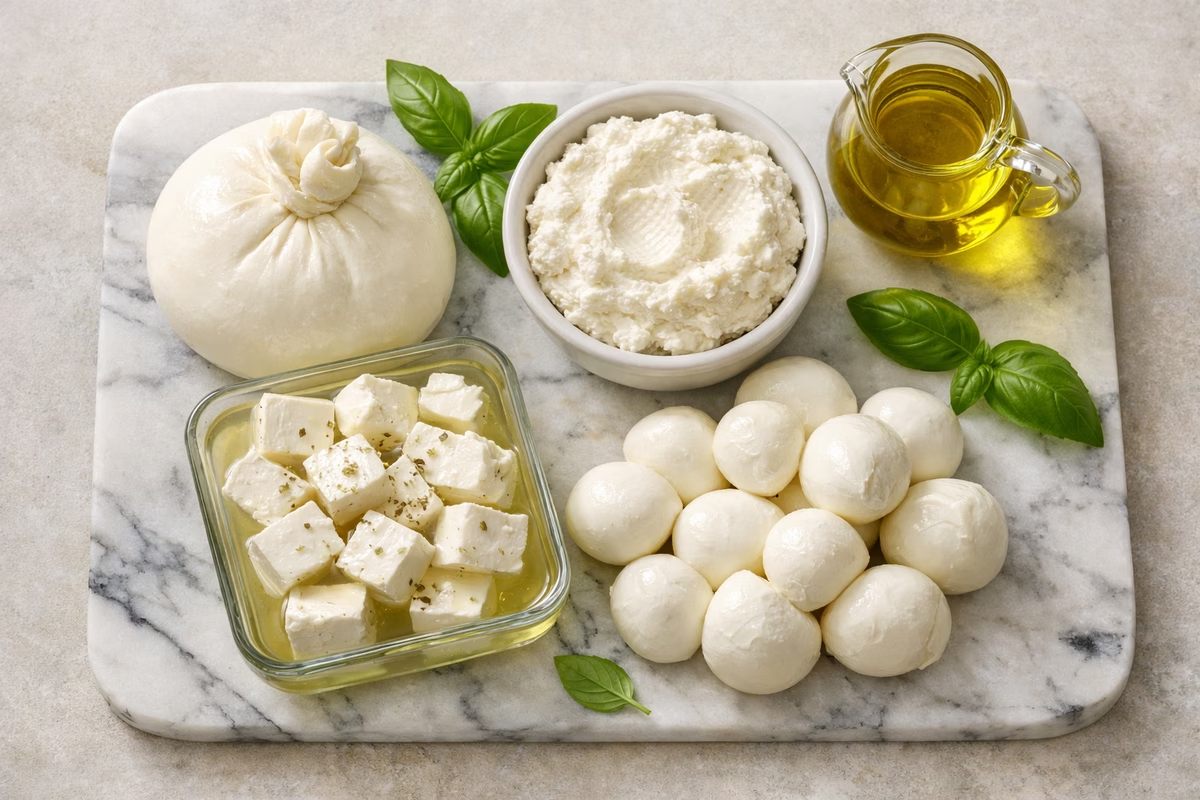
Fresh cheeses are where every cheese story begins. They’re not aged, not ripened, not fussed over in a cave for months on end. They carry the clean, dairy-sweet clarity of milk at the very beginning of its transformation—bright, honest, and almost startlingly simple. Their flavor is mild and milky, their texture is soft and spreadable, and they have no rind to speak of. The trade-off? They have a short shelf life. Fresh cheese doesn’t wait around for you; it wants to be eaten now.
Think mozzarella, ricotta, cottage cheese, cream cheese, and feta. These are the cheeses that show up in your life most often, and they’re the ones most people underestimate. A truly great fresh mozzarella—still warm, pulled that morning—is a revelation. It barely needs anything beyond a drizzle of olive oil, a sprinkle of salt, and maybe a ripe tomato if you’re feeling fancy.
Fresh cheeses are best for simple salads, warm bread, ripe tomatoes, bright herbs, and quick boards where you want something easy and universally loved. They’re usually the least salty-tasting of all the cheese types when young, and they’re the most sensitive to time. They don’t get “better” sitting in the fridge—they just get older. There’s a real difference.
When you’re shopping for fresh cheese, use your nose first: look for a clean dairy aroma, not a sour one. For mozzarella and burrata, prioritize freshness and texture over brand loyalty. The stuff made yesterday at the local shop will almost always beat the big-name version that’s been sitting on a shelf. For feta, the decision is really about what you want it to do—briny and firm (usually sheep and goat blends) for crumbling over salads, or milder and creamier for spreading and dipping. Both are wonderful; they’re just different tools for different jobs.
Soft-Ripened Cheeses
Now we enter the realm of the truly seductive. Soft-ripened cheeses ripen from the outside in, developing that gorgeous bloomy white rind that looks like velvet and smells like a forest floor after rain. Inside, they’re creamy—sometimes startlingly runny—with flavors that dance between buttery richness and earthy, mushroomy depth. They typically age for just four to eight weeks, which means they’re living on a timeline, constantly evolving.
The classics here are Brie, Camembert, Saint-André, and the gloriously decadent Brillat-Savarin. These are the cheeses that make people gasp at dinner parties, the ones that ooze across the board in the most appealing way possible.
When you’re shopping, look for a gentle give when you press the cheese—not rigid chalk (too young) and not collapsing liquid (too far gone). If it smells sharply of ammonia, it’s past its sweet spot. A little earthiness is fine; a chemical sting is not.
Here’s something fascinating about how these cheeses work: because they ripen from the outside toward the center, a single wedge can contain three completely different experiences. The firmer core near the middle, a creamy mid-layer, and a gooey, almost liquid edge near the rind. It’s like getting three cheeses for the price of one. If you love that runny, spoonable texture, buy your soft-ripened cheese slightly more mature and let it come to room temperature before serving. If runny cheese isn’t your thing, buy younger and serve it slightly cooler. Same cheese category, completely different experience—you just have to know which lever to pull.
Semi-Soft Cheeses
Semi-soft cheeses are the friendly ones, the crowd-pleasers, the ones that never start an argument at the table. They have higher moisture content than their firmer cousins, which gives them a supple, pliable texture that’s immediately appealing. Their flavor ranges from mild to medium—approachable without being boring—and they age anywhere from one to six months.
You’ll find Havarti, Fontina, Monterey Jack, and young Gouda in this category, and they’re all absolute workhorses. Need a cheese for grilled cheese sandwiches? Semi-soft. Building a fondue hybrid? Semi-soft. Putting together a board for people whose tastes you don’t know? Semi-soft is your safety net.
Where these cheeses truly shine is in the kitchen. Semi-soft cheeses usually melt smoothly and forgive heat beautifully. They tend to emulsify without breaking, which makes them the easiest “melty” cheeses for home cooking. If you’ve ever made a cheese sauce that turned oily and grainy, the culprit was almost certainly a cheese that was too aged, heated too aggressively, or too lean in fat content. Semi-soft styles sidestep all of those problems. They’re a fantastic default whenever a recipe calls for melted cheese and you want guaranteed success.
Semi-Hard Cheeses
Welcome to what I like to think of as the sweet spot of the entire cheese universe. Semi-hard cheeses are the workhorses of the cheese world—versatile, flavorful, and reliable in virtually every situation you can throw at them. They’re firm but not crumbly, complex in flavor, excellent for slicing, and they age gracefully over two to twelve months.
The roster here reads like a hall of fame: Cheddar, Gruyère, Manchego, Emmental, Comté. These are the cheeses people fall in love with and buy over and over again, and for good reason. This is where “nutty, sweet, brothy” starts to show up as a flavor profile, especially in alpine styles like Gruyère and Comté. Take a bite of a well-aged Comté and you’ll taste caramelized onion, toasted hazelnuts, and something almost meaty—all from a single piece of cheese. It’s remarkable.
Semi-hard cheeses often deliver the best blend of flavor, value, and versatility of any category. They slice beautifully for sandwiches, they melt wonderfully in gratins and quiches, they age gracefully if you forget about them for a bit, and they pair with almost anything from wine to beer to a simple apple. If you’re building a board and don’t want to gamble, semi-hard is where you should buy the biggest wedge. It’ll be the first thing to disappear, guaranteed.
Hard Cheeses
Hard cheeses are what happens when patience meets milk. Aged extensively—twelve months to several years—these cheeses have had most of their moisture driven out, leaving behind concentrated, intense, complex flavors that practically vibrate on your palate. Their texture is granular and crystalline, almost brittle, and they have a long shelf life that rewards buying in larger pieces.
The legends live here: Parmigiano-Reggiano, Pecorino Romano, aged Gouda, Grana Padano. These are the cheeses that make chefs weep with gratitude and home cooks feel like alchemists.
Hard cheeses are best for shaving over dishes, grating into pasta, snacking in thin, delicate shards, and finishing everything from soups to salads. Those crunchy little crystals you find in a well-aged wedge? Those are concentrated proteins and salts that form during maturation, and they’re one of the great textural pleasures in all of food. People actively chase this crystal crunch—aged Gouda and Parmigiano-Reggiano are the classics for a reason.
One important thing to remember when cooking with hard cheeses: they’re salt-forward, so use them like seasoning rather than a main ingredient. A little grated Parmigiano can transform a bowl of soup, a simple salad, scrambled eggs, a plate of roasted vegetables, or a bowl of pasta. You don’t need much. Just enough to make everything around it taste more like itself.
Blue Cheeses
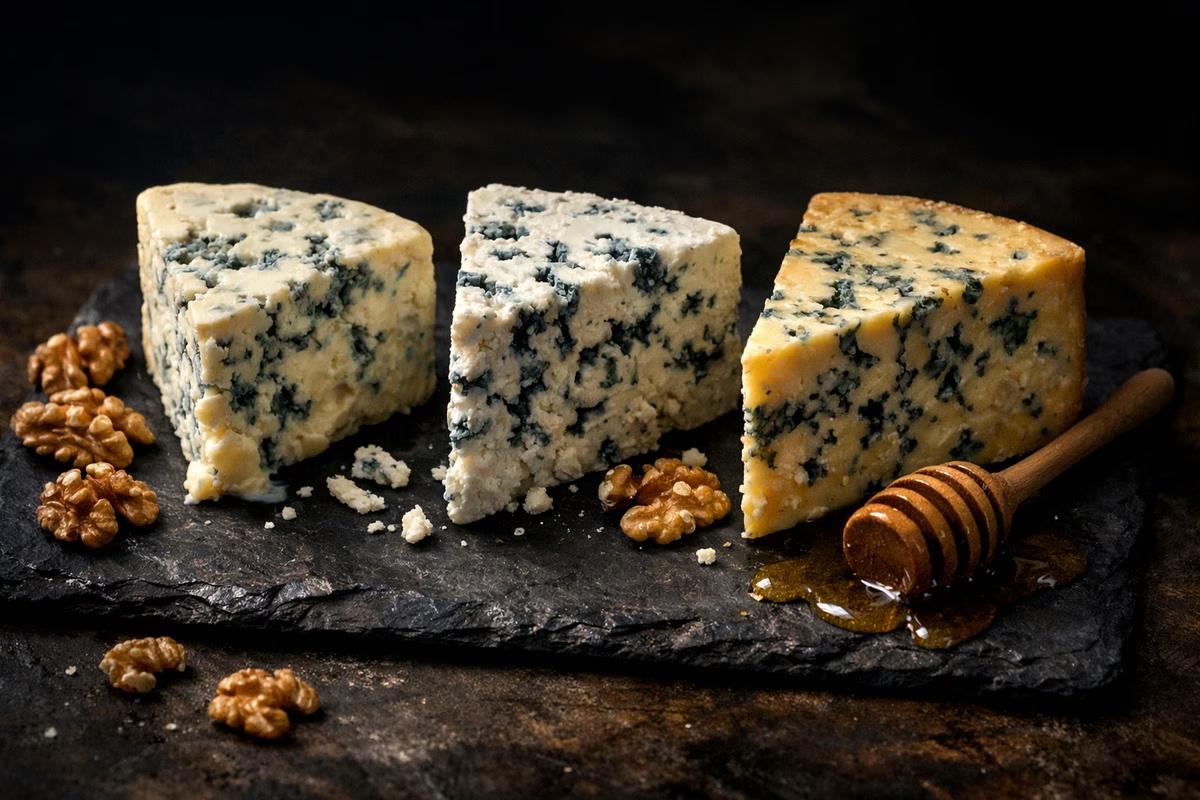
Ah, blue cheese. The one that divides rooms, starts debates, and inspires either passionate devotion or theatrical gagging. Characterized by those dramatic blue-green veins of mold running through the paste, blue cheeses are sharp, tangy, and pungent, with textures ranging from creamy to crumbly depending on the style. They typically age for two to six months, and the famous examples—Roquefort, Gorgonzola, Stilton, Danish Blue—each have their own personality.
Here’s the secret to serving blue cheese well: temperature and pairing. Blue absolutely blooms at warmer temperatures, so bring it out of the fridge early and give it time to wake up. Then add something sweet—honey, ripe pear, fig jam—to soften the sharper edges. The contrast between salty-funky blue and pure sweetness is one of the greatest flavor combinations in existence.
If you’re someone who thinks you don’t like blue cheese, I’d gently suggest that you might not have met the right one yet. Start with a milder, creamier blue and pair it with something sweet and starchy. Honey and crusty bread are the classic training wheels, and they work brilliantly. Also, buy small pieces. Blue is potent. A tiny wedge—no bigger than your thumb—can anchor an entire cheese board and give everyone a taste of adventure without overwhelming the spread.
Washed-Rind Cheeses
If blue cheese is the rebel of the cheese world, washed-rind cheese is the mysterious stranger who walks into the room and immediately makes everyone nervous. These cheeses are bathed in brine, beer, wine, or spirits during aging, which encourages specific bacteria to colonize the rind and produce those famously pungent, meaty aromas. The result is an orange-red sticky rind, a creamy interior, and a complexity of flavor that rewards the brave.
The greats of this category include Époisses (sometimes called the king of cheeses, and sometimes banned from public transport in France for its aroma), Taleggio, Münster, and Limburger. They smell intense. Really intense. Like, “is something wrong in here?” intense. But here’s the wonderful paradox: most washed rinds taste far gentler than they smell. The aroma is a warning label, not a verdict.
The key to falling in love with washed-rind cheese is pairing it with acid. This is a practical trick that transforms the experience entirely. Cornichons or pickled onions provide a briny, tangy crunch. Apple slices, pear, or grapes offer fruity brightness. A crisp cracker or fresh baguette gives textural contrast. And a dry sparkling beverage—whether it’s cider, beer, or sparkling wine—lifts and cleanses the palate between bites. The acid and crunch keep the richness from turning heavy, and suddenly you’re not eating “stinky cheese”—you’re having an elegant, layered tasting experience that feels incredibly sophisticated.
Cheese Comparison Table
| Type | Texture | Flavor | Aging |
|---|---|---|---|
| Fresh | Soft, moist | Mild, milky | None |
| Soft-ripened | Creamy | Buttery | 4-8 weeks |
| Semi-soft | Supple | Mild-medium | 1-6 months |
| Semi-hard | Firm | Complex | 2-12 months |
| Hard | Granular | Intense | 1+ years |
| Blue | Variable | Sharp, tangy | 2-6 months |
| Washed-rind | Creamy | Pungent | 4-12 weeks |
Beyond the Basics: Milk Type, Region, and Rind
Now that you’ve got the seven major types down, let’s layer in three additional clues that’ll help you shop like a true pro. These are the details that separate “I like cheese” from “I know what I’m looking for,” and they’re surprisingly easy to pick up.
Milk type
The animal behind the milk influences both flavor and texture in ways that are immediately noticeable once you start paying attention. Cow’s milk cheeses tend to be buttery, developing caramel and nutty notes as they age, and they represent the broadest range of styles you’ll encounter. Goat’s milk cheeses are tangy, citrusy, and sometimes herbal—they have a bright, clean quality that feels almost refreshing. Sheep’s milk cheeses are rich, sweet, and dense, often developing a luxurious nuttiness as they mature.
Here’s a fun experiment if you’re not sure what you prefer: try the same cheese type (say, semi-hard) made from cow’s milk, goat’s milk, and sheep’s milk. Compare them side by side and notice what changes. The structure is similar, but the flavor tells a completely different story. It’s like hearing the same song performed by three different artists—same melody, wildly different feeling.
Rind style
Rinds aren’t just packaging—they’re both a flavor engine and a handling clue that tells you a lot about what’s going on inside.
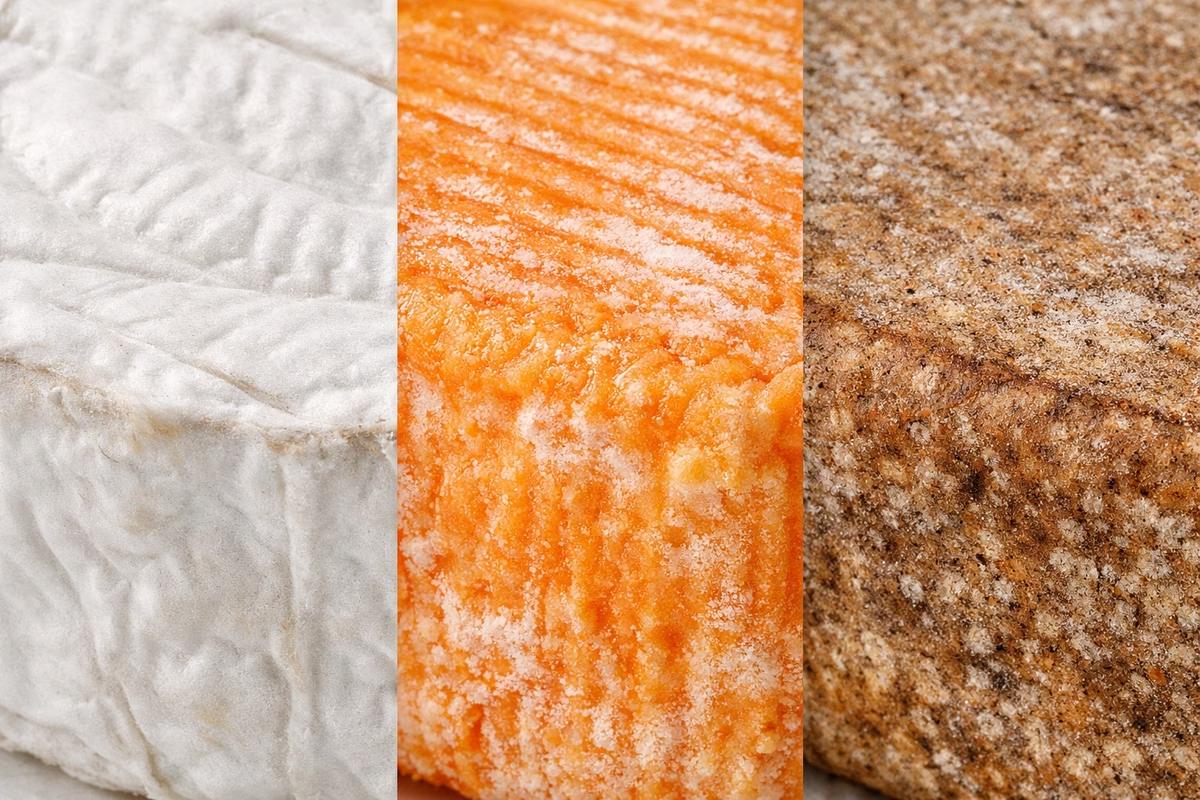
A bloomy rind—that soft, white, velvety coating—signals mushroomy aromas, a creamy interior, and a cheese that’s sensitive to time. A washed rind, recognizable by its orange or red sticky surface, promises savory, meaty aromas that can be intense but pair beautifully with acid. A natural rind, typically brown or gray, suggests something rustic that can be nutty and complex, varying significantly from producer to producer. And then there are waxed and clothbound cheeses, where the protective coating shapes the aging process—wax is usually not eaten, but the cheese underneath can be spectacular.
Age
Age is the great amplifier. As cheese ages, salt concentrates, flavors deepen, and texture shifts toward firmness and crystal formation. This is a beautifully simple lever to pull when shopping: if you like gentle, mild cheeses, buy younger. If you crave that savory, brothy depth that makes you close your eyes and sigh, buy older. Same cheese, different age, completely different personality. It’s one of the most magical things about this food.
How to Use This Guide When Shopping
Alright, let’s get practical. You’re standing at the counter, the line is forming behind you, and you need to make a decision. Here’s your cheat sheet, distilled down to its essence.
Fresh and soft-ripened cheeses are your easiest crowd-pleasers—universally loved, but best eaten soon after buying. Semi-soft and semi-hard cheeses occupy the “middle ground” where you’ll find the widest range of flavors and the best value for your money. Hard cheeses are your concentrated, salty, savory powerhouses—perfect for grating, shaving, and snacking in thin shards. And blue and washed-rind cheeses are the loud, specific characters that bring excitement to any spread—buy smaller pieces and pair them with care.
Two practical questions will further narrow your choice. Do you want something “melty” or “sliceable”? Semi-soft and semi-hard cheeses melt beautifully, while hard cheeses are better for grating and shaving. Do you want “bright” or “savory”? Fresh and young cheeses tend toward brightness, while aged cheeses deliver nutty, brothy, savory depth.
What to say at the counter
Here’s a secret that will change your cheese-shopping life forever: you don’t need to know cheese names to get great recommendations. You just need to give the cheesemonger constraints they can work with. Try something like “I want a creamy cheese that isn’t too funky” or “I’m looking for something cheddar-like, but a little sweeter.” You could say “I want one bold cheese that’ll be exciting but not punishing” or “This is for melting into a sauce—I need something that won’t get oily.”
Those kinds of requests work in any cheese shop anywhere in the world, and they’ll lead to far better recommendations than naming a specific cheese you half-remember from a dinner party three years ago. Mongers love these questions because they get to show off their knowledge and match you with something perfect. It’s a win-win.
A board that never fails
Building a cheese board can feel intimidating, but it really comes down to one simple principle: contrast. If you want a board that feels abundant without being chaotic, choose one cheese from each of three roles.
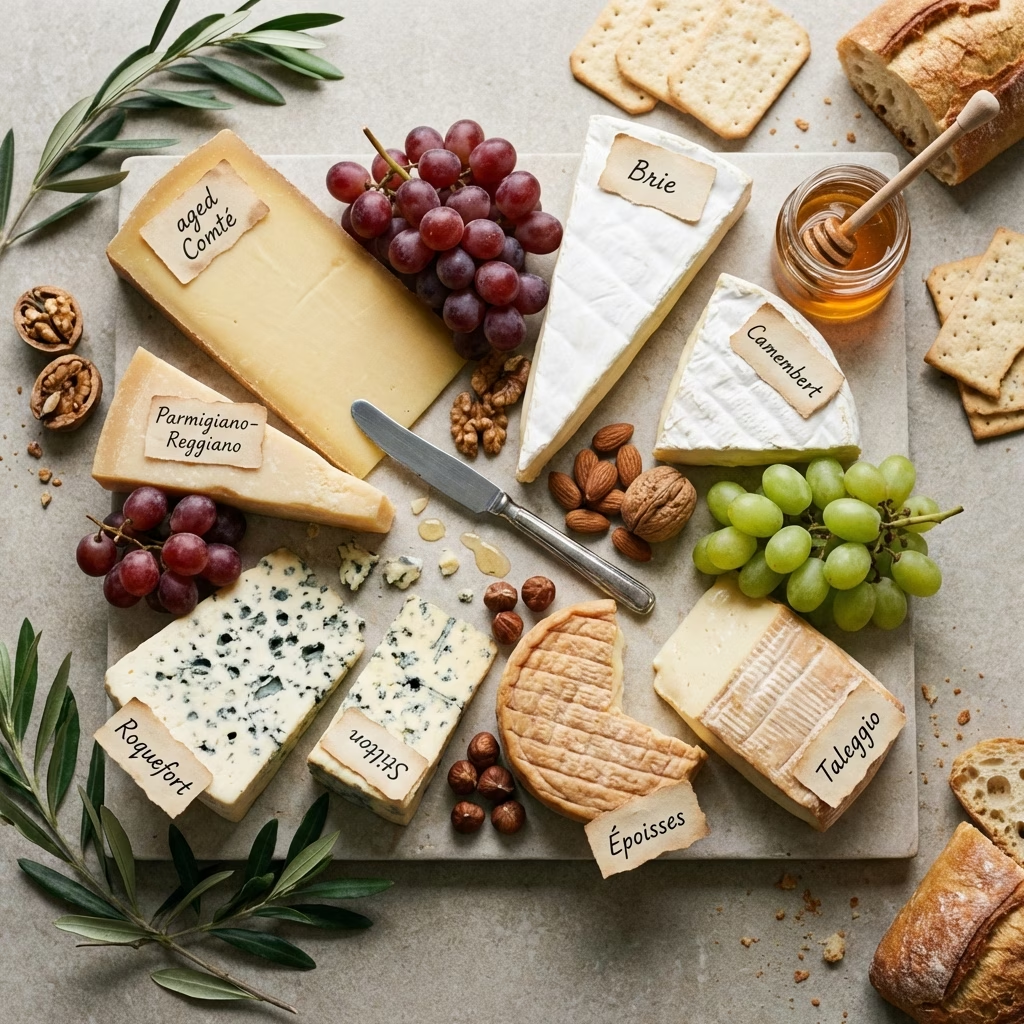
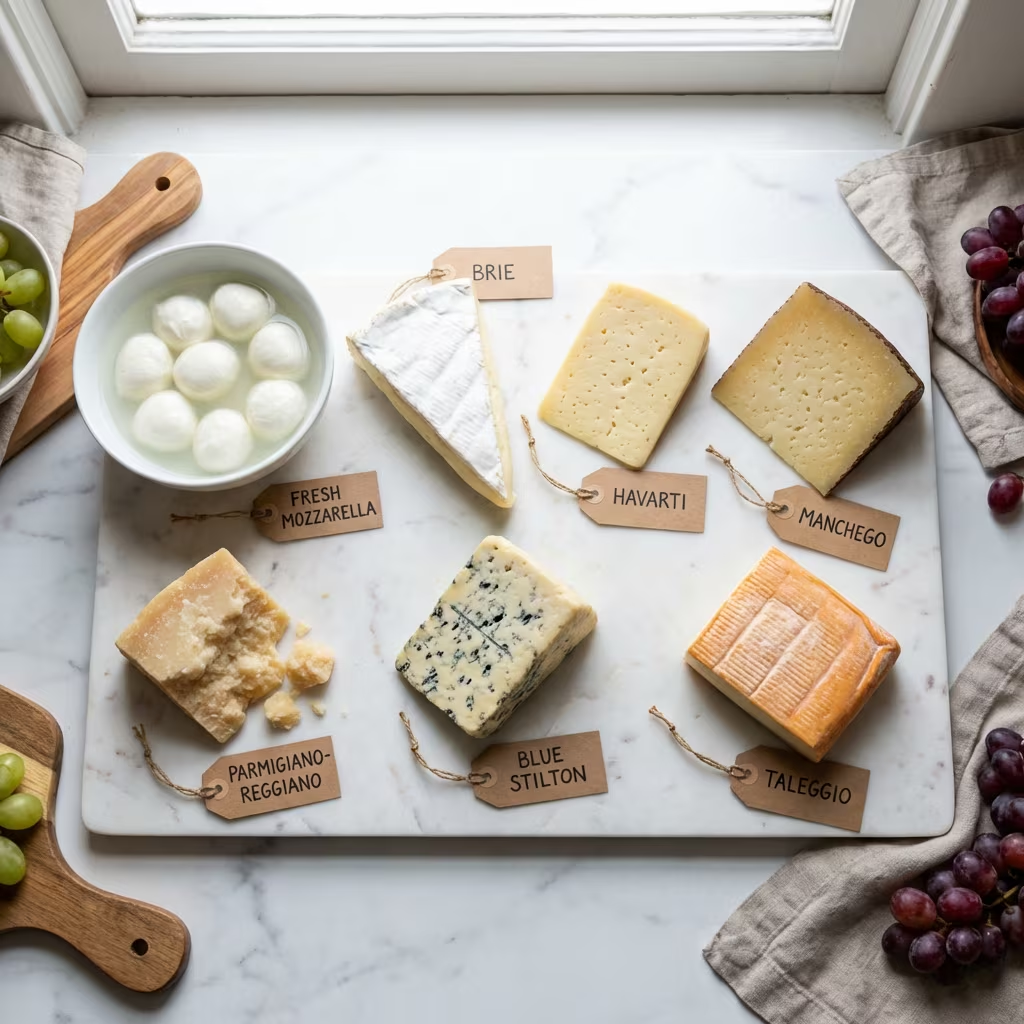
For your creamy element, reach for a soft-ripened or fresh cheese—a wedge of Brie, a pillow of triple-cream, or a log of fresh chèvre. For your chewy, savory centerpiece, go semi-hard—a chunk of Comté, a slab of Manchego, or a good sharp cheddar. And for your bold accent, pick either a blue or a washed-rind—Roquefort, Stilton, or Taleggio all work beautifully.
Then build the rest of the board using The Art of the Cheese Plate and pair it with one bottle from the Cheese and Wine Pairing Guide.
A second board formula (for adventurous guests)
If your crowd gravitates toward bolder flavors, try flipping the script with a different approach. Start with a gentle anchor—a mild semi-soft cheese like young Gouda or Havarti that gives everyone a safe landing place. Add savory depth with a washed rind or an alpine-style semi-hard that brings complexity and intrigue. Then finish with sweet-salty crunch from an aged hard cheese with crystals, the kind that shatters and sparkles on your tongue.
Round it out with one sweet element (honey or quince paste) and one acidic element (cornichons or pickled onions). You’ll be genuinely surprised at how “advanced” and thoughtfully curated the board tastes with only a few intentional choices. No culinary degree required—just a little pattern recognition.
Rinds, Milk, and Aging (Fast Notes)
Let’s do a quick recap of the three bonus dimensions that help you navigate beyond basic types. Bloomy rinds—those white, velvety coatings you see on soft-ripened cheeses—bring mushroomy aromas and a creamy interior that evolves as the cheese matures. Washed rinds, with their distinctive orange-red coloring, deliver savory, meaty aromas that can range from gently funky to full-on barn-floor intensity. Natural rinds, typically brown or gray, are the wild cards—rustic and variable, with flavors that deepen beautifully with age.
And remember that milk type adds another whole layer. Cow’s milk gives you buttery richness that develops caramel and nutty tones with age. Goat’s milk brings tangy, citrusy brightness that sometimes veers into herbal territory. And sheep’s milk delivers rich, sweet density that becomes wonderfully nutty as it matures. Knowing these three variables—rind, milk, age—alongside the basic type gives you a remarkably complete picture of what any cheese will taste like before you even unwrap it.
Melting and Cooking: A Quick Guide
Cheese and heat have a complicated relationship, so if you’re buying cheese specifically for cooking, the style you choose matters enormously. For smooth, gorgeous melting—the kind you want in grilled cheese sandwiches, cheese sauces, and fondue—semi-soft and many semi-hard cheeses are your best friends. They emulsify beautifully and forgive minor temperature swings. For finishing dishes with a savory punch—grating over pasta, shaving onto salads, stirring into soups—hard cheeses are unbeatable. A little goes a long way, and they add depth without making anything heavy. For creamy, luxurious additions to pasta or soup, soft-ripened cheeses can melt into silky, velvety texture, but you need to watch the heat carefully—too hot and they’ll turn greasy instead of gorgeous.
And if you’ve ever had a cheese sauce break into an oily, grainy mess, two culprits are almost always to blame. Either the heat was too high or the cheese was too aged and low-moisture to melt smoothly. The fix is simple: lower the heat, add cheese gradually in small handfuls, and choose a style that was actually designed to melt. Follow those rules and you’ll never suffer a broken sauce again.
Serving & Storage Basics
Here’s something that might surprise you: most cheese you’ve eaten in your life was probably served too cold. Cheese straight from the refrigerator is cheese that’s half asleep—the fats are firm, the aromas are muted, and the flavors are dull. Serve most cheeses slightly cool, not fridge-cold, and you’ll be amazed at how much more interesting they become. Flavor literally blooms as the cheese warms up.
For storage, wrap your cheese in cheese paper or parchment paper with a loose layer of plastic over it. You want the cheese to breathe a little—avoid sealing it airtight for long periods, which traps moisture and accelerates spoilage. Strong-flavored styles like blue and washed-rind cheeses deserve their own separate wrapping to keep their potent aromas from migrating to everything else in the fridge. (Trust me, you don’t want your butter tasting like Époisses.)
The one serving habit that makes all cheese better
If you take just one thing away from this entire guide, let it be this: serve cheese not cold. Most cheeses need a good 30 to 60 minutes out of the fridge to open up aromatically and reach their full flavor potential. If you taste cheese straight from the refrigerator and think it’s boring, you’re not wrong—you’re tasting it asleep. Give it time to wake up, and it will reward you with flavors and aromas you didn’t know were hiding in there. This single habit will make every cheese you buy taste noticeably better, and it costs you nothing but a little patience.
Next Steps
- Explore our Cheese Database
- Take the Cheese Quiz
- Learn about Cheese and Wine Pairings