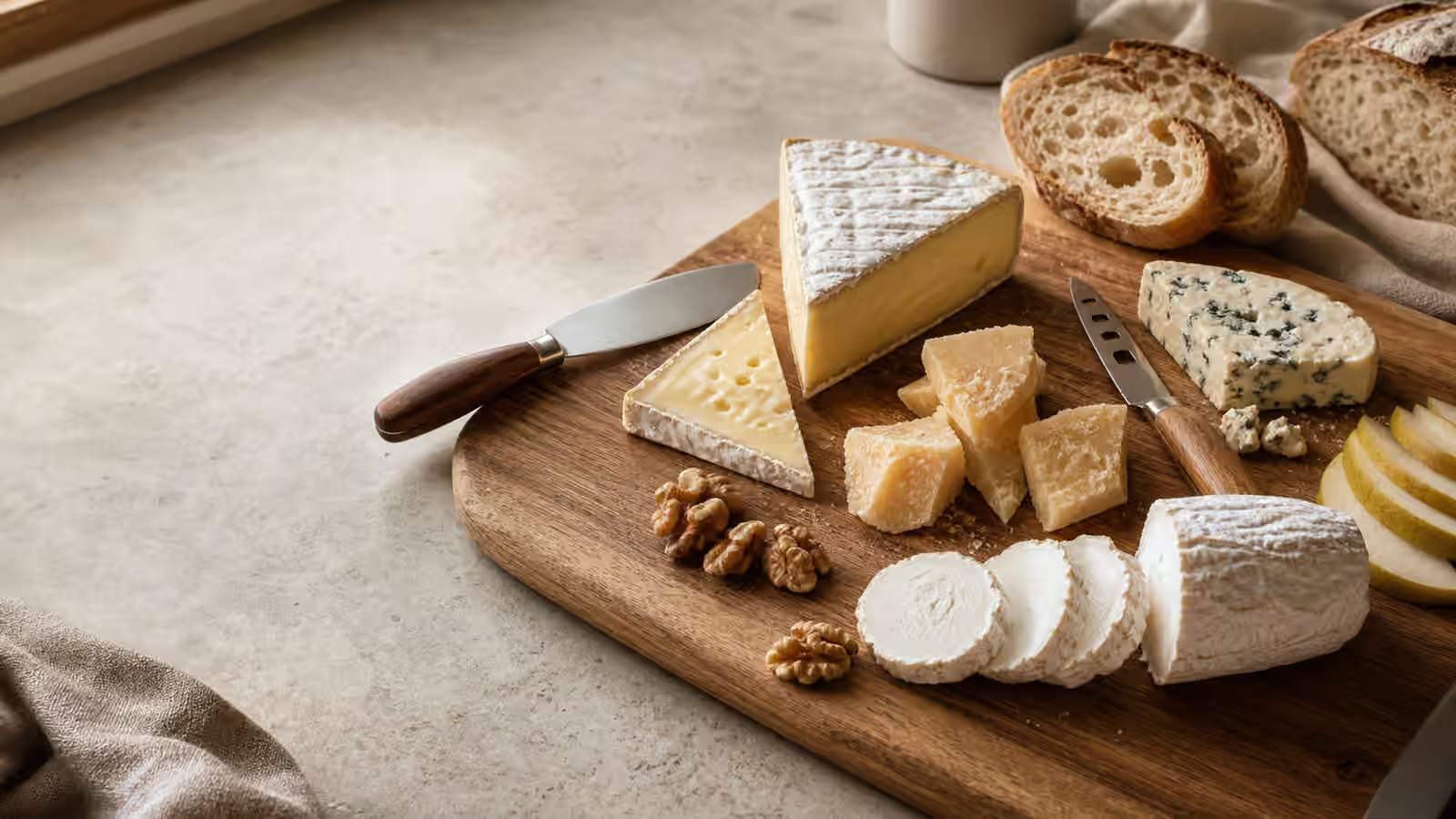
Cheese tools are useful when they solve a real problem. They are not useful when they turn a simple board into a drawer full of props. A good knife keeps soft cheese from smearing. A wire makes clean slices from a young block. Cheese paper slows the sad slide from lively wedge to refrigerator brick. A plain board gives guests room to cut without making them nervous.
This guide is the practical companion to How to Cut and Serve Cheese and Cheese Storage . Those guides explain the methods. This one explains which tools actually help the methods work. The best cheese setup is usually smaller, sturdier, and less decorative than people expect.
A small knife can do most of the work
If you own only one cheese knife, make it a small sturdy knife with a comfortable handle and a blade you can control. It does not need to be sold as a cheese knife. A paring knife or short utility knife can slice semi-soft cheeses, trim rinds, portion wedges, and cut small serving pieces. Control matters more than ceremony.
The limitation appears with very soft or sticky cheese. A broad blade drags through ripe Brie, triple-cream, or fresh goat cheese and leaves a smeared edge. A thin blade helps. A knife with holes can reduce sticking, though it is not magic. Dipping the blade in warm water and wiping it dry between cuts often matters more than the shape of the knife. Clean cuts come from a clean blade, not from owning a theatrical set.
For hard cheeses, the goal changes. You are not slicing so much as opening the cheese along its natural structure. A short, pointed hard-cheese knife lets you press into the paste and twist gently until the cheese breaks. This is especially useful for crystalline aged cheeses. It exposes texture and prevents the thick, blunt cubes that make concentrated cheese feel harsher than it is.
Separate knives matter when cheeses are strong. A blue knife dragged through a mild bloomy rind changes the whole board. If you do not have separate knives, cut bold cheeses last or wipe thoroughly between styles. This is a small hospitality move, not a rule of etiquette.
Wires are for clean, moist slices
A cheese wire is excellent for certain cheeses and awkward for others. It shines with young, moist, sliceable cheeses: young Gouda, Havarti, Monterey Jack, fresh blocks, and some semi-soft styles. The wire cuts cleanly without pushing the cheese out of shape. It is especially useful when you want repeated slices for sandwiches, snacks, or a neat board.
Wires are less useful with crumbly aged cheese, very soft ripe cheese, or hard grating cheese. A crumbly cheddar may fracture unpredictably. A ripe bloomy rind may squeeze rather than slice. A very hard cheese may strain the wire and still give you a poor cut. When the cheese resists, change tools instead of forcing the wire.
Board-mounted wire cutters can be helpful if you regularly buy blocks, but they take space and are not necessary for most casual cheese service. A handheld wire is easier to store and good enough for many kitchens. The question is not whether a wire looks professional. The question is whether you often cut cheeses that benefit from a wire’s straight, low-pressure motion.
Graters and peelers are serving tools too
Graters are usually treated as cooking tools, but they shape serving just as much. A rasp makes hard cheese into fine, aromatic flakes that vanish into hot food. A box grater makes thicker shreds with more body. A vegetable peeler creates shavings that sit beautifully on salads, vegetables, soups, and boards. Each tool changes the way cheese lands.
Grating, Shaving, and Crumbling Cheese goes deeper into those textures, but the tool lesson is simple: match the cut to the role. If cheese is seasoning, grate it fine. If it is a visible accent, shave it. If it needs to melt into body, grate it larger and choose a cheese with enough moisture.
A good peeler is often the most underrated cheese tool. It turns firm cheese into thin sheets without requiring much skill. Those sheets make concentrated cheeses easier to enjoy because they deliver aroma without a heavy block of salt. For many home boards, a peeler does more useful work than an ornate cheese knife set.
Cheese paper is not precious
Cheese paper sounds specialized, but the idea behind it is plain. Cheese needs protection from dry refrigerator air without being sealed into a sweaty little trap. Good cheese paper balances humidity and breathability. It keeps the cut face from drying too fast while letting the cheese avoid the stale plastic smell that can come from tight wrapping.
You do not need perfect supplies to improve storage. Parchment against the cheese with a loose outer bag or container can work well for many wedges. The important part is not suffocation. Cheese should be protected, not vacuum-packed by hand. If condensation forms, the wrapping is too wet. If the cut face dries hard overnight, it is too exposed.
Labeling the paper can help more than people expect. Write the cheese name and the date you cut or opened it. This is not about turning your fridge into an inventory system. It is about preventing mystery wedges. When you know what a piece is and when it entered the drawer, you are more likely to use it while it still tastes like itself.
Fresh cheeses and brined cheeses need different storage. A ball of mozzarella in liquid, feta in brine, and a tub of ricotta do not benefit from being treated like a dry wedge. Let the package, liquid, and cheese style guide you. Fresh Cheeses is the better reference for those high-moisture styles.
Boards should give cheese room
A good cheese board is a work surface first. It should be large enough that cheeses are not crowded, flat enough for cutting, and easy to clean. Marble, slate, wood, ceramic, and plain plates can all work, but each has tradeoffs. Stone stays cool and looks clean, though it can be hard on knife edges. Wood feels warm and forgiving, but it needs proper cleaning and drying. A plain dinner plate is often better than a tiny decorative board because it gives the cheese room.
Crowding is the enemy of good service. When cheeses touch, rinds smear, blue travels, and guests hesitate because every cut feels like it will damage the arrangement. Space is practical. It lets a soft cheese spread a little. It lets a hard cheese sit in broken pieces. It gives accompaniments their own place instead of turning everything into one sweet, salty pile.
If you use a wooden board, reserve it for foods that make sense on wood and clean it promptly. Avoid letting wet cheeses, brines, jams, or oily foods sit long enough to soak in. For very soft or wet cheeses, a small plate or shallow bowl on the board can be better than direct contact. The board should serve the cheese, not force every cheese to behave like dry cheddar.
Containers matter more than domes
Cheese domes look romantic, but in a normal refrigerator they are rarely the most important tool. A modest container with a lid that does not seal aggressively can create a useful microclimate for wrapped cheese. It protects aroma, buffers humidity, and keeps wedges from being crushed. The produce drawer can do some of the same work if it is clean and not overloaded.
The container should be easy to inspect. If you cannot see what is inside, you will forget the cheese. If it is too small, the cheeses press into one another. If it is airtight and condensation forms, the surface can become wet and tired. A slightly breathable setup is better than a sealed vault.
For serving, a dome can protect cheese from drying for a short time, but it should not trap strong cheeses for hours in a warm room. Cheese service still depends on timing. Bring out what you need, let it warm enough to taste alive, and return usable leftovers to clean wrapping rather than leaving the whole board to fade.
Buy tools after noticing the problem
The best way to build a cheese toolkit is to notice friction. If soft cheese always smears, get a thinner knife or use warm-water wiping. If block cheese is hard to slice evenly, get a wire. If aged cheese feels blunt, get a stubby hard-cheese knife and break it instead of cubing it. If leftovers dry out, improve paper and containers. If salads need a better finish, use a peeler.
This keeps the drawer honest. Cheese does not require a ceremonial kit. It requires a few objects that help milk, salt, fat, rind, and texture reach the table in good condition. A small knife, a hard-cheese knife, a grater, a peeler, decent paper, and a roomy board will handle most home situations.
Tools should make cheese less fussy, not more. When they are chosen well, they disappear into the meal. The soft cheese cuts cleanly. The hard cheese breaks naturally. The paper opens to a wedge that still smells fresh. Guests can serve themselves without guessing. That is the quiet measure of a good cheese tool.