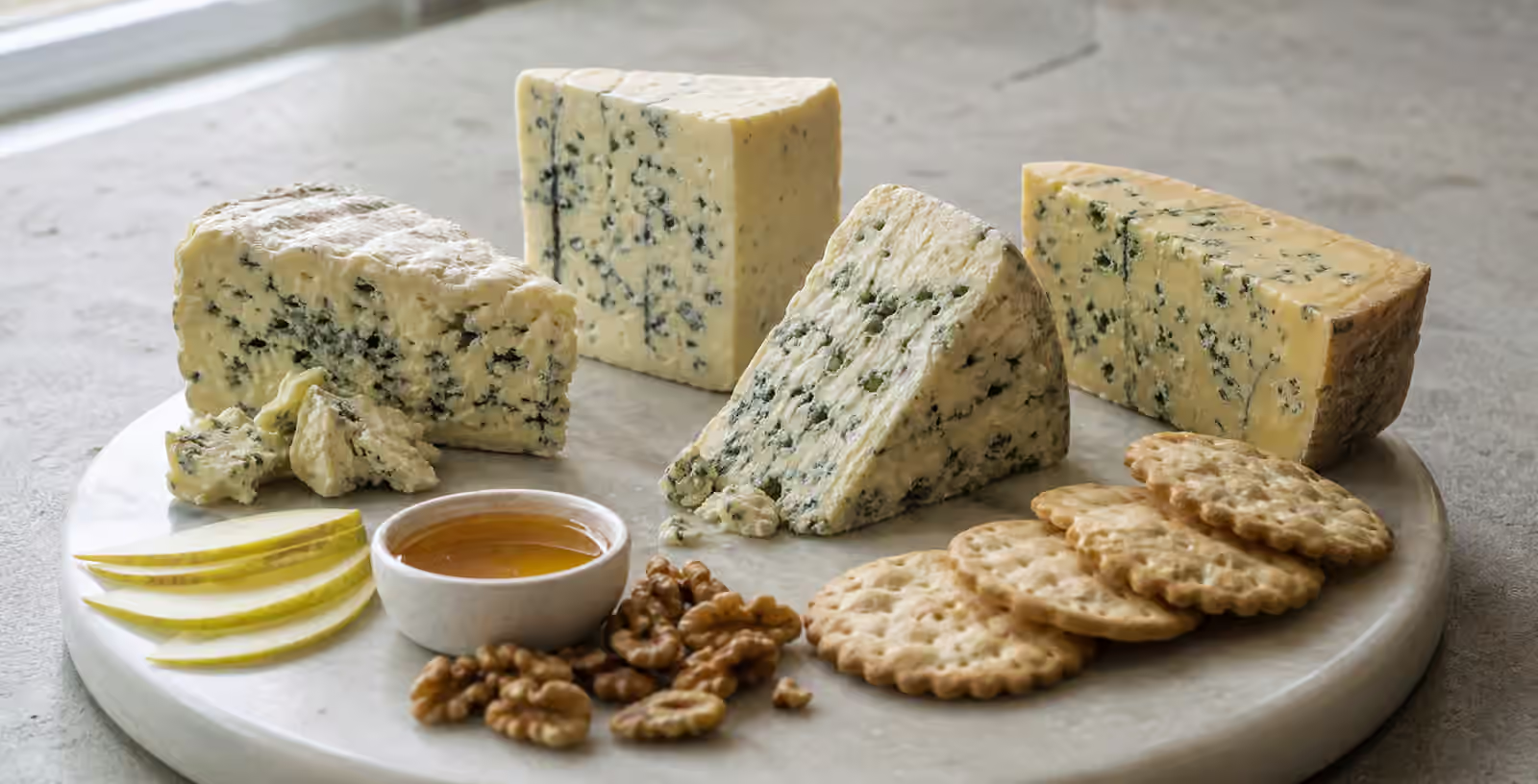
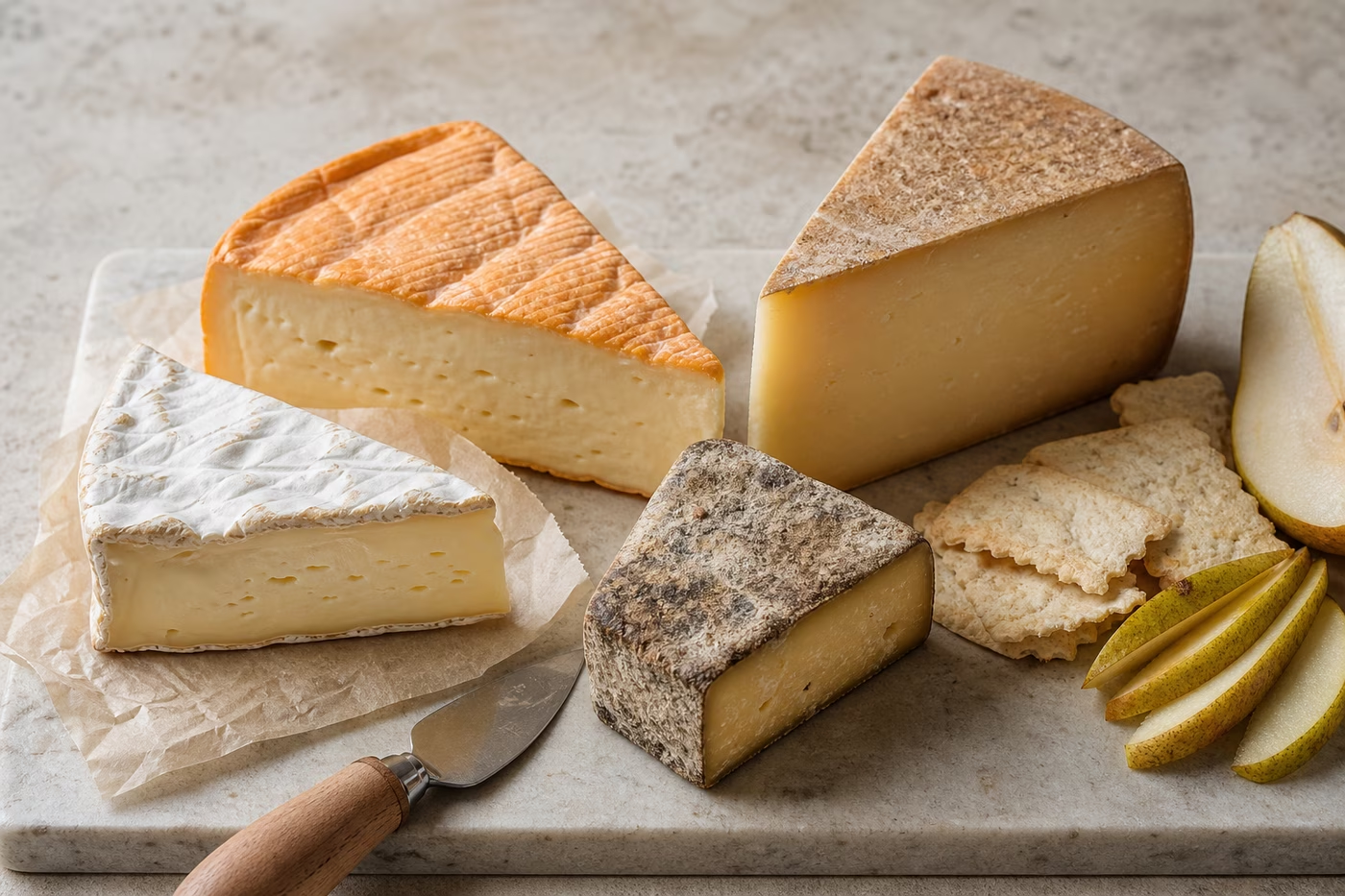
Texture is the first thing cheese tells you after aroma. Before you can name the milk, the rind, or the age, your knife already knows something. It meets a cheese that spreads, springs, cracks, crumbles, tears, shaves, oozes, or breaks into crystalline pieces. Those physical clues are not decorative. They are the visible record of moisture, acid, fat, salt, curd handling, and time.
This is why two cheeses with similar flavor words can behave so differently. A young Gouda and a fresh mozzarella can both taste milky, but one slices and melts with quiet smoothness while the other tears in wet layers. A bloomy-rind cheese and a blue can both be creamy, but one ripens under a white coat while the other carries veins that change salt, aroma, and structure. Aged cheddar and aged Gouda can both show crunch, yet one may crumble sharply while the other breaks like dense candy.
Cheese Tasting Vocabulary gives words for describing what you sense. This guide is more about reading the physical evidence before and during the bite. Texture helps you buy better, cut better, choose better pairings, and avoid asking the wrong cheese to do the wrong job in the kitchen.
Moisture Is the First Clue
Moisture is not the same thing as softness, but it is often the first clue. Fresh cheeses hold a great deal of water. That is why ricotta can feel spoonable, burrata can spill, fresh mozzarella can weep on a plate, and chevre can spread before it crumbles. Moisture makes flavor feel immediate. It carries acidity and milk sweetness quickly, then fades sooner than the deep finish of a hard aged cheese.
As cheese loses moisture, the paste tightens. A semi-soft cheese still bends and slices because it has enough water and fat to remain supple. A firm cheese resists the knife more. A hard grating cheese may fracture rather than slice cleanly. The change is not merely dryness. During aging, proteins and fats are also breaking down, salt is becoming more concentrated, and the rind or coating is influencing how water leaves the cheese. Moisture is the visible part of a larger transformation.
That is one reason Cheese Types becomes more useful when you stop treating the categories as names and start treating them as textures. Fresh, bloomy, semi-soft, firm, hard, and blue are not just store labels. They are warnings and invitations. They suggest how soon to eat the cheese, how long to warm it before serving, how thinly to cut it, and what might happen if heat gets involved.
Creamy Can Mean Several Things
Creamy is one of the most overworked words in cheese because it can describe texture, fat, ripeness, or even flavor. A triple-cream Brie-style cheese is creamy because it is rich and ripened into softness. Mascarpone is creamy because it is high in fat and barely asks to be cut. A young washed rind may feel creamy under a sticky, aromatic surface. A blue can be creamy and still taste sharp, salty, and mineral.
The useful question is how the creaminess holds together. A ripe bloomy-rind cheese should relax under the knife, but it should not always collapse into liquid. A spoonable fresh cheese should feel moist and clean, not watery and tired. A creamy blue should smear or crumble according to its style, not taste like a salty paste with no life left in it. Texture gives you a way to judge ripeness without relying only on smell.
Creaminess also changes with temperature. Cold fat is firm, so a cheese straight from the refrigerator often feels less generous than it really is. Warmth lets fat soften and aroma rise. Too much warmth can make a soft cheese slump until the rind and paste separate unpleasantly. The goal is not to serve every cheese at the same temperature. The goal is to give each cheese enough warmth that its intended texture appears. The serving habits in How to Cut and Serve Cheese are really texture habits in practical form.
Crumbly, Brittle, and Crystalline Are Not the Same
Crumbly cheese breaks into irregular pieces because its paste no longer holds as one smooth body. That can be charming. Mature cheddar often crumbles in a way that makes each bite sharp-edged and satisfying. Some goat cheeses crumble because their acid and moisture create a tender, chalky structure. Blue cheese may crumble because veining and salt have interrupted the paste. Crumbling is not a defect by itself. It is a clue about make, age, acidity, and handling.
Brittle cheese feels drier and more forceful. Very aged hard cheeses can snap, flake, or shatter under a knife. They often taste concentrated, savory, and long. They are better shaved or broken into small pieces than forced into thick chunks. If a brittle cheese is cut too large, the texture can become work instead of pleasure. A small shard of an aged cheese can feel generous; a large block of the same cheese can feel exhausting.
Crystalline cheese has a special kind of crunch. The tiny white flecks in aged Gouda, Parmigiano-style cheeses, and some aged cheddars are usually signs of time changing the paste. They are integrated into the cheese rather than sprinkled on top. Aged Firm Cheese goes deeper into that family, but the practical lesson is simple: crystals extend the bite. They make the mouth notice texture after the first flavor has landed.
Elastic Cheese Remembers the Make
Elasticity is not the same as melt. A stretched-curd cheese like mozzarella is elastic because the curd was heated and worked until the protein structure aligned. That work leaves a memory. You can see it when fresh mozzarella tears in layers, when Oaxaca-style cheese pulls into strands, or when provolone slices with a smooth resistance. The cheese is telling you how it was handled before it ever reached the counter.
Rennet, Acid, and Vegetarian Cheese explains how milk sets, and Stretched-Curd Cheese follows one dramatic path from curd to pull. The important point for texture is that an elastic cheese usually asks to be used differently from a crumbly cheese. It may be wonderful torn, layered, melted, or pulled apart. It may be less satisfying if treated like a cheese that wants to be crumbled over a salad.
Elastic cheeses can also disappoint when moisture is ignored. Fresh mozzarella can make a pizza watery if the pieces are too wet for the heat and timing. Low-moisture mozzarella may be less romantic in a tomato salad but better in an oven. Provolone may bring stretch and savory depth where fresh mozzarella would bring too much water. Texture is not only what the cheese feels like now. It is a prediction about what the cheese will do next.
Texture Changes Cutting
Cut shape changes how texture reaches the mouth. A soft cheese needs enough rind and paste in each portion so the bite makes sense. A crumbly cheese may be better broken than sliced, because the broken surface feels natural and inviting. A firm cheese can be cut thin when you want salt and fat to feel lighter. A hard crystalline cheese often shines in shards or shavings because small pieces let intensity stay pleasurable.
The same cheese can feel different with a different cut. Aged Gouda in a thick cube can taste heavy and sweet. In thin chips, it becomes more aromatic and less tiring. A wedge of bloomy rind cut so one guest gets all rind and another gets all center is not fair to the cheese or the table. A blue cheese crumbled too finely can vanish into salt; left in large cold chunks, it can dominate. Cutting is not etiquette first. It is texture management.
This is why a board should not be built only by color and shape. Texture contrast matters more. One soft cheese, one elastic or semi-soft cheese, and one firm or crumbly cheese can teach more than five cheeses that all slice the same way. Cheese Board for Learning uses that idea deliberately. The board becomes easier to understand when each cheese gives the knife and mouth a different job.
Texture Changes Cooking
Heat is where texture stops being descriptive and becomes practical. A high-moisture cheese may melt, weep, or soften depending on its structure. A firm young cheese may relax smoothly. A very aged cheese may bring deep flavor but refuse to become a silky sauce on its own. An acid-set cheese may warm and brown while holding shape. The pan exposes what the counter only suggested.
Smooth melting usually needs moisture, fat, and a protein structure willing to loosen without squeezing out grease. That is why young Gouda, Fontina, Gruyere-style cheeses, Havarti, and low-moisture mozzarella are so useful in many cooked dishes. They have enough structure to grate or slice, but enough moisture and elasticity to cooperate. Older hard cheeses are often better as seasoning, finishing, or part of a blend. They can make a sauce taste deeper, but they may not want to be the whole sauce.
The detailed kitchen advice belongs in Cooking with Cheese , but texture gives you a shortcut before you cook. If the cheese crumbles dryly in your fingers, do not expect it to melt like a young melter. If it weeps in its container, plan for that moisture. If it pulls into strands when torn, use that pull where it helps. If it is crystalline and intense, let small amounts do strong work.
Texture Changes Storage
Storage is partly the art of preserving texture. A fresh cheese can lose its charm quickly if it dries. A bloomy rind can suffocate if sealed too tightly, but it can also dry and become chalky if left exposed. A firm cheese can survive longer than a soft one, yet its cut face still loses moisture to refrigerator air. A blue can become sharper and saltier as it sits. These are texture changes before they are flavor changes.
Good storage keeps the cheese close to the condition you bought. That may mean brine for a brined cheese, paper and a loose outer layer for a firm wedge, a breathable wrap for a bloomy rind, or a container that keeps strong aromas from drifting without trapping too much moisture on the surface. How to Store Cheese covers the mechanics. The texture question to ask each time is plain: is this cheese trying to stay moist, trying to breathe, or trying not to dry at the cut face?
Texture also helps you decide when a cheese is merely aging in your refrigerator and when it is fading. A firmer edge on an aged cheese can be trimmed. A fresh cheese that has become slimy, harsh, or sour in a way that does not fit the style is no longer the same food you bought. A bloomy rind that has moved from creamy to ammoniated may be past the point where serving will flatter it. Judgment improves when you compare the cheese to its intended texture rather than to an abstract idea of freshness.
Let the Knife Teach You
The easiest way to learn cheese texture is to slow down at the first cut. Notice whether the knife slides, drags, cracks, springs back, or pulls threads. Notice whether the cheese smells stronger after it opens. Notice whether the first bite melts quickly, crumbles slowly, coats the mouth, squeaks, crunches, or disappears. Those small observations are not fussy. They are how cheese explains itself.
Texture gives you practical choices. It tells you to tear mozzarella instead of slicing it stiffly. It tells you to break aged cheddar into rough pieces. It tells you to shave hard cheese thinly, warm bloomy rind gently, crumble blue with restraint, and keep fresh cheese moist until serving. It tells you when a cheese belongs on a board, in a sauce, over vegetables, or in a sandwich.
Flavor may be the reason people remember a cheese, but texture is often the reason they enjoy it in the moment. A good cheese feels coherent. The moisture, salt, rind, age, and cut all seem to agree. Once you learn to read that agreement, the cheese counter becomes less like a wall of names and more like a set of physical clues waiting for your knife.