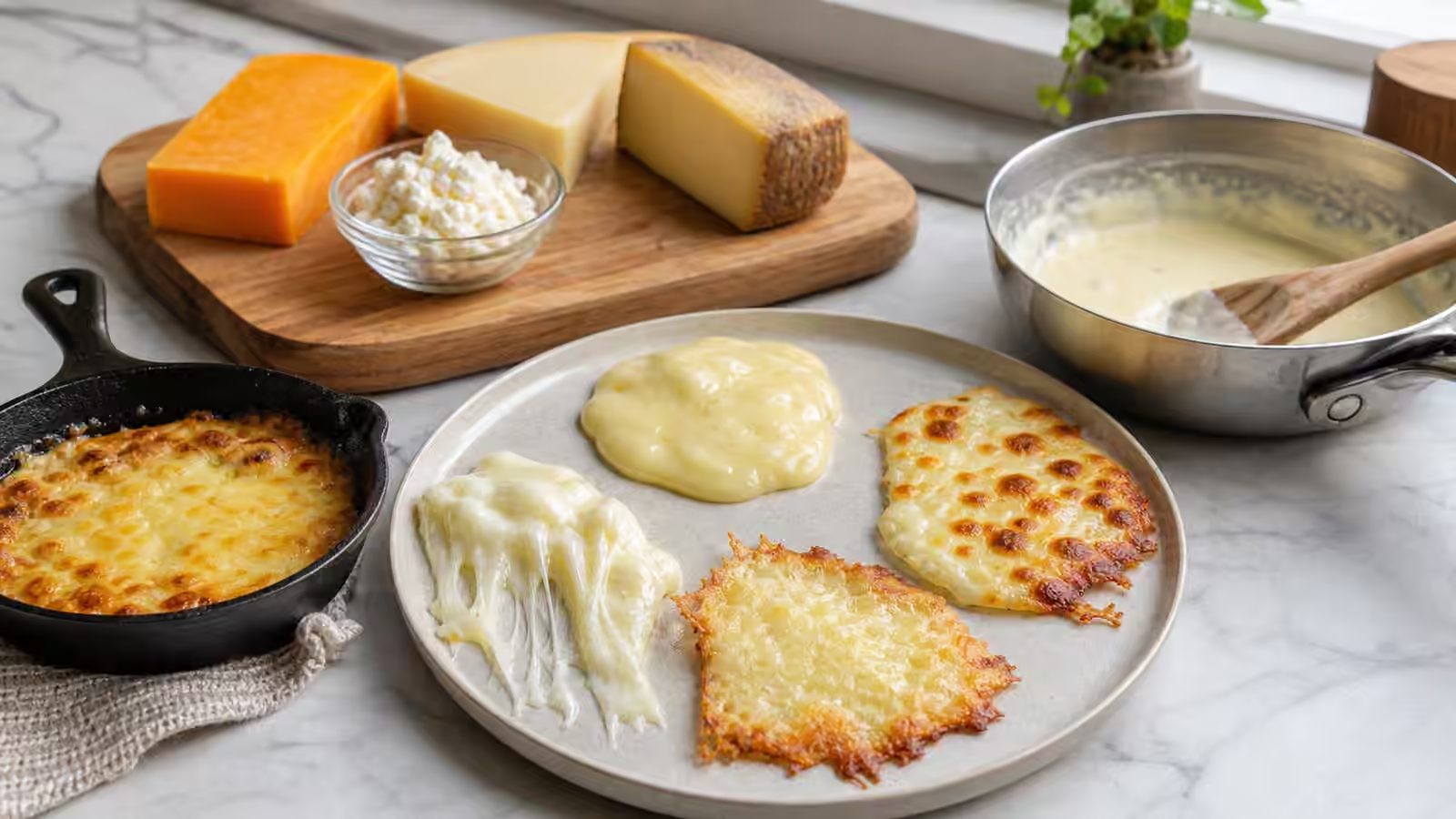
Cheese becomes easier to enjoy when you can describe what is happening in your mouth. Not because tasting needs to become formal, but because language helps you notice. A cheese that once tasted only “strong” may turn out to be salty, brothy, nutty, and long-finishing. A cheese that seemed plain may be milky, sweet, elastic, and clean. Once those differences have names, shopping gets easier, serving gets more intentional, and a board feels less like a random collection of wedges.
This guide sits beside Cheese Board for Learning and Blind Cheese Tasting . Those guides show how to arrange a tasting. This one gives you the words to make sense of what you notice. The goal is not to sound like a professional judge. The goal is to move from vague reactions toward useful observations.
Start before the first bite
A cheese begins speaking before you taste it. The cut face tells you about moisture and age. A glossy, wet surface suggests a cheese that will feel soft, fresh, or supple. A dry face with small fissures suggests concentration. Tiny white crystals in an aged cheese hint at a long, savory bite. A bloomy rind may look velvety and white, while a washed rind may look tacky, orange, or ruddy. These clues do not tell the whole story, but they prepare your mouth.
Smell matters even more. Much of what people call flavor is aroma moving through the nose. Cold cheese hides aroma, which is why the serving habits in How to Cut and Serve Cheese matter. Let a small piece warm enough that it stops smelling like refrigerator air. Then smell the paste and the rind separately if the cheese has a rind. The center may smell like cream, butter, grass, nuts, or cooked milk. The rind may smell like mushrooms, cellar, hay, toast, broth, or damp leaves.
The first useful tasting sentence is simple: “It smells like…” Do not try to be poetic at first. Butter, yogurt, mushrooms, bread crust, nuts, apples, hay, onions, wet stone, cream, broth, and pepper are all useful words. If the cheese smells unpleasant, be specific there too. Sharp ammonia, bitter rind, stale nuts, wet cardboard, or sour milk tell you more than “bad.”
Texture is not decoration
Texture changes flavor because it changes how fast the cheese melts, how salt arrives, and how long the bite lasts. A creamy cheese spreads across the tongue and releases aroma quickly. A crumbly cheese breaks apart and can feel sharper because salt and acid land in small bursts. A firm cheese asks for chewing, which gives nutty and savory notes more time to appear. A stretchy cheese feels mild at first, then becomes more aromatic as it warms in the mouth.
Texture words should be physical. Creamy, chalky, elastic, fudgy, brittle, grainy, dense, springy, custardy, crumbly, and crystalline are more helpful than fancy praise. They also help you buy better cheese. If you loved a cheddar because it was crumbly and sharp, that is different from loving one because it was smooth and sweet. If you liked a bloomy rind only near the edge, you may prefer riper cheeses. If you liked the firmer center, you may prefer younger ones.
Pay attention to how texture changes across one piece. A bloomy-rind cheese can move from mushroomy rind to creamy creamline to chalky center. A blue can move from buttery paste to salty vein. A natural-rind tomme can taste different near the rind than in the center. This is one reason a thoughtful cut matters. A good portion lets the eater experience the whole cheese, not only the easiest-looking part.
Salt, acid, fat, and sweetness
Most cheese flavor can be understood through a few forces. Salt is the most obvious. It can make a cheese lively, savory, and satisfying, or it can dominate the bite. Blue cheese often feels intense partly because salt and mold arrive together. Feta depends on salt for structure. Aged cheeses concentrate salt as moisture leaves, so a small shard may feel better than a large cube.
Acidity gives cheese lift. Fresh goat cheese can taste lemony. Yogurt-like acidity can make a fresh cheese feel clean. Too much acidity can feel sharp, sour, or thin. The best acid in cheese does not merely poke the tongue; it makes the milk taste brighter. If you are learning to identify it, compare a mild fresh mozzarella with fresh chevre. Both can be fresh, but the chevre often has a clearer tang.
Fat gives roundness. It makes triple-cream cheeses feel plush, softens salt, and carries aroma. Fat can also make a cheese feel heavy if nothing cuts through it. This is why acidic accompaniments, crisp drinks, and fresh fruit can help rich cheeses. Cheese Accompaniments is useful here because pairing is often just texture and balance made visible on the plate.
Sweetness in cheese is usually quiet. It can feel like warm milk, caramel, cooked cream, or browned butter. Aged Gouda often shows sweetness clearly. Alpine cheeses may taste nutty and sweet at once. Sheep milk cheeses can feel dense and sweet even when they are salty. When a cheese tastes sweeter than you expected, ask whether that sweetness comes from milk, aging, or a pairing beside it.
Rind words explain the edge
Rinds give some of the most vivid tasting words because they are where cheese meets air, salt, washing, mold, or cloth. A bloomy rind can taste mushroomy, creamy, earthy, or cabbagey if it has gone too far for your taste. A washed rind can smell loud and taste savory, meaty, oniony, yeasty, or gently sweet. A natural rind can bring nuts, cellar, damp stone, hay, or bitterness. A clothbound rind can influence flavor even when you do not eat the cloth-marked outside.
When tasting rind, separate preference from usefulness. You may dislike a rind and still describe it well. Is it bitter at the end? Does it make the paste taste deeper? Does it add mushroom and cream, or does it overpower the bite? Cheese Rinds goes further into what to eat and what to trim, but tasting vocabulary gives you the practical question: does the edge improve this bite?
It helps to taste paste alone, rind alone if appropriate, and then both together. Many cheeses are built around that combination. A washed rind without paste can be too salty or aromatic. Paste without rind can feel mild. Together they may become balanced. Describing those parts separately keeps you from calling the whole cheese too strong when only the edge bothered you.
Finish is where quality often appears
The finish is what remains after you swallow. Some cheeses vanish quickly. Others leave cream, salt, nuts, broth, fruit, pepper, or a gentle tang. A long finish is not automatically better, but it often tells you the cheese has depth. The key is whether the finish stays pleasant. A long nutty finish can be beautiful. A long bitter finish may be tiring.
To notice finish, slow down for ten seconds after the bite. Do not immediately eat a cracker or reach for a drink. Ask what is still there. Is it salt? Is it milk? Is it rind? Does the flavor become sweeter, sharper, earthier, or cleaner? A cheese can begin quietly and finish with surprising depth. Another can start dramatically and disappear.
This habit is especially useful with aged firm cheeses. A small piece of Aged Firm Cheese may begin as salt and texture, then move into roasted nuts, caramel, broth, or browned butter. If you rush, you only catch the first part. If you pause, you understand why the cheese was worth serving in small pieces.
Use ordinary language, then refine it
Good tasting language begins with ordinary comparisons. If a cheese reminds you of buttered toast, say that. If it reminds you of mushrooms, say that. If it tastes like yogurt, roasted nuts, soup, apples, cream, pepper, or cooked onions, those are useful observations. Later you can refine them. Buttered toast might become browned butter and bread crust. Soup might become broth, onion, and roasted root vegetables. Mushroom might become fresh button mushroom or damp forest floor.
Avoid turning tasting into performance. A table full of people can enjoy cheese more when the language stays welcoming. “This tastes nutty and a little sweet” helps someone decide whether to try a piece. “This has a long savory finish, but the rind is a little bitter” helps someone cut a better portion. Useful language serves the eater.
The simplest practice is to taste two related cheeses side by side and describe only the differences. Compare cow and goat fresh cheeses after reading Milk Types in Cheese . Compare young and aged Gouda. Compare a mild blue with a stronger one. Difference teaches faster than isolated tasting because your mouth has a reference point.
Cheese vocabulary is not a private code. It is a way to pay attention. The more accurately you can describe aroma, texture, balance, rind, and finish, the easier it becomes to buy what you like, serve it well, and understand why one small piece can hold so much flavor.