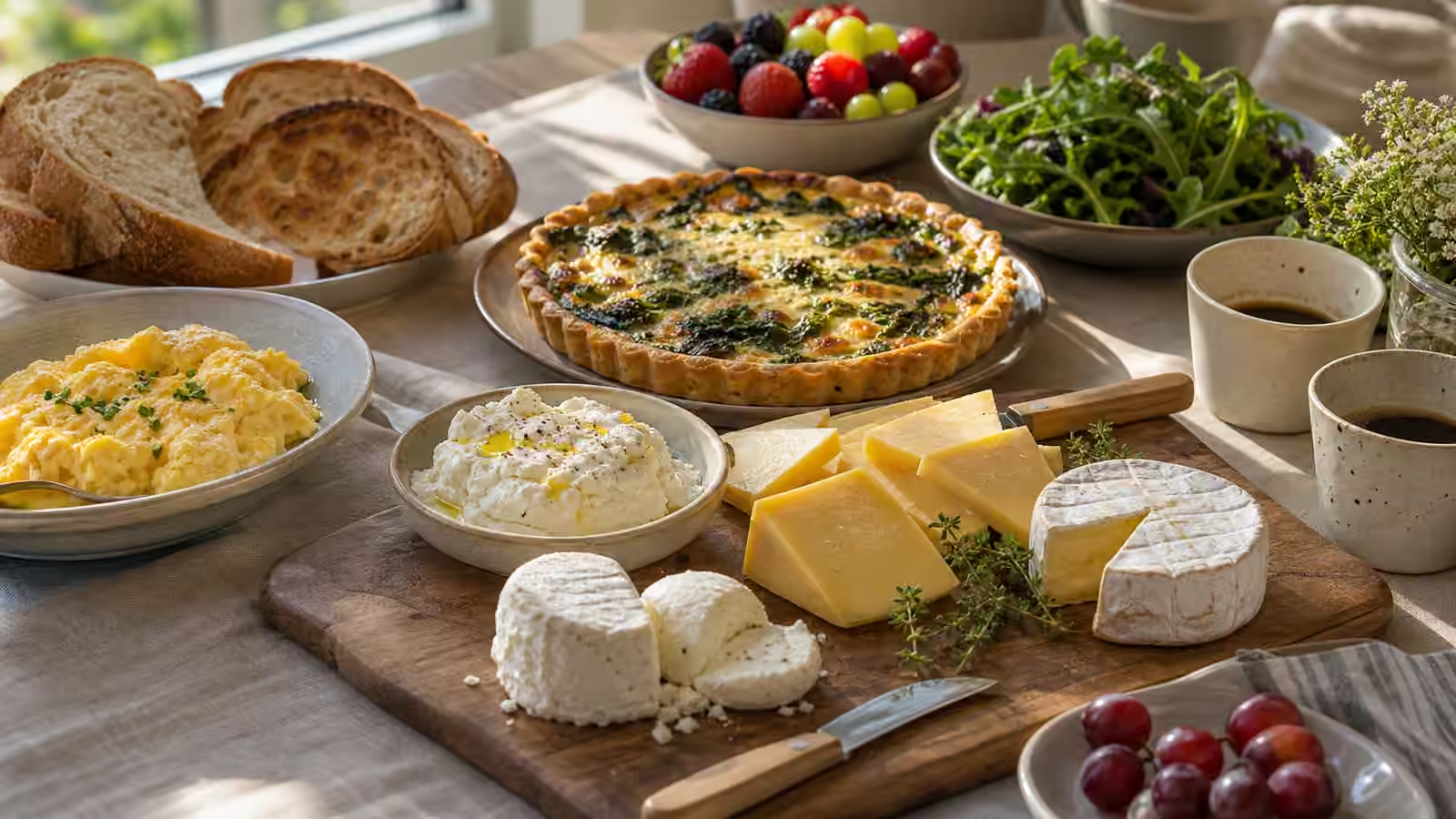
Cheese can make vegetables feel finished, but it can also make them feel heavy, salty, or confused. The difference is usually not the price of the cheese. It is the cut, the amount, the temperature, and the kind of vegetable underneath. A few shavings of firm cheese can make roasted carrots taste deeper. A crumble of fresh goat cheese can make bitter greens feel round. A salty sheep milk cheese can wake up beans, tomatoes, cucumbers, and herbs. The wrong cheese in the wrong shape can turn a clean salad into a dull dairy blanket.
Salads and vegetables ask cheese to work differently than a cheese board does. On a board, cheese is the subject and the accompaniments support it. With vegetables, cheese is usually a seasoning, a texture, or a small source of richness. The vegetables still need to taste like themselves. A wedge that is beautiful alone may be too loud when scattered over delicate leaves, while a mild cheese that seems plain on a board may become exactly right against charred broccoli or ripe tomatoes.
This guide extends the pairing logic from Cheese Accompaniments , but reverses the focus. Instead of asking what fruit, bread, or pickles can do for cheese, it asks what cheese can do for vegetables. It also connects to Grating, Shaving, and Crumbling Cheese because the same cheese can feel bright, heavy, sharp, or elegant depending on how it is cut.
Think of cheese as contrast
Vegetables are full of water, fiber, bitterness, sweetness, starch, acid, and green flavor. Cheese brings fat, salt, protein, tang, and aroma. The best pairings happen when those qualities correct each other. Fat softens bitterness. Salt sharpens sweetness. Tang brightens starch. Aged savor gives mild vegetables more depth. Texture interrupts monotony.
This is why bitter greens and fresh cheese work so well. Arugula, radicchio, endive, escarole, and chicories can taste severe if they are only dressed with acid. A soft cheese adds fat and quiets the bitterness without erasing it. The greens make the cheese taste fresher, while the cheese makes the greens feel less stern. The same idea explains why shaved aged cheese works over roasted vegetables. Roasting brings sweetness and browning; the cheese adds salt, umami, and a dry snap.
Contrast does not mean conflict. If the cheese is too strong or the vegetable too delicate, the plate stops tasting balanced. A blue cheese crumble over watery lettuce can feel harsh. A mild fresh cheese over deeply roasted mushrooms may disappear. The cook’s job is to decide which side needs help and choose the cheese accordingly.
Fresh cheeses bring moisture and tang
Fresh cheeses are the easiest way to add softness to vegetables. Fresh goat cheese, ricotta, feta-style cheese, farmer cheese, mozzarella, burrata, and similar styles each bring a different kind of moisture. Some crumble. Some spoon. Some tear. Some sit in creamy pools. They work best when their freshness is protected rather than buried.
Fresh goat cheese loves beets, carrots, peas, asparagus, tomatoes, berries, herbs, and bitter greens because its tang wakes up sweetness and green flavor. Ricotta is gentler. It works with grilled zucchini, roasted squash, peas, lemon, olive oil, and herbs when you want cream without a sharp edge. Mozzarella and burrata belong with ripe tomatoes for a reason, but they can also soften charred peppers, eggplant, or grilled bread salads when the vegetables have enough seasoning.
Feta-style and other brined cheeses are stronger because they bring salt and brine. They can make cucumbers, tomatoes, beans, watermelon, roasted peppers, or herbs taste vivid, but they can also oversalt a salad quickly. The brine should feel like a seasoning, not a dressing by itself. Brined Cheese is useful here because storage liquid, salt, and texture all affect how the cheese behaves once it leaves the package.
Shaved firm cheese gives aroma without weight
Shaving is one of the best ways to use aged firm cheese with vegetables. A thin shaving looks generous but eats lightly. It warms against roasted vegetables, bends over leaves, and releases aroma without dropping dense cubes of salt into every bite. This is especially useful with aged Gouda, Manchego-style cheese, Parmigiano-style cheese, firm sheep milk cheeses, and some mountain cheeses.
The shape changes the flavor. A thick chunk of aged cheese can dominate a salad because each bite becomes cheese first. A shaving gives a flash of salt and savor, then lets the vegetable return. On roasted carrots, squash, cauliflower, Brussels sprouts, mushrooms, or potatoes, shavings settle into the warm surfaces and bring depth. On raw salads, they give structure and fragrance without making the leaves collapse.
Aged Firm Cheese explains why those cheeses can be concentrated, crystalline, and salty. With vegetables, that concentration is useful only when the cut is thin enough. If the cheese is very old or very salty, shave less and add something bright nearby: lemon, vinegar, apple, herbs, pickled onion, or crisp greens.
Crumbles make pockets of flavor
Crumbled cheese works differently from shaved cheese. A crumble creates small pockets. One forkful may catch cheese, another may not. That unevenness can be pleasant because it keeps the salad from tasting uniform. Blue cheese, feta-style cheese, fresh goat cheese, young cheddar, and some sheep milk cheeses all work this way, though each needs a different scale.
Blue cheese needs the smallest stage. It is excellent with bitter greens, apples, pears, walnuts, celery, roasted beets, or steakhouse-style salads, but it should appear as an accent. Too much blue makes every vegetable taste like blue. A few small crumbles can turn the same salad savory and dramatic. The portioning advice in Blue Cheese matters because blue’s salt and aroma expand as the plate warms.
Feta-style cheese and fresh goat cheese can be used more generously, but they still need balance. A salad full of cheese crumbles may look abundant and taste flat because there is no clean bite left. Let the vegetable, herb, or grain hold the center. Cheese should interrupt, not carpet the plate.
Warm vegetables change cheese quickly
Heat softens cheese and releases aroma, sometimes faster than expected. A shaving of hard cheese over hot roasted vegetables may melt at the edges and smell nutty. Fresh goat cheese on warm beets may become creamy. Mozzarella on hot eggplant may stretch. Blue cheese on warm potatoes may bloom so strongly that a small amount becomes plenty.
That change is useful when planned. Add cheese while vegetables are warm if you want the cheese to soften into the dish. Wait until they cool slightly if you want the cheese to keep its shape. For salads, very hot vegetables can wilt greens and smear fresh cheese into the dressing. Warm is often better than scorching.
Roasted vegetables usually need acidity when cheese is involved. Roasting concentrates sweetness, and cheese adds fat and salt. Lemon juice, vinegar, pickles, mustard, yogurt, tomatoes, or bitter leaves can keep the plate lively. Without that lift, cheese and roasted vegetables can become rich but slow, especially in cooler-weather dishes.
Raw vegetables need sharper choices
Raw vegetables carry water and crunch. Cucumbers, radishes, tomatoes, fennel, celery, carrots, snap peas, and peppers often need cheese that can season clearly without becoming heavy. Brined cheeses, fresh goat cheese, ricotta salata-style cheeses, and thin aged shavings can all work. Very melty cheeses usually do not, because raw vegetables are not warm enough to help them relax.
Tomatoes show the principle clearly. A milky cheese like mozzarella makes ripe tomatoes feel lush, but only if the tomatoes have enough salt, oil, and acidity around them. Feta-style cheese makes tomatoes brighter and more savory, but it can overwhelm delicate fruit if added heavily. A hard aged cheese can work in thin shavings, especially with olive oil and herbs, but it changes the dish from fresh and milky to savory and sharp.
Crunchy raw vegetables also benefit from texture contrast. A soft cheese gives them a creamy landing. A shaved cheese gives them a brittle accent. A crumble gives them salt pockets. Choose one main cheese texture and let the vegetable keep the rest of the plate crisp.
Bitter greens are cheese-friendly
Bitter greens are some of the best partners for cheese because they can stand up to fat and salt. Radicchio, endive, escarole, arugula, kale, mustard greens, and dandelion-style greens all become easier to eat when cheese rounds their edges. The cheese does not remove bitterness. It gives bitterness a frame.
Fresh goat cheese with arugula is a classic because tang, pepper, and fat move together. Blue cheese with endive works because the leaf is crisp and bitter enough to handle the cheese. Shaved aged cheese with kale or escarole gives a savory finish without making the greens soggy. Washed-rind cheese is trickier but can be wonderful in tiny amounts with warm bitter greens, potatoes, or mushrooms when acid is present.
The dressing should be adjusted after the cheese is chosen. A salty cheese needs less salt in the dressing. A creamy cheese may need more acid. A hard aged cheese may want a little more oil to help it cling. Salads fail when the dressing is made in isolation and the cheese is added afterward as decoration. Treat the cheese as part of the seasoning from the start.
Vegetables can make cheese easier to enjoy
Some cheeses that feel intense on a board become easier with vegetables. Blue cheese softens beside roasted beets or pears because sweetness and water cushion the salt. Brined cheese becomes less stark with cucumbers, tomatoes, herbs, and beans. Aged sheep milk cheese becomes more fragrant over warm squash or greens. Washed rind becomes savory rather than merely aromatic when paired with potatoes, mushrooms, or pickled vegetables.
This is the reverse of ordinary cheese-board thinking. Instead of choosing accompaniments to flatter a wedge, you use a small amount of cheese to give vegetables a fuller voice. It is a practical way to enjoy stronger cheeses without building a whole board around them. A few crumbles can season a meal. A few shavings can finish a platter. A spoonful of ricotta can turn roasted vegetables into supper.
Storage matters because these are often leftover uses. A tired edge of firm cheese may still shave well after trimming. A small piece of blue may be enough for a salad. A spoon of fresh cheese may loosen into a dressing. Leftover Cheese Scraps is the natural next read if you want to turn small pieces into useful meals rather than letting them dry in the drawer.
Use less cheese, but place it better
The easiest improvement is to use less cheese and place it where it matters. Scatter shavings while roasted vegetables are still warm enough to catch them. Crumble fresh cheese in uneven pockets instead of mashing it into every leaf. Add blue near the bitter greens or fruit that can handle it. Spoon ricotta under vegetables when you want cream in every forkful, or over them when you want visible softness.
A good vegetable plate with cheese should still have contrast at the end of the meal. Some bites should be crisp. Some should be creamy. Some should be salty. Some should taste mostly of the vegetable. When every bite is equally cheesy, the plate may be comforting, but it stops being interesting.
Cheese is powerful with vegetables because it brings what vegetables often lack: fat, salt, tang, savor, and lasting aroma. Vegetables are powerful with cheese because they bring what cheese often needs: water, bitterness, acidity, sweetness, crunch, and freshness. When the two sides are balanced, neither one has to work too hard. The plate tastes complete without becoming crowded.