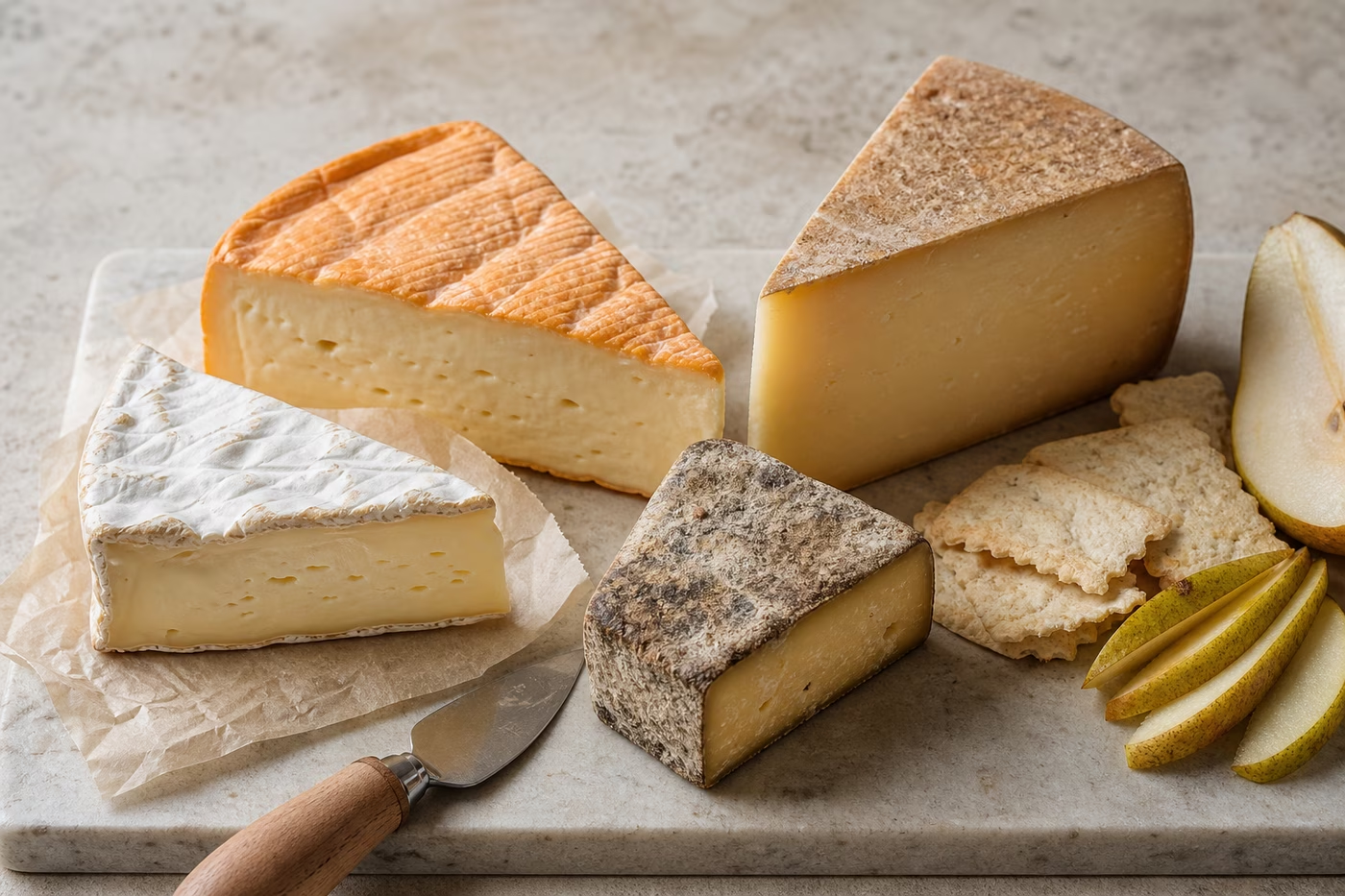
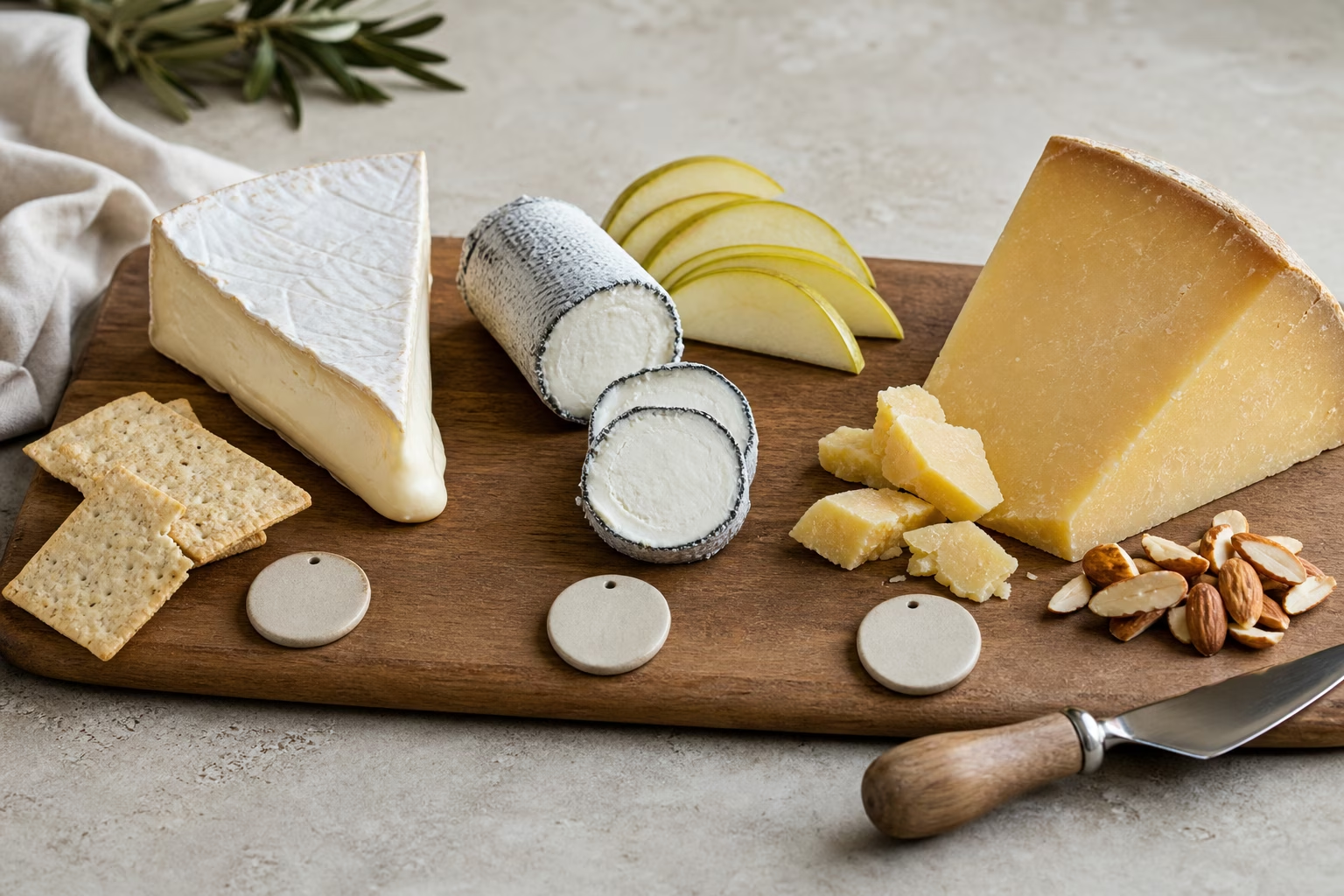
Cheese changes while you own it. That is obvious with a ripe Camembert, but it is also true of cheddar, blue cheese, fresh goat cheese, washed rinds, and the forgotten heel of alpine cheese wrapped in the back of the drawer. Moisture moves. Rinds keep breathing. Cut faces dry. Aromas concentrate. Salt seems louder as water disappears. Some changes are part of ripening. Some are ordinary storage wear. Some mean the cheese has moved past the version you wanted to serve.
The useful skill is not panic. It is reading condition. A cheese can be funky without being bad, dry without being ruined, or ripe without being overripe. It can also look acceptable and taste tired because it has been cut too long, wrapped badly, or held at the wrong temperature. The goal is to decide what job the cheese can still do.
This guide sits between Cheese Rinds , How to Store Cheese , and How to Buy Cheese . Rind tells you how the cheese lived. Storage tells you how to protect it. Condition tells you what it is like today.
Ripeness Is Not the Same as Freshness
Freshness sounds simple, but cheese complicates it. Fresh mozzarella wants to taste young and milky. A fresh chevre wants clean acidity and moisture. A bloomy rind wants some ripening, or it tastes chalky and shy. A washed rind wants enough surface development to taste savory rather than merely salty. A hard aged cheese may be at its best long after it was made.
So the first question is not whether the cheese is fresh in a general way. The first question is whether the cheese is at the right stage for its style and purpose. A young Brie with a firm center may be perfectly fine if you like a cleaner, milder bite. The same Brie may disappoint if you wanted spoonable richness tonight. A very ripe washed rind may thrill people who love strong cheese and unsettle everyone else. A dry corner of cheddar may be poor for a board but excellent grated into a sauce or soup.
Ripeness is about readiness. Condition is about how gracefully the cheese has reached that point. A cheese can be ripe and well kept, ripe and tired, underripe and promising, or overripe and no longer pleasant. Learning to separate those ideas saves both money and meals.
Aroma Should Make Sense as Food
Smell is the fastest clue, but it needs context. Fresh cheese should smell clean: milk, cream, yogurt, grass, salt, lemon, or brine depending on the style. Bloomy rinds can smell like mushrooms, cream, earth, cabbage, or damp straw in a gentle way. Washed rinds can smell meaty, yeasty, savory, oniony, or cellar-like. Blue cheese can smell peppery, mushroomy, mineral, salty, or earthy. Aged firm cheese can smell nutty, fruity, brothy, caramelized, or grassy.
Those aromas can be strong without being wrong. The question is whether they belong to the style and still invite eating. Harsh ammonia, chemical cleaner, stale refrigerator air, rancid fat, or a smell that makes the cheese seem hot and aggressive are different from honest funk. With bloomy and washed rinds, a little ammonia can appear when the cheese is very ripe or wrapped tightly, but a sharp blast that overwhelms everything is a sign that the table may not be the right place for it.
Temperature affects smell. A cold cheese may hide both virtues and flaws. Let a small piece sit for a few minutes before judging, especially with firm and soft-ripened styles. If the aroma becomes more rounded, the cheese may simply have needed air and warmth. If the aroma becomes sharper, flatter, or more unpleasant as it warms, the condition is probably not improving.
Texture Tells You What Happened to Moisture
Cheese texture records moisture. Fresh cheese that should be moist but feels dry, grainy, or cracked may be old or poorly wrapped. A bloomy rind that should have a creamy band but feels rubbery may be too young, too cold, or dried by storage. A washed rind that should be supple but feels wet and collapsing may be overripe or trapped in too much moisture. A firm cheese that should break cleanly but feels sawdusty at the edge has probably dried after cutting.
Dryness is not always failure. Hard aged cheese is meant to be dry compared with a young cheese. Crystals, grain, and fracture can be beautiful in aged Gouda, Parmigiano-style cheese, cheddar, and alpine wedges. The problem is dryness that tastes stale rather than concentrated. A dry cut face can often be trimmed thinly to reveal better paste underneath. A cheese that is dry all the way through may still season cooking, but it may not belong on a board.
Wetness needs the same judgment. Some cheeses are supposed to be glossy, brined, or soft. Feta lives in brine. Burrata releases cream. Ripe bloomy cheese may ooze. But unexpected slime, trapped condensation, or a surface that feels sticky in a style that should be clean suggests poor storage. When moisture appears where it does not belong, smell and taste become more important. If the cheese no longer seems coherent, use caution and do not serve it as a showcase.
Rinds Have Their Own Language
Rind condition is style-specific. A bloomy rind should look reasonably white, ivory, wrinkled, or downy depending on the cheese. It may show small beige patches as it ages. If the rind is cracked, dry, and pulling away from the paste, the cheese may be tired. If the paste is liquid under the rind and smells sharply ammoniated, it may be past peak for most tables.
Washed rinds often look orange, pink, peach, tan, or reddish, and they may feel tacky. That tackiness is not automatically a problem. It can be part of the style. The problem is a rind that becomes unpleasantly slimy, bitter, or aggressively sharp. Taste a small amount of paste alone, then paste with rind. If the rind makes the cheese taste more savory, keep it. If it overwhelms the paste, trim narrowly or use the cheese in cooking where starch and heat can soften its force.
Natural rinds can look rustic because they are rustic. Brushing, cave contact, age, and dryness can leave surfaces that look dusty, mottled, or uneven. Some are edible, some are not pleasant, and some are structural rather than delicious. Wax and cloth are not food in the ordinary serving sense and should be removed. The deeper guide in Cheese Rinds is useful here because visual roughness does not mean the same thing across styles.
Blue cheese deserves a separate note because its mold is internal and intentional. Blue, green, or gray-blue veining belongs in blue cheese. Clean marbling with creamy or crumbly paste can be beautiful. What you do not want is a stale, dry, bitter, or harsh piece where the cut face has oxidized and the salt dominates everything. A fresh cut from a good wheel often tastes much better than a plastic-wrapped crumble that has been waiting too long.
The Cut Face Ages Faster Than the Wheel
A whole wheel or intact small cheese ages differently from a cut wedge. Cutting exposes the interior to air, handling, wrap, and refrigerator aromas. The cut face dries first. It also absorbs odors first. A cheese that would have been stable in wheel form may become tired once opened.
This is why buying smaller pieces often gives better results. A large wedge can feel economical, but only if you can finish it while the cut surface still tastes alive. If the first serving is excellent and the third serving tastes like refrigerator paper, the savings were imaginary. How to Buy Cheese makes this point from the shopping side: the right amount is the amount you can enjoy at the cheese’s best.
At home, unwrap and inspect before serving. Trim a dry face if needed. Rewrap in cleaner paper if the surface has collected moisture. Move strong cheeses into separate containers so their aroma does not travel. Do not judge the whole wedge by the most exposed corner. Cheese has layers of condition, and a careful trim can rescue a piece that looked worse than it is.
Decide the Job Before You Decide the Fate
Not every tired cheese belongs in the trash, and not every edible cheese belongs on a board. A slightly dry cheddar may be fine in a grilled sandwich. A bloomy rind that is too strong for plain serving may work in eggs, potatoes, or a tart if the aroma still tastes like food. A hard rind from a grating cheese may flavor a pot of beans or soup if it is clean and appropriate for cooking. Odd pieces can become useful when handled with the ideas in Leftover Cheese Scraps .
Serving guests requires a higher bar than cooking for yourself. If a cheese smells confusing, looks tired, or asks for too much explanation, do not make it the centerpiece. Cheese should invite trust at the table. A board with one questionable wedge makes every other cheese harder to enjoy because people start inspecting rather than tasting.
When uncertain, ask earlier next time. At the counter, ask whether the cheese is ready for tonight or better later. Ask when it was cut. Ask how the shop would store it. At home, label the wrap with the date opened if that helps you remember. None of this turns cheese into a project. It simply gives you a better memory than the back of the refrigerator can provide.
The best condition check is generous but unsentimental. Look for style-appropriate aroma, coherent texture, a rind that still supports the paste, and a cut face that has not become the whole story. Serve the cheeses that are ready. Cook with the pieces that have useful flavor but less beauty. Let go of the ones that no longer smell or taste like food you want to share.