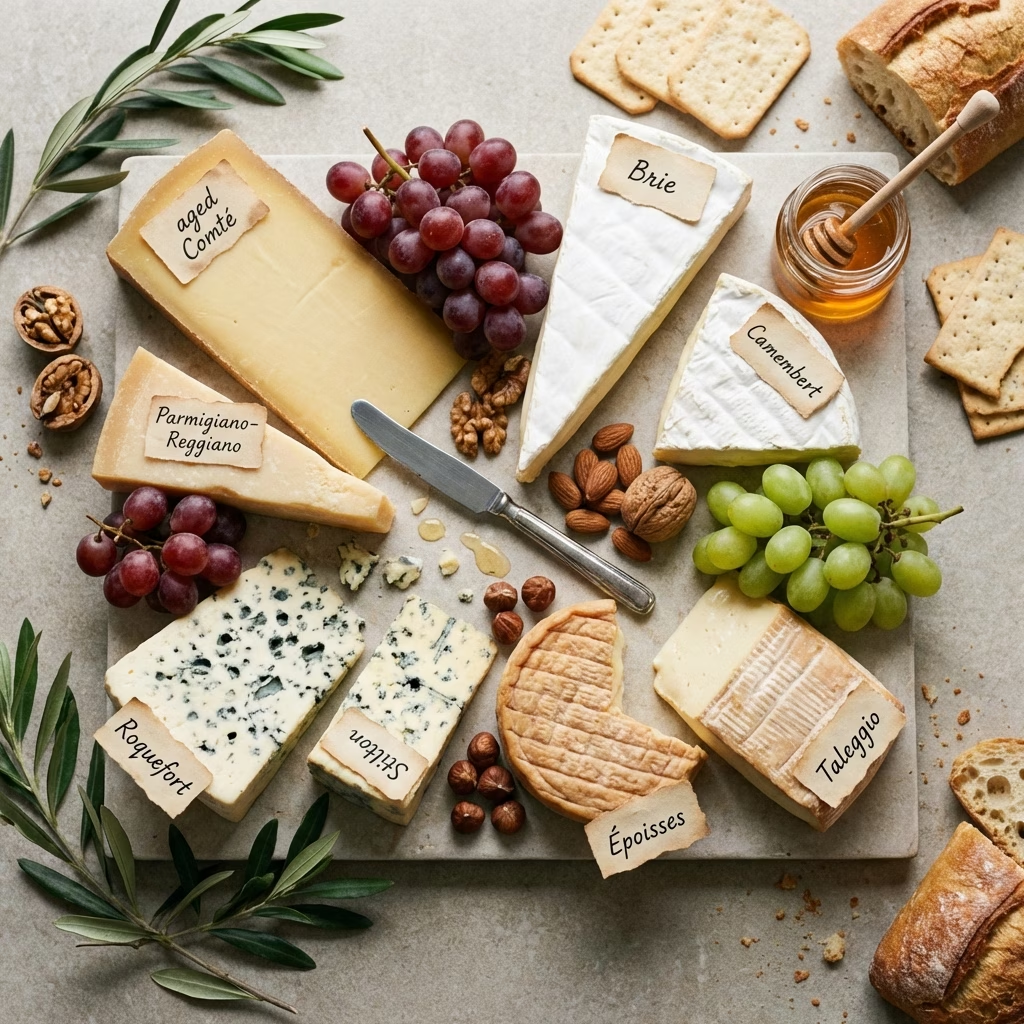
You don’t need to know anything about cheese to enjoy it. But knowing a few things makes the cheese counter less intimidating, helps you spend your money better, and turns a block of something-from-the-fridge into the centerpiece of an evening.
This guide gets you from “I buy cheddar” to “I know what I’m looking at and what I like” in twelve minutes.
The Five Families of Cheese
Every cheese in the world fits into one of five broad categories based on texture and how it’s made. Learn these five, and you can navigate any cheese counter:
1. Fresh Cheese
Fresh cheese is unaged cheese, usually made and sold within days, so it stays high in moisture and close in flavor to the milk it came from. Think mozzarella, ricotta, chèvre, feta, cream cheese, and burrata. These cheeses taste bright, milky, and lightly tangy, and they belong in daily cooking as much as on a board. They are the least transformed members of the family, which is part of their charm.
2. Soft-Ripened Cheese
Soft-ripened cheeses are the bloomy-rind cheeses, usually covered in a white coat of Penicillium candidum and ripened from the outside inward. Brie, Camembert, Saint-André, and Brillat-Savarin all live here. When young they can be chalky in the center; when ripe they turn creamy and spreadable. Flavor-wise, expect butter, mushroom, cream, and mild earth, and yes, the rind is usually part of the experience.
3. Semi-Hard Cheese
Semi-hard cheese is the broad middle of the category: aged for weeks to months, firm but not brittle, and useful in almost every context. Cheddar, Gouda, Gruyère, Manchego, Havarti, Monterey Jack, and Emmental all fit. This is where most people’s cheese experience already lives because the family covers everything from mild and buttery to sharp and crystalline. These are the workhorses for slicing, melting, cooking, and everyday snacking.
4. Hard Cheese
Hard cheeses stay in the cave or aging room long enough to lose moisture and gain concentration. Parmigiano-Reggiano, Pecorino Romano, aged Gouda, and Grana Padano are the familiar examples. They taste savory, dense, and complex, often with those pleasant tyrosine crystals that crunch between your teeth. Because the flavor is so concentrated, a little goes a long way whether you are grating, shaving, or serving chunks with fruit or honey.
5. Blue Cheese
Blue cheese is the most dramatic family because the mold is intentional, visible, and central to the flavor. Roquefort, Gorgonzola, Stilton, Danish Blue, and Maytag Blue all develop their blue-green veining because the cheese is inoculated and then pierced during aging so air can feed the mold. The results range from soft and creamy to fierce and peppery, but they all bring some combination of salt, tang, and pungency. A small amount can transform a board, a salad dressing, or a sweet-and-savory pairing.
How to Taste Cheese (The 60-Second Method)
You don’t need a certification. You need a minute and your five senses.
Look first: color, rind, texture, and whether the cheese appears smooth, grainy, dense, or airy already tell you a lot. Then smell it before tasting, because aroma usually previews what is coming. When you take a bite, let it sit for a second rather than chewing immediately. Notice the first impression, the texture on the tongue, and what flavors arrive later. Great cheese has a finish, and that lingering aftertaste is often where the most interesting part lives.
How to Buy Cheese
At a cheese counter
Ask for samples, because good cheese counters expect it and it is the fastest way to avoid buying blindly. Ask what is especially good right now, because cheesemongers know what just arrived and what is at peak ripeness. Buy smaller quantities than you think you need, and buy for the current week rather than the fantasy future. Cheese is a living product; your refrigerator is storage, not an aging cave.
At a grocery store
Look for: a cut date on the label, cheese from the specialty section rather than the pre-packed wall, and whole pieces instead of pre-shredded or pre-sliced formats. Those three clues do not guarantee greatness, but they tilt the odds noticeably in your favor.
For a deeper buying guide, see How to Buy Cheese.
Your First Cheese Plate (30 Minutes, Start to Finish)
The Formula
Pick 3–5 cheeses from at least three different families:
One soft cheese, one semi-hard cheese, and one hard or blue cheese is enough for a real plate. If you want a fourth, make it a wildcard you have never tried before. That simple structure gives contrast without turning the board into homework.
The Accompaniments
Keep the accompaniments simple and neutral. Bread or crackers should support the cheese rather than compete with it, fruit adds freshness and sweetness, nuts add crunch, and a small jar of honey gives you an easy win with hard or blue cheeses. Cured meat is optional, not mandatory.
Assembly
Take the cheese out of the fridge about 30 minutes before serving, because cold cheese tastes muted. Pre-cut at least a starter portion of each piece so nobody has to decode the geometry of a wedge in public. Give the cheeses some space on the board, and if you can, give them separate knives so the flavors do not all get blurred together.
For a narrative guide to building your first board, see Your First Cheese Board.
Storage Basics
Wrap cheese first in wax paper or cheese paper, then loosely in plastic or a bag so it can breathe without drying out. Store it in the vegetable crisper, where humidity is usually a little kinder. Freezing is fine only if the cheese is headed for cooking later, and fresh cheeses should generally be eaten within a week. Semi-hard and hard cheeses buy you more time, but not immortality.
For detailed storage guidance, see Cheese Storage.
Pairing Cheese with Drinks
| Cheese type | Best with | Why |
|---|---|---|
| Fresh (mozzarella, chèvre) | Light white wine, Prosecco, lager | Delicate flavors need light partners |
| Soft-ripened (Brie, Camembert) | Champagne, Chardonnay, cider | Bubbles cut through cream; fruit complements butter |
| Semi-hard (cheddar, Gouda) | Red wine, amber ale, port | Weight matches weight |
| Hard (Parmigiano, aged Gouda) | Bold red, barleywine, aged spirits | Intensity matches intensity |
| Blue (Roquefort, Stilton) | Sweet wine (Sauternes, Port), stout | Sweetness tames salt and funk |
For comprehensive pairing advice, see the Wine Pairing guide and Cheese Pairing Beyond Wine.
What to Explore Next
This quickstart is the door. If you want the full map of styles, continue to Cheese Types: A Comprehensive Guide. If boards are your next move, open The Art of the Cheese Plate. For what time does to flavor, read Cheese Aging, and for the longer backstory, read A Brief History of Cheese. The Afternoon We Made Mozzarella covers home cheesemaking in story form, and the Glossary remains the reference shelf.