Cheese is often treated as the obvious finish for tacos, quesadillas, and nachos, but these dishes ask different things from the same ingredient. A quesadilla wants cheese that relaxes into the tortilla and holds the fold together. Nachos want cheese that spreads without turning the chips limp. A taco may need only a salty crumble, a soft fresh accent, or a thin ribbon of melt that stays in proportion to the filling. When the cheese is chosen by habit alone, the dish can become greasy, blunt, or strangely dry.
The useful question is not which cheese is most authentic in the abstract. It is what job the cheese has in this particular bite. Is it glue, seasoning, contrast, stretch, or cream? A young stretched-curd cheese behaves differently from a brined crumble. A processed melting cheese behaves differently from a hand-grated block. A fresh cheese that tastes perfect over beans may disappear inside a hot folded tortilla.
This guide builds on the heat lessons in Cooking with Cheese and the structure notes in Stretched-Curd Cheese . Tortilla dishes are simple, but cheese still obeys moisture, fat, protein, and salt.
Melt Is Not the Same as Flavor
The cheeses that melt most smoothly are not always the ones with the strongest flavor. Young, moist cheeses usually relax better than dry aged ones. Oaxaca-style cheese, low-moisture mozzarella, young Jack, mild cheddar, young Gouda, and some young provolone-style cheeses can give stretch, softness, and coverage because their protein network still has enough moisture to move. They are useful when the tortilla itself needs to be held together.
Very aged cheeses bring more concentration, but they can turn oily or grainy under direct heat. A little aged cheddar, aged Gouda, or hard grating cheese can add depth, but it usually works best as part of a blend or as a finishing layer. Asking a dry aged cheese to carry a whole quesadilla is like asking a finishing salt to become the meal. It may taste powerful in the first bite and punishing by the third.
Flavor can come from the filling too. Roasted chiles, beans, mushrooms, squash, onion, grilled meat, citrus, herbs, and salsa all change how much cheese the dish needs. A mild melting cheese may be exactly right when the filling is lively. A sharper cheese may help when the filling is mostly starch or mild beans. Cheese should complete the tortilla, not bury the reason you filled it.
Quesadillas Need Even Contact
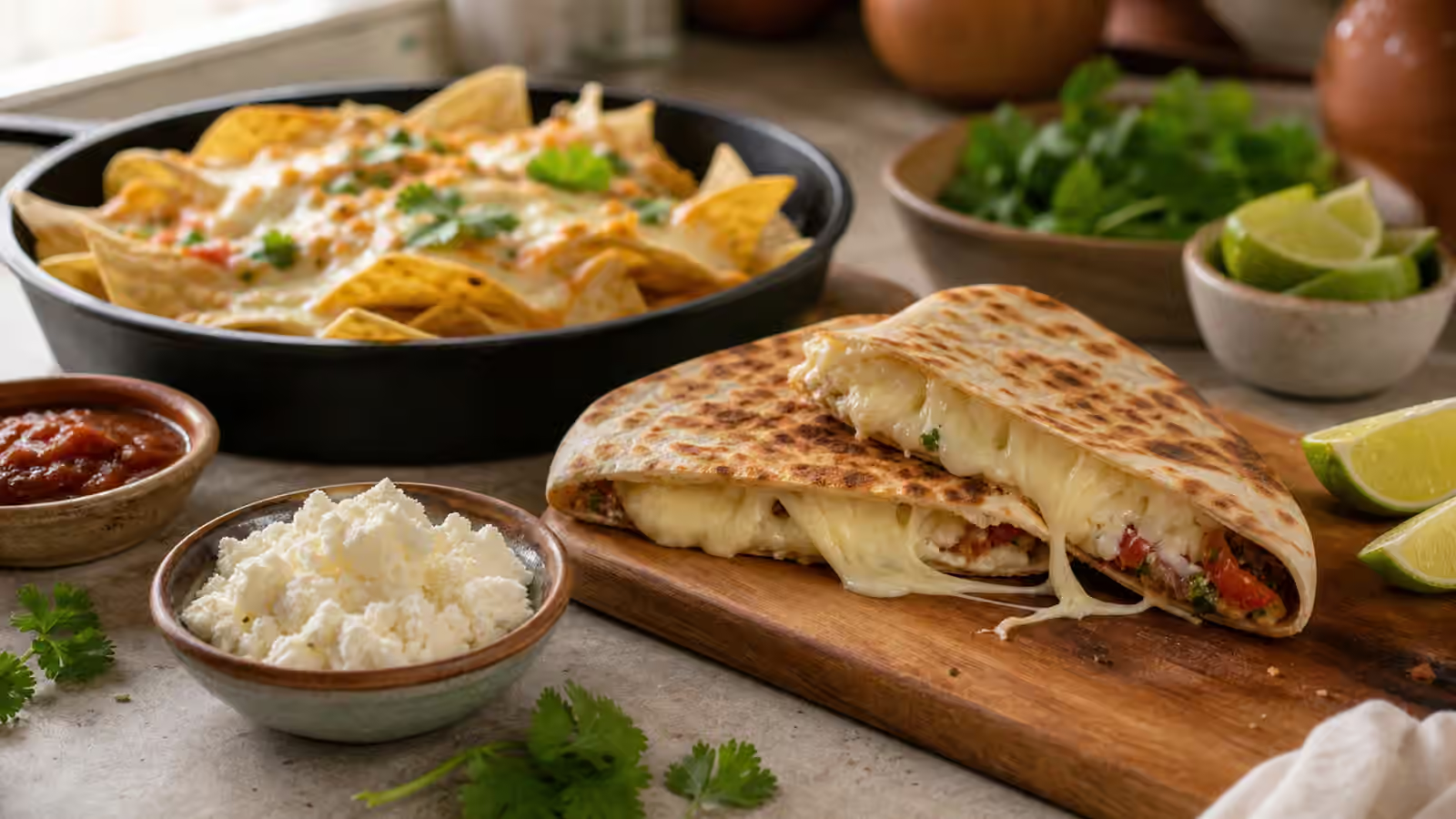
A quesadilla succeeds when cheese touches enough of the tortilla to bind the layers without flooding the pan. Thick chunks melt slowly and leave dry pockets. Fine shreds or pulled ribbons melt faster and more evenly. This is why Oaxaca-style cheese is so good in a folded tortilla: it separates into strands, distributes easily, and softens into an elastic layer without needing aggressive heat.
The pan should be hot enough to toast the tortilla but not so hot that the outside burns before the cheese warms. Medium heat is often more useful than high heat. A covered pan can help the cheese relax while the tortilla browns, especially if the filling is cold or the cheese is thick. If the cheese is already soft and the filling is warm, a covered pan may be unnecessary.
Moist fillings need caution. Salsa, wet beans, juicy mushrooms, and watery vegetables can keep cheese from bonding cleanly to the tortilla. Drain or cook them down first, then let cheese act as the bridge. Too much cheese is not the fix for a wet quesadilla. It only adds grease to the moisture problem.
Nachos Need Coverage Without Collapse
Nachos are a test of timing and distribution. Chips need enough cheese to feel deliberate, but not so much that steam and fat soften every crisp edge. A grated melting cheese scattered in a moderate layer can work well when the chips are warmed briefly and served right away. A smooth cheese sauce can work too, but it needs enough body to cling without becoming rubbery as it cools.
The best nachos usually use cheese in two layers of thought. One layer gives melt or sauce. Another brings contrast after heat: crumbled fresh cheese, herbs, pickled onions, radishes, salsa, or a squeeze of lime. That second layer matters because melted cheese alone can make chips taste heavy. Acid, crunch, and freshness keep the board lively.
Pre-shredded cheese can be convenient, but coatings may affect melt. Hand-grated cheese often melts more cleanly. If the goal is a sauce, the method from Cheese Sauce Without Breaking matters more than the cheese name. A sauce needs a base, gentle heat, and a cheese that wants to melt. Boiling shredded cheese into a bare pan rarely ends well.
Tacos Often Need Less Cheese Than You Think
A taco is not a pizza. The tortilla is smaller, the filling is direct, and each topping has little space to work. Cheese can be excellent, but it should be placed with restraint. A salty crumble over beans, potatoes, grilled vegetables, or slow-cooked meat can sharpen the bite. A soft fresh cheese can cool heat and add milkiness. A thin layer of melt can make a breakfast taco or griddled taco feel cohesive.
Fresh crumbling cheeses behave more like seasoning than sauce. Queso fresco-style cheese, cotija-style cheese, feta-style cheese used with care, and other salty white cheeses bring salt and texture without melting away. They are especially useful when the filling already has moisture and heat. Add them at the end so they stay distinct.
Melting cheese belongs where it has a role. It can be griddled into the tortilla, folded around eggs, warmed against beans, or used to hold a crisped taco together. If the filling is already rich, melted cheese may make the taco feel crowded. If the filling is lean or starchy, a little melt can make it feel complete.
Fresh Cheese, Brined Cheese, and Acid
Fresh and brined cheeses are valuable in tortilla dishes because they bring brightness rather than pull. A salty crumble wakes up beans and vegetables. A fresh cheese softens chile heat. A spoon of crema-style dairy or fresh cheese spread can make a dry filling easier to eat. These cheeses are not failed melters. They are doing a different job.
Salt is the main risk. Brined cheeses can season the whole bite quickly, especially when salsa, pickles, chips, or cured fillings already bring salt. Taste the cheese before adding more seasoning. Brined Cheese is useful here because brine changes how cheese reads in a finished dish. What feels pleasantly sharp alone can become too much with salted chips and hot sauce.
Acid completes the balance. Lime, tomatillo salsa, pickled onion, vinegar-based hot sauce, or fresh tomato can cut the fat of melted cheese and the salt of fresh crumbles. Without acid, tortilla dishes can become warm and rich but dull. With too much acid, the cheese can seem flat or chalky. Add enough to lift, then stop.
Heat Changes Every Choice
The same cheese behaves differently on a griddle, under a broiler, in a sauce, or on a hot taco filling. Direct pan heat can brown cheese and make it crisp at the edges. Oven heat can melt a broad layer but may dry chips or tortillas if the dish waits too long. Sauce heat can stay smooth when controlled, but it can break when boiled. Residual heat from fillings can soften a finishing cheese without forcing it to melt.
This is why order matters. Melt the cheese that needs melting, then add the cheese that should stay fresh. Warm the tortilla, then add fragile toppings. Let nachos leave the oven before salsa and herbs go on. Let a quesadilla rest briefly before cutting so the cheese can settle instead of rushing out.
Good tortilla cheese is not about maximum stretch. It is about the right kind of presence. Quesadillas need even melt, nachos need coverage and contrast, and tacos need proportion. Once you choose cheese by job, the whole plate becomes clearer: one cheese binds, one seasons, one cools, one finishes. The dish tastes more like itself because the cheese has stopped trying to do everything at once.