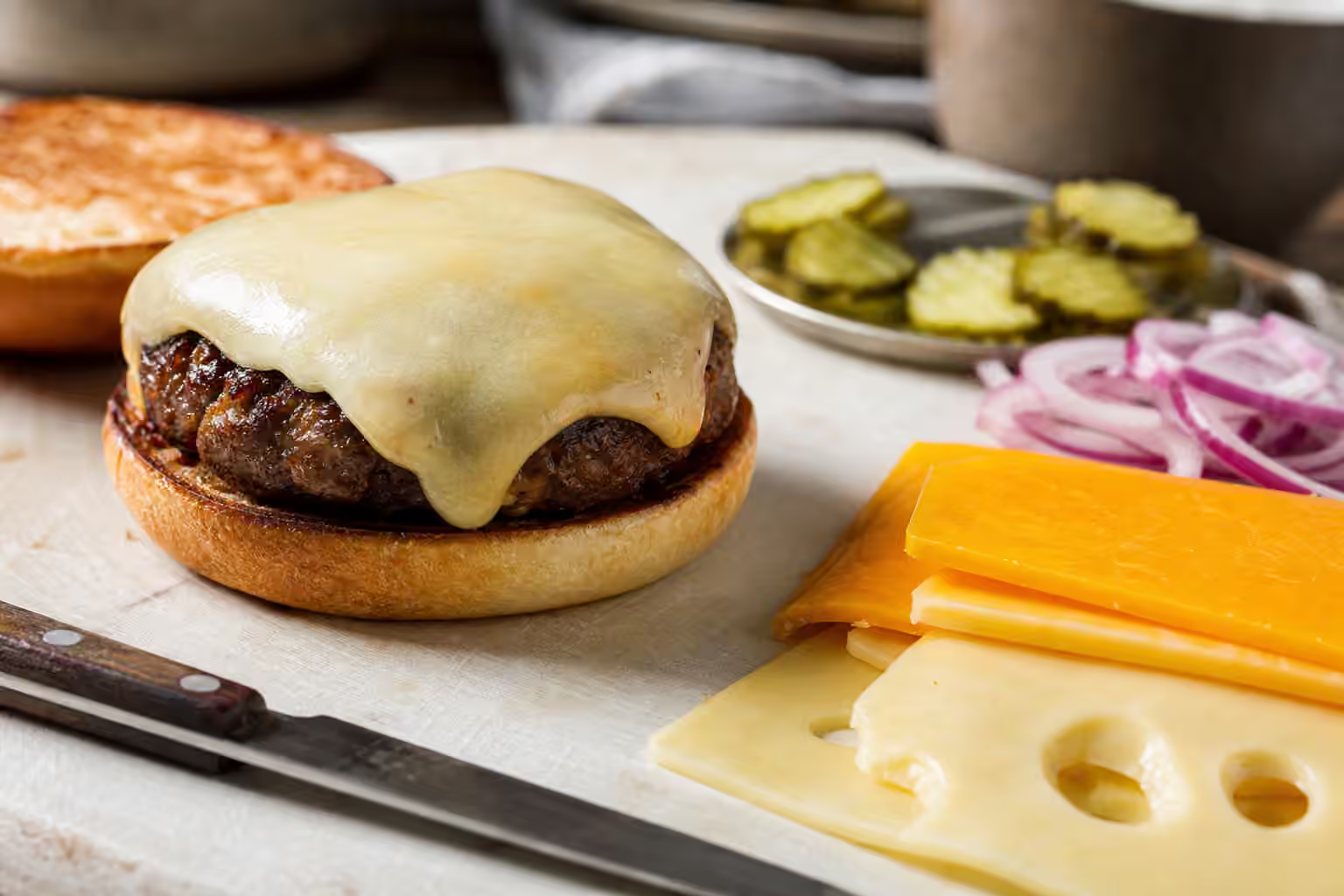
A burger asks cheese to do several things at once. It should melt quickly, cover the patty, season the meat, meet the bun, and still leave room for pickles, onions, sauce, lettuce, tomato, mushrooms, or whatever else is on the sandwich. When it works, cheese makes the burger feel unified. When it fails, it sits as a cold slab, runs into grease, or makes every bite taste like salt.
The right burger cheese is not always the most interesting cheese on a board. A brittle aged wedge may taste wonderful in small shards, but it may not melt before the patty is overcooked. A soft ripe cheese may be delicious on bread, but it may collapse into the bun. Burger cheese needs flavor, but it also needs timing and coverage.
This guide is a close cousin of Cheese for Sandwiches and Toast , but burgers bring their own heat and salt problems. The patty is hot, fatty, and brief. The cheese has only a small window to do its work.
Melt Speed Matters More Than Drama
Burger cheese has to melt while the patty is still on the heat or during the short rest afterward. That favors cheeses with enough moisture and fat to relax quickly. Young cheddar, American-style sliced cheese, young Gouda, Monterey Jack, Havarti, young Swiss-style cheese, fontina-style cheese, and mild provolone-style cheese all work because they soften before the burger is done.
American-style slices are sometimes dismissed because they are engineered, but their usefulness is real. They melt smoothly because they are built to emulsify. That does not mean they are the only choice or the most flavorful one. It means they solve the burger problem of speed and coverage. If you want more character, a young natural cheese can work beautifully, but it may need a thinner slice, a lid over the pan, or a few extra seconds of steam.
Very aged cheeses bring flavor but resist the schedule. Aged cheddar can melt, but it may break or sit in jagged corners if the slice is thick. Aged Gouda can taste sweet and nutty, but it may soften slowly. Hard grating cheeses are usually better shaved in small amounts or used in a sauce rather than laid on as the main slice. Aged Firm Cheese explains why concentration changes texture as much as flavor.
Coverage Changes the Bite
A burger is eaten vertically. Every bite moves through bun, sauce, toppings, cheese, patty, and bun again. Cheese that covers only the center leaves the edge bites plain. Cheese that drapes too far can glue itself to the pan or make the sandwich slippery. The best coverage depends on patty shape and slice thickness.
Thin slices are easier to melt and layer. Two thin slices can cover better than one thick slice, especially on a wide patty. Shingled slices can reach the edges without becoming a heavy block. Grated cheese can work on a griddle burger if it is contained and melted quickly, but loose shreds can fall and burn if the patty is moved too much.
For thick pub-style burgers, a cheese with slower melt can still work because the patty stays hot longer. For thin griddled burgers, cheese needs to melt almost immediately. A lid, a splash of steam, or stacking patties can help, but the cheese should match the cooking style rather than fight it.
Salt Needs a Counterweight
Burgers already carry salt from the patty seasoning, bun, sauces, pickles, bacon, cured toppings, or fries on the plate. Cheese adds another layer. Sharp cheddar, blue cheese, feta-style cheese, aged provolone-style cheese, and smoked cheeses can become too forceful if the rest of the burger is also salty.
The answer is not always milder cheese. Sometimes a bold cheese is exactly the point. It just needs a counterweight. Blue cheese wants sweetness, mushrooms, onions, or bitter greens. Sharp cheddar wants mustard, pickles, tomato, or a cleaner sauce. Smoked cheese wants freshness nearby because smoke plus char plus salty toppings can become heavy. The pairing logic in Cheese Accompaniments applies here, even though the board has become a sandwich.
Taste the cheese by itself before deciding how much to use. A slice that seems modest in the package may taste much stronger when warmed over beef or a plant-based patty. Heat amplifies aroma and salt. A burger with one well-chosen slice often tastes more complete than one buried under several competing cheeses.
Strong Cheeses Need Smaller Roles
Blue cheese can make a memorable burger, but it rarely needs to be the only cheese. It can be crumbled lightly over a milder melt, mixed into a sauce, or paired with onions and mushrooms so its salt has somewhere to go. Too much blue turns the burger into a cheese delivery system and makes the patty seem incidental.
Washed-rind cheese can be wonderful with a burger if used carefully. Its savory, meaty aroma can echo the patty, but it also blooms fast under heat. A small piece melted onto a thick burger may be enough. Add pickles, mustard, or a crisp bitter leaf to keep the sandwich from feeling closed in.
Fresh cheeses have a place too, though they behave differently. Fresh goat cheese does not melt into a blanket, but it can soften into a tangy layer. Ricotta-style cheese is usually too loose unless used as a spread with herbs. Brined cheese can crumble into a lamb burger or vegetable burger, but its salt should be treated as seasoning rather than bulk.
Toppings Decide the Best Cheese
A plain burger can carry a classic melter because the cheese provides most of the dairy flavor. A mushroom burger can take Swiss-style, blue, or alpine-style cheese because the mushrooms bring earth and moisture. A burger with barbecue sauce may prefer cheddar, smoked cheese, or provolone-style cheese, but it needs restraint because sweet sauce and melted cheese become heavy fast. A burger with pickles and mustard can handle sharper cheese because acid keeps the bite moving.
Vegetable and bean patties need their own thinking. Some are delicate and can be overwhelmed by a salty aged cheese. Some are earthy and benefit from tangy goat cheese, mild cheddar, or a smooth melting slice. The cheese should support the patty rather than apologize for it. If the patty is already soft, choose a cheese that melts without adding too much looseness. If the patty is dry, a creamier cheese or sauce may help.
Buns matter more than they seem. A soft bun absorbs melted cheese and sauce quickly. A sturdy toasted bun can handle a juicier melt. A very sweet bun may make mild cheese taste dull, while a sharper cheese can restore balance. Cheese is not an isolated topping. It is part of the structure.
Add Cheese at the Right Moment
The cheese should go on late enough that it does not overcook and early enough that it melts. On a griddle or skillet, that may be the final minute. On a grill, it may be near the end with the lid closed briefly. For thin patties, cheese may go on as soon as the patty is flipped. For thick patties, it may need a little more time.
Resting helps. A slice that looks only partly melted can continue softening from the patty’s residual heat. But a cold, thick slice will not become a good melt after the burger leaves the pan. Give the cheese a fair start while there is still heat available.
A burger is a compact lesson in cheese behavior. Choose a cheese that can melt on schedule, slice it for coverage, respect salt, and let toppings provide contrast. When those choices line up, the cheese does not shout. It binds the sandwich, seasons the patty, and makes the next bite make sense.