
The Art of Cheese Aging
Cheese aging, or affinage, is what turns fresh curds into nutty, brothy, floral, or funky cheese. Time matters, but conditions decide the result.
Think of aging as work done by enzymes, microbes, and air. The cheese keeps changing after it leaves the vat. Fresh mozzarella and 36-month Parmigiano are not just different ages. They are different foods.
This guide explains what aging is, what changes in a cave, and how to buy or age cheese with more confidence.
What is Cheese Aging?
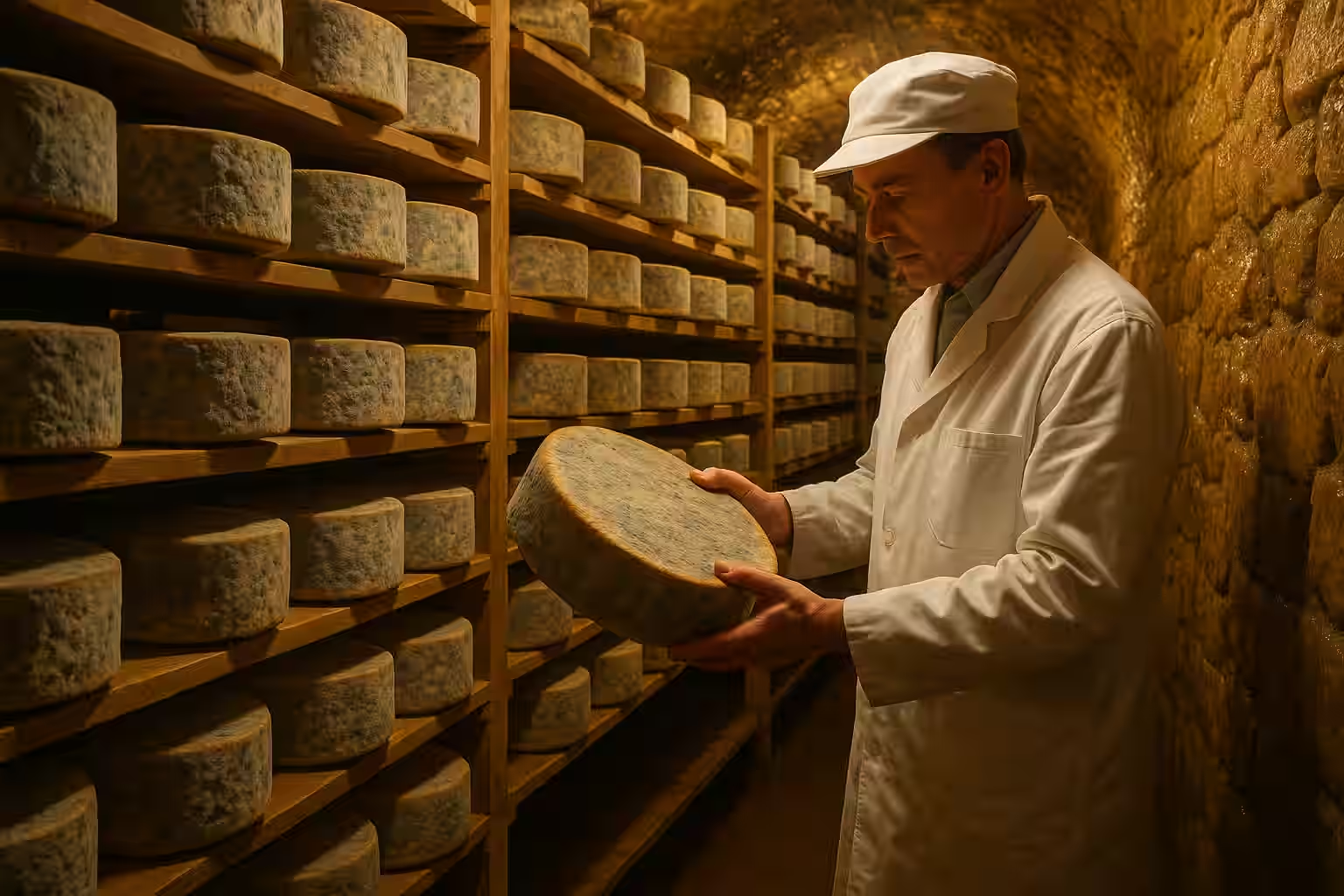
Affinage (ah-fee-NAHJ) is the care of cheese as it matures. That can mean turning, washing, brushing, wrapping, and keeping temperature and humidity in the right range.
Aging is not passive storage. Even after cheese leaves the vat, it keeps changing:
- proteins break into smaller savory compounds (texture softens or becomes crystalline)
- fats break into aromatic fragments (fruit, spice, funk, pungency)
- moisture gradually leaves (flavor concentrates)
- surface microbes build rinds (blooms, washes, blues, naturals)
The Science of Aging
You do not need a biochemistry degree to understand what cheese is doing. These are the main levers.
What Happens During Aging
Proteolysis (protein breakdown) is a big part of aged cheese flavor. Enzymes from rennet, starter cultures, and surface microbes break proteins into smaller pieces. That can create creamy softness in bloomy rinds or a long savory finish in aged Alpine cheeses.
Lipolysis (fat breakdown) creates strong aroma. It helps give washed rinds their meaty smell and can add spicy, lanolin-like notes to sheep and goat cheese. If it goes too far, it can smell rancid.
Moisture loss concentrates flavor. As water leaves, the cheese firms up. This is also part of why aged cheese costs more.
Microbial activity shapes rind and aroma. Surface molds and bacteria do more than sit on the outside. They soften paste, create ammonia, bring out mushroom notes, and build washed-rind character.
Environmental Factors
If aging is cooking, the environment is the oven.
Temperature controls speed. Cold aging is slower. Warm aging is faster and can push a cheese too hard.
Humidity controls moisture loss. Too little and cheese dries and cracks. Too much and surfaces turn slimy or moldy. Most cheeses need a middle ground.
Air circulation keeps moisture from sitting still. It also helps rinds form evenly and carries away ammonia.
Light is mostly the enemy. It changes temperature and can dull flavor. Traditional caves are dark for a reason.
Aging Categories
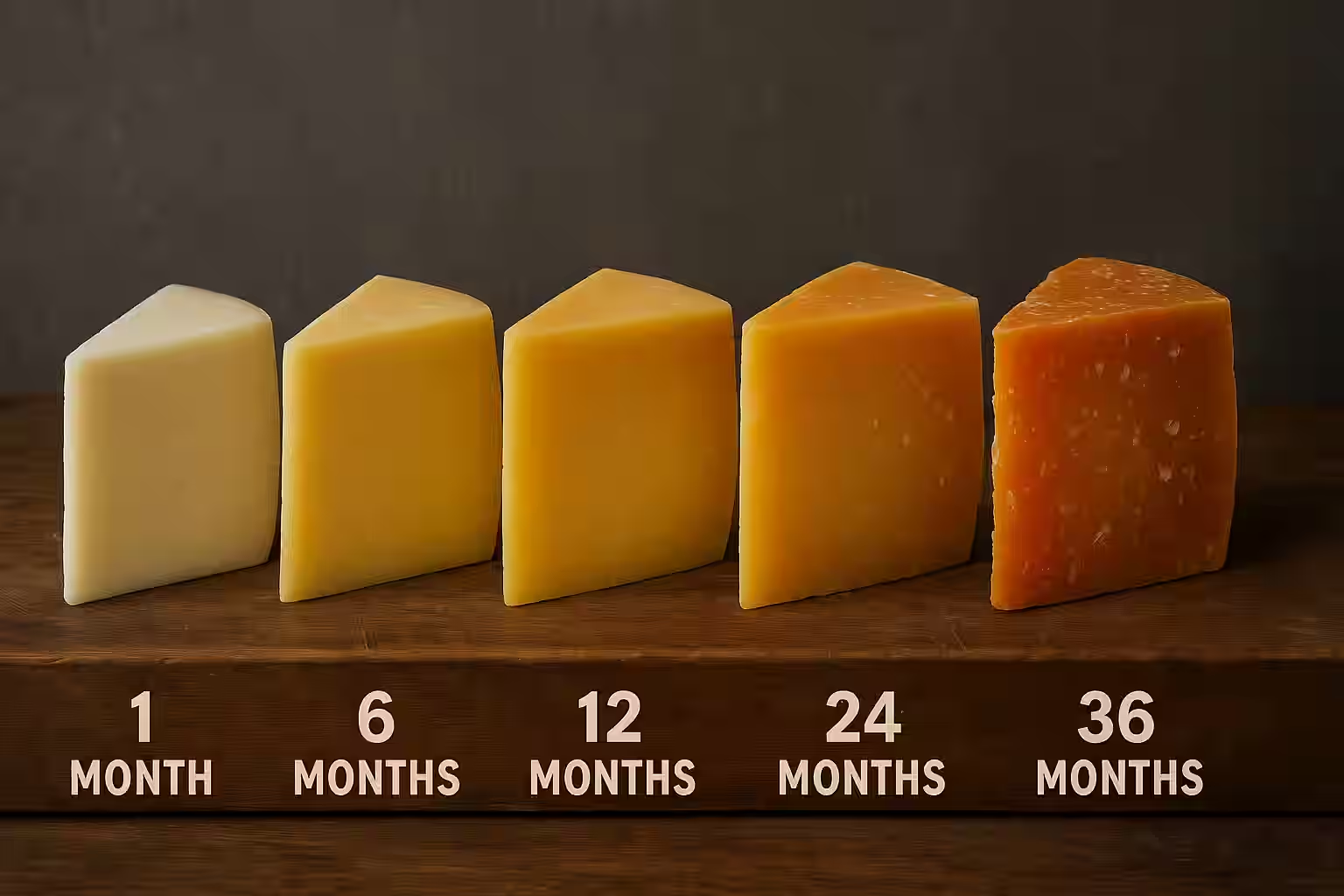
One of the easiest ways to learn aging is to taste the same cheese at different ages. That teaches your palate faster than reading about it.
Fresh Cheese (No Aging)
Fresh cheeses (mozzarella, ricotta, chèvre, queso fresco) are meant to be eaten young. Their appeal is milk sweetness, high moisture, and a clean taste. Aging them usually just moves them toward spoilage.
Young Cheese (0–3 Months)
Young cheeses still feel supple and taste easy. Think young Gouda, Havarti, or young Manchego. They are milky, buttery, and gently tangy. This stage is good for melting and everyday eating.
Medium-Aged Cheese (3–12 Months)
This is where cheese gets more layered. You start to get nuts, browned butter, and broth. Texture firms up, and crystals may start to show. Many cheeses are at their most useful in this range.
Long-Aged Cheese (12–24 Months)
Now the cheese is more concentrated. Moisture loss and enzymatic work bring out umami, sweetness, and a longer finish. Crystals become common, and portions get smaller.
Extra-Long-Aged Cheese (24+ Months)
This is where cheese gets intense, crystalline, and sometimes surprisingly sweet. Old Gouda can taste like caramel or butterscotch. Old Comté can taste brothy. Some people love it. Others do not.
Aging by Cheese Type
Different cheeses want different timelines. Age is not a quality guarantee. It is a choice. This table gives practical sweet spots for common styles.
| Type | Examples | Typical sweet spot | What changes with age |
|---|---|---|---|
| Hard / grating | Parmigiano-Reggiano, Grana-style | 24–30 months | crystals, umami, concentration |
| Alpine / cooked curd | Comté, Gruyère-style | 10–16 months (Comté can go older) | nut/broth notes, long finish |
| Cheddar family | Cheddar | 12–18 months | sharpness, crumble, depth |
| Aged Gouda | Gouda | 18–24 months | caramel/butterscotch, crunch |
| Bloomy rind | Brie, Camembert, triple crème | 4–5 weeks | ripens outside-in; chalk → cream |
| Washed rind | Taleggio, Époisses | ~6–7 weeks | savory funk, softening paste |
| Blue | Roquefort, Stilton, Gorgonzola | varies (often 3–5 months) | sharper tang, stronger aroma |
Hard Cheeses (Best for long aging)
Hard cheeses are the easiest to age for a long time because their low moisture slows spoilage and supports slow development.
- Parmigiano-Reggiano: younger wheels (18–24 months) emphasize balance and sweetness; older wheels (30–36+) bring more intensity and crunch. Many people love the 24–30 month window for “best of both.”
- Aged Gouda: the famous caramel/butterscotch character often becomes vivid in the 18–24 month range. Go older and the texture turns aggressively crunchy and the flavors become more concentrated (sometimes almost candy-like).
- Cheddar: age adds sharpness and complexity, but very old cheddars can become dry or bitter if they pass their peak. If you want “classic sharp,” 12–18 months is often the happiest zone.
- Comté: as it ages, Comté often shifts from nuts and fruit (younger) to brown butter and broth (older). 12–16 months is a balanced “board + cooking” choice; 18–24 months can be stunning for savoring.
Soft-Ripened Cheeses (Bloomy rind)
Bloomy rinds ripen from the outside in. That means age is really ripeness, so timing matters.
- Under-ripe Brie/Camembert has a chalky center.
- At peak, paste is creamy through the center and aroma is mushroomy and sweet.
- Over-ripe often becomes runny with harsh ammonia notes.
For many bloomy rinds, the most reliable peak is around 4–5 weeks, but storage and handling matter as much as the calendar.
Washed-Rind Cheeses
Washed rinds are cultivated. Repeated brine or alcohol washes encourage orange rind bacteria and the savory aroma people either love or avoid.
Taleggio and Époisses are classic examples. In general, washed rinds reward:
- proper airflow (to avoid slimy surfaces)
- careful timing (funk can spike fast)
- small portions (intensity is the point)
Blue Cheeses
Blue cheeses are pierced so oxygen reaches the inside and blue mold can grow. Age makes them stronger, but they still have a peak. Too young can taste flat. Too old can taste harsh.
For many blues, 3–5 months is a sweet spot, though the exact window varies by cheese and style (e.g., Gorgonzola dolce vs piccante).
Fresh Cheeses (Not aged)
Fresh cheeses are about immediacy. Buy them close to when you plan to eat them, and treat very fresh as a good thing.
The Affineur’s Role
An affineur is the person or team that guides cheese to its best moment. The work sounds simple. Turn, brush, wash. The skill is in reading the cheese and making small, timely calls.
Affineurs manage:
- environment (temperature, humidity, airflow)
- surface care (washing, brushing, wrapping)
- timing (when a cheese is ready, and when it’s going past peak)
- defects (catching early mold issues, cracks, uneven rinds)
This is why the same cheese can taste different from two shops. Affinage is not fixed. It is interpretation.
Home Cheese Aging
Can You Age Cheese at Home?
Yes, but it is easiest when you choose cheeses that do not need laboratory precision.
The best home candidates are hard cheeses and sealed cheeses because they need less rind care and carry less risk. Soft-ripened and blue cheeses are harder because they need tighter humidity control and their molds can spread.
If you want the home-aging experience without most of the risk, start with a sealed wedge of a semi-hard cheese and treat it like a slow experiment.
Home Aging Setup
Home aging mostly comes down to temperature and humidity.
- Temperature: roughly 50–55°F (10–13°C) is a common target for many cheeses.
- Humidity: high enough to avoid cracking, low enough to avoid slime.
A wine fridge or mini-fridge can work if conditions stay stable and the cheese stays away from strong-smelling foods.
Aging Process
A simple rhythm helps you stay safe and learn:
- Start with the right cheese (firm, intact, no existing defects).
- Create stable conditions (don’t chase numbers hourly; chase consistency).
- Inspect regularly and keep notes so you can learn what “normal” looks like.
- Taste periodically rather than waiting a year and hoping.
Recognizing Properly Aged Cheese
Aged cheese should look and smell cared for, not forgotten.
Visual cues
- Cut face: clean, even color, moist but not wet, and no slimy sheen.
- Rind: appropriate for the style, not cracked or oozing in odd ways.
- Crystals: in hard aged cheeses, crystals are usually a good sign.
Texture cues
Hard cheeses should be firm and break cleanly. Very old cheeses can be crumbly, but they should not feel like sawdust. Soft-ripened cheeses should be creamy without harsh ammonia. If a bloomy rind is runny and smells sharp, it is likely past peak.
Aroma cues
Complex is good. Chemical is not. A little funk is normal in washed rinds, but harsh ammonia is a warning sign, especially in soft cheeses.
Aging and Price
Why aged cheese costs more
Price is not just branding. Aged cheese costs more because it takes space, takes labor, and loses weight as moisture leaves. The seller has to cover both time and shrinkage.
As a rough rule, the longer a cheese ages, the more you pay for flavor concentration and storage time.
Getting value in aged cheese
If you want more flavor without overspending:
- buy from shops that store cheese well
- ask for age in months
- buy smaller portions of bold cheeses and larger portions of versatile semi-hards
A simple buyer’s checklist
At a shop, you do not need a cave. Just a few cues:
- Ask for the age in months and the milk type.
- Check the cut face for clean color and no slimy sheen.
- Smell for balance. Complex is good. Harsh ammonia is not.
- Buy smaller when the cheese is bold and bigger when it is versatile.
Common Aging Problems
Over-aging
Over-aged cheese is not just strong. It is often unbalanced, dry, bitter, or too sharp. It can happen at the producer, in the shop, or in your fridge if a cheese sits too long.
The fix is rarely rescue. The lesson is timing: know the typical peak window for the style you love, and don’t assume “older” is automatically “better.”
Under-aging
Under-aged cheese often tastes one-dimensional and can have textures that feel unfinished (rubbery semi-hards, chalky bloomy rinds). If a cheese feels boring, it may simply be too young for the style’s promise.
Uneven aging
Uneven aging shows up as inconsistent texture and flavor within a wheel or wedge. It usually comes from inconsistent conditions (temperature/humidity) or lack of turning during aging. Shops that store cheese carefully tend to have fewer “random” disappointments.
Unwanted mold
Not all mold is “cheese mold.” Unwanted fuzzy or brightly colored molds are a sign to be cautious. Small surface issues can sometimes be trimmed from hard cheeses; extensive or suspicious growth is a discard situation.
Seasonal Aging Variations
Milk changes with seasons, and cheese reflects that. Summer pasture often produces richer, more aromatic milk (and a deeper golden color from beta‑carotene), which can translate into more expressive aged cheeses. Winter milk can be milder and more consistent.
Some cheeses lean into this explicitly:
- Comté d’été (summer Comté) is prized for expressive flavor.
- Beaufort d’Alpage is made in alpine summer conditions and is often considered a pinnacle of the style.
- Vacherin Mont d’Or is intentionally seasonal (a winter specialty), reminding us that “best” isn’t always “year-round.”
Cheese aging is alchemy—transforming simple milk into complex, treasured foods through time, care, and microbial magic. Once you start tasting cheese as a timeline, you’ll stop thinking in labels like “aged” and start thinking in moments: young, peak, and past. That’s where the real pleasure lives.