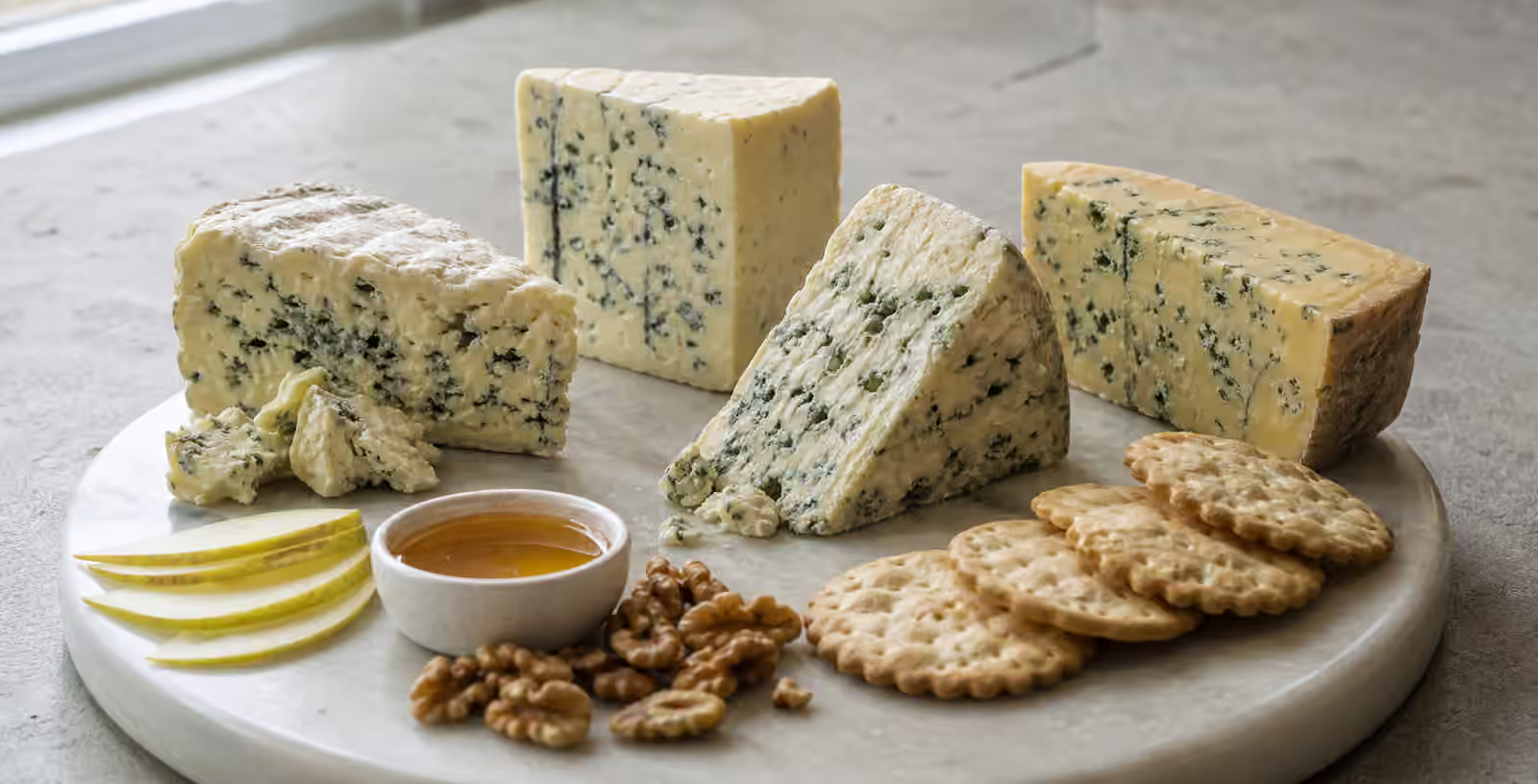
Blue cheese has a reputation for being difficult, but most of that reputation comes from meeting it in the wrong shape, at the wrong temperature, or in a portion too large for the rest of the plate. A good blue is not just “strong cheese.” It is a cheese where salt, moisture, air, mold, fat, and time have been arranged to create a specific kind of drama.
That drama can be creamy and sweet, like a soft blue melting into pear. It can be crumbly and peppery, like Stilton broken into small pieces beside toasted walnuts. It can be sharp, mineral, and almost electric, like Roquefort in a tiny bite with honey. The category is broader than its smell suggests, and learning to read it makes the cheese counter much less intimidating.
If Cheese Types gives you the wide map, blue cheese deserves a closer look because it behaves differently from most other styles. Its interior is intentionally pierced, opened to air, and ripened through veins rather than only from a rind or from the paste itself. The result is a cheese that can taste salty, mushroomy, spicy, creamy, sweet, metallic, grassy, or brothy depending on the milk, make, age, and moisture. The useful skill is not proving you like every blue. It is learning which kind of blue belongs on your table.
The veins are a clue, not a warning
The blue-green veins in blue cheese are made by mold cultures, most famously Penicillium roqueforti or close relatives. The mold needs oxygen, so many blue cheeses are pierced during aging. Those small channels let air move through the interior, allowing the mold to grow in streaks, pockets, and marbled lines. Without that air, the cheese might still age, but it would not develop the same blue character.
This is why the veining often looks uneven. A natural-looking blue is not a printed pattern. It may have a dense blue seam near one side, a pale creamy center, and scattered green flecks elsewhere. That irregularity can be part of the pleasure because each bite changes. One piece might be mostly sweet paste. Another might catch a vein and taste sharper, saltier, and more aromatic.
Do not judge blue cheese only by how blue it looks. Heavy veining often suggests more intensity, but moisture, salt, milk type, age, and texture matter just as much. A creamy, heavily veined blue can feel lush and gentle if the paste is buttery enough to soften the mold. A drier blue with fewer veins can still taste pointed if the salt is high and the paste is crumbly. The visual clue starts the conversation, but the texture usually tells you how the cheese will eat.
Texture predicts the experience
Blue cheese becomes easier to choose when you start with texture. Creamy blues tend to spread or slump as they warm. They can taste milder than their aroma because fat rounds the edges of the mold and salt. They are often the best entry point for people who think they dislike blue cheese, especially when paired with bread, pear, or a small ribbon of honey. Their flavor moves slowly across the mouth rather than arriving as a single sharp hit.
Crumbly blues feel more direct. They break into pebbly pieces, dissolve unevenly, and often taste saltier because there is less lush paste to buffer the flavor. This can be wonderful when the cheese is used as an accent. A small crumble over roasted vegetables, bitter greens, a steak, a lentil salad, or a bowl of soup can make the whole dish feel deeper. On a board, crumbly blue needs thoughtful portioning. If guests have to hack off a large piece, the cheese can dominate everything after it.
Firm blues sit between those poles. They slice or shave more cleanly, and they can feel savory rather than purely pungent. Some are excellent with nuts and dried fruit because their density gives the pairing something to hold. Others work well in cooking, though heat needs care. Blue cheese can become aggressive when melted too hard, and its salt concentrates quickly. The melting habits in Cooking with Cheese still apply: low heat, enough moisture, and restraint usually give better results than force.
Salt is part of the style
Blue cheese is usually salt-forward, and that is not an accident. Salt helps manage moisture, shape texture, and balance the intensity of the mold. It also makes blue cheese powerful in small quantities. The mistake is treating blue like a mild cheddar and serving a large wedge as if everyone will take the same size bite. Most blues are better when they are given a smaller role with more contrast around them.
Sweetness is the classic bridge because it softens salt and rounds bitterness. Honey, figs, dates, pears, apples, roasted grapes, and sweet fortified wines all make sense for this reason. The goal is not to hide the blue. It is to give the salt somewhere to land. When a bite of blue meets pear, the fruit makes the cheese taste more savory and the cheese makes the pear taste fuller. When blue meets honey, the mold notes can seem less sharp and more mushroomy.
Acid matters just as much. A board with blue cheese benefits from something that resets the mouth: crisp apple, pickled onion, lightly dressed greens, cider, sparkling wine, or a bright non-alcoholic drink with some tartness. Richness without acid can make blue feel heavy. Acid gives the next bite a clean start. This is the same pairing logic used in Cheese Pairing Beyond Wine , where bubbles, bitterness, sweetness, and acidity each have a job.
Milk changes the kind of power
Cow, sheep, goat, and mixed-milk blues do not speak with the same accent. Cow’s milk blues often feel creamy, buttery, and broad. They can be bold, but they may carry a soft dairy sweetness underneath the veins. This makes many cow’s milk blues friendly on boards, especially when the paste is moist enough to spread.
Sheep milk blues can feel denser and more concentrated. Roquefort is the famous example, with a salty, mineral, lively character that can seem enormous in a small bite. That intensity is part of its charm, but it also explains why sheep milk blues often need sweet or starchy companions. Bread, pear, honey, or a small piece of fig can turn a demanding bite into a balanced one.
Goat blue is less common in many shops, but it can be fascinating: bright, tangy, sometimes earthy, and often cleaner on the finish than expected. Mixed-milk blues can combine cream, brightness, and density in ways that are hard to predict from the label alone. The best move is the same one described in Milk Types in Cheese : use milk type as orientation, then let the actual cheese correct your assumption.
How to buy blue cheese without overcommitting
Blue cheese rewards small purchases. A little goes a long way, and a freshly cut small wedge usually serves you better than a large piece that sits too long in the fridge. At the counter, ask for the texture and intensity before you ask for a famous name. A useful request might sound like this: you want a creamy blue that is salty but not fierce, or a crumbly blue that can stand up to steak, or a sheep milk blue for a board where honey and pears are already planned.
Ask when the cheese was cut and whether it is ready to serve. Very young blue can taste salty and closed before the aroma has opened. Overheld blue can dry at the cut face, grow harsh, or pick up stale refrigerator notes. The right piece should smell alive and intentional: dairy, mushroom, earth, pepper, cellar, sometimes fruit or grass. It should not smell like harsh ammonia, chemical cleaner, or old damp packaging.
The cut face matters. Creamy blues should look moist but not wet in a broken, weeping way. Crumbly blues should break cleanly without seeming dusty or exhausted. A little surface color is normal in many blue cheeses, especially near intended rind or pierced areas, but unexpected fuzzy growth on a cut face deserves caution. If you are unsure, ask the monger. The surface-reading habits in Cheese Rinds help, but blue cheese is one place where local knowledge at the counter is especially useful.
Serving blue so people actually eat it
Temperature changes blue cheese dramatically. Served fridge-cold, it often tastes mostly salty and sharp. As it warms, the paste relaxes, fat carries aroma, and the flavor becomes more complete. Most blues benefit from about twenty to forty minutes at cool room temperature, though very soft blues may need less time and very firm blues may need a bit more. The point is not to let the cheese slump into a puddle. The point is to let aroma return.
Cutting matters too. For a creamy blue, put out a small knife or spreader and give guests bread or crackers that can carry it cleanly. For crumbly blue, break some pieces in advance so nobody has to wrestle with the wedge. For firm blue, thin slices or small shards make the salt manageable. The serving logic in How to Cut and Serve Cheese is especially important here because portion size changes flavor. A huge bite of blue can taste punishing. A small bite with pear can taste elegant.
Place blue cheese near its partners rather than marooning it on a board. Honey, pear, walnuts, dried figs, oat crackers, rye bread, apples, celery, bitter greens, and pickled onions are not decoration. They are tools that help the cheese make sense. If you are building a mixed board, put blue after milder cheeses in the tasting order. Let people start with fresh, bloomy, or alpine styles before reaching the strongest accent.
Storage needs containment and breath
Blue cheese needs enough protection to keep it from drying out and enough containment to keep its aroma from taking over the refrigerator. Wrap it in cheese paper or parchment, then place it in a small container that is not trapping visible condensation. If the paper becomes wet or strongly scented, replace it. If the cut face dries, trim a thin layer before serving and rewrap the rest.
Do not store blue pressed directly against delicate cheeses unless you want everything to smell faintly blue. A separate container is a small act of kindness to the rest of the drawer. The general rhythm from How to Store Cheese still works: protect without suffocating, keep humidity steady, and rewrap after each use. Blue simply asks for a little more separation because its aroma is strong and its mold is part of the cheese’s identity.
Once opened, use your senses and your calendar. Some firm blues keep well for a while when wrapped carefully. Softer blues can shift faster. If the cheese smells cleanly blue, tastes balanced, and looks coherent, it is probably still doing what it was made to do. If it becomes sharply rotten, slimy in an unintended way, bitter beyond recognition, or covered in growth that does not belong to the style, let it go.
Let blue be the accent
The easiest way to enjoy blue cheese is to stop asking it to be polite. It is not meant to disappear into the background. It is meant to bring contrast: salt against fruit, mold against butterfat, pepper against sweetness, cream against crunch. Once you give it the right scale, it becomes one of the most useful cheeses in the case.
Buy a small piece. Serve it warmer than the fridge. Give it something sweet, something crisp, and something plain. Taste the paste and the veins separately if the cheese allows it, then taste them together. Notice how a creamy blue softens as it warms, how a crumbly blue gets friendlier with honey, and how a firm blue can turn walnuts or pears into something more deliberate.
Blue cheese is not a dare. It is a concentrated style with a strong voice. Give that voice a little space and a few good companions, and it becomes far easier to hear what people love about it.