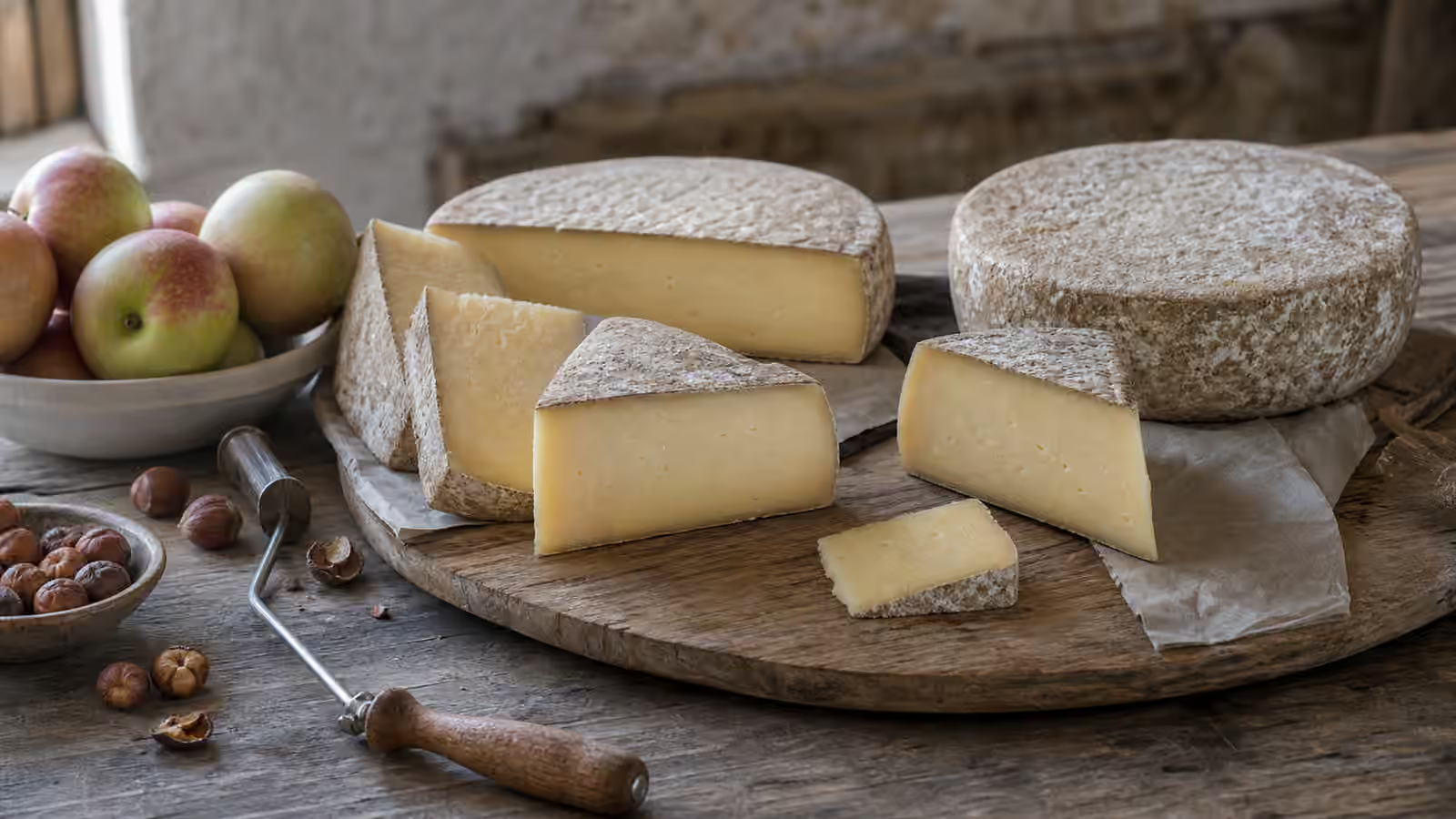
Bloomy-rind cheese is the style many people picture when they hear the word “fancy,” even if the cheese itself is more approachable than that reputation suggests. A wheel of Brie, a small Camembert, or a dense triple-cream looks quiet on the board: pale rind, soft paste, maybe a little ooze at the edge. Then the knife goes in, the center gives way, and the cheese starts to explain itself through cream, mushrooms, butter, damp earth, and warm milk.
That white rind is not decoration. It is the surface that shapes the cheese. Bloomy-rind cheeses ripen from the outside toward the center, which means a single wedge can hold several textures at once. Near the rind the paste may be glossy and almost spoonable. Closer to the core it may be firmer, chalkier, and more lactic. Neither part is automatically better. The pleasure of the style is learning how those zones work together.
If Cheese Rinds gives you the broad map of edible and inedible surfaces, bloomy rinds deserve their own close look because they are so sensitive to time. A cheese that tastes elegant on Thursday can feel sharp by Sunday. A wedge served fridge-cold can seem dull, while the same wedge served too warm can collapse into a puddle and smell more aggressive than it tastes. The style is forgiving once you know what to watch, but it does ask for attention.
What the white rind does
The rind on Brie-style cheese is usually formed by friendly molds and yeasts encouraged during aging. They grow across the outside as a thin white coat, sometimes velvety, sometimes wrinkled, sometimes slightly downy. As they work, they change the surface chemistry of the cheese and help break down the paste beneath the rind. That is why the edge of a ripe bloomy cheese often softens before the center does.
This outside-in ripening is the heart of the style. A young wheel can have a firm, chalk-white middle with only a narrow creamy layer under the rind. A riper wheel can soften almost all the way through. A very ripe wheel can slump when cut and smell sharply ammoniated if it has moved past its best window. The name on the label matters less than the stage of ripeness in front of you.
The rind brings flavor as well as texture. At its best it tastes mushroomy, earthy, and faintly bitter in a way that keeps all that butterfat from becoming flat. It can make a triple-cream taste less like plain whipped dairy and more like cheese. It can give Camembert a savory, woodland quality. It can make a mild Brie feel complete.
Brie, Camembert, and triple-cream are related, not identical
It is tempting to use “Brie” as shorthand for every soft white-rinded cheese, but that hides useful differences. Brie-style cheeses can be broad and gentle, with a buttery paste and a mild mushroom aroma. Camembert-style cheeses are often smaller, more concentrated, and more savory, with a rind character that may feel more direct. Triple-creams have extra cream added to the milk, making them dense, lush, and sometimes almost frosting-like when young.
Those differences matter at the table. A mild Brie-style wedge is a generous anchor for guests who want creaminess without drama. A ripe Camembert can be a small centerpiece because its aroma and paste have more presence. A triple-cream can feel luxurious, but it benefits from restraint: a modest piece with bread or fruit is usually more satisfying than a huge slab. Richness is not only about fat. It is about how much of that fat a bite can carry before the palate gets tired.
Milk type can shift the experience too. Cow’s milk dominates the category and tends to give buttery sweetness. Goat’s milk bloomy cheeses can be tangier, brighter, and sometimes a little lemony under the rind. Sheep’s milk versions can feel rounder and richer. If you want to understand those differences more deliberately, the tasting frame in Milk Types in Cheese pairs well with this style because the rind gives each milk a different kind of stage.
How to read ripeness at the counter
Bloomy-rind cheese should be bought for when you plan to eat it. This is not a long-term fridge project unless you know the producer and the stage of the wheel. At the cheese counter, the most useful question is not “Is this good?” but “When should I serve it?” A monger can usually tell you whether a piece is firm and young, ready tonight, or better for someone who loves a fully ripe texture.
Use your senses. The rind should look alive but not chaotic. White is normal, cream is normal, and a little tan or beige marking can be normal depending on the cheese. A neatly wrinkled surface can be beautiful. What you do not want is a cut face with unexpected fuzzy growth, a rind that is wet and breaking down unpleasantly, or an aroma that stings in a chemical way and does not settle after a few minutes of air.
Touch helps, though you should let the cheesemonger handle the cheese when possible. A young bloomy cheese feels firm and springy. A ready one gives gently, especially near the edge. A very ripe one may feel loose under the rind. Some people love that texture, but it is risky for a mixed board because it can overwhelm milder cheeses and make cutting difficult.
The chalky center is not a defect by itself. In a young Brie or Camembert, that firmer core can taste clean, milky, and slightly tangy. Some people prefer it because it feels fresher and less funky. The issue is balance. If the entire wedge is cold and chalky, it may be too young or simply too cold. If the edge is liquid and the center is still stiff, the cheese may need time, but not necessarily heat. Temperature can reveal ripeness, but it cannot manufacture maturity.
The rind is usually part of the bite
Bloomy rinds are generally meant to be eaten, and removing them automatically makes the cheese less complete. The rind is where much of the mushroom aroma lives. It also gives structure to a paste that might otherwise taste only creamy. A good slice includes rind, cream line, and center, so the bite moves from earthy to buttery to milky.
That said, eating the rind is not a test of seriousness. If the rind tastes bitter, sharply ammoniated, or simply too strong for the table, trim a narrow strip and taste the paste by itself. Then taste a smaller piece with rind. The comparison is more useful than any fixed rule. Cheese is not improved by forcing yourself to eat the part you do not enjoy.
The serving cut matters here. A wedge of bloomy-rind cheese should be cut from the center outward so each portion gets some rind and some interior. Cutting off the nose of the wedge gives one guest mostly paste and leaves later guests with too much rind. The practical details in How to Cut and Serve Cheese are especially important for this style because the cheese changes across a short distance.
Temperature decides whether the cheese speaks clearly
Most bloomy-rind cheeses are disappointing straight from the refrigerator. The fat is firm, the aroma is muted, and the rind can feel papery. Give the cheese time to relax before serving. A small wedge may need twenty to forty minutes. A larger piece or a firmer wheel may need closer to an hour. Very ripe cheeses need less because they soften quickly and can run if left too long.
Watch the cheese instead of worshiping the clock. The paste should lose its refrigerator stiffness and take on a gentle gloss. The aroma should smell rounded, like mushrooms, cream, or butter, rather than cold and closed. If the cheese starts slumping heavily or the rind becomes sweaty, it has gone too far for a tidy board. You can still serve it, but give it a shallow dish, bread close by, and a knife that can handle softness.
Temperature also changes how strong the rind feels. A cold rind can taste bitter and detached from the paste. A too-warm rind can dominate the room. The middle ground is where the style becomes clear: soft enough to spread, structured enough to slice, aromatic enough to invite, not so loud that every other cheese disappears.
Storage is a gentle balance
Bloomy-rind cheeses need humidity, but they dislike suffocation. Tight plastic can trap moisture and encourage ammonia. Too much exposure can dry the rind and make the paste tighten. The home routine from How to Store Cheese applies cleanly here: breathable paper against the cheese, a loose outer layer, and a small container if your fridge is dry or odor-heavy.
Do not store a ripe bloomy cheese pressed against blue cheese, washed rind, onions, or leftovers. It absorbs aroma, and its own rind can share aroma back. A small container protects both the cheese and the rest of the refrigerator. If condensation collects inside, open the container briefly, replace damp wrapping, and give the cheese a cleaner environment.
Buy smaller pieces more often when possible. Bloomy-rind cheese is not like a hard grating cheese that can wait patiently for weeks. Once cut, it has more exposed surface and a faster clock. A small piece eaten while it is vivid is better than a large bargain wedge that spends half its life becoming a problem.
Pairings that make cream feel lively
The easiest pairing mistake is adding only more richness. Bloomy-rind cheese already brings butterfat and softness. It usually wants lift, crunch, and a little contrast. Plain bread is the first partner because it gives the paste somewhere to go. A baguette, country loaf, or simple cracker makes the cheese feel like food rather than a spoonful of cream.
Fruit helps when it brings acidity as well as sweetness. Apples, pears, grapes, apricots, and figs can all work, but the best partner depends on the cheese. A mild Brie-style wedge can take pear or apple cleanly. A more savory Camembert may prefer apple, cider, or a sharp chutney used sparingly. A triple-cream often benefits from tart fruit because the acid keeps the bite awake.
Mushrooms, toasted nuts, honey, and jam can be useful, but they should not bury the cheese. A little honey can make a salty, earthy rind feel rounder. Too much jam can turn the bite into dessert and hide the very flavor you bought the cheese for. If you want to think beyond wine, Cheese Pairing Beyond Wine has the better principle: match richness with refreshment, and give aroma something to connect to.
For drinks, sparkling wine, dry cider, light beer, tea, and mineral water can all work because they reset the palate. Red wine is trickier than many people expect; tannin can make bloomy rind taste metallic or bitter. If you want wine, gentle bubbles, high acid whites, and lighter reds usually treat the cheese more kindly than heavy, tannic bottles.
How to place it on a board
Bloomy-rind cheese is often the creamy anchor of a board. It works well beside a firm savory cheese and one stronger accent, especially if you follow the contrast logic in Cheese Board for Learning . The bloomy cheese gives softness and comfort. The firm cheese gives chew and depth. The stronger accent, perhaps blue or washed rind, gives drama in a smaller portion.
Give the bloomy cheese enough space. A ripe wedge may spread as it warms, and guests need room to cut from the center outward. Start the first slice before the board reaches the table so nobody has to guess how to approach it. Keep bread nearby. If the cheese is very soft, a shallow bowl or small plate can be more hospitable than forcing it to behave on a crowded board.
Leftover bloomy-rind cheese can be excellent in the kitchen when handled gently. It can melt into eggs, potatoes, grilled sandwiches, tarts, or a simple cream sauce. Use low heat and remember that the rind brings mushroomy, earthy flavor. The melting cautions in Cooking with Cheese still apply: too much heat can make fat separate, and a strong rind can take over a dish if you use the cheese like bulk instead of seasoning.
Bloomy-rind cheese is not hard to love. It only becomes confusing when treated as a generic soft cheese. Read the rind, ask about ripeness, serve it warmer than the fridge but not collapsing, and cut it so each bite includes the parts that make the style whole. Then the familiar white wheel becomes more than a creamy crowd-pleaser. It becomes a lesson in how surface, time, fat, and temperature can turn milk into something quietly expressive.