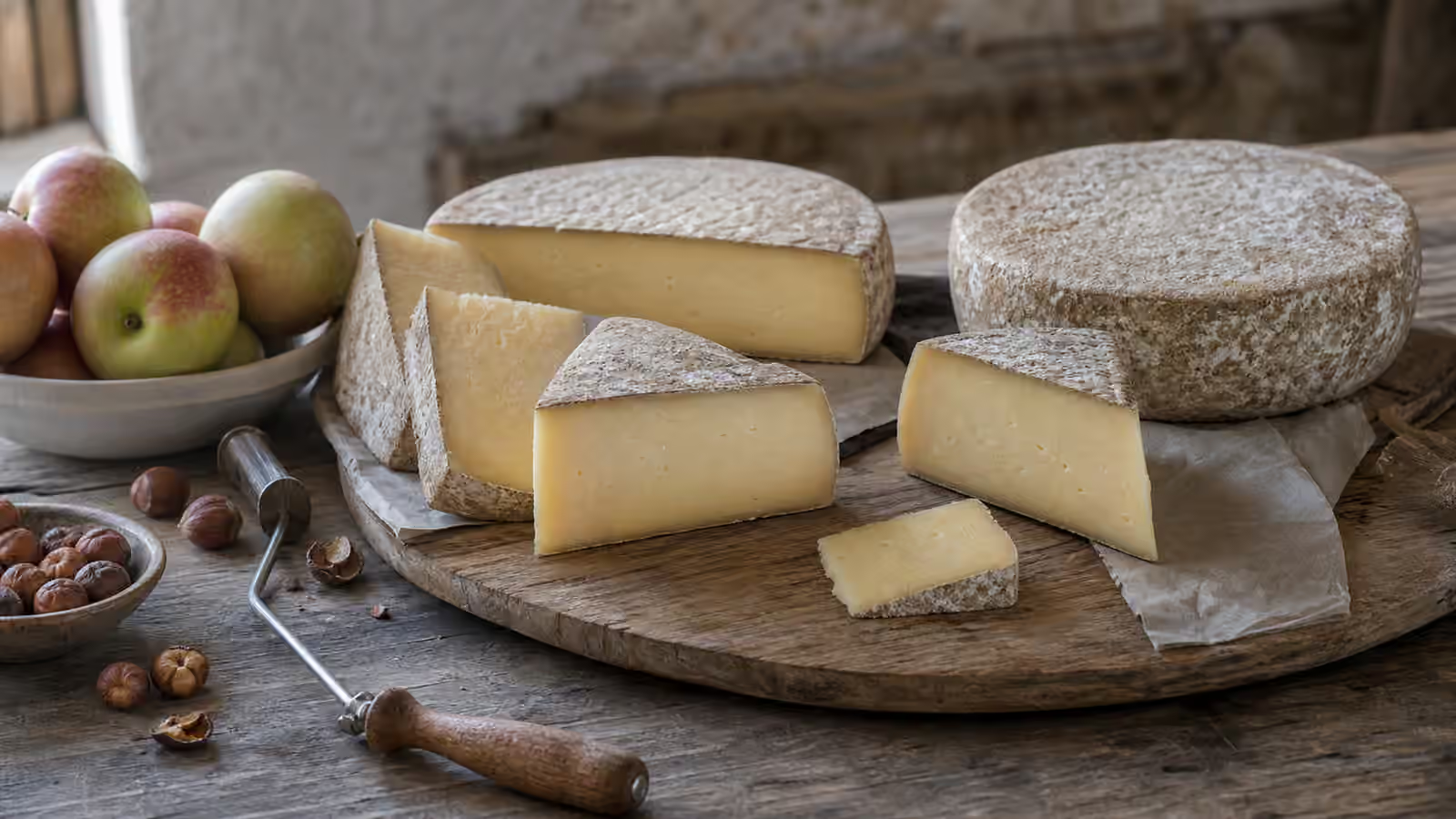
Aged firm cheese is the part of the cheese counter that often looks the least dramatic and gives the most steady pleasure. It does not ooze across the board like a ripe bloomy rind. It does not announce itself from across the room like a washed rind. It usually sits there as a wedge, a block, or a broken piece, dense and quiet, waiting for someone to cut it properly and let it warm enough to speak.
The style includes everyday names and special occasion names at the same time. Cheddar can be simple, sharp, clothbound, sweet, or earthy. Aged Gouda can taste like caramel and roasted nuts. Manchego can be firm, sheepy, and savory without becoming harsh. Older mountain cheeses can taste like broth, toasted hazelnuts, browned butter, onion soup, or the edge of a well-roasted potato. The family is broad, but the eating logic is shared: moisture has left, flavor has concentrated, texture has tightened, and time has given the cheese a longer finish.
If Cheese Types gives you the map, aged firm cheese is the territory where that map becomes practical. These are cheeses you can slice for a sandwich, break into shards for a board, grate into a dish, or nibble slowly with fruit and something crisp. They are forgiving enough for a normal refrigerator, but not so indestructible that handling does not matter. A dried-out wedge of good cheddar can still be useful, but it will not have the same generosity as one stored and served with attention.
What aging changes
Fresh cheese tastes close to milk. Aged firm cheese tastes like milk that has been reorganized by acid, salt, pressure, rind, and time. During aging, enzymes continue breaking proteins and fats into smaller, more flavorful pieces. Water moves out of the cheese. Salt becomes more noticeable because there is less moisture to dilute it. The paste becomes tighter, sometimes crumbly, sometimes brittle, sometimes dotted with crunchy crystals.
That is why age is not only a number on a label. A six-month cheddar and an eighteen-month cheddar are not simply young and old versions of the same thing. They ask to be used differently. The younger cheese may slice cleanly and melt kindly. The older cheese may break into rough pieces, taste sharper, and behave more like seasoning when heated. The same shift happens across Gouda, Manchego, Alpine-style cheese, and many hard grating cheeses. Time makes flavor deeper, but it also changes texture and kitchen behavior.
The cheesemaking steps behind this are covered more fully in How Cheese Is Made , but the useful idea is simple: firm cheeses are built to shed moisture and hold shape. Curds may be cut smaller, cooked, pressed, salted thoroughly, or aged behind a protective rind or coating. Those choices create a cheese that can travel farther from milk than a fresh cheese can.
Cheddar, Gouda, Manchego, and mountain cheese are cousins, not twins
Cheddar is often the entry point because its range is so wide. A young block can be mild, smooth, and friendly. A mature cheddar can be sharp, tangy, and faintly crumbly. Clothbound cheddar often adds an earthy cellar note near the rind, especially if it has been aged with care. The word “sharp” is useful, but it does not describe everything. A good aged cheddar may be sharp and sweet, sharp and brothy, or sharp and grassy depending on milk, make, and age.
Aged Gouda moves in a different direction. It often becomes sweet, dense, and deeply nutty, with caramel and butterscotch notes that can surprise people who expect all aged cheese to taste salty first. The texture can become almost candy-like in the best way: firm, smooth at first, then crunchy where crystals interrupt the paste. Very old Gouda can be powerful, so it usually works best in thin pieces or small chunks rather than thick slabs.
Manchego brings sheep milk into the conversation. It is firm and sliceable when younger, then drier and more concentrated with age. The flavor often feels rich, nutty, grassy, and slightly lanolin-like, with a savory depth that lands differently from cow milk cheddar or Gouda. If you want to explore why cow, goat, sheep, and mixed-milk cheeses feel so distinct, Milk Types in Cheese gives the better frame.
Mountain and Alpine-style cheeses, such as Gruyere, Comte, and related cooked-curd wheels, tend to emphasize broth, nuts, caramelized onion, and warm savory depth. Some are supple and melty, especially when not too old. Others are dense enough to break. The Alpine Cheese Trail approaches that family through place and story; on the plate, the practical clue is that these cheeses often give you comfort and complexity without the intensity of blue or washed rind.
Crystals are texture, not a defect
Those crunchy white flecks in aged cheese are one of the small pleasures of the style. They are commonly protein or calcium-based crystals formed during aging, and they are usually a sign that time has changed the paste in an interesting way. They are not the same thing as a cheese being sandy from poor storage, and they are not simply salt sprinkled through the wedge, even though aged cheese can taste saltier as moisture leaves.
Crystals change how a bite unfolds. The cheese may start smooth, then crackle. That tiny interruption makes the flavor feel longer because texture keeps the mouth paying attention. Aged Gouda is famous for this. Parmigiano-style cheeses and aged cheddars can show it too. In a board setting, crystalline cheese is useful because it gives contrast without needing a bold aroma. A small pile of broken shards can be as memorable as a soft cheese, especially beside fruit, nuts, and a plain cracker.
There is a difference between attractive crystallization and a wedge that has dried badly. Good crystals feel integrated. Dry damage feels like a hard, leathery edge or a stale, chalky surface. If the outside has gone dull but the interior still tastes good, trim the tired edge and serve the center. The goal is not to save every crumb. It is to protect the part of the cheese that still tastes alive.
How to buy aged firm cheese
At the counter, ask less about prestige and more about use. If the cheese is for snacking or a board, ask for something with enough age to have depth but not so much salt or brittleness that guests need instruction. If it is for cooking, say what you plan to cook. A cheesemonger may steer you toward a younger Alpine-style cheese for melting, a sharper cheddar for a sauce with backbone, or a hard grating cheese for finishing a dish rather than forming the body of it.
Look at the cut face. Aged firm cheese should look coherent. Small cracks, crystals, and natural color variation can be beautiful. A deeply dried face, large unwanted fissures, or a sweaty surface under plastic suggests the cheese has been handled poorly or has waited too long after cutting. Rinds and coatings matter too. Wax is removed. Cloth is removed. Natural rinds are sometimes pleasant near younger wheels and sometimes too rough on older ones. The broader rind habits in Cheese Rinds are especially useful with this category because the edge can taste dramatically different from the center.
Buy an amount you can finish while the cut face still feels fresh. Aged firm cheese lasts longer than fresh mozzarella or ripe Brie, but it still loses aroma and moisture after cutting. Smaller pieces bought more often usually taste better than a large bargain wedge that spends weeks becoming a refrigerator project.
Cutting changes the cheese
With aged firm cheese, shape is flavor. Thick blocks can feel blunt because each bite becomes dense and salty. Thin slices are gentler and show sweetness. Broken shards expose rough surfaces and make crystalline cheeses feel more vivid. Fine shavings let hard cheese dissolve on the tongue instead of forcing the jaw to do all the work.
Cheddar often works well in irregular pieces when it is mature enough to crumble. Aged Gouda is happiest in small chips or thin cuts because its density can become tiring in large cubes. Manchego can be sliced into slim triangles when it is moderately aged, then broken smaller when it becomes drier. Mountain cheeses can be sliced, shaved, or chunked depending on age. The point is not etiquette. It is kindness to the cheese and to the person eating it.
If the wedge has a rind, avoid giving one person all the middle and another person only edge. Trim anything inedible or unpleasant, then portion so bites move through the cheese fairly. How to Cut and Serve Cheese explains the same principle across styles: every cut should respect how flavor changes from rind to center.
Temperature and storage
Aged firm cheese is less fragile than soft-ripened cheese, but it still needs warmth before serving. Straight from the refrigerator, fat is tight and aroma is muted. Give most pieces twenty to forty minutes at room temperature, longer for a large dense wedge and less for very thin shavings. The goal is not sweating warmth. It is a relaxed texture and a clear aroma.
Storage is mostly a battle against drying. Wrap the cut face with parchment or cheese paper, then give the wedge a protective outer layer or a container that keeps fridge air from pulling out moisture. Tight plastic can work briefly for firm cheese, but it often traps stale aromas and condensation if used carelessly. The paper-and-container method from How to Store Cheese keeps aged firm cheese in better shape without treating it like museum glass.
If a firm cheese develops a small spot of unwanted surface mold, the usual home response is to cut away a generous margin and rewrap the clean piece. If a cheese smells rotten, chemical, or plainly wrong, do not argue yourself into eating it. Aged firm cheese gives you more room for trimming than soft cheese does, but good judgment still matters.
Pairing without making the board heavy
Aged firm cheese likes partners that either echo its depth or cut through it. Apples, pears, grapes, toasted nuts, crusty bread, crackers, mustard, pickles, honey, and dried fruit can all work, but each does a different job. Apple makes cheddar feel brighter. Walnuts echo Gouda and mountain cheese. Mustard wakes up the salt and fat. Honey makes sharpness rounder, though too much can flatten the cheese into sweetness.
For drinks, aged firm cheeses are flexible because they have enough salt and flavor to stand up for themselves. Dry cider is often excellent with cheddar and Manchego because acidity refreshes the palate. Malt-driven beer can meet nutty mountain cheeses cleanly. Tea can be surprisingly good, especially black tea with cheddar or roasted oolong with aged Gouda. If you want to look beyond wine, Cheese Pairing Beyond Wine has the most useful principle: decide whether the drink is refreshing the bite, echoing it, or deliberately contrasting it.
On a board, aged firm cheese is usually the structural center. It gives guests something easy to return to between softer or stronger cheeses. Pair it with a creamy cheese and one bold accent, and the board will feel complete without looking crowded. Cheese Board for Learning uses that contrast deliberately, which is the best way to understand why one firm, savory cheese can carry so much of the spread.
Cooking with aged firm cheese
The kitchen is where age becomes both gift and warning. Younger firm cheeses often melt more smoothly because they still hold more moisture and have a protein structure that relaxes under heat. Older cheeses bring more flavor, but they can turn oily or grainy if pushed too hard. This does not make them bad cooking cheeses. It means they should often be used as seasoning, finishing, or part of a blend.
Aged cheddar can bring depth to a sauce, but it may need gentler heat and help from a younger cheese if you want silkiness. Aged Gouda can be wonderful in small amounts, especially where its sweetness makes sense, but it can dominate if used heavily. Manchego shaves beautifully over vegetables, eggs, or beans. Hard mountain cheese can finish soups, potatoes, and gratins with savory force. The melting details in Cooking with Cheese matter here because the oldest wedge is rarely the smoothest melt.
Aged firm cheese rewards attention without demanding ceremony. Buy for purpose, cut for texture, warm it enough to let aroma rise, and store it so the cut face stays generous. Once you learn to notice salt, crystals, rind, and moisture, the quiet wedges at the counter stop looking plain. They become some of the most useful cheeses you can bring home: sturdy enough for the week, expressive enough for a board, and concentrated enough that a small piece can carry a whole bite.