Yeast is the ingredient most beer drinkers learn last, partly because it is hard to see. Malt sits in bags. Hops smell loud before they ever reach the kettle. Water is obvious because beer is mostly water. Yeast arrives as a small pitch of cells and then disappears into the fermenter, where it quietly changes sweet wort into beer. That hidden work makes it easy to treat yeast as a switch that turns sugar into alcohol, but that is only the beginning. Yeast decides whether a beer feels crisp or round, clean or fruity, spicy or neutral, dry or sweet, settled or hazy.
Learning yeast completes the ingredient picture. Understanding Malt explains the grain that gives yeast its food. Understanding Hops explains bitterness, flavor, and aroma. Yeast explains why the same malt and hop bill can become a clean pale ale, a clove-scented wheat beer, a peppery saison, or a crisp lager. It is not just a brewer’s detail. It is one of the fastest ways to understand why beer styles taste the way they do.
What Yeast Actually Does
Before fermentation, the brewer has wort: a sweet, bitter, grain-based liquid made from malt, water, and hops. Yeast consumes fermentable sugars in that wort and produces alcohol, carbon dioxide, heat, and a wide range of flavor-active compounds. Some of those compounds are central to the beer’s personality. Others are flaws when they appear in the wrong amount or the wrong style.
This is why fermentation is not a waiting room between brewing and packaging. It is a major creative act. The brewer can make excellent wort, but yeast decides how that wort finishes. A highly attenuative strain may leave the beer dry and snappy. A less attenuative strain may leave more body and sweetness. A neutral strain may let malt and hops take the stage. A characterful strain may add pear, banana, apple, pepper, clove, earth, or soft fruit notes that become part of the style itself.
Yeast also shapes texture. Carbon dioxide from fermentation becomes the basis for natural carbonation in bottle-conditioned beers and cask ales. Yeast flocculation, which is the tendency of cells to clump together and settle, affects clarity and mouthfeel. A strain that drops bright can leave a beer clear and polished. A strain that stays in suspension can make a beer hazy, bready, or softly textured. Haze is not automatically a flaw, and clarity is not automatically a virtue. Both have to fit the beer.
Fermentation Is Flavor
The most useful yeast word for tasters is ester. Esters are aroma compounds that often smell fruity. Depending on the yeast, fermentation conditions, and beer style, they can suggest apple, pear, banana, berry, stone fruit, or tropical fruit. In a restrained English bitter, a little fruitiness can make the beer feel alive without turning it sweet. In a German-style wheat beer, banana-like ester character may be a defining feature. In a very clean pilsner, the same fruitiness would feel out of place.
Another useful word is phenol. In beer, phenolic character can show up as clove, pepper, spice, smoke, medicine, or plastic. Some yeast strains are prized for controlled spicy phenols. Belgian ales, saisons, and many wheat beers often depend on them. In other beers, phenols can make a glass taste harsh or medicinal. Context matters, which is a theme that also runs through Beer Off-Flavors . A flavor can be traditional in one style and distracting in another.
Yeast can also produce sulfur notes, buttery diacetyl, green-apple acetaldehyde, solvent-like alcohol warmth, or other compounds that tell a story about fermentation health, time, and handling. A trace of sulfur in a young lager may fade with proper conditioning. A soft buttery note may be part of some traditional profiles, but too much can make beer taste slick and unfinished. Green apple can suggest beer that was rushed or fermentation that did not clean up fully. These signals do not mean every beer needs laboratory judgment. They simply give you better words for what the glass is saying.
Ale Yeast, Lager Yeast, And Wild Fermentation
Most beer conversations begin with ale and lager, and yeast is the reason the split matters. Ale yeasts usually ferment warmer and often create more expressive fermentation character. That does not mean all ales are fruity or heavy. A clean American ale can be quite neutral. A British ale may show gentle fruit and mineral snap. A Belgian ale can be intensely aromatic. The ale family is wide because yeast strains behave differently and brewers use them for different ends.
Lager yeasts are associated with cooler fermentation and long conditioning. The best lagers are not flavorless; they are precise. Because lager yeast often leaves fewer fruity or spicy notes, malt, hops, water character, and fermentation cleanliness become easier to notice. A great helles can taste softly bready and balanced. A Czech-style pilsner can show grain, herbal hops, and rounded bitterness. A dunkel can bring dark bread and toast without the yeast adding much visible perfume. If you have only thought of lager as plain, tasting it through yeast may change the frame. Its restraint is part of the craft.
Wild and mixed fermentation beers add another layer. In those beers, brewers may use Saccharomyces yeast along with Brettanomyces and bacteria such as lactic acid producers. The result can include acidity, funk, leather, hay, fruit skin, earth, or a bone-dry finish. These beers can be beautiful, but they also make context essential. The tartness and funk that belong in a lambic-inspired beer would be alarming in a cream ale. If sour beer feels confusing, the story-driven Sour Beer Awakening guide is a useful companion.
Temperature, Time, And Patience
Yeast is alive, and fermentation conditions matter. Temperature is one of the biggest levers. Warmer fermentation can make yeast more expressive and sometimes more unruly. Cooler fermentation can make it cleaner or slower. Each strain has a preferred range, and good brewers choose temperatures that fit the beer rather than chasing one universal rule.
Time matters because fermentation does not end the moment bubbling slows. After the most active phase, yeast can reabsorb or transform some compounds it produced earlier. This cleanup period is one reason patience improves beer. A batch that tastes rough, buttery, sulfurous, or sharp when young may settle with time if the underlying fermentation was sound. A batch that is packaged too early can carry unfinished flavors into the glass.
For homebrewers, this is one of the central lessons in Homebrewing Basics . Sanitation matters, but yeast health and steady fermentation matter just as much. Pitch enough healthy yeast, keep the temperature steady, give fermentation enough time, and protect the beer from oxygen after fermentation is complete. Those habits are not glamorous, but they make the difference between beer that merely becomes alcoholic and beer that tastes composed.
Attenuation, Dryness, And Body
Attenuation describes how much of the available sugar yeast ferments. A beer with high attenuation finishes drier because more sugar has been consumed. A beer with lower attenuation retains more body and sweetness. This does not mean one is better. A dry saison can feel refreshing because yeast has stripped the beer down to a crisp finish. A sweet stout may need more residual body to support roast and chocolate notes. A balanced pale ale may want enough dryness for hops to snap while keeping enough malt to avoid feeling thin.
This is where yeast connects directly to malt. Malt creates the sugar profile, proteins, dextrins, and flavor base. Yeast decides how much of the fermentable part remains. If a beer tastes heavy, sweet, and dull, the issue may be recipe design, mash choices, yeast selection, fermentation performance, or a combination of all of them. If a beer tastes sharp and empty, it may have fermented very dry without enough malt structure. The glass rarely gives a single-cause answer, but yeast helps explain why body and sweetness do not come from malt alone.
Dryness also changes how bitterness feels. A dry beer can make hop bitterness seem firmer and more direct. A fuller beer can soften bitterness and make it feel rounder. This is why the same measured bitterness can taste different across styles. The Beer Styles Guide becomes easier to read when you see styles as balances between malt, hops, yeast, alcohol, carbonation, and finish rather than as names on a menu.
Yeast In The Glass
Sometimes yeast remains visible in the finished beer. Bottle-conditioned beer may have a small layer of sediment at the bottom. Hazy wheat beers and some modern pale ales may carry yeast or yeast-derived haze along with proteins and hop compounds. Cask ale may taste softer because it is naturally conditioned and served with gentler carbonation. These choices affect flavor, aroma, appearance, and texture.
Sediment is not automatically bad. In some beers, a careful pour leaves it behind for a cleaner glass. In others, a gentle swirl can add body and traditional character. The right approach depends on style and preference. A bottle-conditioned Belgian ale may change dramatically between the first clear pour and the final yeastier sip. That change can be enjoyable if you know what is happening.
Yeast can also influence foam. Proteins from malt do much of the work, but fermentation health, carbonation, alcohol level, and conditioning all affect head formation and persistence. A beer that is lively but not harsh, aromatic but not solvent-like, and clear or hazy in a way that suits its style is usually showing careful fermentation behind the scenes.
How To Taste Yeast More Clearly
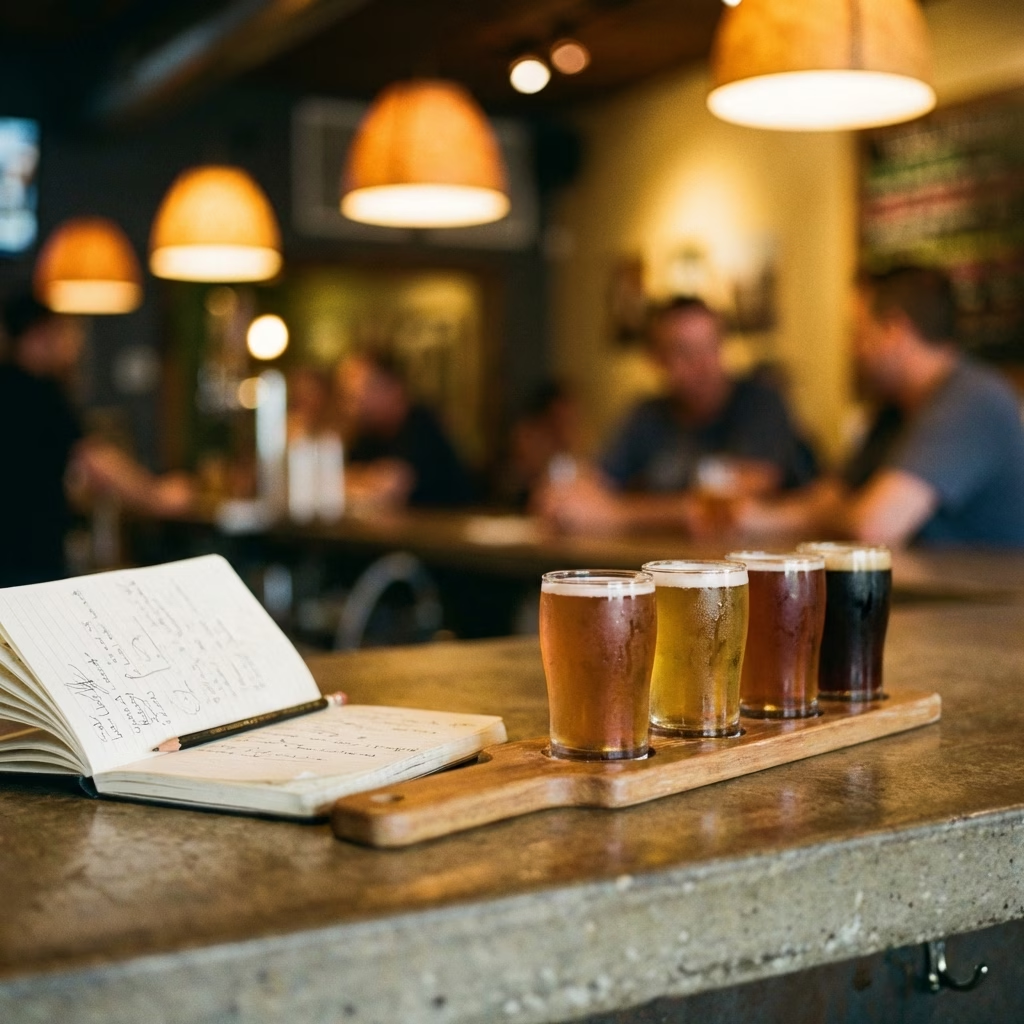
The easiest way to learn yeast is to taste styles where yeast is meant to be obvious. Put a German-style wheat beer beside a clean blonde ale and notice banana, clove, and soft dough against a cleaner profile. Taste a Belgian saison beside a pale lager and notice pepper, dryness, and rustic fruit against restraint. Try an English bitter beside a very neutral American pale ale and look for gentle fruit, mineral structure, and a different kind of finish. You do not need rare bottles. You need contrast.
Smell first, because yeast often speaks in aroma before flavor. Fruity esters may appear before the first sip. Spicy phenols may rise as the beer warms. Sulfur may be more obvious when the glass is first poured and then fade. Diacetyl can show in aroma, but it often appears more clearly as a slick butteriness on the palate. Acetaldehyde can smell or taste like green apple, cut pumpkin, or raw cider. Ordinary comparisons are useful because they make memory sticky.
It also helps to separate yeast character from hop character. Tropical aroma in an IPA may come mostly from hops, but fermentation can amplify or reshape fruitiness. Pepper in a saison is usually yeast-driven, while herbal bitterness in a pilsner is often hop-driven. Bread crust is often malt. A rounded dry finish may involve all three. The point is not to assign every molecule correctly. It is to build a practical sense of which ingredient is likely speaking.
When Yeast Character Becomes A Fault
Yeast is powerful enough to create beauty and powerful enough to create problems. Fermentation that runs too warm for the strain can create harsh fusel alcohols or excessive fruitiness. Unhealthy yeast can leave sweetness, sulfur, acetaldehyde, or other unfinished notes. Poor sanitation can let unwanted microbes take over, creating sourness, phenols, gushers, ropey texture, or overcarbonation where they do not belong. Oxygen after fermentation can make yeast-conditioned beers stale faster, especially when hop aroma is part of the design.
The important habit is to judge faults against intention. Banana in a wheat beer may be welcome. Banana in a clean lager is probably not. Pepper in a saison may be the point. Plastic-like phenol in a pale ale is not. A slight sulfur edge in a young lager may clear; a persistent rotten aroma is another matter. A dry, funky mixed-fermentation beer may be excellent; the same funk in a fresh IPA is a warning sign.
This is why yeast knowledge makes you a fairer taster. Instead of calling a beer strange, you can ask whether the yeast character fits. Instead of assuming every clear lager is simple, you can notice how hard it is to ferment cleanly. Instead of treating haze as a trend or a defect by default, you can ask what role yeast, protein, and hops are playing in the style.
Reading Beer Through Yeast
Once you start looking for yeast, tap lists become more legible. Words like hefeweizen, saison, Belgian blond, tripel, witbier, kveik ale, lambic-inspired, bottle-conditioned, lagered, cask-conditioned, and wild ale all carry fermentation clues. They tell you to expect more than malt color and hop intensity. They suggest texture, aroma, dryness, clarity, acidity, and the way the beer may change as it warms.
Yeast also explains why restrained beers deserve attention. A clean pilsner gives the brewer nowhere to hide. A delicate helles has to ferment cleanly, condition well, and still taste like something. A simple pale ale can be ruined by a poor fermentation even if the malt and hops were chosen well. Conversely, an expressive yeast strain can make a modest recipe feel layered and alive.
The practical reward is not technical display. It is better drinking. You can choose beer with a clearer sense of what you want. You can understand why one Belgian ale tastes peppery and dry while another tastes fruity and sweet. You can tell the difference between purposeful yeast character and a batch that seems unfinished. You can taste how fermentation turns ingredients into style.
Yeast is small, but it is not a footnote. It is the quiet organism that turns grain sugar into beer and, in the process, leaves fingerprints all over aroma, body, carbonation, clarity, dryness, and finish. Once you notice those fingerprints, many beers stop feeling mysterious. They begin to feel made.