The first time someone put a sour beer in front of me, I thought it had gone bad.
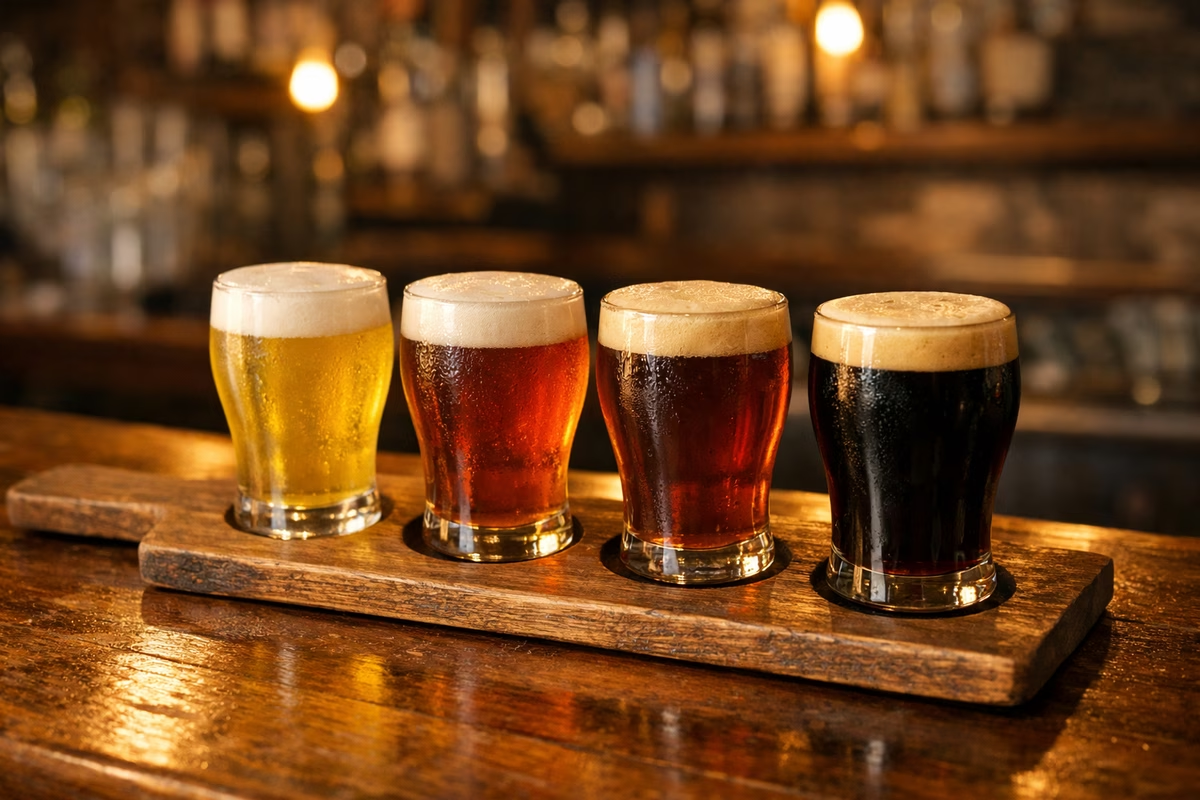
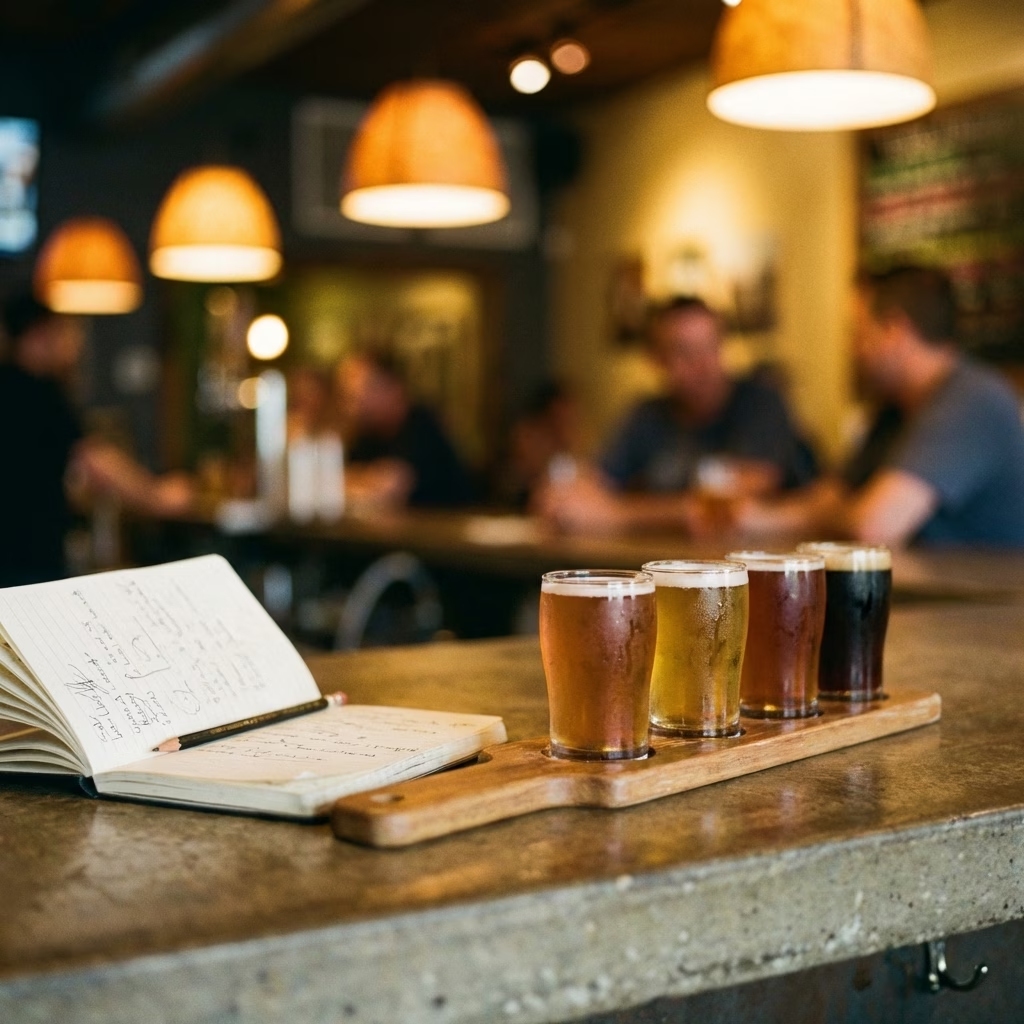
I was at a craft beer bar in Portland, the kind with sixty taps and a menu that reads like a chemistry textbook. My friend ordered a “lambic”—a word I didn’t recognize—and the bartender poured something golden and hazy into a tulip glass. I took a sip and my face did the thing faces do when they encounter something unexpected: a full-body pucker, eyes squinting, followed by a slow confusion as my brain tried to reconcile “this is beer” with “this tastes like sparkling lemonade crossed with a wine cellar.”
“This is… beer?” I asked.
“This is a three-year-old spontaneously fermented Belgian lambic blended with fresh raspberries,” my friend said, in the way beer people say things.
I took another sip. The sourness was still there, but now I could taste past it: tart raspberry, something earthy and barnyard-like (I’d later learn to call this “funk”), a dry, champagne-like finish, and absolutely zero of the malty sweetness I associated with beer. It tasted ancient and modern at the same time.
By the end of the glass, I understood something I hadn’t before: sourness in beer isn’t a flaw. It’s a flavor family. And the family is enormous.
Why some beer is supposed to be sour
All beer contains acid. Hops contribute acids. Malt contributes acids. Fermentation produces acids. The reason most beer doesn’t taste sour is that brewers carefully control their process to minimize acid production and maximize the flavors we associate with “normal” beer: malt sweetness, hop bitterness, yeast character.
Sour beer takes the opposite approach. Brewers deliberately introduce acid-producing microorganisms—specific bacteria and wild yeast strains—that transform the beer’s sugar into lactic acid, acetic acid, and a constellation of funky flavor compounds. The result is beer that lives in the same flavor space as wine, cider, and kombucha: tart, complex, dry, and often surprisingly refreshing.
The sourness isn’t an accident. It’s the point.
Lactobacillus: A bacteria that produces lactic acid—clean, yogurt-like sourness. This is the primary souring agent in many modern sour beers (gose, Berliner Weisse, kettle sours). Fast-acting and controllable.
Pediococcus: Another lactic acid bacteria, but slower and capable of producing more complex flavors. Often used alongside Brettanomyces in longer-aged sours. Can create a “sick” phase where the beer tastes silky/ropey before it resolves.
Brettanomyces (“Brett”): A wild yeast genus that produces funky, earthy, barnyard flavors alongside fruity esters. Brett is the signature of Belgian lambics and many American wild ales. It works slowly—months to years—and adds layers of complexity that conventional yeast cannot.
Acetobacter: A bacteria that produces acetic acid (vinegar). In small amounts, it adds sharp complexity. In large amounts, it makes the beer taste like salad dressing. Brewers manage it carefully through oxygen control.
The styles: a tasting journey
Berliner Weisse
This is where many people start. A German wheat beer style that’s light-bodied (3-4% ABV), bracingly tart, and refreshingly dry. Traditional Berliner Weisse is almost austere—just sour wheat beer, pale and effervescent. Modern American versions often add fruit, creating what amounts to a beer slushie for adults.
If you’ve never had sour beer, start here. The low alcohol, clean acidity, and fruit-forward character are the gentlest entry point.
What to expect: Think lemonade with a wheaty backdrop. Sparkling, sharp, thirst-quenching. Served in a wide-mouth glass, sometimes with a dash of raspberry or woodruff syrup in the traditional German style.
Gose
A German salt-and-coriander sour wheat beer (pronounced GO-zuh). Gose adds two unusual ingredients: salt and ground coriander seed. The salt enhances the tartness and adds a margarita-like quality. The coriander provides a subtle citrus-spice note.
Modern American gose has become a playground for fruit additions—watermelon gose, mango gose, cucumber gose—making it one of the most approachable sour styles.
What to expect: Tart, slightly salty, citrusy, light. Like a craft beer version of a salty limeade.
Flanders Red Ale
Here’s where sour beer gets serious. Flanders Red is aged in oak barrels for one to three years, developing deep, wine-like complexity. The flavor profile includes sour cherry, red wine vinegar, leather, and a dry, tannic finish. It’s sometimes called “the Burgundy of Belgium.”
This is not a refreshment beer. This is a contemplation beer. Sip it slowly with rich food—roasted meats, aged cheese, or dark chocolate.
What to expect: Deep red, wine-like sourness, cherry and plum, earthy oak tannins. Dry finish. 5-8% ABV.
Lambic and Gueuze
This is the summit. Lambic is spontaneously fermented—the brewer makes the wort, exposes it to the open air in a coolship (a large, shallow copper pan), and lets whatever wild microorganisms happen to be floating in the brewery’s local atmosphere inoculate the beer. No yeast is added. Nature does the work.
The result, after one to three years of barrel aging, is something that transcends beer categories. A good lambic is dry, complex, funky, and completely unlike any beer you’ve had. It’s closer to a natural wine than to an ale.
Gueuze is a blend of one-, two-, and three-year-old lambics, bottle-conditioned to create natural carbonation. The blending is an art form—the gueuze blender (or stekerij) is selecting from dozens of barrels to create a final product that balances young freshness with aged complexity.
Fruit lambic (kriek, framboise) adds whole fruit to aging lambic. Traditional fruit lambics are dry—the wild yeast eats all the fruit sugar—and the fruit character is subtle and wine-like. Avoid sweetened versions labeled “lambic” at grocery stores; they’re a different product entirely.
What to expect: Bone-dry, complex, funky, with notes of hay, lemon, horse blanket (yes, this is a real tasting note and it’s a compliment), and aged cheese rind. Fruit lambics add a layer of tart fruit without sweetness.
- Don’t fight the pucker. The first sip of any sour beer will make your face react. That’s normal. By the third sip, your palate calibrates and you start tasting the flavors behind the acidity.
- Serve slightly cool, not cold. 45-50°F is ideal. Too cold and the complexity hides. Too warm and the acidity becomes aggressive.
- Use a tulip or wine glass. These shapes concentrate aromatics and let you appreciate the nose, which is often as complex as the flavor.
- Pair with food. Sour beer is one of the most food-friendly beer styles. The acidity cuts through rich, fatty, or salty foods the way wine does.
American wild ales: the new frontier
American craft brewers took the Belgian wild ale tradition and ran with it. The result is a distinctly American category: wild ales that use mixed cultures of yeast and bacteria, often barrel-aged, frequently fruit-forward, and willing to break any rule the Belgians might consider sacred.
The best American wild ale programs—Jester King in Texas, Cascade in Oregon, Allagash in Maine, Side Project in Missouri, the Rare Barrel in California—are producing beers that rival Belgian classics while exploring flavors that Belgium never attempted: wild ales aged on peaches, blueberries, apricots, passion fruit, or even savory ingredients like herbs and peppers.
Many of these beers are released in limited quantities and develop passionate followings. The secondary market for rare bottles can be intense—but you don’t need to chase hype to enjoy great American wild ale. Most of the breweries above have taprooms where you can taste current releases at reasonable prices.
The education of a sour beer drinker
After that first lambic in Portland, I went through what most sour beer converts experience: a rapid, delirious tasting education.
Month 1: I tried every gose and Berliner Weisse I could find. Fruit sours, salted sours, herb sours. I discovered that “sour beer” isn’t one flavor—it’s dozens of flavors arranged along a spectrum from gentle to aggressive.
Month 3: I moved into Flanders Red and started understanding oak-aged sour. The depth and complexity surprised me. These weren’t session beers—they were contemplation drinks that rewarded slow sipping the way good wine does.
Month 6: I bought my first bottle of authentic Belgian gueuze (3 Fonteinen Oude Geuze) and opened it with the same friend who’d handed me that first lambic. We drank it slowly over an hour, and I finally understood what “complex” means in beer: layers of flavor that reveal themselves over time, changing as the beer warms, as your palate adjusts, as you pay closer attention.
Month 12: I visited a Belgian-style brewery with a coolship program and watched the evening cooldown—hot wort pumped into the shallow copper pan, the barn doors opened to let the night air in, and a faith in the invisible microbiology of a specific place that felt more like religion than brewing.
Pairing sour beer with food
Sour beer is among the best food beers in existence. The acidity performs the same culinary role as wine or vinegar: it cuts through fat, brightens rich dishes, and cleanses the palate between bites.
Berliner Weisse / Gose + Seafood: The light body and bright acidity pair beautifully with oysters, ceviche, grilled shrimp, or fish tacos.
Flanders Red + Roasted meats: The cherry and wine-like character stands up to roast duck, lamb, or grilled steak. Think of it as the beer equivalent of Pinot Noir.
Lambic / Gueuze + Cheese: Aged gouda, Gruyère, or blue cheese with traditional gueuze is one of the great food pairings in all of beer.
Fruit lambic + Desserts: Traditional (dry) fruit lambic with dark chocolate, fruit tarts, or crème brûlée. The fruit character echoes the dessert without adding sweetness.
Any sour + Charcuterie: Cured meats, pickles, mustard, and a bottle of sour beer is a board that rivals any wine-and-cheese pairing.
The conversion moment
Everyone who falls for sour beer has a conversion moment—a single glass that rewires their understanding of what beer can be.
Mine was that lambic in Portland. For you, it might be a perfectly balanced gose on a hot afternoon, or a three-year-old Flanders Red that tastes like liquid cherry pie with a PhD in complexity.
The only way to find your moment is to try the first glass. Expect the pucker. Let it pass. And then notice what’s behind it.
What’s behind it is an entire world of flavor that most beer drinkers never discover—because they assumed sour meant spoiled.
It doesn’t. It means alive.
Next steps
- Read Beer Styles Guide for the broader landscape of beer categories
- Explore Beer Tasting 101 for systematic tasting technique
- See Food Pairing for more pairing ideas across all beer styles
- Try Understanding Hops to understand how hops complement and contrast with sour flavors
- Check Glassware Guide for the right glass for every sour style