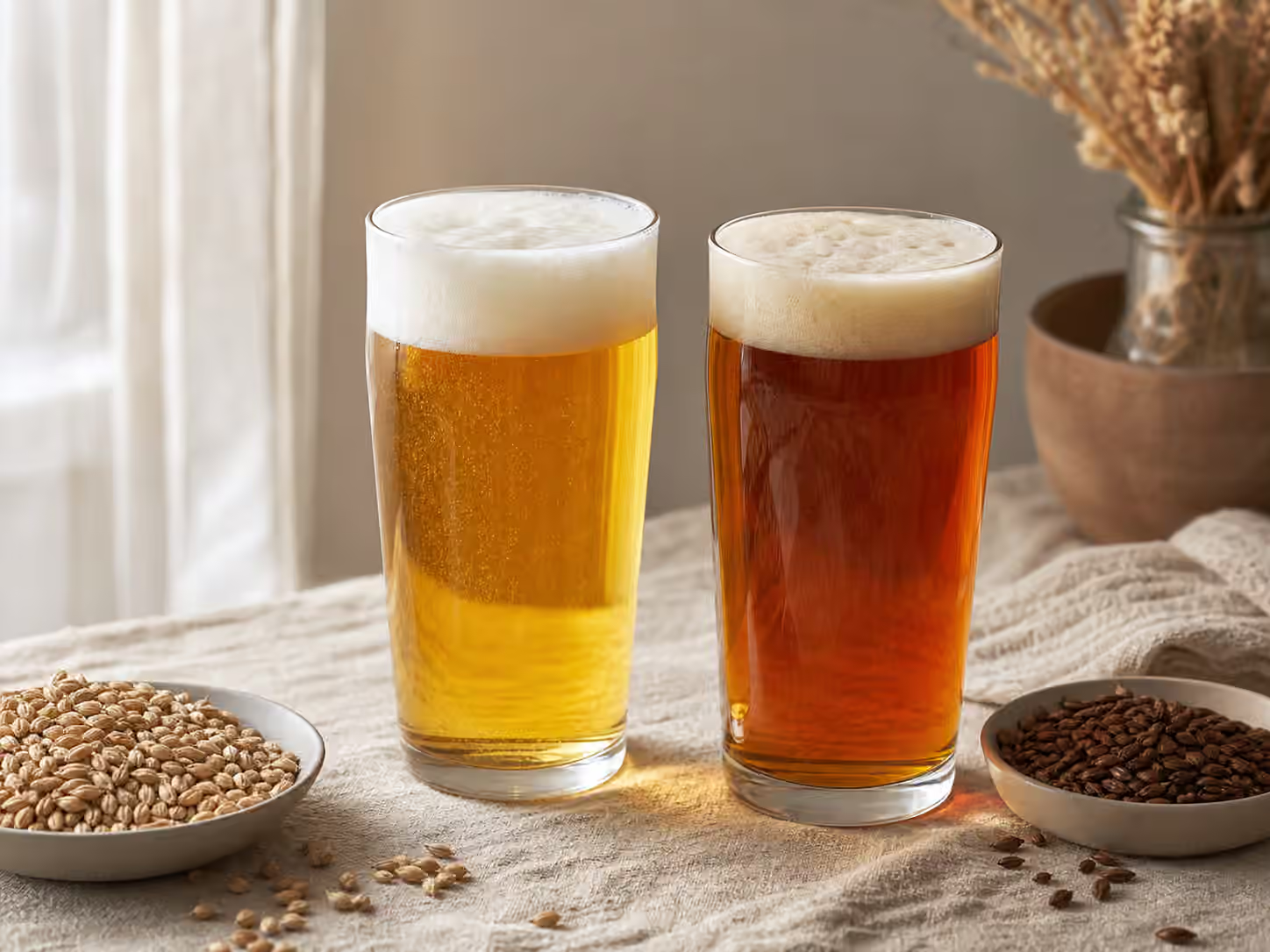
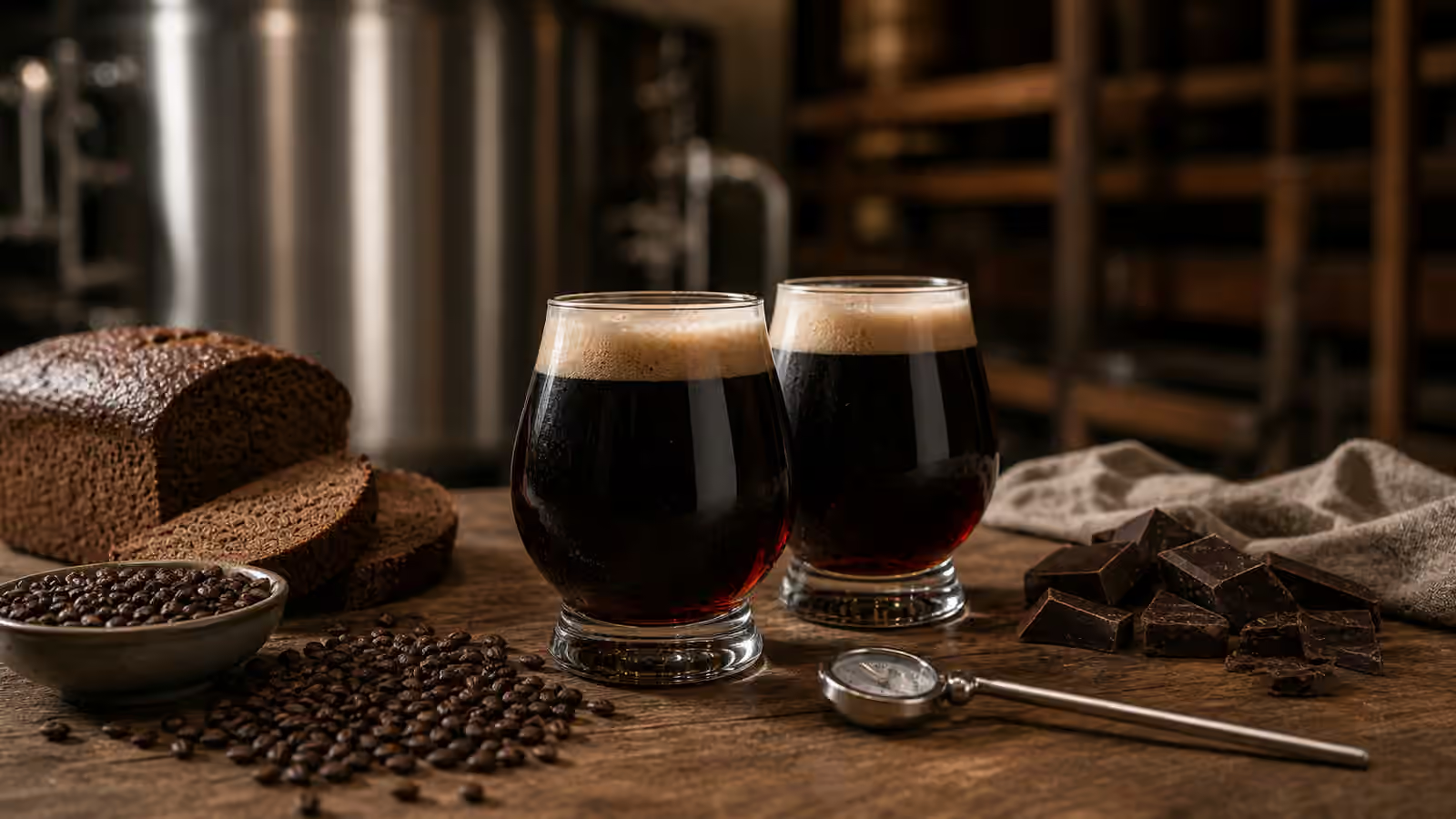
Smoked beer is easy to caricature. People hear smoke and imagine a glass that tastes like a campfire, a barbecue pit, or an ashtray. Some examples do lean too hard in that direction, but the best smoked beers are not built on shock. They are built on malt. Smoke becomes one part of bread, toast, caramel, roast, fermentation cleanliness, bitterness, carbonation, and finish. When those pieces line up, the beer can taste savory, elegant, and surprisingly drinkable.
Rauchbier, the German word most associated with smoked beer, is the classic reference point. Traditional examples often connect smoke with lager balance, amber malt, clean fermentation, and a finish that invites another sip. That last part matters. A smoked beer that impresses for two ounces and exhausts you by the middle of the glass has not found balance. A good one lets smoke remain visible while the beer still behaves like beer.
If you already know Understanding Malt , smoked beer gives you a vivid extension of that lesson. Malt is not only pale grain, caramel, toast, chocolate, or roast. Malt can also carry smoke because grain can be dried or kilned with smoke from wood or other fuel. The smoke character becomes part of the ingredient rather than a flavor sprayed on at the end.
Smoke Begins With Malt
In traditional smoked beer, the smoke usually comes from smoked malt. The grain takes on aromatic compounds during drying, and those compounds enter the mash with the malt. Different woods, kilning methods, malt bases, and amounts can create different impressions. Beechwood smoke may suggest ham, bacon, hearth, or toasted wood. Other smoking approaches can suggest peat, fruitwood, campfire, spice, or char. The exact language varies, but the source matters because smoke is not one flavor.
The malt base decides whether smoke has somewhere to sit. An amber lager-like beer can give smoke bread crust, toast, and caramel to work with. A porter or stout can connect smoke to roast, cocoa, coffee, and char. A pale smoked beer has less cover, so smoke may seem sharper. A strong smoked beer can use alcohol warmth and malt depth, but it risks heaviness if the smoke, sweetness, and strength all rise together.
This is why smoked beer often teaches balance faster than subtle styles do. If the smoke floats above the beer with no connection to malt, it feels artificial even when it came from real smoked grain. If the malt is sweet and the smoke is heavy, the beer can become cloying and meaty. If the beer is too dry and smoky without enough body, it can taste ashy. Good smoked beer makes the smoke seem rooted.
Rauchbier Is More Than Smoke
Classic rauchbier is often associated with Bamberg-style smoked lagers, especially amber versions with clean fermentation and firm malt. The important word is lager as much as smoke. Clean fermentation keeps the beer from becoming muddy. The malt gives structure. Carbonation and bitterness keep the finish moving. Smoke adds identity, but it does not excuse poor brewing.
An amber smoked lager can taste like toasted bread, gentle caramel, cured smoke, and clean bitterness. The smoke may seem intense in the first few sips, then settle into the beer as your palate adjusts. This adjustment is part of the experience. The first smell can be dramatic because smoke is an aroma we notice quickly. By the middle of the glass, the question is whether the beer still tastes balanced. If it does, the smoke has become seasoning rather than a stunt.
Pale smoked lagers, smoked helles-like beers, smoked bocks, smoked porters, and smoked stouts all move the idea in different directions. A smoked helles needs delicacy. A smoked bock needs enough depth to carry both malt sweetness and smoke. A smoked porter can make roast and smoke feel natural together, but it can also become harsh if both are overdone. The Beer Styles Guide helps because smoke can appear inside several style frames rather than as one isolated category.
How Smoke Changes Aroma And Flavor
Smoke reaches the nose before the palate. Smell a smoked beer and you may find cured meat, toasted wood, bacon, campfire, clove-like spice, leather, roast, ash, or sweet malt. Not all of those notes are equally welcome in every beer. A little savory character can be beautiful. A strong ashtray note is usually not. Bacon-like aroma can be traditional in some smoked lagers, but if it overwhelms every other part of the beer, balance has been lost.
Flavor is more revealing than aroma alone. Smoke should connect to the beer’s body and finish. In a good rauchbier, the sip may begin with smoke, move through bread crust and malt, and finish dry enough that the next sip feels possible. In a smoked stout, roast may take the first role while smoke adds depth around the edges. In a smoked wheat beer, yeast character and smoke can make an unusual contrast, but the beer has to stay clear in its purpose.
Bitterness changes how smoke feels. A moderate bitterness can keep smoke from becoming sweet or greasy. Too much bitterness can make smoke seem acrid. Too little bitterness can make a smoked amber beer feel like sweet smoked bread. The measured IBU number will not tell the whole story because dryness, carbonation, roast, and smoke all change perception. Beer Bitterness and IBU is useful here because smoked beer makes bitterness feel physical.
Carbonation also matters. A smoked lager with lively carbonation can stay refreshing despite intense aroma. A flat smoked beer can become heavy and food-like in a tiring way. Foam carries smoke too, so a good pour gives the aroma a place to gather. The guide to Beer Carbonation and Foam applies directly: bubbles are part of flavor delivery.
Smoke, Freshness, And Faults
Smoke can hide flaws, but it can also make flaws worse. Oxidation may turn malt dull and sweet, which can make smoke seem stale or meaty. Poor fermentation can add sulfur, butter, solvent, or rough fruit that clashes with the smoke. Too much roast can turn char into harshness. Dirty draft lines can make a smoked beer taste sour or muddy, and the strong aroma may distract from the service issue at first.
The Beer Off-Flavors guide is helpful because some smoke-adjacent words need care. Smoky is not the same as burnt plastic. Toasty is not the same as ashy. Savory is not the same as sour. A smoked beer can be intense and still clean. It can also be dramatic and flawed. The trick is to ask whether the unfamiliar note belongs to the style and whether it supports the finish.
Freshness depends on the beer. A hop-forward smoked pale ale should be treated like other hoppy beer: cold storage, good turnover, and prompt drinking. A smoked lager may have a little more resilience if packaged well, but heat and oxygen still hurt it. Strong smoked beers may tolerate time better, yet they do not automatically improve. Smoke can become stale, and malt can lose its shape. Beer Packaging gives the practical shelf clues: cold, dark, undamaged, and dated when possible.
Draft smoked beer can be wonderful when the place has clean lines and turnover. It can also sit too long because smoked beer is a specialty choice. If you see a smoked beer on draft at a busy brewery known for it, that may be a good sign. If it is a lonely handle in a bar where no one seems to order it, ask when it was tapped. The general draft habits from Draft Beer apply even more strongly because smoke can make a tired keg seem interesting for a few minutes before the dullness appears.
Serving Smoked Beer
Smoked beer often benefits from a glass that gives aroma room without making the beer seem enormous. A tulip, willi becher, nonic pint, mug, or simple stemmed glass can all work depending on style. The goal is to let foam form and aroma collect. Drinking smoked beer straight from a bottle or can hides too much of the story and can make the smoke seem blunt.
Temperature should follow the base style. A smoked lager should be cool and refreshing, not warm. A smoked porter or bock may open as it warms slightly. A strong smoked beer may need a smaller pour and a few minutes in the glass. Too cold and smoke may dominate because malt is muted. Too warm and smoke, sweetness, and alcohol can crowd the palate. The Serving and Storage guide gives the larger rule: temperature is a tool, not a ritual.
Pour with enough energy to build foam, then smell before tasting. The first aroma may be intense, but let the beer settle. Take a small sip and wait for the finish. Does smoke linger pleasantly, or does it turn bitter and ashy? Does malt remain visible? Does carbonation refresh? Does the second sip seem easier than the first? Good smoked beer often becomes more balanced as your palate adjusts. Bad smoked beer often becomes more tiring.
Food Can Clarify The Beer
Smoked beer and food can be excellent together, but the obvious pairing is not always the best one. Pairing smoked beer with smoked meat can work, yet it can also become a pileup where everything tastes like smoke. Sometimes the better match is food that gives smoke a contrast: roast chicken, grilled vegetables, mushrooms, soft pretzels, aged cheese, lentils, sausages without heavy smoke, onion tart, charred cabbage, or a simple burger. The beer brings the smoke; the food does not always need to repeat it.
Salt helps because it sharpens malt and keeps smoke lively. Fat helps because carbonation and bitterness can refresh the palate. Sweetness needs caution. A smoked beer with sweet barbecue sauce can become heavy if the beer is already malty. A drier smoked lager with roasted vegetables may feel cleaner. A smoked porter with chocolate can work if the roast and smoke are controlled, but it can become bitter if both sides are dark and intense. Beer and Food Pairing gives the broader pattern of echo, contrast, and intensity.
Smoked beer is also worth trying beside beer that shares its base style without smoke. Put an amber lager beside a rauchbier, or a porter beside a smoked porter. Notice what smoke changes and what stays the same. Does the smoked version still have malt depth, clean fermentation, carbonation, and finish? Or does smoke replace the beer instead of deepening it? That comparison is the fastest way to see smoke as an ingredient rather than a novelty.
The best smoked beers are confident but disciplined. They do not hide the smoke, and they do not let it erase everything else. They taste like malt first, fermentation second, service third, and smoke woven through the structure. Once you find that balance, the style stops being strange for its own sake. It becomes another way beer can turn grain, heat, wood, yeast, and patience into a glass that smells memorable and drinks clean.