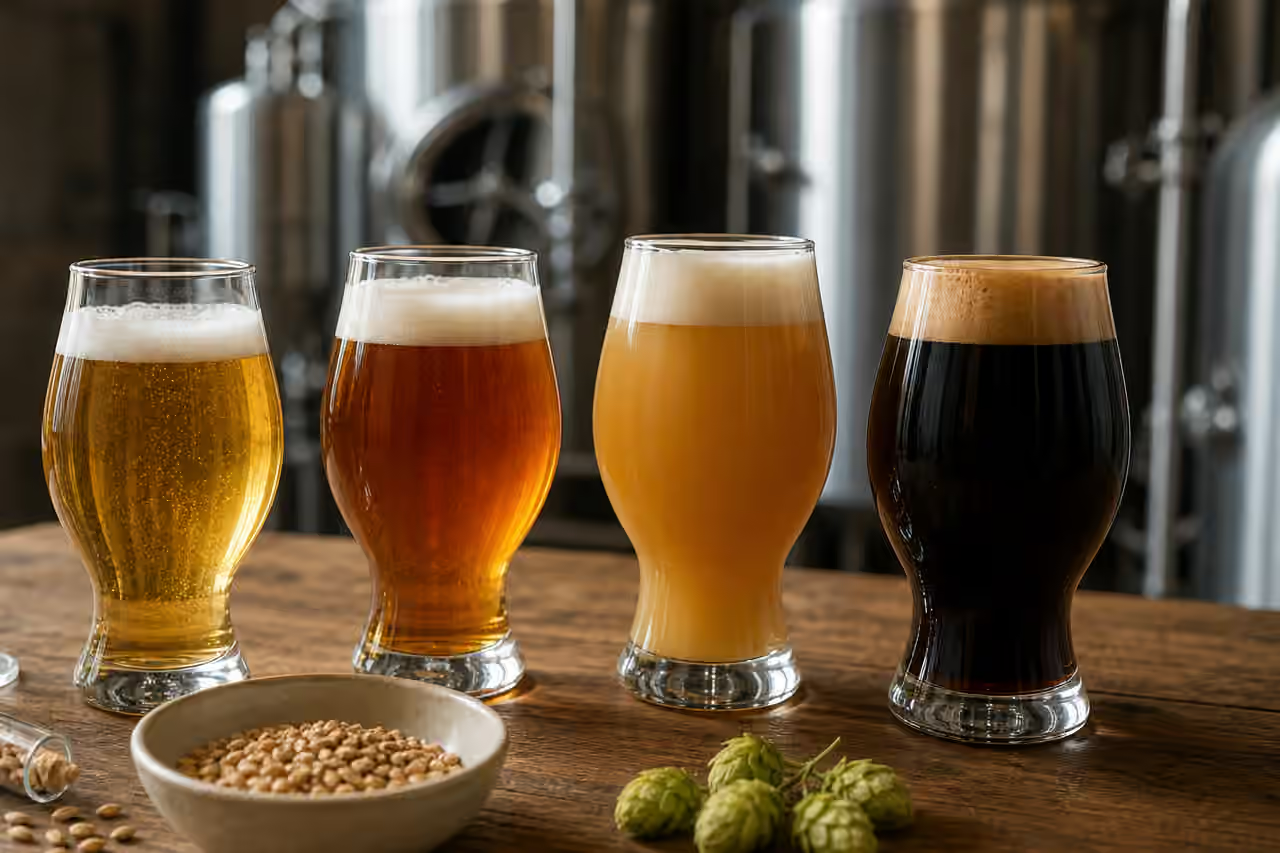
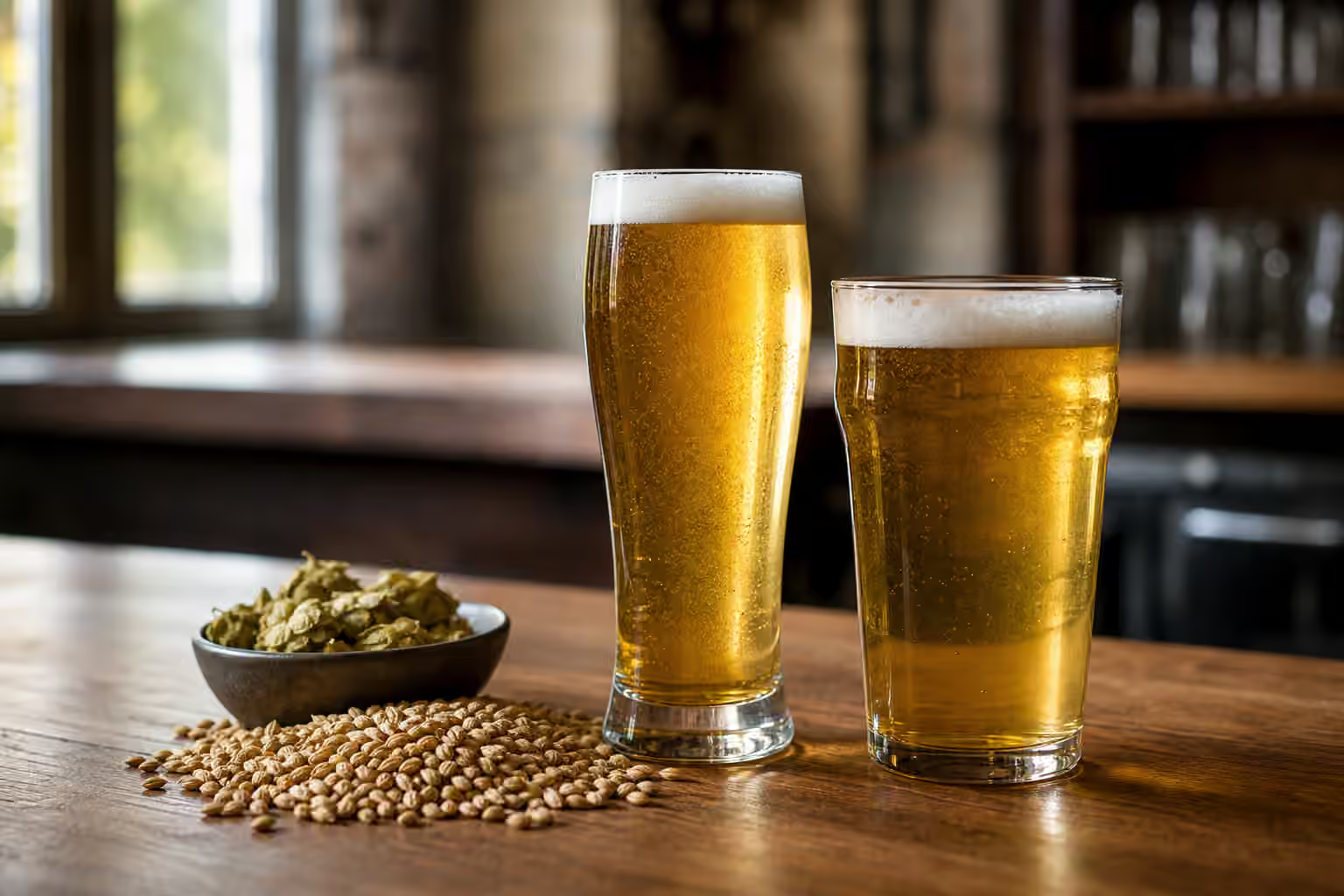
Session beer is one of the most useful ideas in beer and one of the easiest to flatten into a number. People often use the phrase to mean low alcohol, and low alcohol is part of it, but the better meaning is more practical. A session beer is built for time. It has enough flavor to stay interesting, enough balance to avoid palate fatigue, and enough restraint that one glass does not feel like the whole evening.
That does not mean bland beer. In fact, lower-strength beer can expose poor brewing faster than strong beer because there is less alcohol, sweetness, roast, fruit, or heavy hopping to hide behind. A good session beer is a small structure that still stands up. It may be a bitter, mild, pale lager, table saison, dark mild, ordinary-strength pale ale, Berliner-style wheat beer, dry stout, or hoppy small ale. The shared quality is not one flavor. It is proportion.
The guide to Beer Strength, Body, and Balance explains why ABV does not tell the whole story. This guide starts from the same idea but asks a narrower question: how does a beer stay satisfying when it is intentionally modest?
Drinkability Is Built, Not Accidental
Drinkability is sometimes used as a lazy compliment, as if it means the beer disappears quickly. Real drinkability is more disciplined. The beer has to invite another sip without becoming watery, sticky, harsh, or dull. That depends on the relationship between malt, bitterness, carbonation, fermentation, finish, serving temperature, and glass size.
Body is the first challenge. Alcohol adds weight, so a lower-ABV beer can feel thin if the grain bill and mash profile do not give it enough texture. Brewers solve this with careful malt choice, a little wheat or oats in some styles, controlled fermentation, and carbonation that lifts rather than strips the palate. The result should feel light, not empty.
Bitterness is the second challenge. In a small beer, bitterness has less sweetness and alcohol to lean against. Too little bitterness and the beer can taste like weak grain tea. Too much and it becomes sharp. The best session beers use bitterness like seasoning. It shapes the finish and keeps the beer dry, but it does not punish the tongue.
Classic Styles Already Know The Trick
Many traditional beer cultures understood session strength long before the phrase became fashionable. English bitter is one of the clearest examples. At modest strength, it can carry biscuit malt, earthy hops, firm bitterness, gentle fruit from yeast, and a finish that makes sense in a pint. Dark mild works differently, using low strength, darker malt, soft carbonation, and flavors of toast, nut, cocoa, or light caramel.
Pale lager can be a session beer when it is fresh, clean, and balanced. That may sound too obvious, but a crisp lager is difficult to make well because flaws have nowhere to hide. Helles, pilsner, and other lighter lagers show how small adjustments in malt sweetness, hop bitterness, carbonation, and finish can change the whole impression. The guide to Lager Styles gives that family more room.
Dry stout is another useful example because color misleads people. A dark beer can be moderate in strength, dry in finish, and lighter on the palate than a strong golden ale. The roast gives flavor, the dryness keeps it from feeling sweet, and carbonation or nitrogen service changes the texture. The guide to Porter and Stout explains why dark does not always mean heavy.
Hoppy Session Beer Has To Avoid The Trap
Session IPA and hoppy pale ale became popular because many drinkers wanted IPA-like aroma without IPA strength. The idea is sound, but the execution is difficult. If the beer uses too much bitterness for its body, it can taste like hop tea. If it uses too much dry hopping without enough structure, it can smell exciting and taste hollow. If it leaves too much sweetness behind to compensate, it can become sticky despite the lower ABV.
A good hoppy session beer has aroma, but it also has a middle. The malt may be pale and simple, yet it should give enough bread, cracker, or light toast to support the hops. The finish should be clean enough for another sip. The bitterness should feel placed, not sprayed over the beer. Freshness matters because the whole point is aroma and brightness. A dull, oxidized session IPA often has nothing left to offer except rough bitterness.
This is where Understanding Hops and Beer Bitterness and IBU become practical. Lower alcohol changes how hop intensity feels. A number that seems moderate in a stronger beer may feel more aggressive in a smaller one.
Lower Alcohol Does Not Remove Responsibility
Session beer should not be treated as permission to stop paying attention. Alcohol is lower, not absent, unless the beer is specifically nonalcoholic or alcohol-free by local definition. Serving size, pace, food, hydration, transport, medication, health, and personal tolerance still matter. A lower-strength beer can be a better fit for a long meal or a slow afternoon, but it does not make judgment automatic.
This is not legal or medical advice. It is a beer-quality point as much as a personal one. The point of session beer is not to drink carelessly. It is to keep flavor in proportion to the occasion. A beer that lets conversation, food, and time remain part of the experience is doing a different job from a strong stout, tripel, barleywine, or double IPA.
Food Makes Session Beer Shine
Lower-strength beer often works beautifully with food because it refreshes without dominating. A bitter can cut through fried fish, sausages, or cheddar. A pale lager can reset the palate beside salty snacks, tacos, roast chicken, or simple seafood. A dark mild can sit beside mushrooms, grilled onions, shepherd’s pie, or a roast sandwich without the heaviness of a stronger dark beer. A table saison can bring peppery dryness to salads, herbs, goat cheese, and chicken.
The goal is not to create a perfect pairing chart. It is to notice that modest beer leaves room. Strong beer can be wonderful with food, but it often becomes a feature of the meal. Session beer can be a companion. The broader guide to Beer and Food Pairing gives more pairing logic; session beer teaches restraint inside that logic.
Temperature and glassware matter here too. Serve a small beer too cold and it may seem flavorless. Serve it too warm and bitterness or graininess can feel exposed. A clean pint, nonic, willi becher, tulip, or small stemmed glass can all work depending on the style. Serving and Storage covers the broader technique, but the smaller the beer, the less room there is for careless service.
How To Recognize A Good One
A good session beer tastes like it was designed at its strength, not watered down from a stronger idea. The aroma may be modest or vivid, but it should match the style. The first sip should have shape. The middle should not collapse. The finish should be clear enough that you want to return to the glass. You should not have to excuse thinness by saying, “It is only low ABV.” Low strength is a constraint, not a flaw.
Compare two beers when you can. Put a crisp lager beside a hoppy pale ale, or a dark mild beside a dry stout. Notice how each creates flavor without relying on strength. Look for malt texture, bitterness, carbonation, and finish. If you keep notes, use plain words: crisp, bready, watery, sharp, round, dry, toasty, fresh, stale, lively, dull.
Session beer is where beer’s quiet engineering becomes visible. The brewer has fewer loud tools, so every small choice matters. When those choices line up, the result is not a lesser beer. It is a beer scaled to the human pace of an evening, a meal, a conversation, and a glass that can be enjoyed without making itself the only subject in the room.