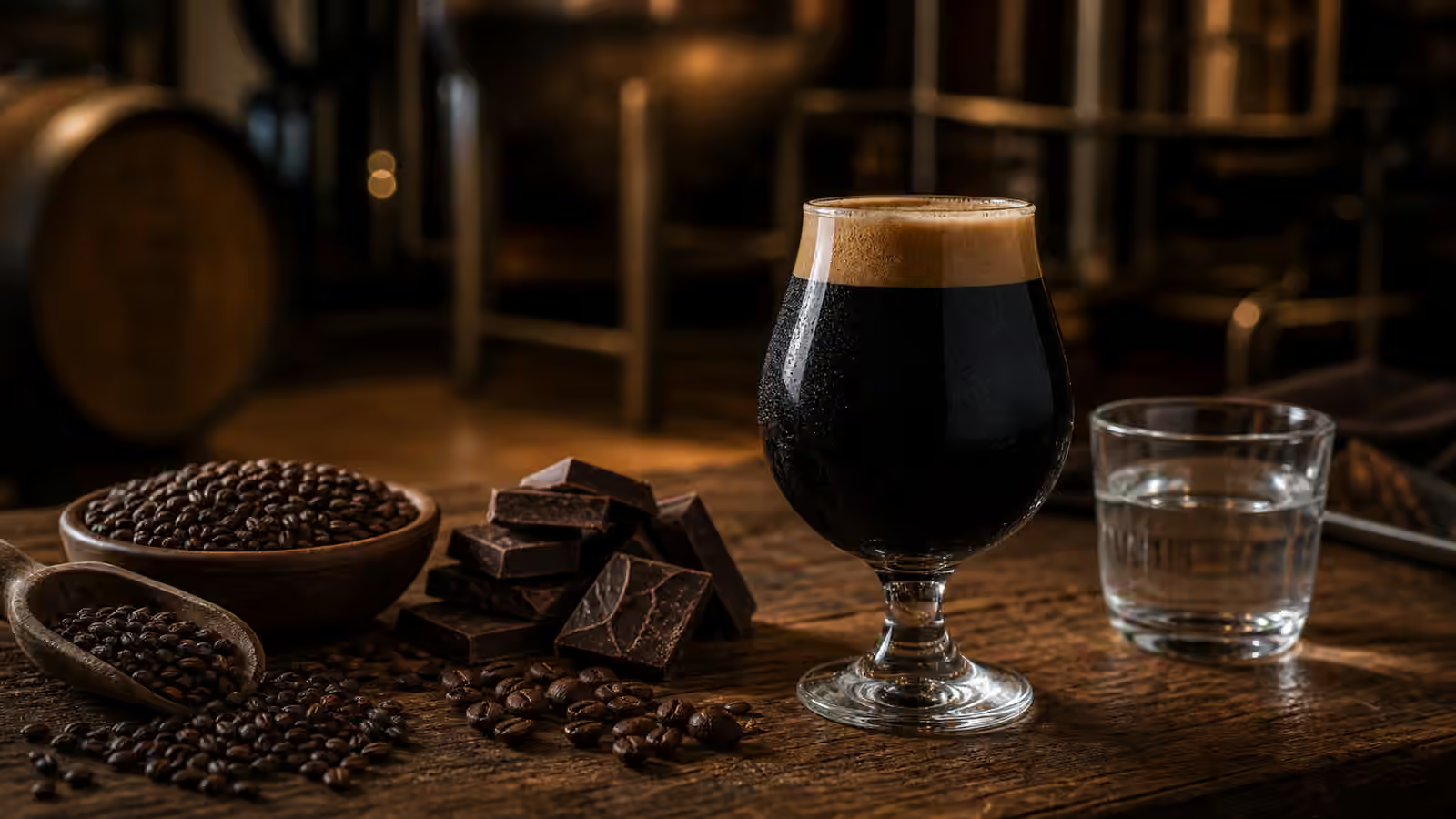
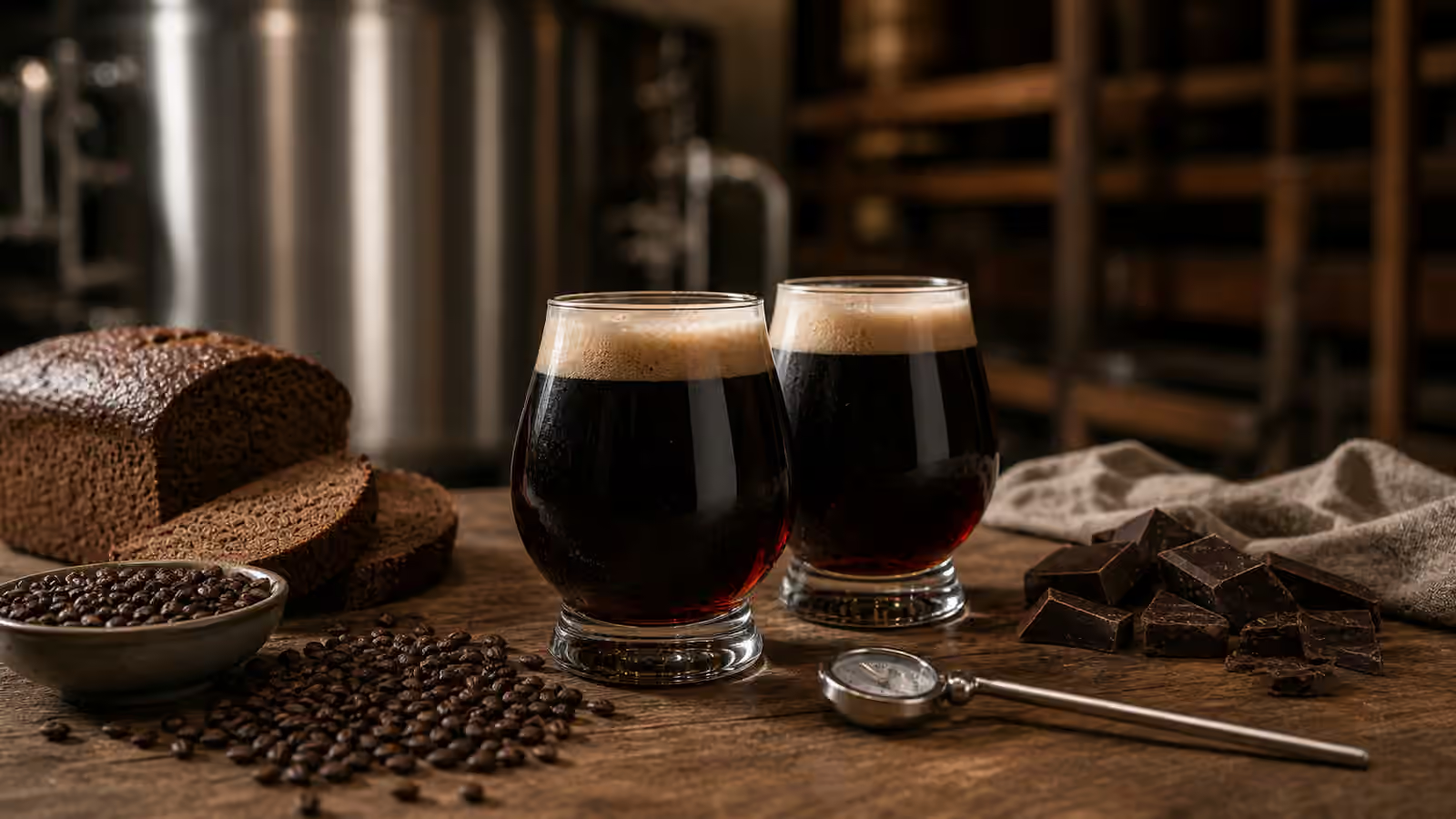
Porter and stout are often introduced as if one is simply lighter and the other is stronger, but the real difference is more interesting and less tidy. Both live in the dark beer family. Both rely on roasted and deeply kilned grains. Both can taste like coffee, cocoa, toast, nuts, caramel, or dark bread. Both can be modest or strong, dry or sweet, creamy or sharp. The useful question is not which word is heavier. It is how the beer uses roast, body, sweetness, carbonation, and finish.
The Beer Styles Guide introduces porter and stout inside the broader dark ale family. Understanding Malt explains the grain side, and Beer Color and Clarity helps separate appearance from strength. This guide brings those threads together in the glass. Dark beer is not one flavor, and black beer is not automatically heavy.
Dark Malt Sets The Stage
Porter and stout begin with malt choices. Pale malt supplies fermentable sugar and the base. Specialty malts add color and flavor. Chocolate malt, black malt, roasted barley, brown malt, crystal malt, and other darker grains can create coffee, cocoa, toast, burnt sugar, nut, raisin, bread crust, and char. The brewer decides how much roast to use, how sharp it should be, and how much sweetness or body will support it.
This is why two beers that look almost identical can taste different. One dark beer may feel smooth and chocolate-like. Another may be dry, bitter, and coffee-like. Another may taste sweet, creamy, and dessert-like. Another may be strong enough to sip slowly after dinner. Color gives a clue, but it does not finish the argument. You have to smell and taste.
Roast is not the same as burnt harshness. A little sharpness can be pleasant, especially in dry stout, where a coffee-like bitter edge is part of the style. Too much acrid roast can make beer taste ashy or scraped. Too much caramel sweetness can make dark beer taste heavy and tired. A good porter or stout does not simply pile dark flavor on dark flavor. It arranges roast, malt sweetness, bitterness, body, and finish so the beer has shape.
Porter Is Often About Smooth Dark Malt
Porter has a long history, but for modern tasting it is helpful to think of it as a dark beer family that often emphasizes smoothness, chocolate, toast, caramel, and moderate roast. English-style porter may be restrained, with brown malt character, light roast, and an easy strength. Robust porter can push more coffee, cocoa, and bitterness. Baltic porter is its own fascinating branch, often lager-fermented or lager-conditioned, stronger, smoother, and deeper, with dark fruit and chocolate notes.
The common porter pleasure is dark flavor without necessarily asking for the intensity of stout. A good porter can sit comfortably with food, especially roasted vegetables, mushrooms, grilled meat, stews, aged cheese, or chocolate desserts that are not too sweet. It can also be a useful bridge for drinkers who think they dislike dark beer because they associate darkness only with bitter roast or heavy sweetness.
Porter also shows how malt can create flavor associations without actual coffee or chocolate being added. Those notes often come from grain. Some brewers do add coffee, cocoa, vanilla, coconut, peppers, or other ingredients, and those beers can be excellent, but the base beer should still matter. Beer Adjuncts and Specialty Ingredients is relevant here because dark beer is a common canvas for additions. The question is whether the extra ingredient deepens the porter or turns it into a label idea.
Stout Is A Wider Family Than One Pint
Many drinkers learn stout through dry Irish-style stout, often served with nitrogen for a creamy head and a smooth mouthfeel. That style is black, roasty, modest in alcohol, and dry enough to remain drinkable. Its darkness does not mean it is strong. Its creamy texture does not mean it is sweet. The roast can feel like coffee, dark toast, or bitter chocolate, while the body stays lighter than the color suggests.
Sweet stout or milk stout changes the picture by adding lactose or using a sweeter balance. Since lactose is not fermented by standard brewing yeast, it can remain in the beer and create sweetness and body. Oatmeal stout uses oats for texture, giving a silky feel that supports roast. American stout often brings more hop bitterness and assertive roast. Imperial stout pushes strength, body, dark fruit, roast, and warmth into a slower sipping format.
These differences matter because the word stout alone does not tell you what the beer will do. A dry stout, a milk stout, and an imperial pastry stout may share darkness but behave like different drinks. Beer Strength, Body, and Balance is useful because alcohol, sweetness, body, and roast can move independently. A strong stout can finish dry. A modest stout can feel creamy. A sweet stout can taste full without being high in alcohol.
Nitro, Carbonation, And Texture
Texture is central to dark beer. Nitrogen service creates tiny bubbles and a dense, creamy head. It softens the perception of carbonation and can make a dry stout feel smooth even when the beer itself is not sweet. That famous cascading pour is not just theater; it changes the first sip, the foam, and the way roast lands on the palate.
Standard carbon dioxide carbonation has a different feel. It can sharpen roast, lift aroma, and make the finish livelier. A porter with moderate carbonation may feel more direct than a nitro stout. A bottle-conditioned imperial stout may feel softer after age, especially if carbonation is gentle. Beer Carbonation and Foam explains the broader mechanics, but porter and stout make the sensory difference clear.
Temperature also matters. Served too cold, dark beer can taste like generic roast and nothing else. As it warms slightly, chocolate, coffee, bread crust, dried fruit, and caramel become easier to read. That does not mean dark beer should be warm. It means it should be given enough temperature to smell like itself. Serving and Storage gives the basic logic: crisp pale beer usually wants colder service, while stronger and darker beer often benefits from a little more warmth.
Imperial, Barrel-Aged, And Dessert-Leaning Dark Beer
Imperial stout and strong porter can be extraordinary when they are balanced. They may carry molasses, espresso, dark chocolate, raisin, plum, licorice, oak, vanilla, smoke, or spirit-like warmth. These are small-pour beers. Their job is not to refresh like a pilsner. Their job is to slow the pace and carry intensity without collapsing into syrup or heat.
Barrel aging adds another layer. Oak can bring vanilla, coconut, tannin, toast, and dryness. Spirit barrels can add whiskey, rum, brandy, or other warming notes depending on what the barrel held before. The best examples integrate oak with the base beer. The weaker ones taste like alcohol and sweetness pasted onto roast. Barrel-Aged Beer goes deeper on that process, including when age helps and when it only makes beer tired.
Dessert-leaning stouts can be fun, but they can also flatten the category if every dark beer becomes frosting, syrup, and candy. Sweetness needs contrast. Roast, salt, bitterness, carbonation, alcohol warmth, or oak tannin can keep the beer from feeling one-dimensional. Without contrast, the first sip may be exciting and the third may feel exhausting.
How To Taste Porter And Stout
Start by separating roast from sweetness. Smell first and ask whether the beer suggests coffee, cocoa, toast, caramel, char, dark fruit, or cream. Then taste for the finish. Does roast dry the palate, or does sweetness linger? Does bitterness come from hops, roasted malt, or both? Does alcohol warm gently or scratch? Does the body match the flavor intensity?
Compare dark beers side by side when possible. A brown ale beside a porter shows the move from nut and caramel into darker roast. A porter beside a dry stout shows smooth dark malt against sharper roasted barley. A milk stout beside a dry stout makes sweetness visible. A schwarzbier beside a stout shows how dark lager can carry color without ale roast intensity. These comparisons make style words useful because you can feel what changed.
Food pairing is generous with porter and stout because roasted malt loves browned flavor. Porter can work with burgers, mushrooms, barbecue, roasted squash, sausages, and chocolate cake. Dry stout can cut oysters, salty snacks, grilled food, and rich stews because roast and dryness refresh the palate. Strong stout belongs with small desserts, blue cheese, or slow sipping after a meal. Beer and Food Pairing covers the larger pattern, but dark beer teaches the simple version: match roast with roast, then decide whether sweetness should echo the food or balance it.
Porter and stout are not tests of seriousness. They are tools for malt, roast, texture, and time. Once you stop reading dark color as a single promise, the family becomes much easier to navigate. Some dark beers are crisp. Some are creamy. Some are sweet. Some are dry. Some are strong enough to share. The glass tells you which one you have, and the best examples make darkness feel precise rather than heavy.