I used to describe every beer the same way: good, bad, or weird.
That was my entire vocabulary. A pale ale at a backyard barbecue? Good. A stout someone brought to a dinner party? Good, but heavy. A farmhouse saison with a label I couldn’t read? Weird, but… good?
I wasn’t tasting. I was voting. Thumbs up, thumbs down, move on. Beer was a beverage I consumed, not a thing I paid attention to.
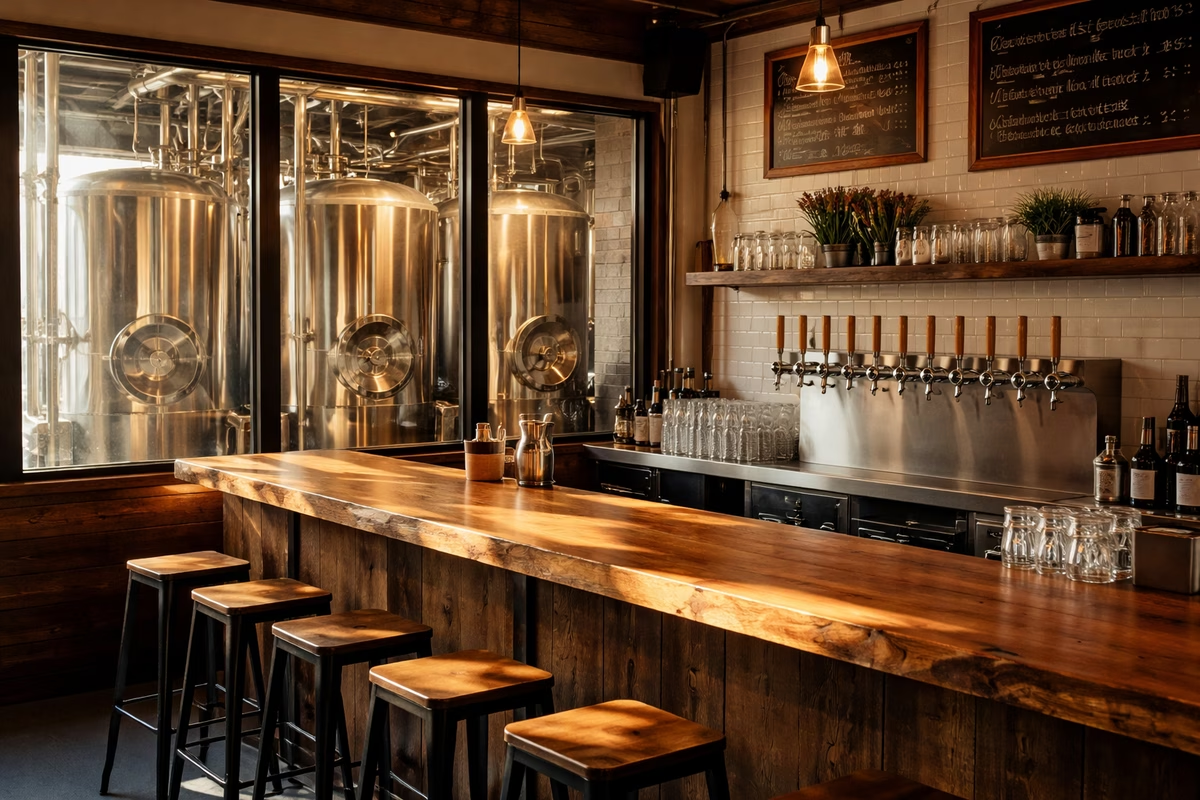
Then a friend invited me to a guided tasting at a bar I’d never been to—a small place with twelve taps, a chalkboard menu, and a bartender who used words like biscuity, resinous, and Brett character without sounding pretentious. She said it was free, casual, and I didn’t have to know anything.
“You just have to be willing to slow down,” she said.
I almost didn’t go. I’m glad I did.
The setup: five beers, one hour, no rush
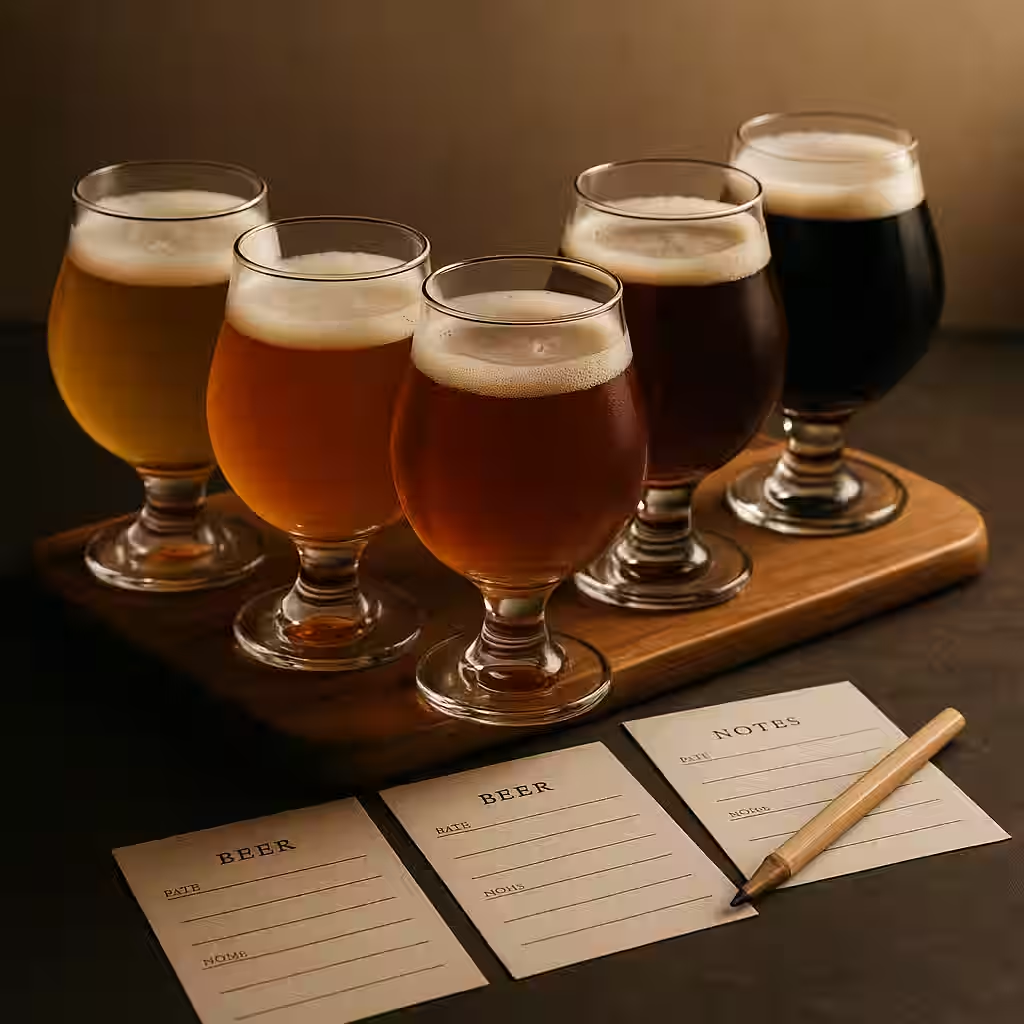
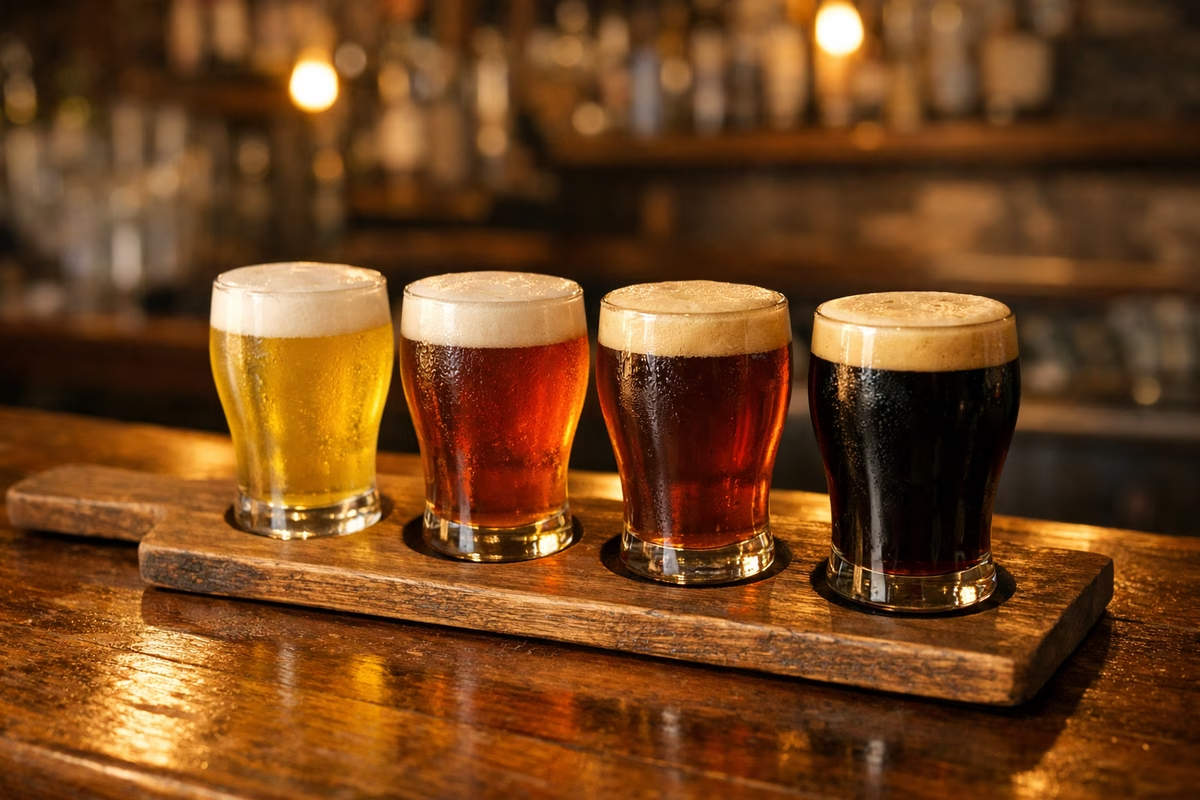
The tasting was simple. Five beers, poured in order from lightest to darkest, each about four ounces. A printed sheet with columns for appearance, aroma, flavor, mouthfeel, and overall impression. A pencil.
The bartender—her name was Jo—started by saying something I didn’t expect: “There are no wrong answers tonight. If you taste banana in a beer, you taste banana. If you taste dirt, you taste dirt. Your palate is your palate. The only thing we’re practicing is paying attention.”
She poured the first beer: a German pilsner, pale gold, with a white foam head that clung to the glass.
“Don’t drink it yet,” she said. “Just look.”
Beer 1: The pilsner (learning to smell)
I looked at the pilsner. It was pale gold. The foam was bright white, fine-bubbled, and it left lace on the glass as I tilted it.
“Now smell it,” Jo said. “Put your nose right into the glass. Breathe normally—don’t sniff hard, just breathe.”
I smelled… beer. Grainy. A little sweet. Clean.
Jo smiled. “Now try this: think of it in categories. Do you get anything grainy, like bread or crackers? Anything floral, like flowers or herbs? Anything grassy, like fresh-cut lawn? Anything sulfury, like a struck match?”
I smelled again. And suddenly the vague “beer smell” split into parts. Bread—yes, like the crust of white bread. A faint sweetness, like honey. And underneath, something sharp and herbal that I recognized as hops but had never isolated before.
“Bread crust and honey,” I said.
“That’s the malt,” Jo said. “Pilsner malt is the lightest kilned malt. It gives you exactly that—bread, cracker, honey. Write it down.”
I wrote: Bread crust. Honey. Faint green herb.
It was the first tasting note I’d ever written. It felt oddly satisfying—like giving a name to something I’d always noticed but never acknowledged.
What I learned from beer one
Aroma has structure. You can break a beer’s smell into categories—malt character, hop character, yeast character, and fermentation byproducts—and each category tells you something about how the beer was made. The pilsner’s aroma was almost entirely malt: clean, bready, simple. That simplicity is the point. A pilsner’s beauty is in its restraint.
Beer 2: The pale ale (discovering bitterness)
The second beer was an American pale ale. Deeper gold, slightly hazy, with a more aggressive aroma—citrus, pine, something tropical.
I sipped it and felt the bitterness hit the sides of my tongue. Not unpleasant—more like a grapefruit pith. It lingered.
“What do you taste?” Jo asked.
“Grapefruit. Pine needles. And the bitterness just… stays.”
“That’s the hops. American hops—Cascade, Centennial, Citra—give you citrus and pine. And the bitterness you feel is isomerized alpha acids from the boil. It’s the backbone of the beer.”
I wrote: Grapefruit, pine, tropical hint. Bitterness lingers—pleasant, dry. Medium body.
Comparing my notes for beer one and beer two, I could see a pattern emerging. The pilsner was malt-forward: bread, honey, subtle. The pale ale was hop-forward: citrus, bitter, bold. Two different philosophies in two glasses.
Beer 3: The hefeweizen (the yeast surprise)
The third glass was a Bavarian hefeweizen. Cloudy, golden-orange, with a voluminous white foam that looked like whipped cream.
I smelled it and my brain did something unexpected: it recognized something that wasn’t hops or malt.
“Banana,” I said, before Jo even asked.
“And?”
I smelled again. “Clove. Like… mulled wine.”
Jo grinned. “That’s not from the ingredients. That’s from the yeast.”
This was the moment the tasting changed for me. I’d always thought of beer as grain + hops + water. Yeast was the thing that made alcohol; it didn’t have a personality.
But Bavarian wheat beer yeast (Saccharomyces cerevisiae var. diastaticus, if you’re keeping score) produces two specific esters and phenols during fermentation: isoamyl acetate (banana) and 4-vinyl guaiacol (clove). These aren’t added flavors. They’re metabolic byproducts—the yeast’s signature, written in chemistry and detectable by anyone who slows down enough to notice.
I wrote: Banana, clove, bubblegum hint. Creamy body. Soft, almost no bitterness. The yeast IS the flavor.
What I learned from beer three
Yeast is the invisible ingredient. In styles like hefeweizen, Belgian ales, and saisons, the yeast contributes more to the flavor than the malt or hops combined. Once you learn to detect yeast character—banana, clove, pepper, fruit, barnyard funk—you unlock an entire dimension of beer that was always there, hiding behind the more obvious flavors.
Beer 4: The brown ale (finding malt complexity)
Beer four was an English brown ale. Deep amber-brown, clear, with a thin tan head. The aroma was all warmth: toffee, toasted bread, a whisper of chocolate.
I sipped it and felt something different from the first three beers: weight. Not heaviness—warmth. The malt flavors unfolded slowly: caramel, biscuit, roasted nuts, a hint of dried fruit. The bitterness was low and gentle, barely there, like a shadow behind the sweetness.
“This is what malt does when you give it the stage,” Jo said. “The pilsner showed malt in its simplest form. This shows malt in its full range—crystal malt for caramel, chocolate malt for that cocoa note, biscuit malt for the toasted edge.”
I wrote: Toffee, toasted biscuit, chocolate, dried fruit. Low bitterness. Warm and comforting. Like a sweater made of beer.
I looked at my four sets of notes side by side. Each beer had told a different story: the pilsner was about simplicity, the pale ale about hops, the hefeweizen about yeast, the brown ale about malt. Together they formed a map—not of beer styles, but of the dimensions of beer flavor.
Beer 5: The stout (the full picture)
The last beer was an oatmeal stout. Almost black, with a thick, creamy, tan head. The aroma was dark chocolate, espresso, and a sweet, roasted quality like burnt sugar.
I sipped it and felt the full spectrum. Roasted barley—bitter and coffee-like, but different from hop bitterness. Smoother, rounder. Chocolate that was dark and unsweetened. A silky, full mouthfeel from the oats. And underneath everything, a sweetness that balanced the roast, like cream in strong coffee.
“How does this compare to the pilsner?” Jo asked.
I looked at the remnants of beer one, still in the glass. Pale gold. Delicate. Clean. Then at the stout: black, complex, thick.
“They’re opposites,” I said. “But they’re both balanced. The pilsner balances with simplicity. The stout balances with complexity.”
Jo nodded. “Now you’re tasting.”
I wrote: Dark chocolate, espresso, burnt sugar. Creamy mouthfeel (oats). Roast bitterness differs from hop bitterness—smoother, rounder. Complex but balanced. This is an essay; the pilsner was a haiku.
The vocabulary that emerged
After the five beers, I looked at my notes. I’d written words I’d never used for beer before:
Malt descriptors: Bread crust, honey, toffee, biscuit, caramel, chocolate, espresso, burnt sugar, dried fruit Hop descriptors: Grapefruit, pine, tropical, herbal, resinous, grassy Yeast descriptors: Banana, clove, bubblegum Mouthfeel words: Light, creamy, silky, dry, full, thin, warming Structural words: Balanced, bitter, sweet, clean, lingering, restrained, complex
None of these words required expertise. They required attention. Five beers, one hour, and a willingness to slow down and ask: What am I actually tasting?
Building your own tasting practice
You don’t need a guided tasting to practice. You need four things:
1. A flight, not a pint
Buy three to five different styles in small pours or small bottles. Line them up from lightest to darkest. Tasting is comparative—a single beer in isolation is harder to describe than a beer sitting next to two others.
2. A sheet of paper
Write down what you notice: appearance, aroma, flavor, mouthfeel. Even single words count. The act of writing forces your brain to translate sensation into language, and language is how palate memory forms.
3. Temperature patience
Let the beers warm slightly from fridge temperature. Cold suppresses aroma and flavor. A beer at 45–50°F reveals more than the same beer at 35°F.
4. Water between sips
A glass of plain water between beers resets your palate. Crackers work too, but water is enough.
What developing a palate actually means
After that evening, I didn’t become a beer expert. I became a more attentive drinker.
I started noticing things at bars I’d never noticed before: the difference between hop bitterness and roast bitterness, the tropical esters in a Belgian tripel, the dry minerality of a Czech lager. I started reading tap descriptions and understanding them—not as marketing but as maps that told me what to expect.
The biggest change was internal. “Good” and “bad” got replaced by something more useful: What is this beer trying to do, and is it doing it well? A pilsner that tastes like a pilsner—clean, balanced, restrained—is excellent. A pilsner that tastes like a pale ale has missed its target. Quality isn’t about intensity. It’s about intention and execution.
The ending: the conversation that opened
Two weeks after the tasting, I was at a different bar with a different friend. He ordered an IPA and said, “This is good.”
I said, “What kind of good?”
He paused. “I don’t know. Beer-good.”
“Does it taste like grapefruit or more like tropical fruit? Is the bitterness up front or does it build at the end? Is it dry or does it have a sweet malt backbone?”
He looked at his beer differently. Sipped again. Thought about it.
“Mango,” he said. “And… piney. The bitterness hits late. And it’s dry.”
“There it is,” I said.
He looked at me. “When did you learn to do this?”
“A Tuesday night. Five beers. A pencil.”
He picked up a napkin and a pen. “Start from the beginning.”
Next steps
- Read Beer Tasting 101 for the full sensory evaluation framework
- Explore Beer Styles Guide to understand the major style families
- Try Understanding Hops to decode the hop side of flavor
- See Glassware for how glass shape affects aroma and flavor perception
- Check Hosting a Beer Tasting Night for bringing this experience to your friends