Kolsch and Altbier live in the useful borderland between ale and lager. They are ales by fermentation, but they are often cool-fermented, conditioned carefully, and served with a clean restraint that feels lager-like to the drinker. That makes them easy to overlook. They rarely shout through hops, roast, fruit, strength, or sourness. Their pleasure is in small details: a soft fruit note, a tidy bitter finish, pale bread, toasted malt, a firm foam collar, and a glass that empties without drama.
If the broad Ale vs. Lager split makes beer feel too binary, these styles are the correction. They show that fermentation categories explain a lot, but not everything. Brewer intention, temperature, conditioning, malt choice, hop choice, and service all shape the final beer. Kolsch and Altbier are not compromises. They are precise answers to a specific kind of drinking: flavorful enough to notice, clean enough to repeat.
The Border Between Ale And Lager
Most drinkers learn that ales ferment warmer and show more yeast character, while lagers ferment colder and taste cleaner. That rule is helpful, but these styles live near the edge of it. Kolsch uses ale yeast but is often fermented cool and conditioned cold. Altbier does something similar with a darker, firmer malt frame. The result can confuse a casual style map because the beer has ale ancestry but lager discipline.
That is not a flaw in the map. It is a reminder that beer styles developed around local habits, equipment, climate, ingredients, and service culture. The glass in front of you does not need to defend a taxonomy. It only needs to taste coherent. With Kolsch and Altbier, coherence means clean fermentation, measured bitterness, and enough malt structure to avoid thinness.
Both styles can teach you to taste subtle yeast character. In many lagers, yeast tries to stay almost invisible. In many expressive ales, yeast brings fruit, spice, or visible fermentation personality. Here, the yeast may show a light apple, pear, berry, or wine-like note, but it should not dominate. If you have read Understanding Yeast and Fermentation , these beers are good practice for noticing fermentation without being overwhelmed by it.
Kolsch Is Pale, Quiet, And Exacting
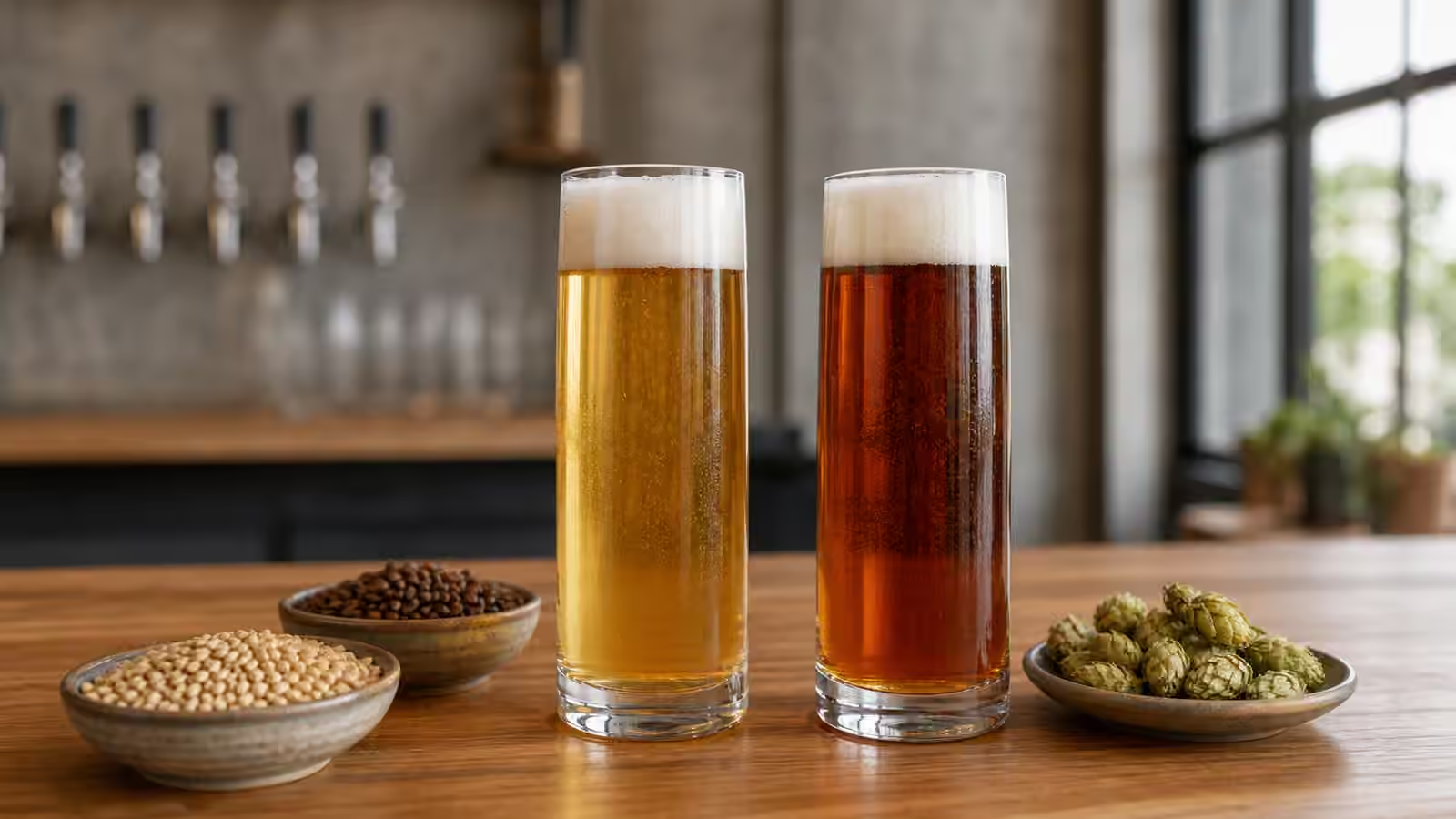
Kolsch is usually pale gold, bright, and gently aromatic. The malt can suggest crackers, soft bread, or a faint honeyed edge. Hops may bring herbal, floral, or spicy notes, with enough bitterness to dry the finish. The yeast often leaves a restrained fruit accent that separates the beer from a straight pale lager. The style should feel delicate but not watery.
The danger with Kolsch is mistaking simplicity for ease. A loud beer can hide a lot. Kolsch cannot. If it is oxidized, the malt turns stale. If fermentation is messy, the beer loses its clean snap. If the serving temperature is too cold, the beer can seem empty. If it is too warm, the faint fruit and malt can feel loose. A good Kolsch depends on freshness, balance, and service.
This is why the traditional slender glass makes sense. A narrow serving keeps the beer cold, lets foam stay tight, and encourages a fresh pour before the last sips go dull. At home, you do not need the exact glass, but a clean narrow glass helps. The Glassware guide explains why shape changes aroma and carbonation, and Kolsch is a useful low-volume example. The glass is modest because the beer is modest in the best sense.
Altbier Is Amber With Grip
Altbier is darker, firmer, and more malt-forward than Kolsch. The color often runs copper, amber, or light brown. The malt can taste like toast, nuts, bread crust, and a little caramel, while the bitterness gives the finish a clean grip. It should not become sticky. It should not become an American amber ale with extra sweetness. It should feel polished, dry enough, and quietly sturdy.
That balance makes Altbier a useful bridge for people who like malt but do not want heavy beer. It has more structure than a delicate pale ale, less roast than porter, and a cleaner finish than many caramel-heavy amber ales. If you already know Pale, Amber, and Brown Ales , Altbier shows how an amber beer changes when the fermentation and conditioning aim for restraint.
Altbier also teaches bitterness in context. The bitterness may be more assertive than the color suggests, but it should support the malt rather than scrape across it. A good example can taste toasty at first and dry at the end. That movement, from malt to finish, is the point. Beer Bitterness and IBU is helpful because the number alone cannot tell you whether the bitterness feels clean, balancing, harsh, or out of place.
Do Not Chase Intensity
Kolsch and Altbier suffer when judged by intensity. They are not built to win a flight by being loud. Put a Kolsch after a hazy double IPA and it may seem faint. Put it before heavier beers, with a clean glass and a fresh palate, and it can show grain, flowers, light fruit, and a precise finish. Put an Altbier after barrel-aged stout and it may look small. Put it beside a Vienna lager or bitter and the shape becomes clearer.
This is a recurring beer lesson. Some styles are meant to be impressive. Others are meant to be repeatable. Repeatable does not mean boring. It means the beer has enough balance that the second glass still makes sense. Kolsch and Altbier belong to that older idea of drinkability, where the brewer’s skill is measured by how little clutter remains in the glass.
Freshness matters more than strength. Neither style usually has the alcohol, roast, acidity, or heavy hop load to tolerate careless storage. Buy from places with good turnover. On draft, look for clean flavor, lively foam, and a finish that does not taste stale, buttery, or sour. Draft Beer gives service clues that apply especially well because these beers do not hide line problems easily.
Food, Mood, And The Right Moment
Kolsch works with lighter food because it refreshes without fighting the plate. Fried fish, roast chicken, salads with gentle vinaigrette, soft cheeses, pretzels, and simple pork dishes all make sense. Its quiet fruit and herbal bitterness keep the palate awake. It is also a good warm-weather beer when you want more character than a neutral lager but less intensity than IPA.
Altbier handles deeper food. Sausages, burgers, mushrooms, onions, roast pork, brown bread, and nutty cheeses fit its toasty frame. The bitterness can cut fat, while the malt echoes browning. It can be a satisfying fall beer without becoming a dessert or sipping beer.
The best way to learn both styles is side by side with nearby beers. Taste Kolsch next to helles or pilsner and notice the soft ale fruit. Taste Altbier next to amber lager and English bitter and notice where the malt, bitterness, and fermentation land differently. The comparison does not need to be formal. Two small pours and a few honest notes are enough.
Kolsch and Altbier reward the drinker who gives quiet beer a fair first sip. They are not trying to be pale lager, not trying to be IPA, and not trying to be nostalgic museum pieces. They are clean ales with patience built into them. When they are fresh and served well, they make restraint taste deliberate.