IPA is the style family that makes many drinkers excited and many others suspicious. One person hears IPA and expects grapefruit, pine, and a firm bitter finish. Another expects soft haze, mango aroma, low bitterness, and a pillowy body. Someone else remembers older English examples with marmalade, earthy hops, and balanced malt. All of those memories can be true, which is why IPA is easier to understand as a family of beers than as one fixed flavor.
The common thread is hops, but hops can speak in several ways. They can create bitterness, aroma, flavor, texture, dryness, grassiness, resin, citrus, flowers, herbs, tropical fruit, or tea-like structure. The Understanding Hops guide explains the ingredient side. This guide stays closer to the glass: how IPA styles differ, why bitterness is not the same as hop aroma, how haze changes expectation, and why freshness matters more here than in many other beer categories.
IPA Is Not One Flavor
The earliest useful correction is simple: IPA does not mean bitter in only one way. It means hop-forward, and hop-forward can point in different directions. A classic clear American IPA may balance caramel-light malt with citrus, pine, resin, and firm bitterness. A modern West Coast IPA often pushes that shape drier, cleaner, and brighter, with a snappy finish and less malt sweetness. A hazy IPA may use large late-hop and dry-hop additions to create saturated fruit aroma while keeping perceived bitterness lower and body softer.
English IPA sits in a different register. It may feel more malt-integrated, with earthy, floral, herbal, or marmalade-like hop character rather than the tropical intensity many drinkers expect from modern American examples. Session IPA tries to compress hop aroma into a smaller beer, keeping alcohol lower while preserving enough body to avoid tasting like hop water. Double IPA raises strength and hop intensity, but the best examples still need balance. Strength alone does not make an IPA more expressive.
The Beer Styles Guide gives the broader map, but IPA rewards a closer look because the style name on a label can hide real differences. Two cans marked IPA may share little beyond a hop emphasis. Color, clarity, malt, yeast, alcohol, bitterness, carbonation, and age all change the experience.
Bitterness And Aroma Are Different
Many IPA misunderstandings begin when hoppy and bitter are treated as the same word. Bitterness usually comes from hop alpha acids transformed by heat during the boil. Aroma comes largely from hop oils preserved through late additions, whirlpool additions, dry hopping, and sometimes fermentation interactions. A beer can smell explosively hoppy and finish gently. Another can smell modest but land with a sharp bitter snap.
This is why IBU numbers can help and mislead at the same time. Beer Bitterness and IBU explains the measurement, but the short version is that IBU does not tell the whole sensory story. Malt sweetness can cushion bitterness. Dryness can expose it. Carbonation can sharpen it. Alcohol can amplify warmth and sweetness. Dry hopping can add a green, tannic, tea-like roughness that some drinkers read as bitterness even when it is not the same as boiled-hop bite.
West Coast IPA often uses bitterness as structure. It should not taste punishing, but it usually wants a clean line through the finish. Hazy IPA often shifts the emphasis toward aroma and texture. The bitterness may still be present, but it is wrapped in body, yeast expression, proteins from wheat or oats, and a softer finish. English IPA may let bitterness lean into malt and yeast rather than standing apart. The important question is not how bitter the beer is in isolation. It is whether the bitterness supports the shape.
Clear IPA And Hazy IPA Ask Different Things
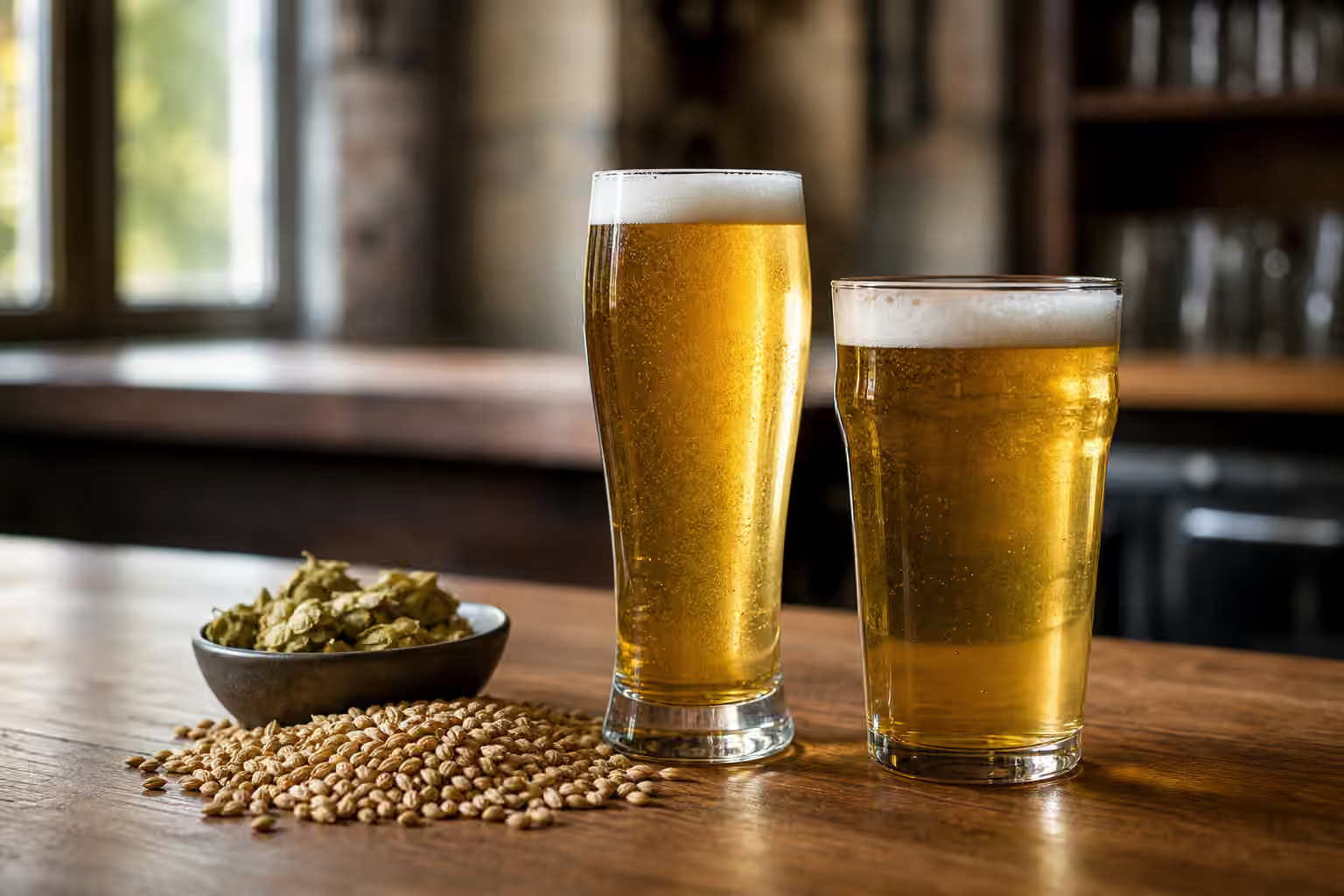
Clarity changes expectation before the first sip. A bright, clear IPA usually suggests a cleaner fermentation profile, a drier finish, and a more direct hop bitterness. That is not a law, but it is a useful starting point. You expect the beer to look polished and taste focused. If it smells bright, finishes crisp, and leaves you ready for another sip, the clarity is part of the message.
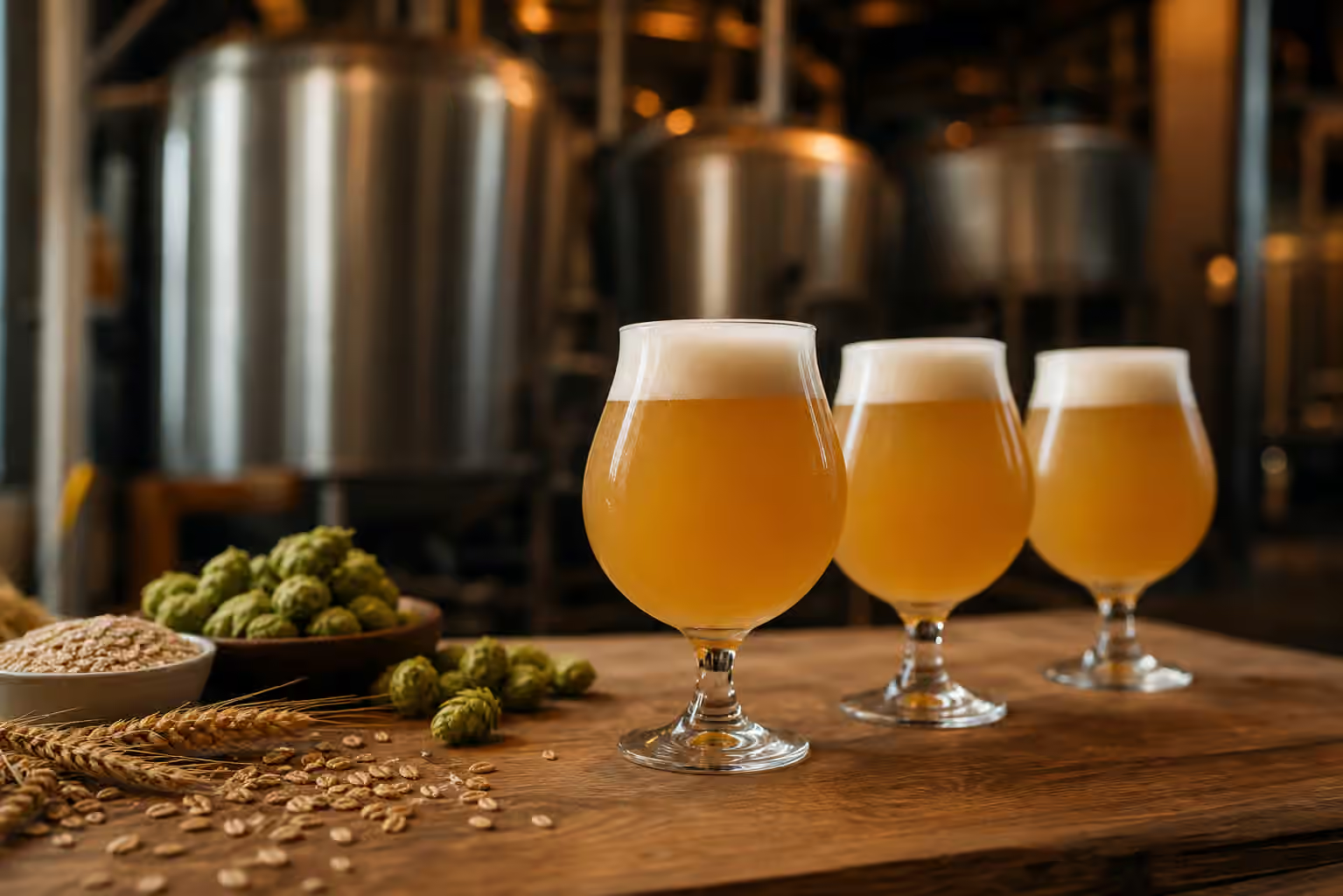
Hazy IPA uses a different visual grammar. Haze can come from yeast, proteins, polyphenols from hops, wheat, oats, dry hopping, or process choices that keep more material in suspension. In the best examples, haze supports aroma saturation and a soft texture. It can make hop fruit feel rounder and bitterness less angular. In weaker examples, haze can become muddy, sweet, chalky, vegetal, or heavy. Cloudiness alone is not a virtue. It has to serve the beer.
Beer Color and Clarity is useful here because IPA makes appearance feel emotional. Some drinkers treat clear beer as old-fashioned and haze as modern. Others treat haze with suspicion. The better habit is to connect appearance with flavor. A clear IPA should not be dull. A hazy IPA should not be shapeless. Each should use its look to prepare you for a coherent beer.
Strength Changes The Job
IPA strength ranges widely, and ABV changes how the beer behaves. A session IPA can be bright, aromatic, and easy to drink, but it has less malt and alcohol to support large hop additions. If the brewer does not build enough body, the beer can feel thin and harsh. If the brewer adds sweetness to compensate, it can feel sticky. The best smaller IPAs understand restraint. They give enough hop character to satisfy without pretending to be a full-strength beer.
Standard IPA often lives in the middle, where malt, hops, bitterness, body, and alcohol can hold each other in balance. Double IPA raises the stakes. More alcohol and more hops can create depth, but they can also create heat, sweetness, palate fatigue, and roughness. A good double IPA does not simply shout. It carries intensity with structure, and the finish still matters. If the first sip is dramatic but the third is exhausting, the beer may be impressive without being especially good.
The guide to Beer Strength, Body, and Balance applies directly to IPA. Alcohol is not just a number on the label. It changes body, sweetness, aroma lift, serving size, and how bitterness lands. This is why a pint of session IPA, a small pour of double IPA, and a tasting glass of experimental IPA are not interchangeable experiences.
Freshness Is Part Of The Style
IPA is unusually sensitive to time because hop aroma is fragile. The vivid notes that make a fresh IPA exciting can fade quickly, especially when beer is stored warm or exposed to oxygen. Citrus can become dull. Tropical fruit can flatten. Pine can turn woody. Bright bitterness can become stale and papery. A beer that was designed to smell alive may still be drinkable later, but it may no longer be itself.
Freshness does not mean every IPA must be consumed the instant it leaves the brewery. It means the beer should be handled with its hop character in mind. Cold storage helps. Good packaging helps. Low oxygen pickup helps. Buying from shops with good turnover helps. How to Buy Beer covers date checking in practical terms, and Serving and Storage explains why heat, light, and oxygen matter.
Freshness also changes by substyle. A delicate hazy IPA with heavy dry hopping may decline in aroma and texture faster than a stronger, more bitter IPA with a sturdier malt base. Fresh-hop IPA is even more tied to immediacy because it is built around hops used soon after harvest. English-inspired examples may not depend on the same loud fresh fruit profile, but they still suffer when oxygen and heat make the beer taste tired. IPA is not meant for careless storage.
Less Common IPA Branches
Black IPA, sometimes called Cascadian dark ale by people who prefer that language, combines IPA hopping with dark malt color and restrained roast. The challenge is balance. Too much roast and the beer becomes a hoppy porter. Too little, and the dark color feels cosmetic. The best examples let citrus, pine, or resin meet cocoa, toast, and dry roast without turning acrid.
Belgian IPA adds expressive yeast to the hop conversation. Pepper, fruit, dryness, and phenolic spice can make hop aroma feel more complex, but yeast and hops can also clash if both are too loud. White IPA borrows from witbier, often using wheat, citrus peel, coriander-like spice, or a softer body to support hops. Rye IPA uses rye’s dry, spicy grain character to make bitterness feel sharper and more structured. These branches are not always easy to find, but they show how flexible the IPA idea can be.
The point is not to memorize every label phrase. The point is to ask what the modifier changes. Black changes malt and roast. Belgian changes yeast. Rye changes grain texture. Hazy changes body and aroma emphasis. Double changes strength. Session changes the beer’s job. Once you read the adjective as a process clue, the shelf becomes easier to navigate.
How To Taste IPA More Clearly
IPA rewards aroma, so start with the smell before the first sip. Notice whether the hops suggest citrus peel, pine, flowers, grass, herbs, resin, stone fruit, tropical fruit, berry, tea, onion, garlic, or something more earthy. None of those words automatically means good or bad. They are coordinates. A little resin can give structure. Too much onion-like character may distract. Fresh grass can be pleasant in some contexts and raw in others.
Then separate the first sip from the finish. The first sip may show sweetness, carbonation, fruit, and immediate bitterness. The finish tells you more about balance. Does the bitterness clean up, or scrape? Does the sweetness linger, or support the aroma and then leave? Does the beer feel soft because the body is intentional, or heavy because it lacks dryness? Does the hop character stay vivid, or collapse into rough green matter?
Beer Carbonation and Foam matters here because foam carries hop aroma and carbonation changes how bitterness feels. A clean glass and proper pour can make an IPA smell brighter. Temperature matters too. Too cold, and aroma shuts down. Too warm, and bitterness, sweetness, and alcohol can feel heavier. IPA usually benefits from a little warmth after leaving the fridge, but not from sitting until it becomes sluggish.
Food And Preference
IPA can be excellent with food when the bitterness and aroma have a job. Citrusy, dry IPA can cut fried food and grilled dishes. Hazy IPA can echo fruit salsas, spicy chicken, or creamy cheeses when the sweetness is controlled. Firm bitterness can refresh the palate between bites of rich food, but it can also clash with very bitter greens or make chile heat feel sharper. The Beer and Food Pairing guide gives the broader logic, and IPA is a good place to practice it because the beer’s structure is so visible.
Preference is allowed to be specific. You may like hop aroma but dislike sharp bitterness. You may like clear, bitter IPA and find hazy versions too sweet. You may prefer English balance to American intensity. You may enjoy double IPA only in small pours. That is not confusion. It is palate information.
IPA becomes less frustrating once you stop treating it as a single test you either pass or fail. It is a wide family built around hops, and hops are capable of many accents. Look at clarity, strength, freshness, aroma, bitterness, body, and finish. Read the modifier before the style name. Buy fresh when hops matter. Pour into a clean glass and let the beer show you what kind of IPA it is trying to be. The best one is not the most extreme one. It is the one where the hops have a purpose from the first smell to the last trace of bitterness.