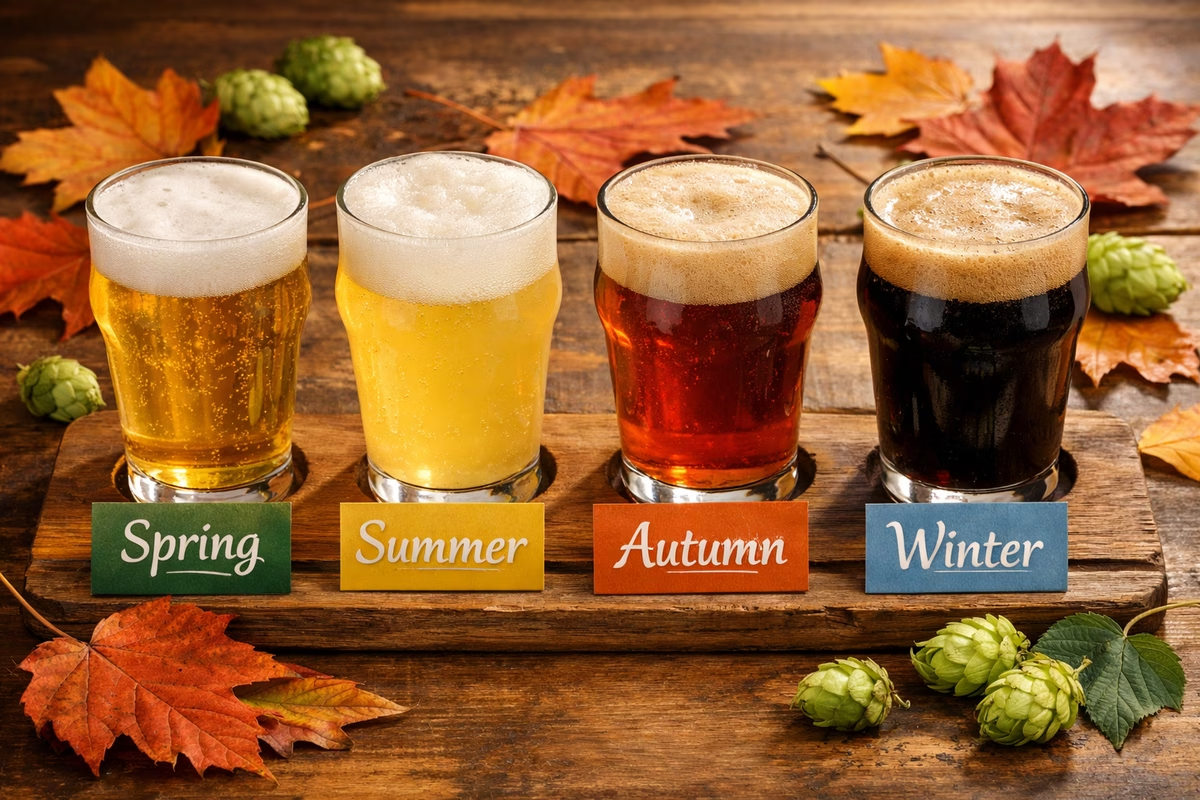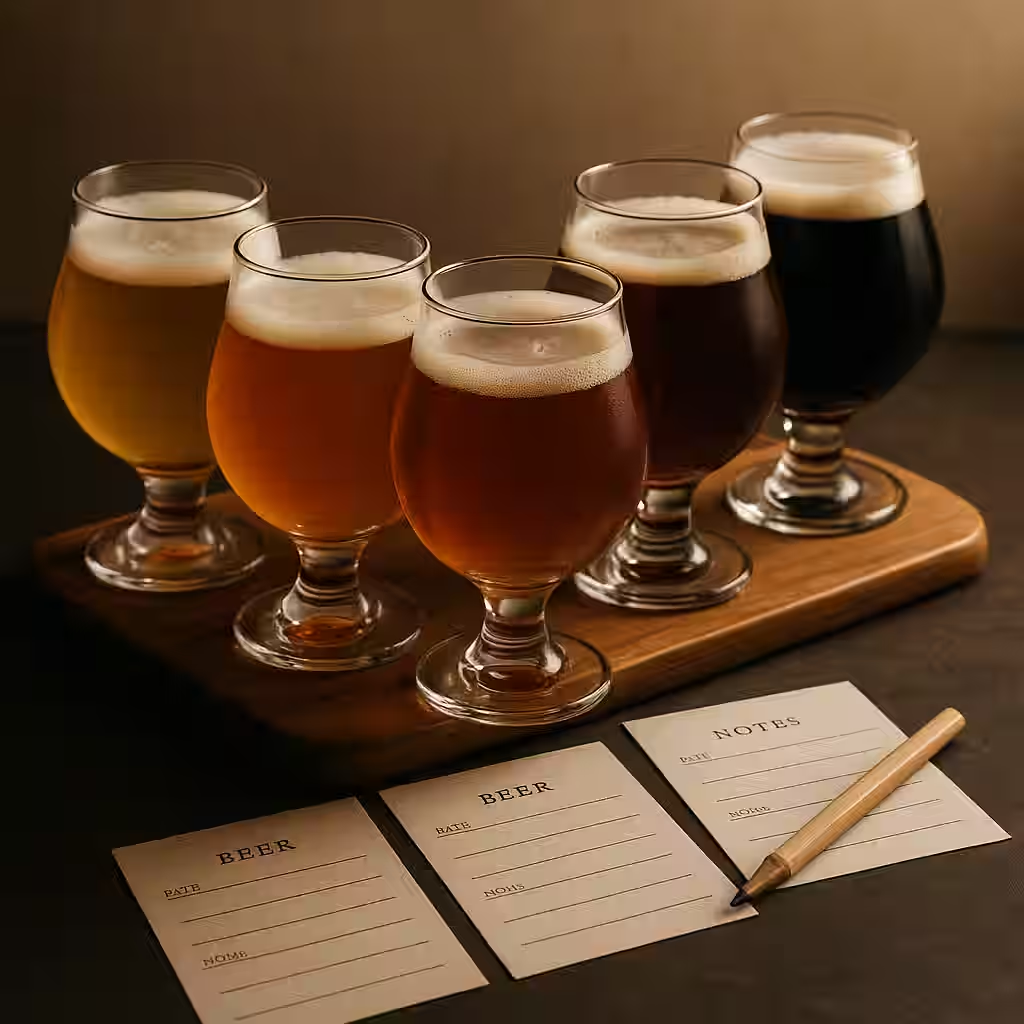
The first beer tasting I hosted was not elegant.
I did what most people do when they want to make something “special”: I overcomplicated it. I bought too many beers. I chose styles that were interesting in isolation but incoherent together. I served them all too cold, because cold feels safe. And I tried to explain each one the way I’d heard experts do online, which meant that half the night sounded like a lecture I didn’t enjoy giving.
The good news is that nobody cared.
They laughed, they ate, they drank, and at one point someone said, “I didn’t know beer could taste like that,” which is the entire point of a tasting.
After that night, I learned the real secret: the best tastings feel like dinner, not class. They’re built around contrast and comfort. They leave room for people to be surprised without feeling tested.
This guide is the version of beer tasting that works in real homes: fewer bottles, better pacing, warmer (in the right way), and designed to make everyone’s preferences visible.
The job of a tasting is not expertise—it’s contrast
A tasting is a simple tool: it shows you differences clearly enough that you can say what you like.
To do that, you need:
- a small number of beers
- an order that makes flavors clearer rather than louder
- serving temperatures that let aroma exist
- enough food and water that nobody gets wrecked
Everything else is optional.
The easiest “perfect” format: 4 beers, 4 people, 2–3 ounces each
If you want a tasting that feels generous without going long:
- choose 4 beers
- invite 3–6 people
- pour 2–3 oz per person per beer
This makes the night feel paced. Nobody has to commit to a whole pint of something they don’t like. And you get enough repetition to notice what changes as the beer warms.
If you have more people, you can still do 4 beers. Just buy two of each (or larger formats).
Choosing beers: build a story arc, not a flex
A strong beginner tasting is built from a few reliable “characters.”
The clean opener
Start with something crisp and refreshing. This calibrates everyone’s palate.
The hop chapter
Add one beer where hops are a feature. Not because everyone must love hops, but because it teaches how aroma works in beer.
The malt chapter
Add a darker or malt-forward beer that shows toast, caramel, cocoa, or roast.
The wildcard
End with one beer that feels like a surprise: a Belgian-style, a sour, a farmhouse-y thing, something that makes people say “Wait—this is beer?”
The only rule: don’t make the entire lineup “wildcards.” A tasting needs anchors.
Serving temperature: the quiet upgrade
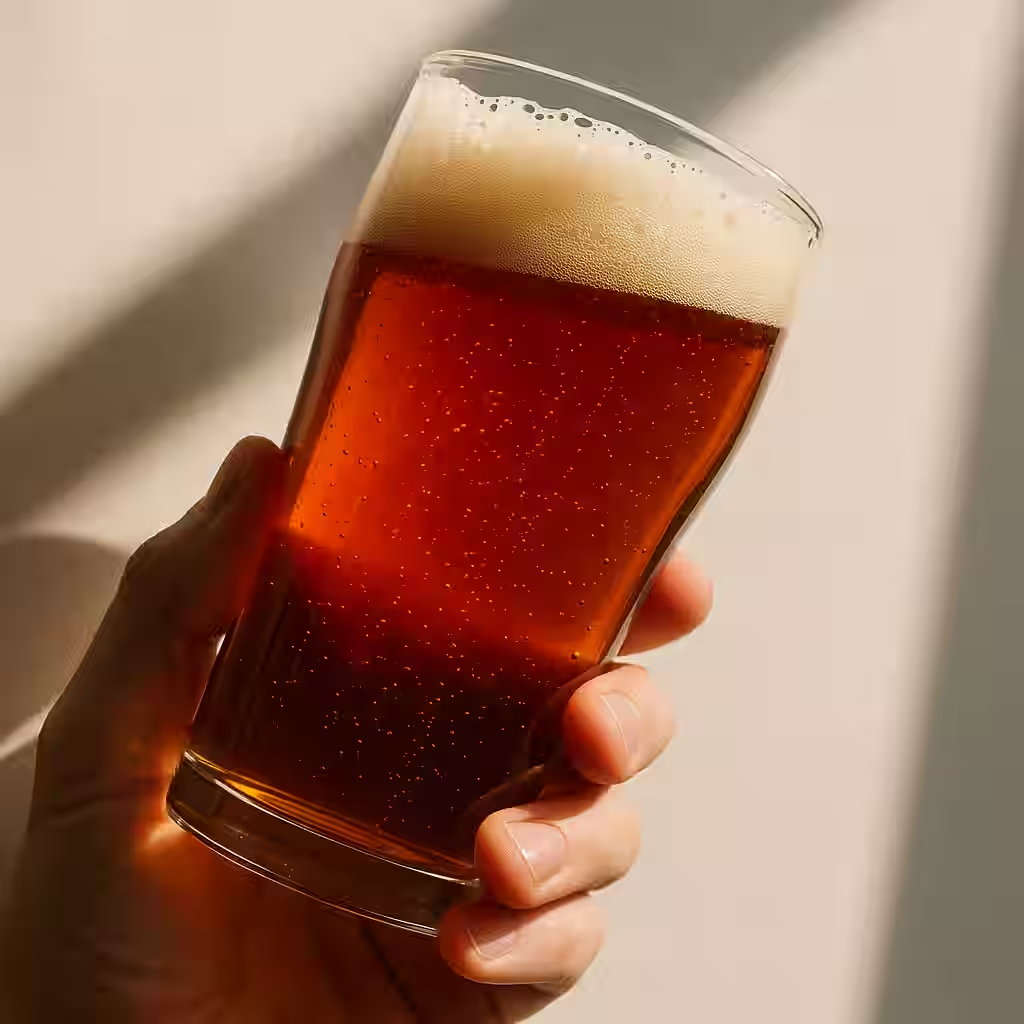
If your tasting feels muted, it’s usually not the beer. It’s the temperature.
Beer that is too cold becomes shy. Aroma disappears. Flavor flattens. Bitterness can feel harsher because the balancing aromas are missing.
A practical approach:
- Keep beers cold, but pour and let them sit for a few minutes.
- Serve the darkest or strongest beers slightly warmer.
You don’t need thermometers. You just need to stop treating beer like it must be ice-cold to be “correct.”
The tasting order that prevents palate wreckage
Put the beers in an order that makes each one easier to understand:
- light → dark
- lower intensity → higher intensity
- clean → funky
Save big bitterness, heavy sweetness, and strong sourness for later.
This is not about rules for rules’ sake. It’s about keeping the earlier beers from being erased.
Glassware and pouring: small details, big difference
You don’t need a different glass for every style. You just need something that holds aroma.
If you have small wine glasses or tulip-shaped glasses, they work beautifully for tastings.
Pour with a modest head. The foam is not waste; it carries aroma. If someone hates foam, they can drink like a normal person later. In a tasting, the head is part of the experience.
If you want the deep dive, read Glassware.
Food that helps (without becoming a pairing seminar)
Serve snacks that reset the palate and keep people comfortable:
- bread or crackers
- salty nuts
- something mildly fatty (cheese is great)
- water, always
Avoid spicy food during the tasting itself. Spice overwhelms nuance and makes bitterness feel louder.
How to talk about beer without turning it into homework
Here’s the script that makes a tasting feel friendly:
- “Smell first.”
- “Take a small sip.”
- “Is it crisp, fruity, bitter, toasty, or funky?”
- “Do you want another sip?”
That’s enough.
You don’t need people to name hop varieties or identify esters. Most of the joy is just noticing.
If someone wants more language, offer simple neighborhoods:
- citrus / tropical / pine
- bread / caramel / toast
- coffee / chocolate
- floral / herbal
- tart / funky
The tasting becomes a conversation instead of a test.
The ending: the night that taught everyone what they like
The best tasting I ever hosted ended with someone pointing at the lineup and saying, “I thought I liked IPAs, but I actually like the smell more than the bitterness.” Another person said, “I don’t like dark beer, I just don’t like sweet dark beer.”
Those sentences are the reward.
A good tasting doesn’t turn your friends into experts. It turns them into people who can buy beer with confidence.
If you want the structured companion pieces behind this story, read Beer Tasting 101, Beer Styles Guide, and Serving and Storage.