Why beer works with food
Beer has a wide range. It can be light or heavy, dry or sweet, simple or intense. Carbonation helps clear the palate. Moderate alcohol helps keep your palate fresh across a meal.
That makes beer easy to pair with food. You do not need a special occasion or a big budget. You just need a beer that fits the food.
The Six Principles of Pairing
1. Match the Intensity
The main rule is simple. Neither beer nor food should overpower the other.
If you ignore that rule:
Fresh oysters with a pilsner? Perfect. Both are subtle, briny, clean. Fresh oysters with an imperial stout? The oysters vanish, overwhelmed by chocolate and roasted malt.
BBQ brisket with a pilsner? The beef dominates completely; the beer becomes flavorless water. BBQ brisket with a robust porter? Now both voices speak at equal volume.
Before thinking about flavor matches, ask if they are in the same weight class.
2. Complement Similar Flavors
The simplest pairing approach is to find shared flavor notes and let them support each other.
Chocolate dessert with chocolate stout. The cocoa echoes across courses, building intensity without overwhelming.
Caramelized onions with an Oktoberfest. The caramel malt notes in the beer reflect the Maillard reaction in the onions, creating a conversation between glass and plate.
Citrus salad with a citrus-forward IPA. Grapefruit meets grapefruit; lime meets lime. The resonance is unmistakable.
Roasted chicken with a toasty amber ale. Roasted meets roasted. The malt and the meat speak the same language.
3. Contrast Creates Balance
Sometimes the best pairings come from contrast instead of similarity.
Sweet and bitter dance together beautifully. That crème brûlée’s sugar sweetness meets the bitter resin of an IPA, and suddenly both elements feel more complete.
Fat craves carbonation and hops. A greasy burger or a basket of fried chicken finds relief in a sharply carbonated pale ale. The hops cut through the richness; the bubbles refresh the palate.
Spice meets sweet malt. Fiery Thai curry or nuclear buffalo wings call for a malt-forward wheat beer whose sweetness tames the heat while carbonation cools the burn.
Salt intensifies everything. Salty pretzels make hop bitterness pop. Salted nuts highlight barleywine’s sweetness. When in doubt, a little salt on the plate makes beer flavors more vivid.
4. Cleanse and Refresh
Think of beer as a reset between bites. Carbonation and bitterness help clear the palate.
High-carbonation styles excel here: Belgian ales, hefeweizen, saison, pilsner. Pair them with fatty foods, fried foods, rich sauces, or multicourse meals where refreshment between plates matters.
The bubbles lift the fat from your tongue. The bitterness counteracts lingering richness. You return to each bite with renewed appetite.
5. Avoid the Collisions
Some pairings fight each other. Learn the warning signs.
Bitter plus bitter equals too bitter. A massively hopped IPA and a plate of bitter greens, arugula, radicchio, and dandelion will make your entire mouth pucker. Choose a maltier beer instead.
Acid plus acid equals too sharp. A sour beer with a vinegar-heavy salad creates a tartness arms race. Dial back one or the other.
Intense plus delicate equals erasure. A blackened Cajun preparation will completely obliterate a subtle pilsner. Match intensity to intensity.
6. Follow the Sauce
The preparation matters more than the protein.
Grilled chicken is mildly flavored. Match it with a light pilsner. But dress that same chicken in cream sauce, and suddenly it wants a Belgian blonde. Coat it in BBQ glaze, and now you need an amber ale. Toss it in buffalo sauce, and you’re in IPA territory. Finish it with teriyaki, and a brown ale makes sense.
The chicken did not change. The sauce did.
Pairing by Style
The Light and Crisp: Pilsner and Pale Lager
Profile: Clean, refreshing, moderate hop bitterness, crystalline clarity.
Pilsners work with a lot of foods. Their light body suits delicate dishes, their carbonation refreshes, and their clean finish stays out of the way.
They excel with:
- Seafood: Raw oysters, grilled shrimp, delicate white fish, ceviche. Pilsner’s cleanliness lets the ocean flavors shine
- Light proteins: Chicken breast, pork tenderloin, turkey. Nothing overshadows the meat
- Asian cuisine: Sushi, sashimi, Vietnamese spring rolls. Pilsner’s subtle flavor complements rather than competes
- Salads: The carbonation and crispness feel like an extension of fresh vegetables
- Spicy food: Thai, Mexican, Indian. Pilsner’s carbonation tames heat while refusing to compete
The classic: Fish and chips with a well-made Czech pilsner. The fish stays delicate; the batter’s fat dissolves in carbonation; the malt echoes the frying oil’s sweetness.
The Fruity and Refreshing: Wheat Beers
Profile: Light body, citrus and spice notes, creamy mouthfeel, moderate sweetness.
Hefeweizen, witbier, and their cousins are breakfast beers, brunch beers, afternoon-in-the-garden beers. Their wheat softness and fruit-and-spice character make them natural companions for lighter fare.
They excel with:
- Brunch: Eggs Benedict, French toast, fruit salads. The banana and clove of hefeweizen is oddly perfect at 11 AM
- Seafood: Mussels, clams, grilled fish. Citrus and coriander complement ocean flavors
- Salads: Especially those with fruit or citrus vinaigrettes
- Soft cheeses: Brie, Camembert, fresh chèvre. The creaminess matches
The classic: Bavarian weisswurst (white sausage) with Weihenstephaner Hefeweissbier. The tradition exists for a reason.
The Balanced Everyday: Pale Ale and Amber Ale
Profile: Harmonious malt and hops, medium body, approachable bitterness.
If pilsner is the all-purpose choice, pale ale is the more focused one. It brings enough hop character to handle flavorful food without taking over.
They excel with:
- The American canon: Burgers, pizza, fried chicken, tacos, BBQ. Pale ale was made for backyard and casual dining
- Strong cheeses: Cheddar, Gouda, Gruyère. The malt and hops can handle dairy intensity
- Anything grilled: The caramelization from the grill finds a friend in caramel malt
The classic: A perfectly made cheeseburger with a quality American pale ale. There’s a reason this pairing became a cliché. It works.
The Hop Showcase: IPA
Profile: Aggressive hop character, substantial bitterness, citrus/pine/tropical aromatics, dry finish.
IPA is bold and hoppy. It needs food that can stand up to it.
It excels with:
- Spicy cuisine: Indian curries, Thai stir-fries, Mexican moles. The hop bitterness and carbonation relieve heat while malt sweetness provides comfort
- Fatty and fried foods: Fried chicken, fish and chips, tempura. Hops cut through grease like nothing else
- Bold cheeses: Aged cheddar, blue cheese, washed rinds. Only strong flavors can compete
- Grilled meats: Steaks, burgers, sausages. Char and hops were meant to meet
The classic: A properly spiced chicken tikka masala with a West Coast IPA. The malt sweetness tames the heat; the hops cleanse the ghee; the bitterness makes you reach for another bite.
A note on hazy IPAs: New England-style IPAs, with their softer bitterness and juicy character, pair differently. Think poke bowls, Thai salads, fruit-based desserts.
The Malt Forward: Brown Ale and Porter
Profile: Nutty, chocolate, toffee, roasted character; full body; soft bitterness.
When the meal gets hearty, malty beers make sense. Their chocolate and caramel notes fit roasts, stews, and braises.
They excel with:
- Roasted meats: Beef, pork, turkey. Malt and meat share roasted chemistry
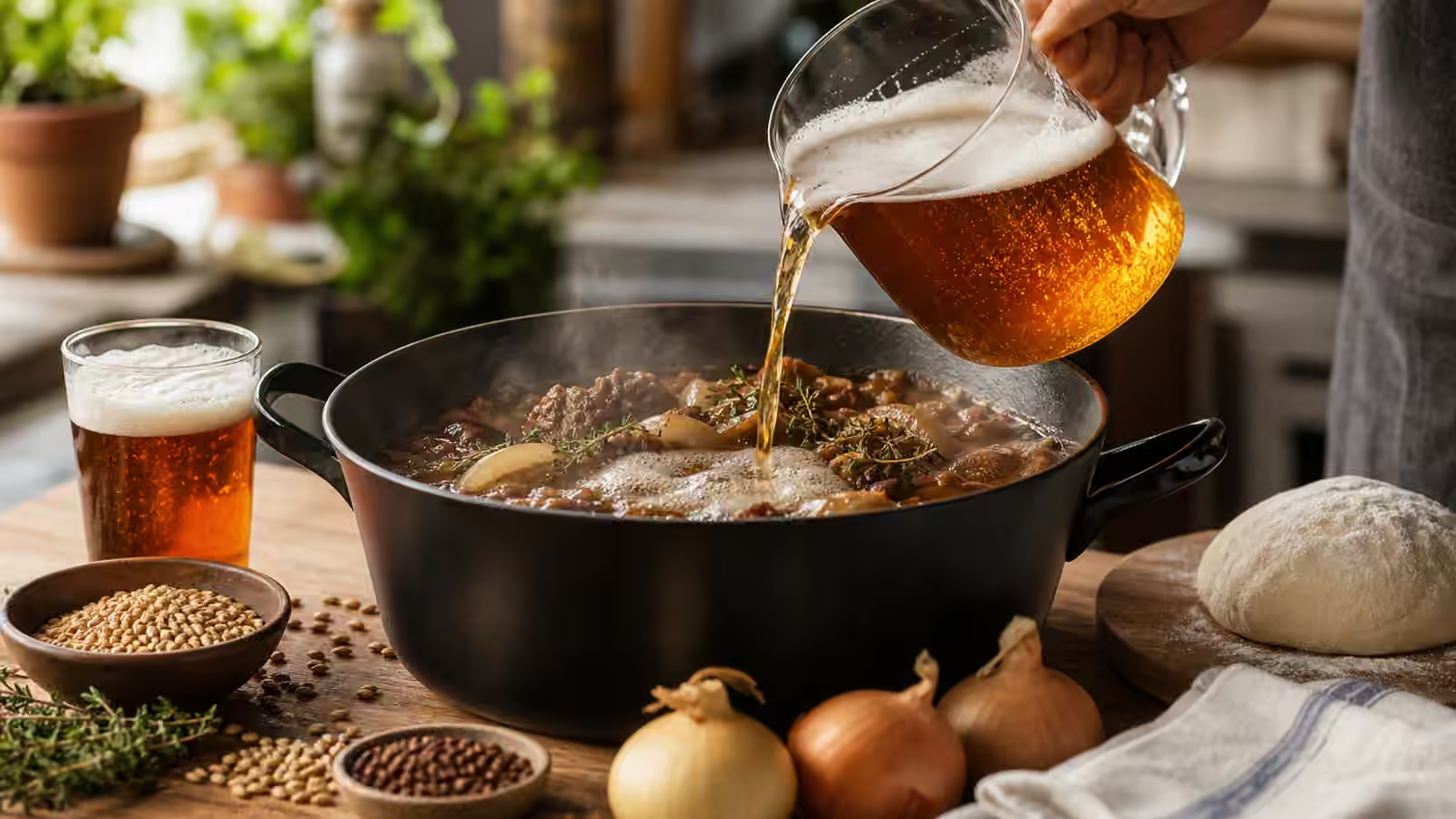
- Stews and braises: Beef bourguignon, pot roast, Irish stew. The beer becomes a liquid extension of the dish
- BBQ: Especially with molasses or brown sugar-based sauces. Caramel malt echoes the glaze
- Smoked foods: Brisket, salmon, pulled pork. Smoke and roast are natural allies
- Chocolate desserts: The beer’s cocoa notes build on the dessert
The classic: Smoked BBQ brisket with a robust porter. The beer’s roasted malt meets the meat’s smoke ring. The fat dissolves. The caramel echoes. This is why pairing matters.
The Dark Depths: Stout
Profile: Roasted coffee, dark chocolate, creamy texture, substantial body.
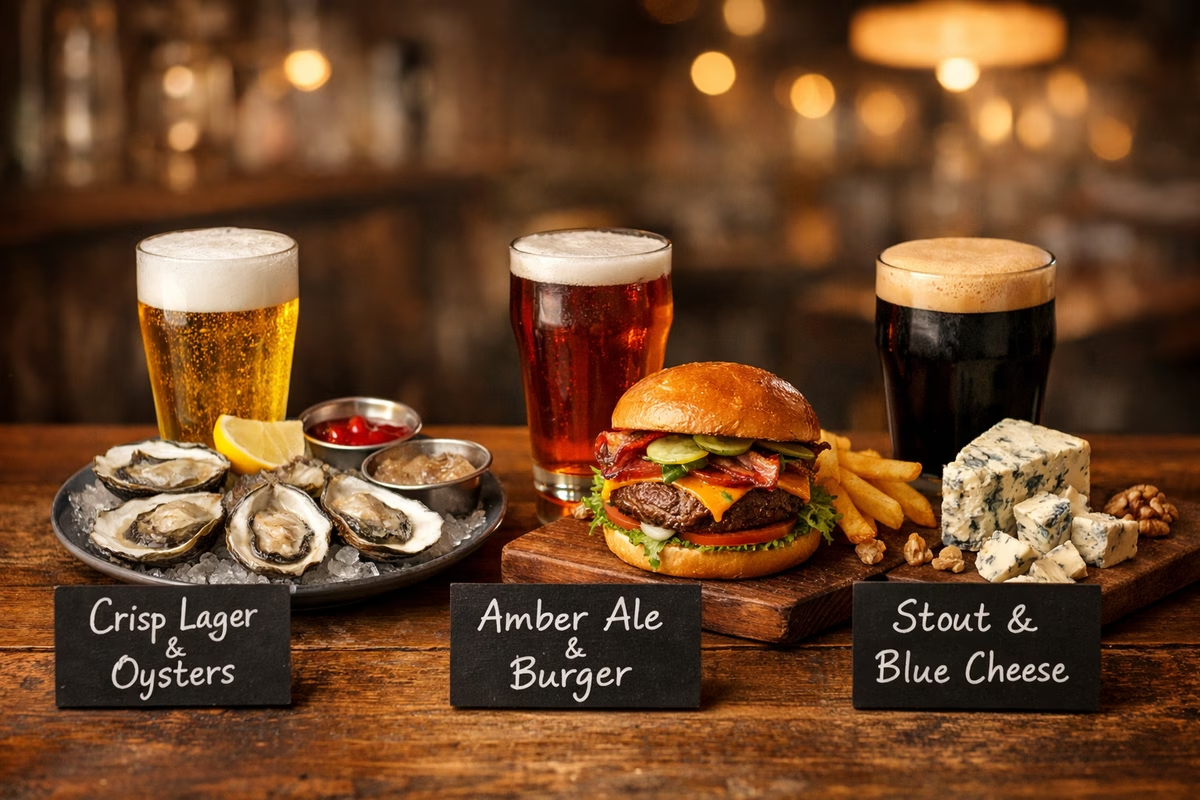
Stout, especially dry Irish stout, has one famous pairing: raw oysters. The brininess and roast work well together.
Beyond shellfish, stout accompanies serious protein: char-crusted steaks, braised short ribs, game meats. At meal’s end, chocolate desserts find a good match in imperial stout’s cocoa intensity.
They excel with:
- Oysters: The legendary match. Briny meets roasty meets dry
- Grilled and charred meats: Steak, burgers, blackened fish. The beer matches the char
- Rich braises: Short ribs, oxtail, lamb shanks. Full body meets full body
- Strong cheeses: Blue cheese, aged cheddar, Stilton. Stout can handle anything
- Chocolate anything: Cake, brownies, mousse, truffles. The pairing seems inevitable
The classic: Fresh oysters with a pint of Guinness. Some pairings are classic because they’re true.
The Spicy and Complex: Belgian Ales
Profile: Varies widely, but generally spicy yeast character, fruity esters, high carbonation, dry finish.
Belgian ales bring spice, fruit, and high carbonation. That makes them good with richer food.
Dubbel (dark, fruity, moderate strength) pairs beautifully with:
- Roasted duck, lamb, pork
- Braised meats with dark fruit notes
- Aged Gouda and other rich cheeses
Tripel (pale, spicy, deceptively strong) excels with:
- Seafood: lobster, crab, scallops
- Roast chicken and turkey
- Creamy cheeses like triple-cream Brie
- Crème brûlée and fruit tarts
Saison (dry, peppery, profoundly versatile) matches:
- Almost everything. Saison is perhaps the most food-friendly style
- Grilled fish, roast chicken, charcuterie
- Goat cheese, feta, Manchego
- Game meats: rabbit, venison, duck
The classic: Moules-frites (mussels and fries) with Belgian tripel. The entire country can’t be wrong.
The Sour and Wild: Lambic, Gose, and American Sours
Profile: Tart, funky, complex, dry, acidic.
Sour beers are bright and acidic. They cut richness and work well with fermented or salty food.
They excel with:
- Fatty foods: Duck confit, pork belly. Acid slices through fat
- Charcuterie: Salami, prosciutto, pâté. Fermented meets fermented
- Funky cheeses: Washed rinds, aged blues. Like calls to like
- Pickled foods: Kimchi, sauerkraut, pickles. The acid conversation continues
- Fruit desserts: Tarts, sorbets, fresh berries. Fruit lambics especially shine here
Specific fruit lambics bring specific pairings:
- Kriek (cherry): Duck, chocolate mousse, berry desserts
- Framboise (raspberry): Salads, fruit tarts, cheesecake
The classic: Duck confit with a Flemish red ale. The beer’s acidity breaks through the fat; the fruity complexity complements the gamey richness.
The Grand Finales: Barleywine and Strong Ales
Profile: High alcohol, rich and complex, sweet malt, warming.
These are after-dinner beers. Use them with rich desserts, strong cheese, or nothing at all.
They excel with:
- Strong cheeses: Blue cheese, aged cheddar, Stilton. Intensity meets intensity
- Game meats: Venison, wild boar, duck. The beer’s complexity matches the meat’s
- Rich desserts: Sticky toffee pudding, bread pudding, pecan pie
- Nuts and dried fruit: Candied nuts, date desserts, fig preparations
The classic: A slab of Stilton with English barleywine. The beer’s malty sweetness balances the cheese’s salt and funk. The finish lasts for minutes.
Building a Beer Dinner
The Art of Progression
When planning multiple courses, think of intensity as a ramp:
Start light: Pilsner, witbier, or saison with appetizers Build gradually: Pale ale or blonde with light courses Match the main: IPA, amber, or porter depending on the protein and preparation Complement cheese: Dubbel, tripel, or strong ale Finish rich: Imperial stout or barleywine with dessert
Do not step backward in intensity. A light pilsner after an imperial stout will taste thin.
Sample Menu
Oysters on the half shell Paired with: Dry Irish Stout (Guinness)
Arugula salad with goat cheese Paired with: Belgian Saison
Pan-seared scallops in brown butter Paired with: Belgian Tripel
Grilled ribeye with herb butter Paired with: Robust American Porter
Aged cheddar and stilton plate Paired with: Belgian Quadrupel
Dark chocolate tart Paired with: Bourbon Barrel-Aged Imperial Stout
Quick Reference: Cuisines
American BBQ
- Texas brisket: Porter or smoked rauchbier
- Pulled pork: Amber ale or brown ale
- Ribs: Porter or American brown ale
- Chicken: Wheat beer or pale ale
Mexican
- Tacos: Pale ale or Mexican lager
- Mole: Belgian dubbel or porter
- Ceviche: Pilsner or witbier
- Spicy dishes: Hefeweizen or hazy IPA
Italian
- Pizza Margherita: Pilsner or pale ale
- Meat pizza: Amber ale or IPA
- Cream pasta: Belgian blonde
- Tomato pasta: Amber ale
- Tiramisu: Porter or coffee stout
Asian
- Sushi: Pilsner or crisp rice lager
- Thai curry: Hazy IPA or hefeweizen
- Dim sum: Pilsner
- Indian curry: American IPA
- Ramen: Amber ale
French
- Coq au vin: Belgian dubbel
- Beef bourguignon: Stout
- Steak frites: Porter
- Crème brûlée: Tripel or barleywine
The Cheese Course
Cheese deserves special attention. Here’s your quick guide:
Fresh and soft (chèvre, ricotta, mozzarella): Pilsner, witbier, saison
Bloomy rind (Brie, Camembert): Tripel, saison, witbier
Semi-hard (cheddar, Gouda, Gruyère): Pale ale, amber ale, brown ale
Hard and aged (aged cheddar, Parmigiano): IPA, barleywine, strong Belgian
Blue cheese (Stilton, Roquefort, Gorgonzola): Imperial stout, barleywine, quad
Washed rind (Taleggio, Époisses): Sour ales, saison, Belgian strong ale
Pairing FAQs
What’s the safest all-around pairing? Pilsner. Its crisp bitterness and light malt backbone cleanse palate and play well with most dishes. How spicy is too spicy for beer? For chili heat, choose lower bitterness and some malt sweetness, like amber ales, Vienna lagers, or hefeweizen. High-IBU beers can amplify heat. Do sours pair with dessert? Yes. Tart fruit beers love cheesecake and citrus desserts; lambic or gose cuts through richness. What beer should I serve with steak? Robust malt + roast wins: porter, stout, or a balanced American brown. Can I pair salad with beer? Absolutely. Witbier, kölsch, or pilsner lift vinaigrettes; hazy IPA complements fruit-driven dressings. Best cheese with IPA? Aged cheddar or blue cheese stands up to hop intensity; the bitterness cuts fat and highlights funk.
The Final Principle
There are no hard rules in pairing. Use the guide as a starting point and adjust from there.
Trust your palate. Try combinations that seem odd. Keep track of what works.
The best pairing is the one that makes both the beer and the food taste better.
More Beer Guides
- Continue with Learn with Fizz for extra practice
- Explore the Complete Beer Styles Guide
- Learn proper Beer Tasting Techniques
Bring the guide back to the pour
Beer learning works best when it stays close to the glass. For Beer and Food Pairing, the useful question is how malt, hops, yeast, fermentation, freshness, glassware, temperature, and setting change the actual pour in front of you. Vocabulary matters, but only when it helps you taste more clearly.
Start with appearance, aroma, texture, flavor, and finish. Notice foam, clarity, grain, bitterness, sweetness, roast, fruit, spice, acidity, alcohol warmth, and carbonation. A short honest note can teach more than a long borrowed description.
Then connect the note to a choice. Maybe the beer wants a different glass, fresher packaging, cooler storage, a better food pairing, or a slower pour. Maybe the style is simply not your preference. That is useful information too.
Good beer knowledge should make taprooms and bottles more enjoyable, not more intimidating. It lets you ask better questions and waste fewer pints on guesses.
Beer and Food Pairing belongs to that practical path: taste, notice, compare, and keep the pleasure of the pour at the center.