The first time you taste beer on purpose, it feels almost silly. You’ve had beer before. You’ve liked some and endured others. You’ve probably nodded politely while someone said “notes of citrus” and thought, privately, that the note was mostly “beer.” But then one evening arrives where you want the drink to be part of the night rather than background noise. Maybe you’re hosting. Maybe you’re tired of guessing. Maybe you had a glass somewhere that tasted oddly like orange peel and fresh bread, and it bothered you—in the good way—because you didn’t know how it happened.
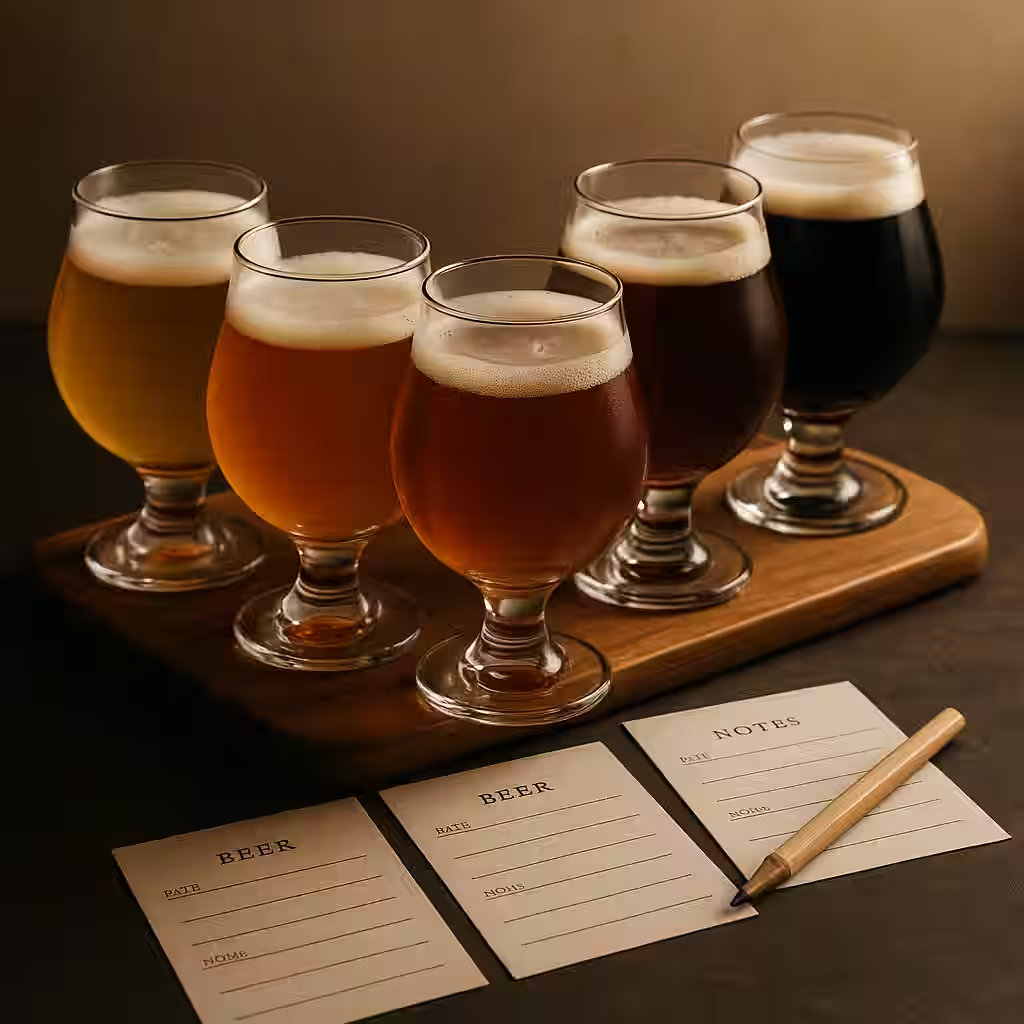
So you decide to run a tiny tasting at home, not as a performance, but as a way to make your preferences visible. You don’t need rare bottles. You need contrast and a calm setup. You buy three beers that are easy to find and different enough to teach: something crisp and pale, something hoppy, something dark. You keep the cans or bottles cool, but you don’t freeze them into silence. Beer opens as it warms, and if it’s too cold, it’s like trying to smell flowers through glass.
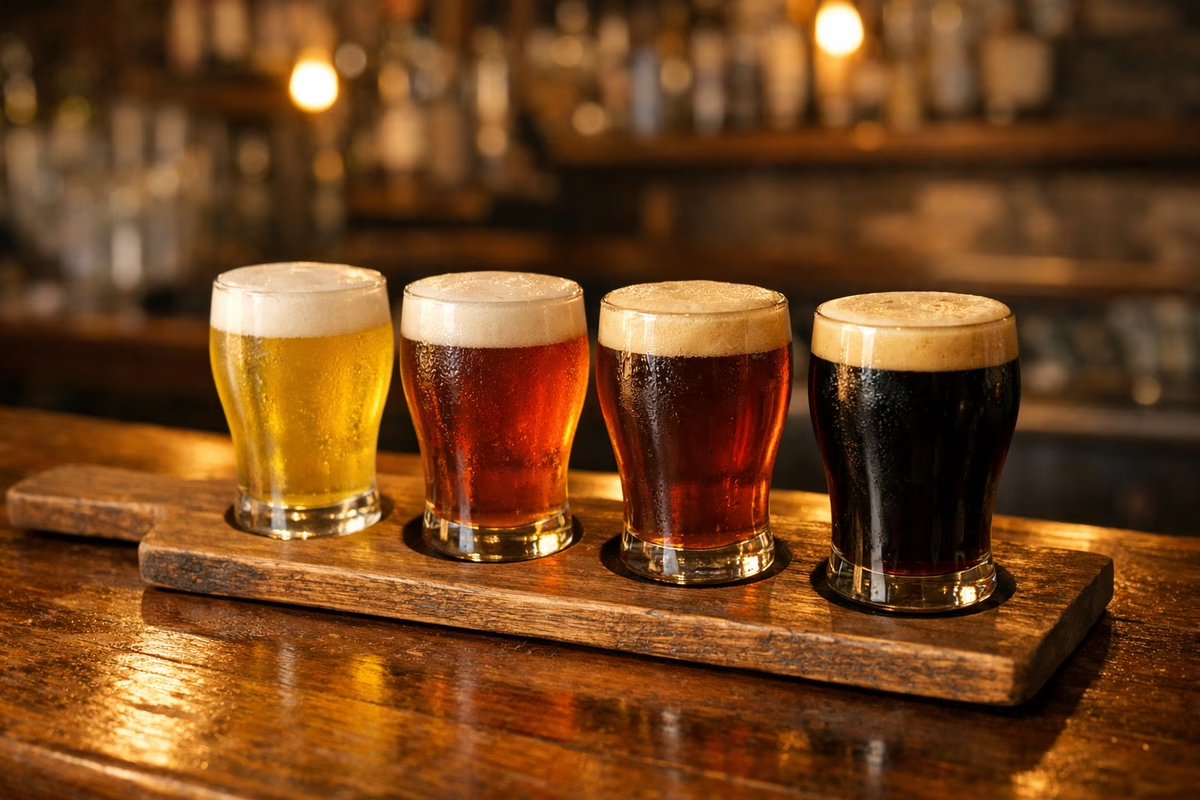
When you pour the first beer, you notice the sound before the flavor—the soft rush, the fizz settling. You pour gently down the side at first, then straighten the glass to build a modest head. The head isn’t decoration; it’s a delivery system for aroma. You hold the glass up and realize that the color is already telling a story. Pale straw looks like sunshine. Amber looks like caramel. Deep brown looks like toasted grain. You’ve learned something before your first sip.
You smell the beer and feel the mind’s urge to invent poetry. You don’t need it. You’re not trying to be correct. You’re trying to be honest. Does it smell clean and crisp? Does it smell like citrus, pine, flowers, or fruit? Does it smell like bread crust, cereal, honey, coffee, cocoa? Most beer aromas live in those neighborhoods. If you can place it in a neighborhood, you’re already doing the work.
The first sip is where people often rush, treating beer like it’s meant to be swallowed quickly. Slow down and let it rest for a second. The beer’s shape shows up: the way it lands, where sweetness appears, whether bitterness arrives early or late. You notice something that seems obvious in retrospect: bitterness isn’t one thing. Sometimes it’s clean, like grapefruit pith. Sometimes it’s sharp and lingering, like burnt rind. Sometimes it feels like a spine that holds the whole drink together. Once you notice that difference, you stop saying “I like hoppy” or “I don’t like hoppy,” and you start saying “I like bitterness that’s bright and clean,” which is a much more useful sentence.
You move to the second beer, the hoppy one, and it’s suddenly clear why tasting in a sequence matters. The aroma hits first—more vivid, more expressive. The beer smells louder than the first one, as if someone turned on the color. You realize that hops aren’t “one flavor.” They’re a family of impressions. Some are tropical and soft, like mango. Some are sharp and green, like pine needles. Some are floral. Some smell like herbs. You don’t need to name the hop variety. You just need to notice whether the hop character feels like fruit, forest, flowers, or something resinous.
The third beer is dark, and you expect heaviness. Sometimes you get it. But sometimes dark beer surprises you with clarity. You taste coffee-like roast without sweetness, or chocolate without sugar, or a dry finish that makes you want another sip. This is where you learn that color is not the same as sweetness. A stout can be rich and dessert-like, but it can also be crisp and dry. A porter can be soft and round. A brown ale can taste like toasted nuts and bread. Suddenly “dark beer” is not a category. It’s a range.
Halfway through the tasting, you begin to notice your own patterns. You lean toward beers that feel clean and crisp, or beers that taste like fruit and citrus, or beers that feel warm and toasty. You discover what you don’t like too, but it’s less dramatic now. It’s just information. Maybe heavy sweetness makes your mouth feel tired. Maybe aggressive bitterness feels sharp. Maybe you love the smell of hops but prefer them in a softer body. The tasting isn’t teaching you what beer is supposed to be; it’s teaching you what you want beer to do.
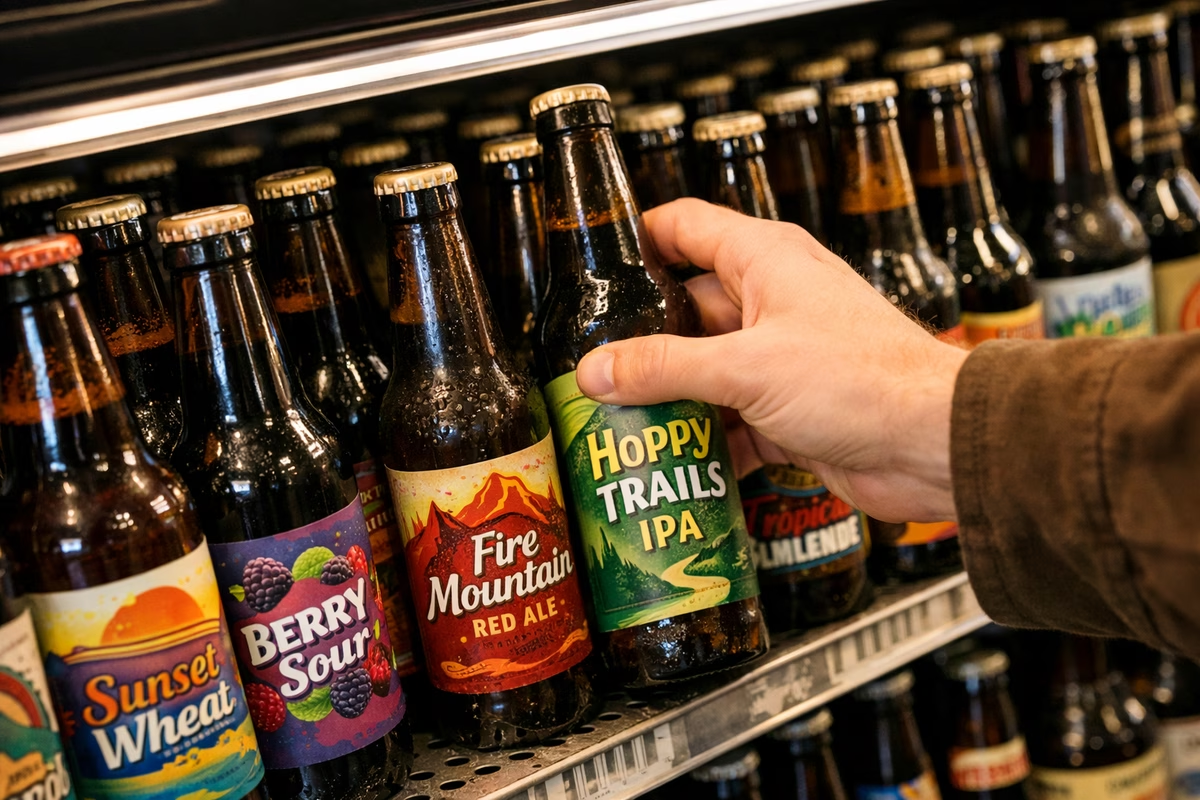
When the tasting ends, you don’t feel like an expert. You feel calmer. You have a small vocabulary that’s yours: crisp, juicy, floral, piney, toasty, dry, sweet, clean, heavy. Those words are enough to buy better beer forever. The next time you’re at a shop, you won’t be browsing labels like a guessing game. You’ll be choosing a mood.
If you want the practical structure behind this story, pair it with Beer Tasting 101 and Beer Styles Guide.