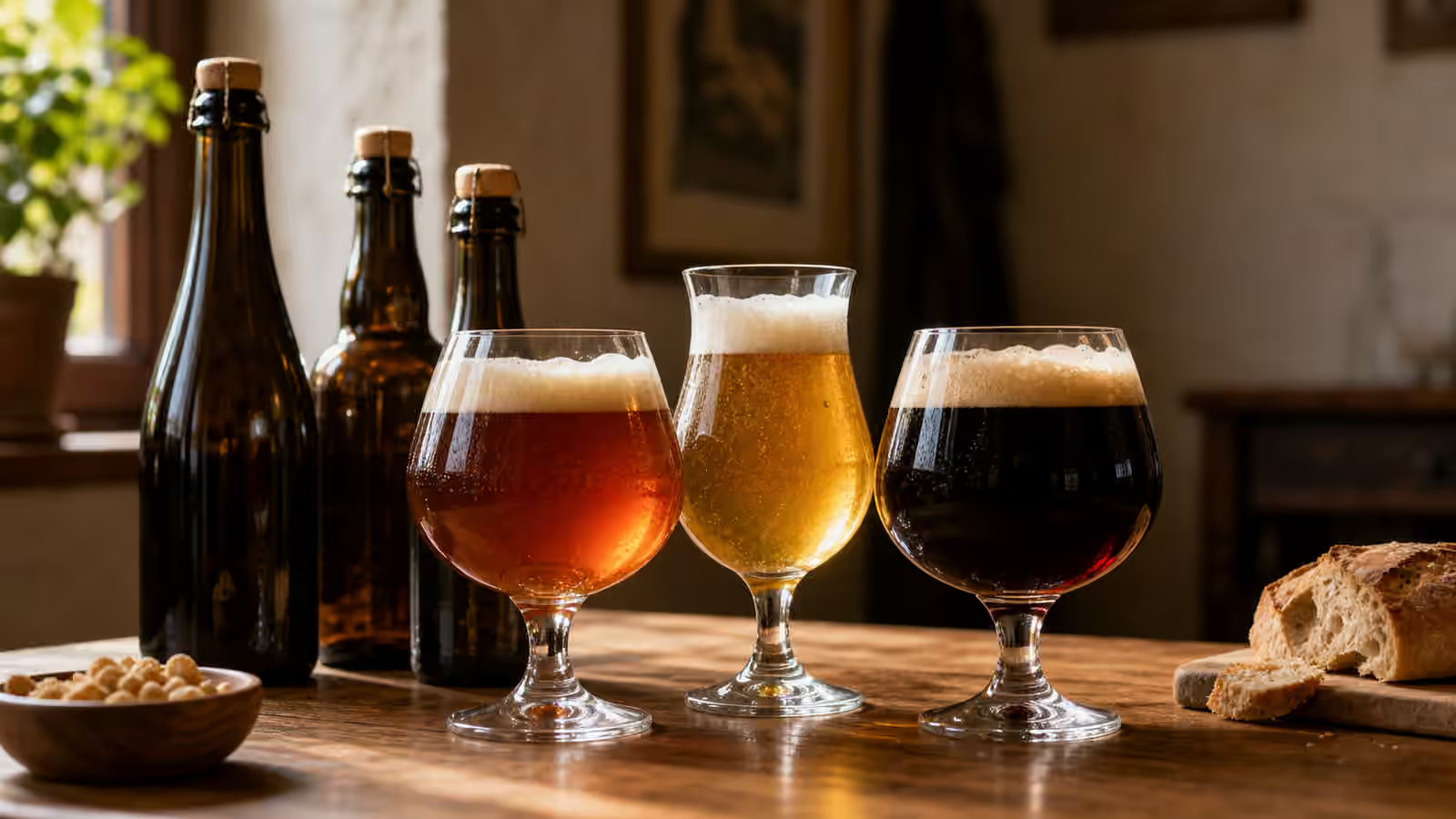
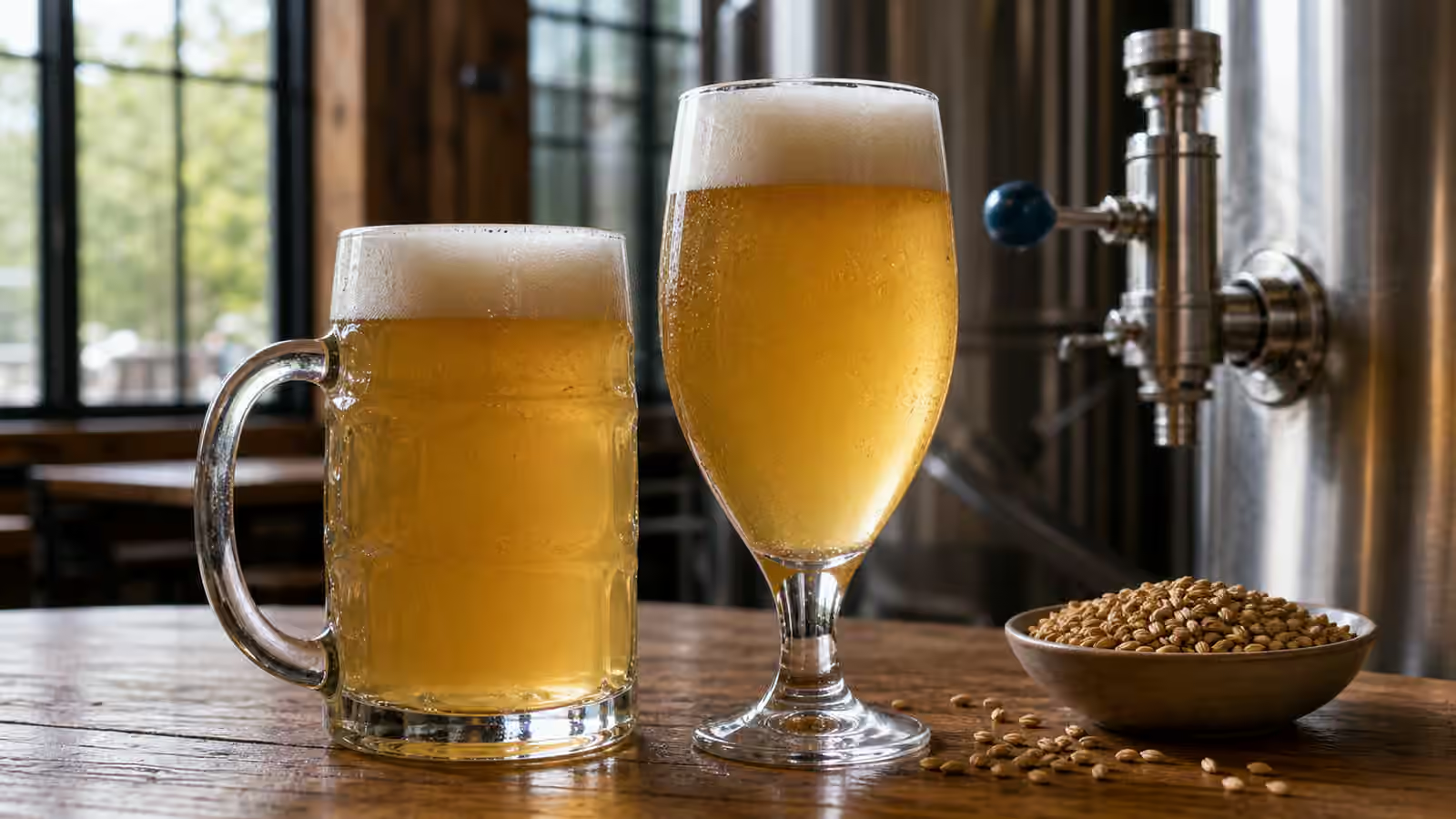
English pub ales can be easy to overlook because they rarely announce themselves with extreme strength, tropical hop perfume, pastry sweetness, or dramatic sourness. Their strength is proportion. A pint of bitter, mild, brown ale, or lower-strength pale ale may carry biscuit malt, marmalade-like hops, soft fruit from yeast, gentle carbonation, and a finish that leaves room for conversation and food. The beer is not trying to be the whole event. It is trying to fit the room.
That modesty is why these styles are worth a dedicated guide. Session Beer explains the idea of flavor at lower strength, and Cask Ale and Nitro Beer explains the softer service traditions that often shape these beers. English pub ales sit where those ideas meet: moderate beer, careful balance, and service that can make malt and yeast feel alive without turning everything loud.
Bitter Is Not A Warning Label
The word bitter can mislead modern drinkers because it sounds like a dare. English bitter is not usually bitter in the punishing sense. It is a pale to amber ale where bitterness gives shape to malt, yeast, and drinkability. The beer may taste like biscuit, toast, light caramel, orange marmalade, tea, flowers, herbs, or earthy hops. The finish should be dry enough to make the next sip natural, but the malt should not disappear.
Ordinary bitter, best bitter, and extra special bitter are strength and intensity steps rather than separate worlds. Ordinary bitter can be beautifully small, with just enough malt and hop structure to hold a pint. Best bitter tends to have a little more weight and aroma. Extra special bitter, often shortened to ESB, moves fuller still, with more malt presence and a firmer hop line. The names are less important than the balance. A stronger bitter that tastes sweet and flabby has missed the point. A smaller one that tastes watery has missed it too.
English hop character can feel different from the citrus, pine, and tropical fruit many drinkers expect from American IPA. It often leans earthy, floral, herbal, woody, tea-like, or orange-marmalade-like. Those notes can seem quiet at first, especially after a heavily dry-hopped beer. Give them a clean palate and they start to make sense. Understanding Hops helps separate hop bitterness from hop aroma, and bitter is a useful classroom because both are present in a restrained way.
Mild Has More Flavor Than Its Name Suggests
Mild is another style name that hides its own charm. It does not mean flavorless. It points toward a gentler, lower-strength ale that may be dark or pale, though dark mild is the version many drinkers picture. A good dark mild can taste like toast, cocoa, nuts, light caramel, brown bread, or a small touch of roast while remaining soft and easy to drink. It is a dark beer that does not need to be heavy.
That distinction matters because color still tricks people. Dark mild is not porter, stout, or strong brown ale, though it may share some ingredients and flavors. It uses dark malt to make a modest beer feel complete. The roast should support the beer, not dominate it. If a mild tastes acrid, thin, and burnt, the dark malt has not been handled gently enough. If it tastes like soft toast and cocoa with a clean finish, the style has done something subtle and valuable.
Mild also teaches body at low strength. Alcohol adds weight, so a small beer needs other tools. Malt choice, mash profile, yeast character, carbonation, and serving temperature all matter. Too cold, and mild can seem empty. Too flat, and it can seem tired. Too sweet, and it loses the quiet refreshment that makes it work. Beer Strength, Body, and Balance is useful here because mild shows that a beer can be low in alcohol and still have shape.
Yeast And Mineral Snap
English ales often carry fermentation character that is easy to miss if you expect yeast to be loud. You may notice light apple, pear, berry, stone fruit, or a rounded fruitiness that sits behind malt and hops. In the right amount, that yeast note makes the beer feel alive. Too much fruit can make the beer seem warm or unfocused. Too little can make it taste neutral. The best examples keep yeast as an accent, not a spotlight.
Water character can also matter, especially in beers inspired by Burton-on-Trent and other brewing traditions where mineral content shaped bitterness and finish. You do not need a water chemistry chart to taste the effect. Some English pale ales and bitters seem to have a firm, dry, slightly mineral snap that makes bitterness feel precise. The guide to Understanding Brewing Water explains the brewing side, but the practical tasting lesson is simple: dryness and bitterness are not only about hops.
Malt is the steady base. Pale ale malt can taste rounder and more biscuity than a very neutral pale malt. Crystal malt can add caramel, toast, or dried fruit impressions, though too much can make the beer sticky. Darker malt can pull mild and brown ale toward cocoa, nut, and toast. Understanding Malt gives the larger map. In English pub ales, malt usually works by shading rather than by shouting.
Cask Changes The Voice
Many English pub ale styles make special sense on cask, though they can also be brewed and served well in keg or package. Cask service brings gentler carbonation, slightly warmer serving temperatures, and a softer texture. That changes how bitterness, malt, yeast, and aroma land. A bitter on cask may feel rounder and more integrated than the same beer pushed through a colder, sharper draft setup. A mild may gain softness and aroma that would be hidden if served near freezing.
Cask is not automatically better. It has to be fresh, kept at the right temperature, conditioned properly, and served through clean equipment. When it is poor, it can taste flat, sour, buttery, stale, or lifeless. The dedicated Cask Ale and Nitro Beer guide covers those service clues in more detail. For pub ales, the important point is that the serving method is part of the style’s personality, not a decorative tradition.
If you taste these beers on regular draft or from a bottle or can, look for the same underlying balance. The carbonation may be higher, the beer may be colder, and the hop line may feel sharper, but the core should remain. Bitter should still have malt and a dry finish. Mild should still feel complete at modest strength. Brown ale should still use nut, toast, and caramel without turning heavy. Service changes the voice, but the song should be recognizable.
Food Makes The Styles Click
English pub ales are food beers because they leave space. Bitter works with fish and chips, roast chicken, sausages, pork pies, cheddar, pickles, and salty snacks because bitterness and carbonation refresh the palate without overwhelming the plate. Mild works with mushrooms, grilled onions, shepherd’s pie, nutty cheese, roast vegetables, and simple stews because dark malt echoes browned flavors without the weight of a strong stout.
Brown ale sits comfortably with burgers, roast pork, aged cheddar, onion gravy, and toasted bread. Lower-strength pale ale can handle fried food, grilled chicken, and sandwiches. The pairings are not precious. They work because the beers have enough flavor to matter and enough restraint to let food remain food. The broader Beer and Food Pairing guide gives the logic, but pub ales show it in everyday form.
Temperature matters at the table. If the beer is too cold, malt and yeast seem muted and the pint may taste thinner than it is. If it is too warm, sweetness and oxidation can become obvious. Cool rather than icy is often best, especially for cask-inspired styles. Serving and Storage explains the general temperature picture, and these beers are a useful reminder that refreshment does not require numbing the glass.
How To Judge A Pint
Start with the first smell. Does the beer have malt, hops, yeast, and freshness, or does it smell like cardboard, butter, vinegar, or nothing? A small amount of yeast fruitiness may belong. A buttery slickness that dominates the glass does not. Oxidation can make these styles taste dull because their flavors are not loud enough to cover stale handling. Beer Off-Flavors helps name those problems without turning every unfamiliar note into a flaw.
Then watch the finish. Bitter should finish with enough dryness and bitterness to invite another sip. Mild should finish cleanly, not like sweet malt water. Brown ale should carry nut and toast without becoming syrupy. A beer can be modest and still have a beginning, middle, and end. If it collapses after the first sip, it is not modest in a charming way. It is thin.
These beers ask for a slower kind of respect. They are built for pints, food, rooms, and repetition, but they still require skill. In fact, the lack of spectacle makes the skill easier to see. There is no barrel, fruit puree, double dry hop, or high alcohol to distract from balance. When a bitter or mild is right, it can seem almost obvious. That obviousness is the achievement.