
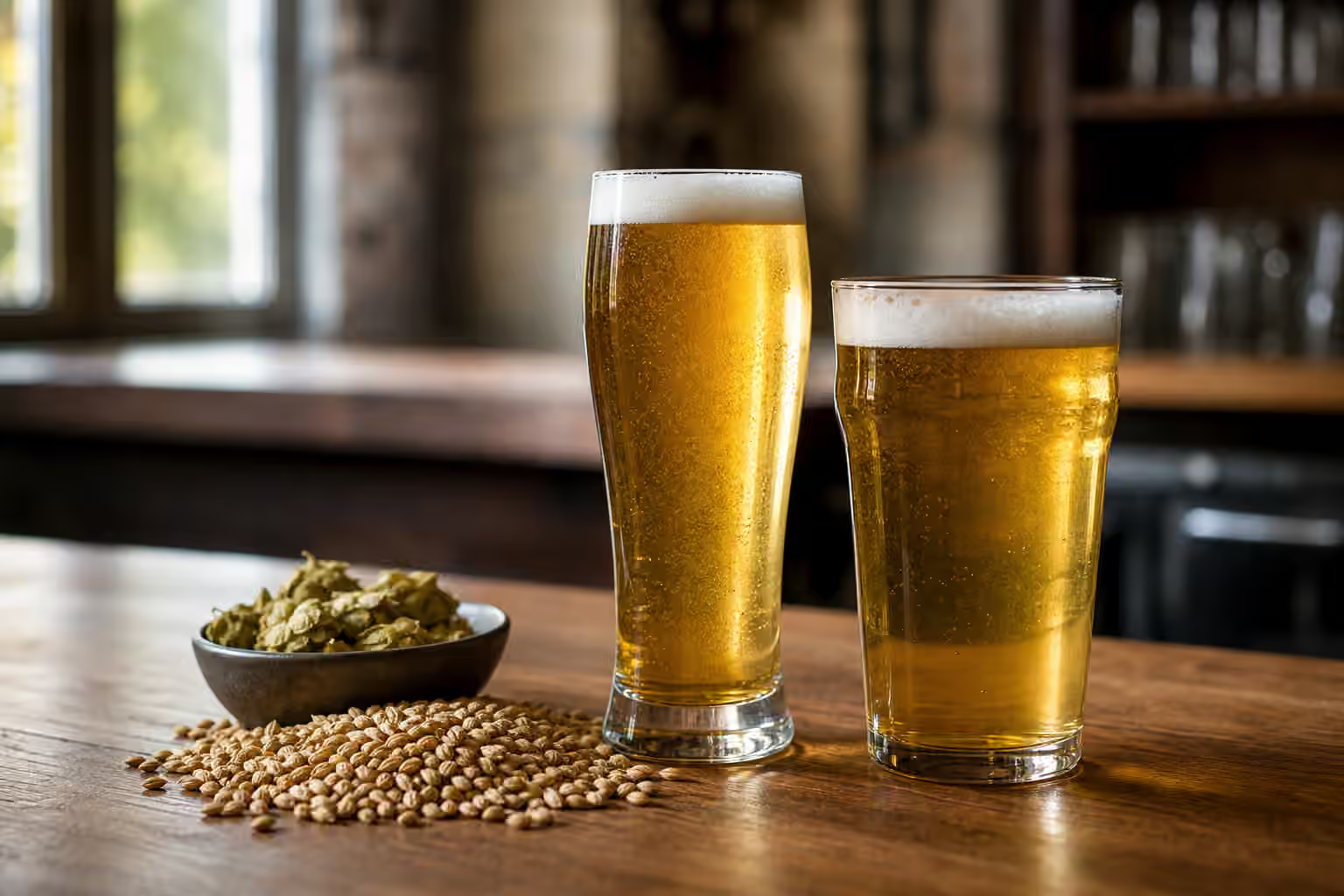
Cream ale and blonde ale are easy to underestimate because they rarely announce themselves with loud hops, roast, acidity, or strength. They are pale, clear or gently bright, moderate in aroma, and built for refreshment. That simplicity can make them seem like empty beer until you start reading the small decisions: how clean the fermentation feels, how the malt avoids sweetness, how bitterness trims the finish, and how the beer stays interesting through a full glass.
These styles belong near Pilsner and Pale Lager , Pale, Amber, and Brown Ales , and Session Beer . They share the same broad promise of drinkability, but they get there by different routes. Pale lager leans on cold fermentation and lagering. Pale ale often invites more hop character. Cream ale and blonde ale usually aim for a softer middle: ale identity without heavy yeast expression, enough malt to taste like beer, and a finish clean enough to make the next sip natural.
Cream Ale Is Not Creamy
The name cream ale causes confusion because it does not mean the beer contains cream, lactose, or a dessert-like texture. Historically, it points more toward smoothness, lightness, and American brewing adaptation. Cream ale is an ale, but many examples are fermented cool, conditioned carefully, or even blended with lager beer to create a clean profile. Some use adjunct grains such as corn or rice to lighten the body, not to erase flavor. The result should be pale gold, gently malty, lightly fruity at most, and easy to drink without tasting like water.
Good cream ale has a small grain sweetness that disappears before it becomes sticky. Think pale bread, cracker, faint honey, or cereal rather than caramel. Hop bitterness is usually low to moderate, just enough to keep the finish tidy. Carbonation matters because the beer depends on lift. If the bubbles are flat, the beer can seem dull. If they are harsh, the beer can seem thin and sharp. A well-made cream ale lands between those mistakes, soft at first and dry enough at the end.
This is why cream ale can be a useful bridge for drinkers who say they only like lager. It offers the clear refreshment of pale beer while keeping a quiet ale warmth. It also gives small breweries a way to show discipline. There is nowhere to hide butter, oxidation, rough bitterness, dirty glassware, or sloppy carbonation. The beer may be modest, but it is not careless.
Blonde Ale Works By Restraint
Blonde ale, sometimes called golden ale, is a broad family rather than one rigid historical style. It usually sits between pale lager and pale ale. It may have a little more malt character than cream ale and a little more hop aroma, but it should not drink like a small IPA. Its job is balance. A good blonde ale tastes like lightly toasted bread, biscuit, pale malt, gentle floral or citrus hops, and clean fermentation. It should finish with enough dryness to remain refreshing.
The danger in blonde ale is shapeless sweetness. If the malt is too simple and the bitterness too low, the beer can taste like sweet grain water. If the brewer overcorrects with hops, the beer becomes pale ale by another name. The best examples have a center. They give you something to notice at the start of the sip and something clean at the end.
Blonde ale is also useful at the table. It can sit beside roast chicken, fried fish, salads with bitter greens, simple pizza, mild cheeses, grilled vegetables, and sandwiches without turning the meal into a beer lesson. It has enough flavor to belong, but it does not fight every bite for attention. The broader Beer and Food Pairing guide explains the matching logic, but blonde ale teaches one of the simplest lessons: sometimes the right beer is the one that keeps the meal moving.
Clean Does Not Mean Flavorless
The word clean gets used so often around pale beer that it can start to sound like absence. In these styles, clean means the fermentation is not throwing heavy banana, pepper, solvent, butter, or sourness into a beer that did not ask for them. A faint fruit note can be fine in blonde ale. Cream ale may have a soft apple or pear edge depending on yeast and fermentation temperature. But those notes should not dominate.
Clean beer lets malt, hops, carbonation, and temperature show clearly. That is why Beer Off-Flavors is especially relevant here. Diacetyl can make a pale beer taste buttery or slick. Oxidation can turn the grain sweet and papery. Lightstruck character can smell skunky if the package has been abused. Dirty lines can make a delicate beer taste sour or muddy. Stronger styles sometimes cover problems for a while. Cream ale and blonde ale usually expose them.
Freshness matters, but not in the same dramatic way it does for hop-saturated IPA. These beers are best when they taste bright, cold-kept, and recently handled well. They do not need to be chased on release day, but they should not taste tired. A stale cream ale often loses its snap first, then its gentle malt turns dull. A stale blonde ale may taste sweet without body or bitter without aroma. The fix is not complicated: buy from places with turnover, keep the beer cold, and drink it while it still tastes awake.
How To Taste Them Clearly
Start with appearance. Cream ale is usually pale straw to gold, often clear, with a white head that should last long enough to frame the glass. Blonde ale may be similar or slightly deeper, from light gold to soft amber. Haze is not automatically wrong, especially in small-brewery versions, but a chunky or lifeless pour deserves attention. Beer Color and Clarity helps separate style expectation from false certainty.
Smell before drinking. You may find bread dough, cracker, corn-like sweetness, light honey, grass, flowers, lemon peel, or very soft fruit. If the aroma is blank, let the beer warm slightly and try again. If the aroma is butter, cardboard, vinegar, or harsh solvent, the problem is probably not your palate. Then taste for the finish. The first sip may be mild, but the finish should tell you whether the beer has balance. Does sweetness clear? Does bitterness guide the palate without scraping? Does carbonation refresh? Does the beer invite a second sip for a reason other than thirst?
Pour size changes the judgment. A two-ounce sample may make these beers seem unremarkable beside louder styles. A full glass tells a better story. Some beers are designed for the first explosive sip. Cream ale and blonde ale are designed for continuity. Their quality appears in the way the fourth sip still feels pleasant, the way the beer stays composed as it warms a little, and the way it leaves food and conversation room to breathe.
These are not styles for proving seriousness. They are styles for noticing proportion. When they are weak, they vanish. When they are strong, they show how much can happen inside a narrow band: pale malt, light hops, clean yeast, good carbonation, and a finish that knows when to leave.


