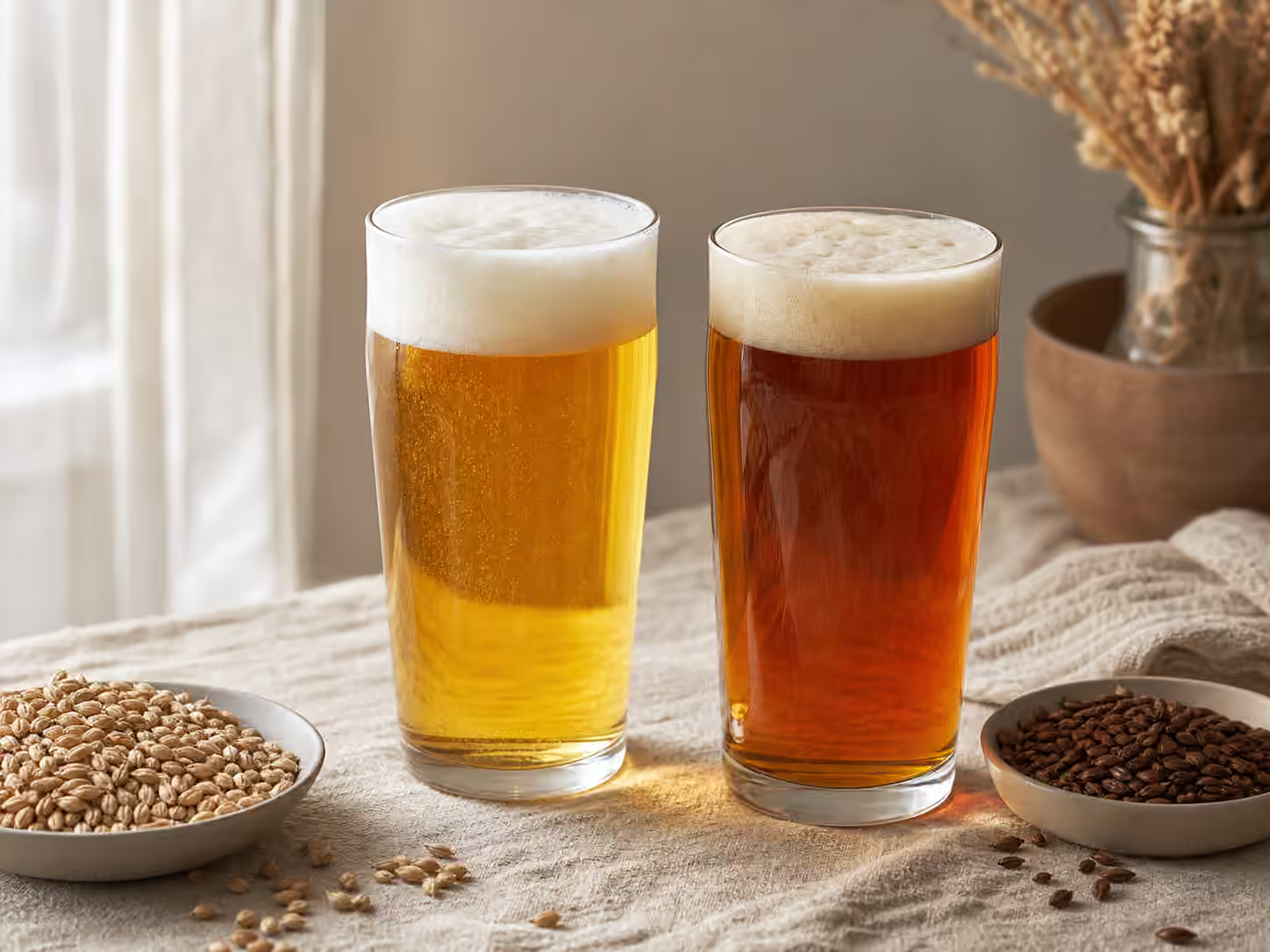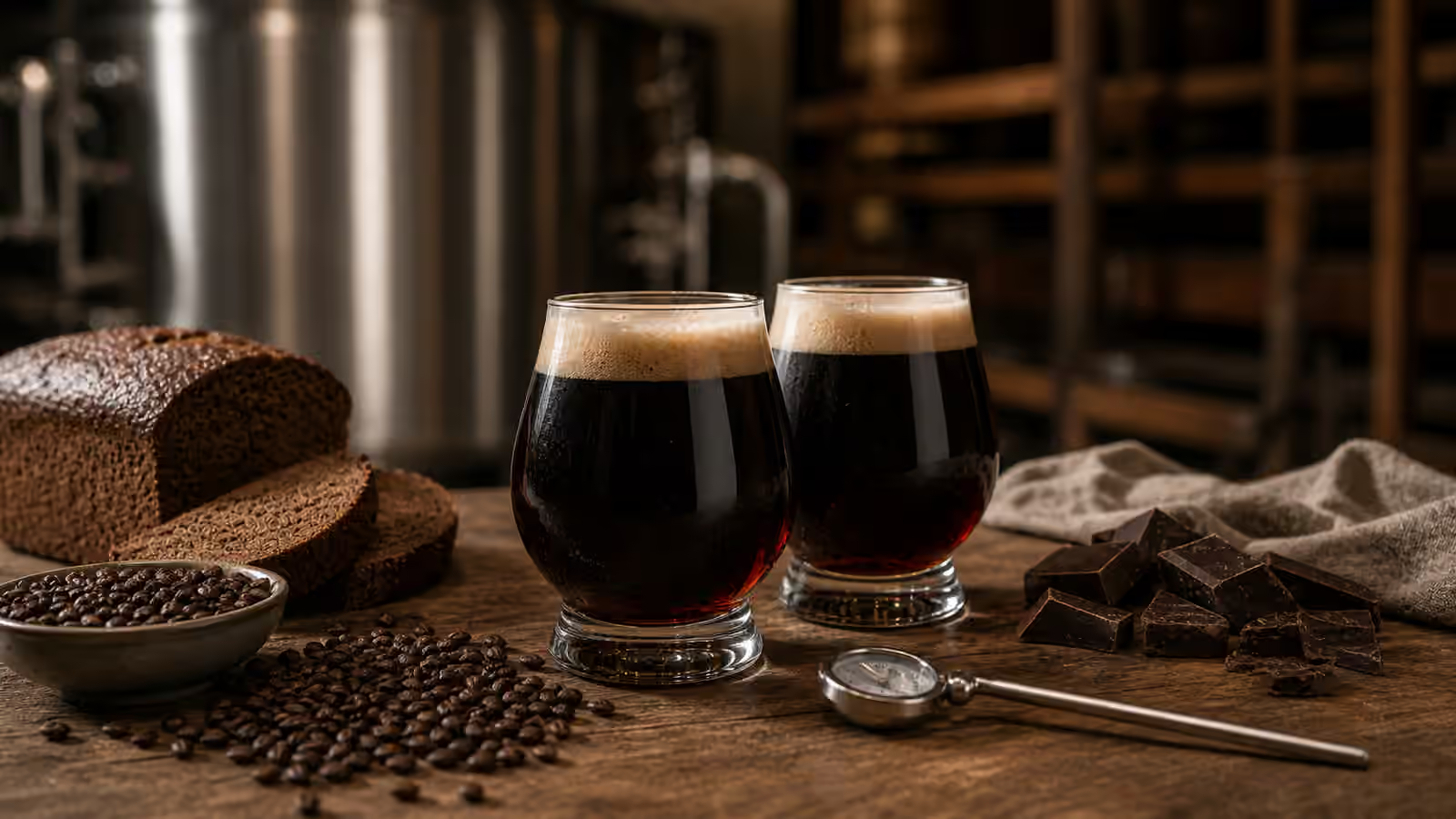
Baltic porter looks as if it should be simple to place. It is dark, often strong, and the word porter points toward roasted malt. Then the glass complicates the assumption. A good Baltic porter can be smoother, cleaner, and more lager-like than many drinkers expect, with dark bread, cocoa, caramel, dried fruit, and gentle roast carried by cool fermentation and patient conditioning. It is dark beer with a cold center.
The wider Porter and Stout guide mentions Baltic porter as a branch of the porter family, while Lager Styles explains the clean fermentation frame. This guide brings those ideas together. Baltic porter is not simply an imperial stout with a different name. Its pleasure comes from strength and darkness held in a smoother, more restrained shape.
Porter Roots, Lager Discipline
Porter began as an ale tradition, but Baltic porter developed in regions where strong dark beer met lager brewing habits. Modern examples are often fermented with lager yeast or conditioned cold enough to create a clean, polished profile. Some may use ale yeast and still aim for a similar smoothness, so the label alone does not tell the whole process. The sensory target matters: dark malt depth without the heavy ale fruit or sharp roast that might define other strong dark beers.
That lager discipline changes how the beer drinks. Fermentation character usually stays quieter, letting malt take the lead. The alcohol may be present, but it should feel integrated rather than hot. The roast should be smooth and chocolate-like more often than acrid. The finish can be warming and round, but it should not collapse into syrup.
Ale vs. Lager is useful because Baltic porter sits near the boundary where family names become less tidy. It reminds you that fermentation is a process, not a color chart. A beer can be dark and strong while still depending on the clean patience of lager brewing.
Dark Malt Without Stout Harshness
Baltic porter often shows dark malt in a polished way. Expect impressions of cocoa, dark bread, toasted crust, caramel, molasses, nuts, raisin, plum, or light coffee. The roast is usually less sharp than in many dry stouts and less aggressive than in some imperial stouts. The beer may look nearly black, but at the edge of the glass it can show ruby, garnet, or deep brown highlights.
Color can mislead. Beer Color and Clarity makes the broader point that dark beer is not automatically heavy or bitter. Baltic porter is a good example because its darkness often arrives with smoothness. The grain bill may include dark malts, but the brewer usually avoids turning the finish ashy. The result can feel like dark bread and chocolate rather than burnt toast.
Sweetness varies. Some versions are fairly dry for their strength, while others are rounder and dessert-adjacent without becoming pastry beer. The best examples keep enough bitterness, carbonation, and roast to frame the malt. If the beer tastes like sweet dark syrup, the balance is off. If it tastes thin and charred, the malt has lost its smooth center.
Strength Should Feel Quietly Built
Baltic porter often carries more alcohol than its calm profile suggests. That strength supports the malt depth and lengthens the finish. It can bring warmth, dried fruit, and a fuller body, but it should not announce itself like spirits. A rough alcohol edge can break the style’s smooth illusion.
This is why conditioning matters. Cold maturation can help strong dark lager become integrated. Rough fermentation notes soften, particles settle, carbonation becomes more composed, and malt flavors seem to arrive together. Beer Conditioning and Lagering explains that maturation is not only waiting. It is the process of letting beer become ready.
Strength also changes serving. Baltic porter is rarely a beer to drink quickly from a large glass. A smaller pour lets the beer warm gradually and keeps the richness pleasant. Serve it cooler than room temperature but not so cold that malt disappears. If the first sip tastes muted, give it a few minutes. If it becomes heavy and sweet, it has warmed too far or lacked balance from the start.
How It Differs From Neighboring Dark Beer
Baltic porter can be confused with several styles. Compared with a dry stout, it is usually stronger, smoother, and less sharply roasty. Compared with imperial stout, it often feels cleaner, less aggressive, and more lager-polished. Compared with schwarzbier or dunkel, it is usually stronger and deeper. Compared with barleywine, it is darker and more roast-framed, though both can share dried fruit and warming malt depth.
The Dark Lagers guide is a useful neighbor because it shows how dark malt can work inside clean fermentation at lower strength. Baltic porter takes that idea and adds size. The Barleywine and Old Ale guide is another useful contrast because it shows strong malt without the same dark lager frame.
Side-by-side tasting teaches the difference quickly. Put Baltic porter beside a robust porter, a schwarzbier, and an imperial stout if you can. The Baltic porter should show depth and strength, but also a smoother fermentation line. It should not be the sharpest, the sweetest, or the most roasty beer on the table. Its identity lives in that controlled middle.
Aging And Freshness
Baltic porter can sometimes age well because strength, malt depth, and darker flavors offer some protection. Over time, dark fruit, chocolate, sherry-like notes, and smooth oxidation may develop. But age is not guaranteed improvement. Heat, oxygen, weak closure, or too much time can make the beer taste papery, soy-like, stale, or flat. Cellaring should be selective.
If you buy a bottle for aging, consider the beer’s structure. Does it have enough alcohol, malt depth, carbonation, and closure quality to survive? Is the beer clean and balanced now, or are you hoping age will fix a flaw? Age can soften edges, but it rarely repairs a poorly built beer. Barrel-Aged Beer and the Cellar Discovery explore the promise and risk of storing beer, and Baltic porter belongs in that cautious conversation.
Fresh examples can be excellent too. Do not assume the beer must be old. A fresh Baltic porter may show clearer chocolate, bread crust, and clean lager finish. An aged one may show deeper fruit and softer roast. Both can be valid when the beer is handled well.
Food And Tasting
Baltic porter is generous with food because it has dark malt without overwhelming roast. It works with roasted pork, sausages, mushroom dishes, braised beef, dark rye bread, aged cheese, nut desserts, and chocolate that is not overly sweet. The beer can echo browned flavors while its clean fermentation keeps the pairing from becoming too heavy. Food and Beer Pairing gives the wider logic.
When tasting, start with aroma. Look for cocoa, bread crust, caramel, dark fruit, roast, and alcohol warmth. Then notice texture. Does the beer feel smooth, or sticky? Does carbonation lift the malt? Does the finish dry out enough to invite another sip? A good Baltic porter should feel composed. It may be strong, but it should not feel chaotic.
Baltic porter rewards drinkers who like dark beer but want a different kind of darkness. It is not built on stout roast alone, and it is not only a porter scaled upward. It is a strong, dark, often lagered beer where malt depth, clean fermentation, and cold patience meet. When those pieces align, the beer tastes less like force and more like quiet architecture.