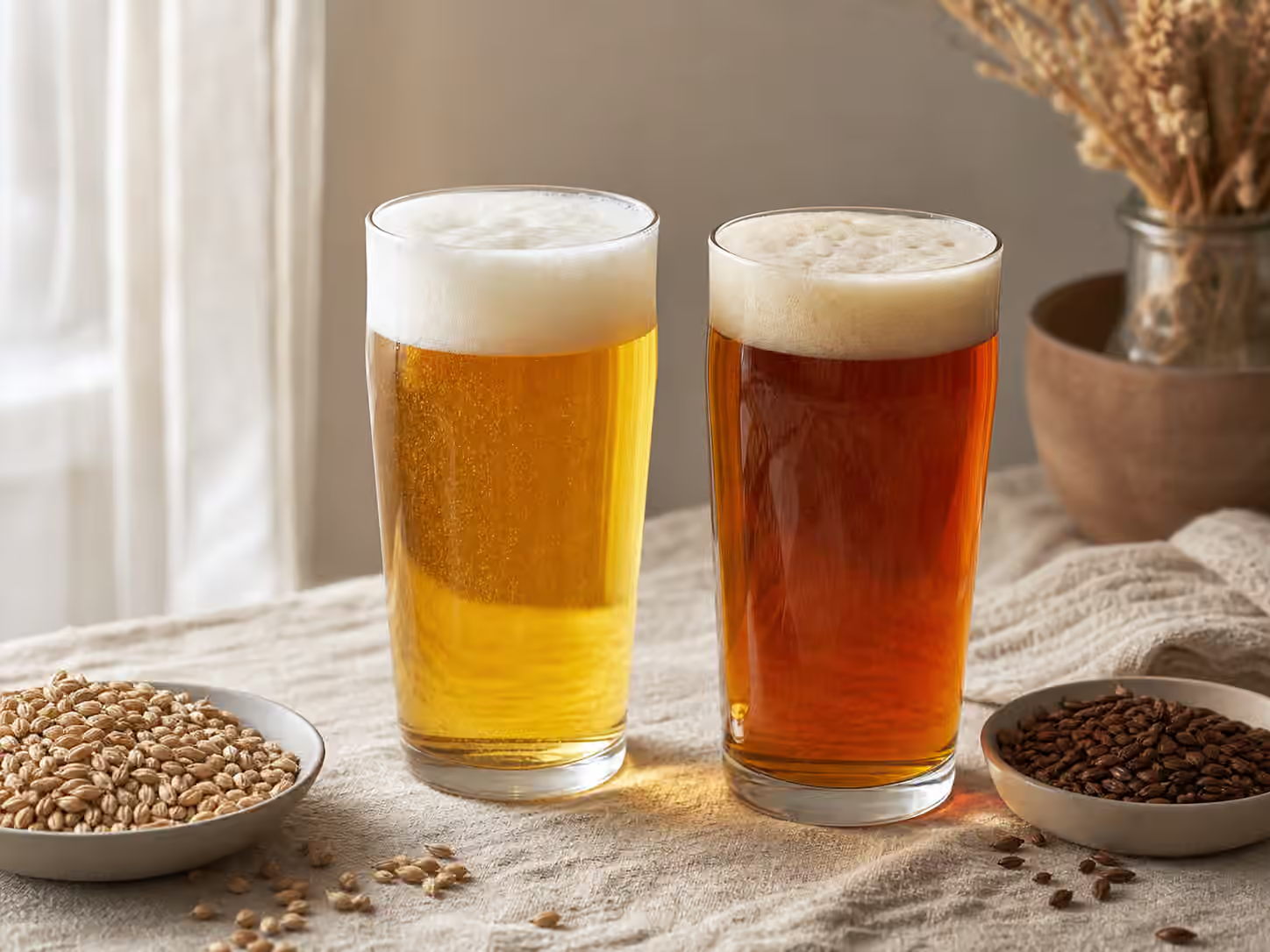
Ale and lager are the two words that appear early in almost every beer conversation, but they are also easy to misuse. Many drinkers learn them as flavor shortcuts: ale means dark, strong, or craft; lager means pale, cold, or simple. Those shortcuts work just often enough to be misleading. The real split is not color, strength, bitterness, glass shape, price, or seriousness. It is fermentation.
That difference matters because fermentation is where beer becomes beer. Malt gives the liquid sugar, bread, toast, roast, and body. Hops add bitterness, aroma, flavor, and structure. Water changes sharpness, roundness, and mineral snap. Yeast turns the wort into alcohol and carbon dioxide, then leaves fingerprints on aroma, texture, clarity, dryness, and finish. Ale and lager are broad families built around different kinds of yeast behavior and different fermentation traditions. Once you understand that, the Beer Styles Guide becomes much easier to read.
The Split Is About Yeast And Temperature
Ale yeast and lager yeast are closely related organisms doing the same essential job, but they tend to work in different ways. Ale fermentation is usually warmer and faster. Lager fermentation is usually cooler and slower, followed by a conditioning period that helps the beer settle into a cleaner profile. The old shorthand says ale yeast is top-fermenting and lager yeast is bottom-fermenting. That can be useful historically, but it is less helpful than asking what the yeast contributes to the glass.
Ales often show more fermentation character. That may mean gentle fruit, pear, apple, berry, banana, pepper, clove, spice, earth, or a broad rounded aroma that does not come from malt or hops alone. Some ales are restrained and clean, but the family gives brewers room for visible yeast expression. English bitters, Belgian saisons, German wheat beers, American pale ales, porters, stouts, and many sour or mixed-fermentation beers all sit under the ale umbrella, even though they do not taste alike.
Lagers usually aim for cleaner fermentation. That does not mean less flavor. It means fewer yeast-derived aromas competing for attention. In a well-made lager, malt, hops, water, carbonation, and finish stand in sharper relief because the yeast stays comparatively quiet. A helles can taste like soft bread and meadowy malt. A pilsner can feel herbal, snappy, and precise. A dunkel can bring toast and dark bread without tasting roasty or heavy. The clean frame is the point, not a lack of craft.
If you want the ingredient side in more detail, read Understanding Yeast beside this guide. Ale and lager are not rigid flavor destinies, but yeast explains why the distinction survives across so many styles.
What Ale Usually Signals
When a beer is called an ale, expect a wide field. Pale ale, brown ale, stout, porter, saison, hefeweizen, barleywine, mild, bitter, Belgian blond, tripel, and many IPAs are ales. Some are light and dry. Some are dark and rich. Some are bitter. Some are barely bitter at all. The shared family name tells you more about fermentation than about appearance.
The useful tasting clue is expression. Ale yeast can add fruit and spice, or it can simply make the beer feel more rounded and aromatic. In a hefeweizen, yeast may bring banana and clove. In a saison, it may bring pepper, citrus peel, rustic dryness, and a high, prickly finish. In an English bitter, it may add a gentle fruit note that makes a modest beer feel alive. In an American IPA, the yeast may be cleaner, letting hops take the lead, but it still affects attenuation, mouthfeel, and how dry the bitterness feels.
Ales can also tolerate a broader sense of roughness or personality when the style calls for it. A porter may carry roast and chocolate. A Belgian ale may feel perfumed and spicy. A mixed-fermentation ale may be tart, funky, and dry. These are not flaws by default. They belong when the beer is designed around them. The caution is context, the same habit that matters in Beer Off-Flavors . A flavor that is beautiful in one ale can be distracting in another.
What Lager Usually Signals
Lager asks for a different kind of attention. Because the fermentation is cleaner, the beer often exposes small choices. A pilsner cannot hide dull malt, coarse bitterness, dirty fermentation, stale hops, or poor draft handling behind heavy fruit or roast. A helles has to be soft without becoming sweet. A Vienna lager has to balance toast and drinkability. A schwarzbier has to look dark while drinking lighter than many people expect.
The word lager also covers much more than the standard pale beer most people imagine. Pilsner, helles, dunkel, schwarzbier, Vienna lager, maibock, doppelbock, rauchbier, Baltic porter, and many amber or dark regional styles all belong to the lager family. Some are golden and crisp. Some are mahogany and malty. Some are strong enough to sip slowly. Some are built for repeated pours with food.
What many good lagers share is composure. The malt may taste like fresh bread, cracker, toast, honeyed grain, nuts, or dark crust. The hops may be herbal, floral, spicy, grassy, or firm. Carbonation often feels neat and cleansing. Bitterness can be low or assertive, but it usually has a clear line. When lager is dismissed as plain, the drinker is often missing how precise the style is trying to be.
Serving matters here. Very cold beer hides flaws, but it also hides good details. A lager poured too warm can lose its snap; a lager poured too cold may seem emptier than it is. The Serving & Storage guide gives the practical temperature side, but the basic rule is simple: let a careful lager stay cool enough to refresh while giving it enough warmth to smell like grain and hops.
Color And Strength Are Bad Clues
The most common mistake is treating ale as dark and lager as pale. Color comes mostly from malt, not from the ale or lager family. A stout is dark because roasted malt is dark. A schwarzbier is also dark, but it is a lager. A pale ale is pale because the malt bill is pale. A helles is also pale, but it is a lager. The yeast family does not decide the color by itself.
Strength is just as misleading. Many ales are moderate. Ordinary bitter, mild, blond ale, witbier, and pale ale can sit in easy drinking ranges. Many lagers are moderate too, but bock and doppelbock show that lager can be strong, malty, and warming. Alcohol level is a recipe and style choice, not proof of ale or lager. Beer Strength, Body, and Balance is useful here because it separates ABV from fullness, sweetness, warmth, and drinkability.
Bitterness also crosses the line. A pilsner can be more bitter than a brown ale. A West Coast IPA can be far more bitter than a helles. A doppelbock can be strong and malt rich with little hop bite. A dry stout can have roast bitterness that feels different from hop bitterness. The ale-lager distinction gives you a fermentation clue, then malt, hops, water, strength, and carbonation complete the picture.
How To Taste The Difference
The best way to learn the split is by comparison, not memorization. Put a clean pale lager beside a pale ale of similar strength. Smell both before sipping. The lager may show grain, cracker, floral or herbal hops, and a crisp finish. The pale ale may show more fruit, citrus, resin, or fermentation roundness, depending on the recipe. The difference may be obvious, or it may be subtle. Either result teaches you something.
Then compare a dark lager with a dark ale. A dunkel beside a brown ale, or a schwarzbier beside a porter, can correct the color myth quickly. The lager may taste like bread crust, toast, nuts, or soft chocolate with a clean finish. The ale may show more roast, fruit, caramel, or fuller fermentation character. Neither is automatically heavier because it is darker. Neither is automatically better because it tastes more intense.
As you taste, pay attention to finish. Lagers often finish with a tidy snap, especially when fermentation and carbonation are handled well. Ales may finish dry, sweet, fruity, bitter, roasty, spicy, or tart depending on style. The finish tells you how yeast, malt, hops, and carbonation meet after the first impression fades. Beer Tasting 101 gives a fuller tasting routine, but even one focused comparison can make ale and lager feel less abstract.
What It Means On A Tap List
On a tap list, ale or lager should help you narrow expectations without making the decision for you. If you want bright yeast spice, fruit, roast, hop perfume, or wild character, the ale side often gives more options. If you want crispness, clean malt, delicate hop structure, or a beer that makes quiet precision the main pleasure, lager is often a good place to look.
Ask what the style is before assuming. “Amber” may be an ale or a lager. “Dark” may be stout, porter, dunkel, schwarzbier, or something else entirely. “Pale” may be pilsner, helles, cream ale, blond ale, pale ale, or IPA. The name after the family matters more than the family alone. A tap list that says Czech pilsner, Munich dunkel, English bitter, Belgian saison, and American pale ale is giving you more useful information than a list that only says lager and ale.
Freshness and service still matter. A clean lager can taste dull if it is old, warm, or poured through a poor draft system. A hop-forward ale can lose its aroma if it has been stored badly. A strong ale can taste harsh if served too warm. The family name is not a guarantee. It is the first clue in a chain that includes style, date, storage, glassware, draft care, and the food in front of you.
A Better Way To Use The Words
Use ale and lager as orientation words. Ale tells you the beer is likely fermented in a tradition that can allow more expressive yeast character, though it may still be clean. Lager tells you the beer is likely fermented and conditioned for a cleaner, more composed profile, though it may still be dark, strong, or complex. Both families contain simple beers and serious beers. Both can be refreshing. Both can be badly made. Both can be beautiful.
The reward for learning the split is not vocabulary for its own sake. It is better choosing. You can stop assuming the pale beer is boring, the dark beer is heavy, the lager is cheap, or the ale is automatically more flavorful. You can read a menu with more patience and ask better questions. You can taste a pilsner for its clarity, a saison for its yeast, a dunkel for its malt, and a pale ale for the way hops and fermentation share the glass.
Ale and lager are doors, not destinations. Step through them, then keep looking at the beer in front of you.