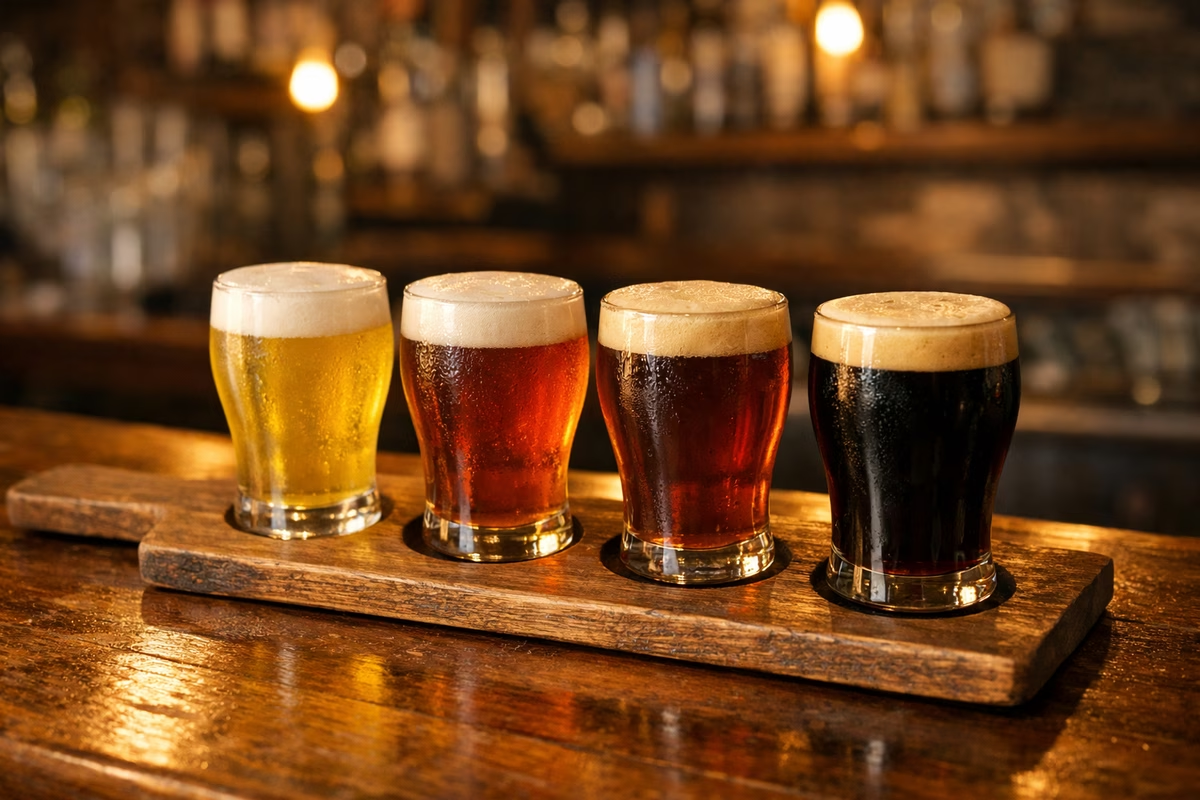
Practice the tasting vocabulary and sensory knowledge from The Night I Learned to Taste. These interactive exercises will help you build the language you need to describe what’s in your glass.
Quiz: Identify the Flavor Source
You smell banana and clove in a beer. What is the most likely source of these aromas?
A beer has a strong grapefruit and pine aroma with a lingering bitterness. Which ingredient is most responsible?
What causes the 'ping' sound—and metallic taste—in some beers?
You're tasting a beer and notice toffee, biscuit, and dried fruit flavors. What type of malt is primarily responsible?
What does 'mouthfeel' describe in beer tasting?
Flashcards: Beer Flavor Vocabulary
Master Beer Tasting Terms
Flip each card to learn the tasting term for common beer flavors and characteristics.
A dry, cracker-like malt flavor found in English ales and pilsners, produced by lightly kilned base malts.
A sticky, pine-sap quality in hop aroma and flavor, common in American IPAs using hops like Simcoe and Chinook.
Fruity aromatic compounds produced by yeast during fermentation—banana in hefeweizens, pear in Belgian ales, stone fruit in English ales.
Spicy or medicinal flavors from yeast (clove, pepper, smoke). Desirable in some styles (hefeweizen, rauchbier), a flaw in others.
A buttery or butterscotch flavor compound. Acceptable in small amounts in English ales; considered a flaw in lagers and most other styles.
A cooked-corn or creamy-corn aroma. Common flaw in pale lagers caused by insufficient boiling. Undesirable in most styles.
How completely the yeast converts sugar to alcohol. High attenuation = dry finish. Low attenuation = sweeter, fuller body.
A measurement of hop bitterness in beer. A light lager might be 10 IBU; a double IPA can be 80+ IBU. Perceived bitterness depends on malt sweetness for balance.
Funky, barnyard, or leather flavors from Brettanomyces wild yeast. Defines Belgian lambics and gueuzes. A flaw in clean styles.
The pattern of foam residue left on the inside of the glass as you drink. Good lacing indicates proper protein content and clean glassware.
Timed Trivia: Beer Styles and Flavors
60-Second Beer Challenge
How many can you get right in 60 seconds? Test your beer knowledge.
Which style is known for banana and clove flavors?
What gives a stout its dark color?
Pilsner malt primarily contributes which flavor?
Which hop variety is famous for citrus and floral notes?
What does 'SRM' measure in beer?
A 'session' beer is defined by its...
Which country originated the pilsner style?
Oats are added to stout to improve...
Matching Pairs: Beer Styles and Their Signature Flavors
Match the Beer Style to Its Signature Flavor
Find the matching pairs—click a style, then click its defining flavor characteristic.
Ready to dive deeper? Read The Night I Learned to Taste for the full narrative, or Beer Tasting 101 for the technical sensory evaluation guide.