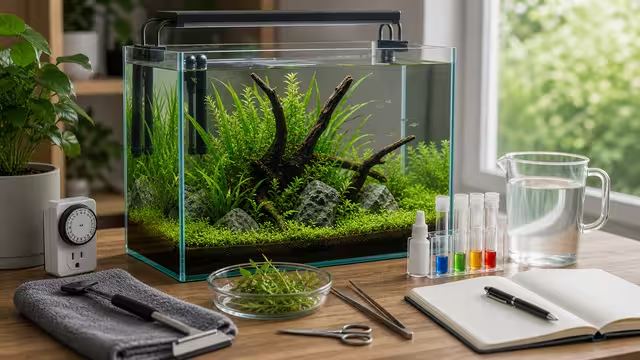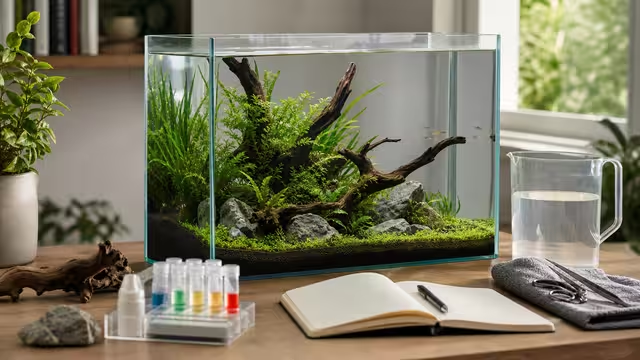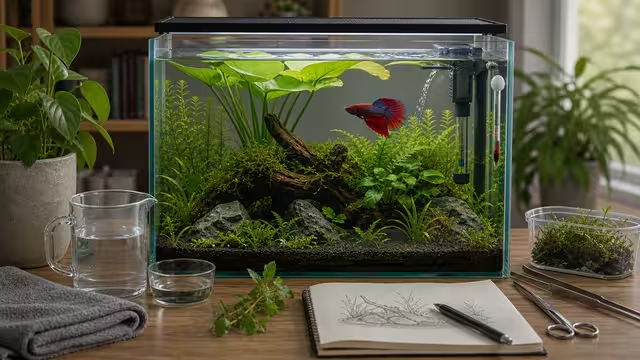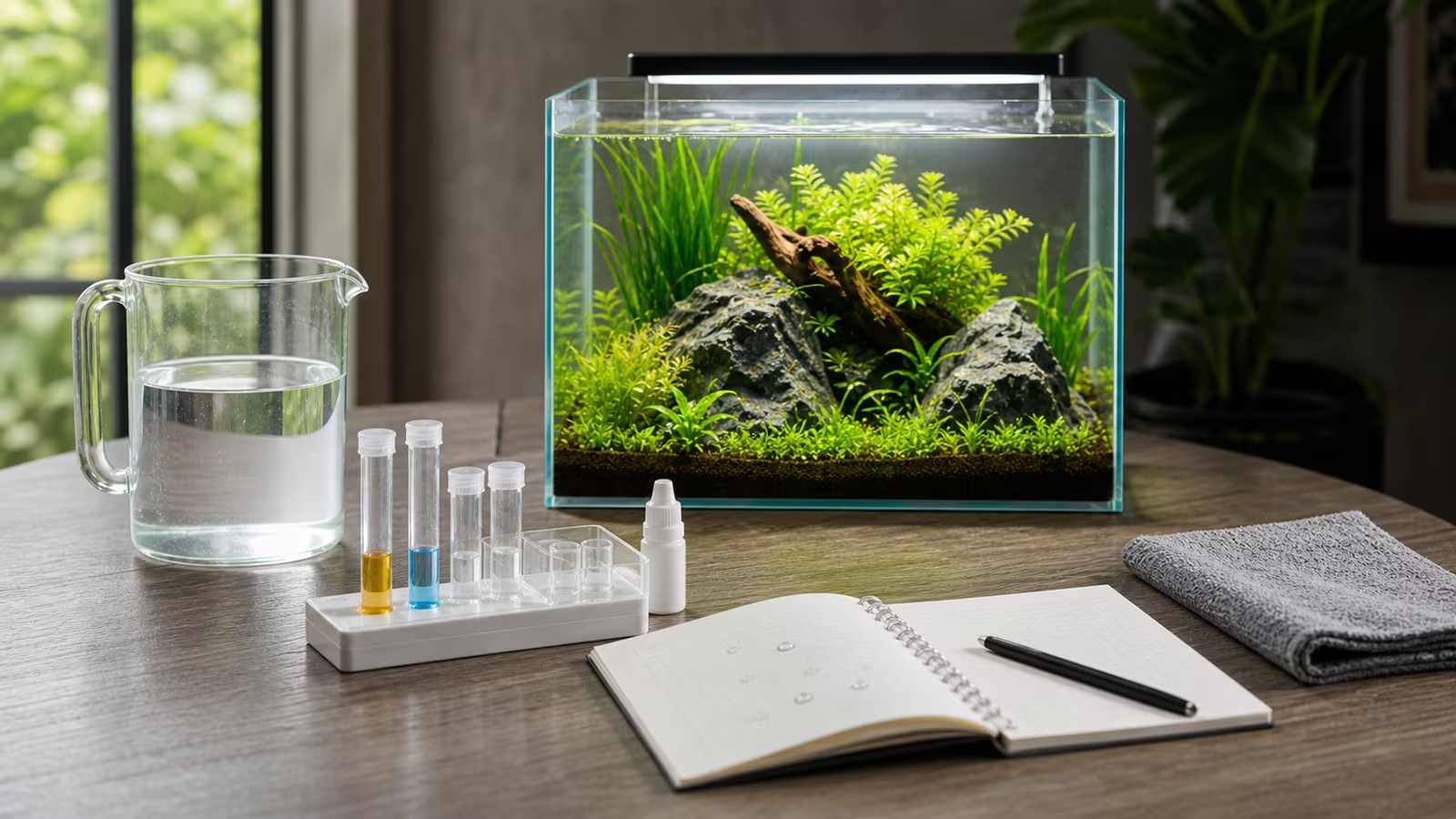
Water testing is not about collecting numbers for their own sake. It is about deciding what the tank needs next. During cycling, ammonia and nitrite can tell you whether animals should wait. Over time, nitrate trends can help you adjust water changes, feeding, plant growth, and stocking. Hardness and pH help you choose livestock that fits your source water instead of forcing water into a constant fight.
The best test result is one you can connect to an action. If a number makes you anxious but does not change your plan, you may need more context rather than another bottle.
What Beginners Usually Need
| Test | Why It Helps |
|---|---|
| Ammonia | Critical during cycling and after disruptions. |
| Nitrite | Critical during cycling and unsafe spikes. |
| Nitrate | Useful for trend, stocking, feeding, plants, and water-change rhythm. |
| pH | Useful when matching livestock and tracking stability. |
| GH/KH | Useful for shrimp, snails, pH stability, and source-water fit. |
| Temperature | Essential for animal welfare and equipment checks. |
Trends Beat Isolated Numbers
A single nitrate reading is less useful than nitrate after a week of normal feeding. A pH reading is less useful without knowing whether it swings between morning and evening or water-change day and the day before maintenance. A stable tank can have numbers that are not identical to someone else’s tank.
Write down the date, time, test results, water-change amount, livestock notes, and recent changes. This turns testing into evidence instead of guesswork.
Do Not Chase Perfect Water
Many beginners see a pH number and immediately reach for bottled adjusters. That can create swings worse than the original number. A better first question is whether the planned animals fit the source water. Stable appropriate water is usually kinder than constantly adjusted water.
Common Mistakes
- Testing only after something looks wrong.
- Using expired or contaminated tests.
- Reading strips or color charts in poor light.
- Chasing pH without understanding KH and source water.
- Forgetting to test before and after major changes.
Related Fondsites Path
- Clear Water Lab for source-water evidence habits.
- Water Change Planner for turning results into routine.
- Pawstead for animal-observation and professional-help boundaries.
Try This Next
Create a five-line log template: date, ammonia/nitrite/nitrate, pH/hardness if relevant, water changed, and animal or plant notes. Use the same format for a month before making complicated conclusions.