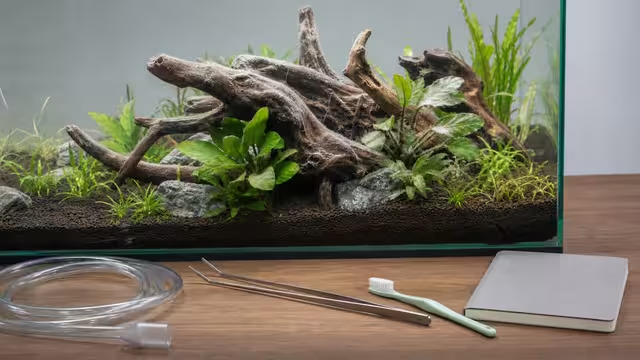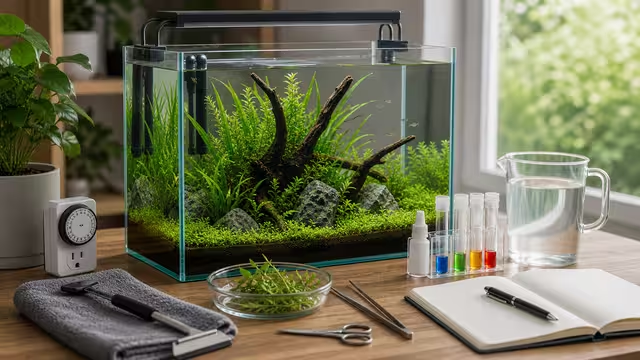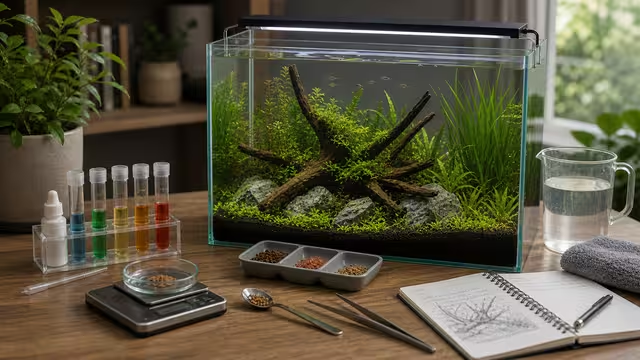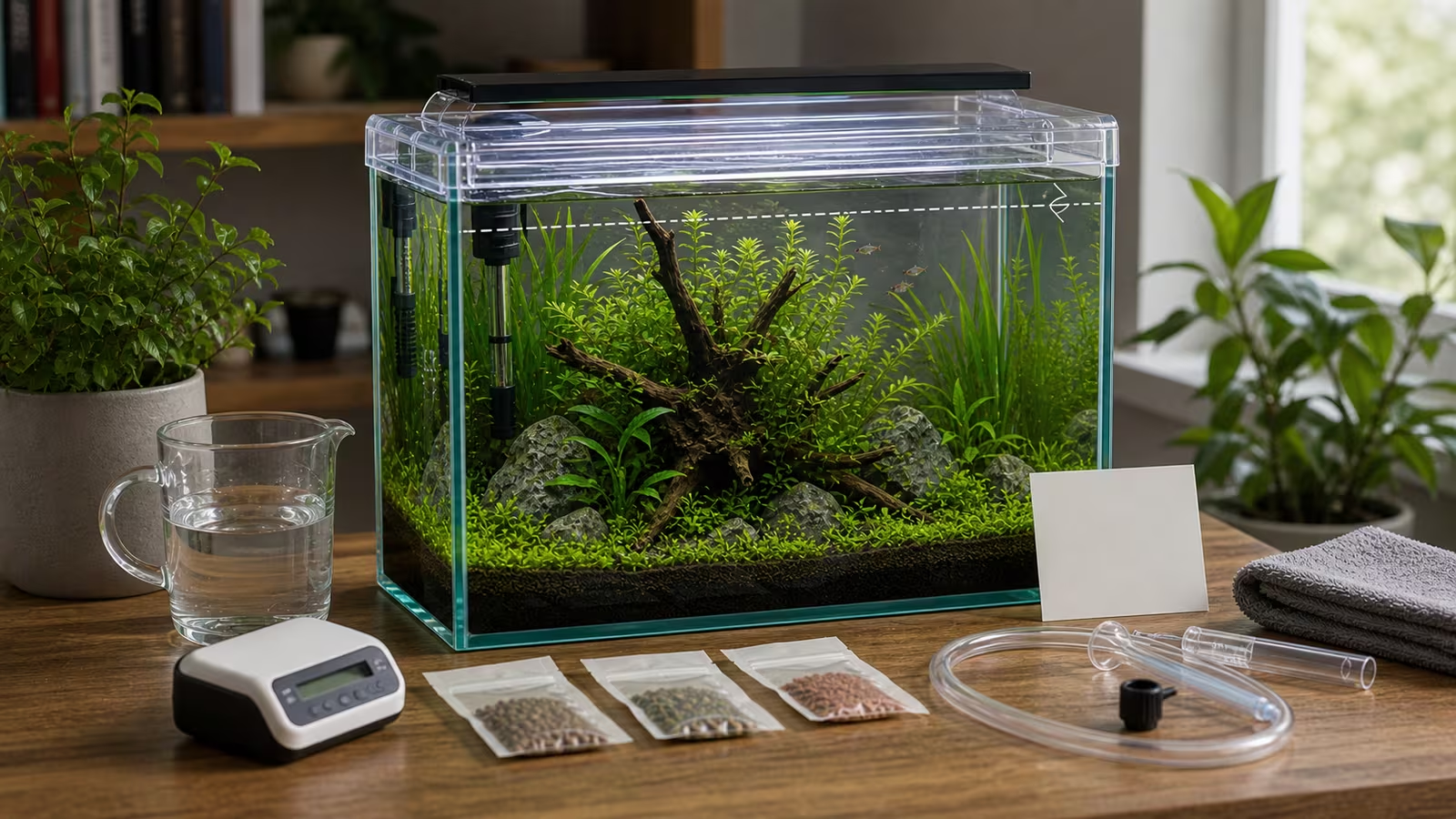
Vacation care is mostly about reducing opportunities for well-meaning mistakes. Most established planted tanks can handle a short absence better than they can handle a caretaker overfeeding, unplugging equipment, dosing mystery products, or improvising water chemistry.
The goal is not to make the tank maintenance-free forever. The goal is to make the aquarium boring while you are gone. Lights come on and off by themselves. Food portions are already decided. Water level is predictable. The caretaker has a short note, not a chemistry assignment. You come home to a tank that may need trimming and a normal water change, not a rescue operation.
Prepare early enough that you can test the plan while you are still home. Vacation prep done the night before travel often creates the very instability it was supposed to prevent.
Start With Trip Length And Tank Maturity
A mature, lightly stocked planted tank can usually tolerate absence better than a new, crowded, heavily fed, or recently changed system. The care plan should match the actual risk. A weekend away from an established low-tech tank is not the same problem as three weeks away from a new aquascape with delicate shrimp, high light, injected CO2, and an open top.
Before deciding what anyone should do, write down the trip length, tank age, livestock, feeding needs, evaporation rate, light schedule, recent problems, and whether the tank has been stable for the last few weeks. If the aquarium has unsafe test results, sick animals, a leaking filter, a heater acting strangely, or algae you are fighting with daily interventions, treat that as a reason to stabilize before travel, not as a reason to leave longer instructions.
The best vacation care plan is often restraint. For a short trip, the safest instruction may be “do nothing except check that the filter is running and call me if water is on the floor.” For a longer trip, the plan may need measured feeding, top-off water, a trusted emergency contact, and a rehearsal with the person helping.
Before You Leave
Do routine maintenance a few days before travel, not minutes before walking out. That buffer matters. If a filter rattles after cleaning, a heater setting gets bumped, a plant mass floats loose, or a fitting drips, you want to discover it while you still have time to respond.
Confirm filter flow, heater function, light timer, waterline, lid, and cords. Trim plants if they will block the surface, shade the entire tank, trap debris, or clog the intake while you are gone. Remove dead leaves and obvious algae clumps, but avoid turning the tank upside down. A huge cleaning can disturb bacteria, release debris, and change water chemistry right before nobody is home to observe the response.
Avoid major rescapes, new livestock, new fertilizers, new CO2 settings, new automatic feeders, new heaters, and new filters right before departure. New equipment is not proven equipment. If you need a timer, feeder, top-off routine, or replacement part for travel, install it early enough to watch it through several normal days.
The One-Week Preparation Rhythm
For an ordinary trip, a simple schedule works better than a frantic checklist.
| Timing | What To Do |
|---|---|
| One week out | Stop making optional changes; verify timer, filter flow, heater, and water tests. |
| Four or five days out | Do normal maintenance, trim risky growth, clean intake guards, and observe recovery. |
| Two or three days out | Prepare measured food, top-off water if needed, caretaker note, and emergency contacts. |
| Day before | Confirm waterline, power, lids, room temperature plan, and that instructions are visible. |
| Departure day | Look for leaks, listen for equipment, feed only if it is part of the plan, then leave it alone. |
This rhythm gives the aquarium time to reveal problems. It also keeps you from doing a dramatic “just in case” cleaning ten minutes before you walk out the door.
Feeding Plan
Many fish are harmed more by overfeeding than by a short feeding gap, but species and trip length matter. Healthy adult fish in established tanks often do not need daily feeding during a short absence. Fry, certain delicate species, heavy stocking, medical situations, and long trips need more specific planning.
If someone feeds the tank, pre-measure portions. Use small packets, labeled containers, or a pill organizer reserved for fish food. Hide the main food container if necessary. Leave clear instructions not to “give a little extra.” Extra food does not become extra kindness once it sinks into the substrate and begins to rot.
Automatic feeders can help for some tanks, but they should be tested before travel and protected from moisture.
Test an automatic feeder with the actual food you will use. Some foods clump in humidity, some openings dispense too much, and some feeders rotate more generously when the battery is fresh. Place it where condensation and splashing will not gum up the food. If the tank has a lid opening, make sure food actually falls into the water and not onto plastic, a brace, or a floating plant mat.
For caretaker feeding, make the rule visual and simple:
- Feed only the prepared portion.
- Feed only on the marked days.
- Do not add more if the fish “look hungry.”
- Call if food remains uneaten.
- Do not open a second container.
Hungry-looking fish are normal. Polluted water is a bigger risk than mild appetite during a planned absence.
Evaporation And Top-Off
Open-top tanks, warm rooms, fans, dry winter air, and strong surface movement can lower the waterline quickly. Evaporation does not remove minerals the way water changes do, so repeated top-offs should use the appropriate water for your setup and source water plan. For many aquariums, that means topping off evaporated water rather than treating top-off like a full water change.
Mark the normal waterline with a discreet piece of tape or a removable marker on the outside glass. If a caretaker is topping off, prepare the water in advance and label it clearly. Do not ask an inexperienced person to mix conditioners, salts, remineralizers, or guess volumes while you are away unless they already know the routine.
Also think about what low water does to equipment. A lowered waterline can expose a filter outlet, increase splashing, make a heater sit awkwardly, dry out floating plants, or let a pump pull air. If your tank evaporates quickly, test the top-off interval before the trip.
Lights, CO2, And Automation
Lights should run on a timer, not on a caretaker’s memory. If the tank has been struggling with algae, consider a conservative light schedule before the trip rather than hoping someone will manage it manually. Do not make a sudden extreme light reduction unless the tank needs it; plants and livestock benefit from predictable conditions.
If you run injected CO2, vacation planning needs extra care. Check the cylinder level, regulator, tubing, diffuser, solenoid, timer, and drop checker or monitoring routine before travel. Make sure CO2 turns off reliably. If the person helping does not understand the system, do not ask them to adjust it. Their job should be observation and escalation, not tuning.
Automation can reduce human error, but it can also hide failure. A timer stuck on, feeder dispensing too much, or top-off system misbehaving can cause more trouble than a simple tank left alone. Test automated pieces while you are home, and write down what normal operation looks like so someone can notice when it is not normal.
Caretaker Notes
Keep instructions short: lights are automatic, do not touch this plug, feed this packet on this day, call this person if water is on the floor. Long essays are less useful in an emergency.
A strong caretaker note separates actions from observations. The action list should be tiny. The observation list can be a little broader, because it tells the helper when to call without inviting improvisation.
Use plain language:
| If You See | What To Do |
|---|---|
| Water on the floor or cabinet | Call me and the emergency contact immediately. |
| Filter not running or making a loud new noise | Call; do not take it apart unless instructed. |
| Fish gasping at the surface | Call immediately and send a photo or video. |
| Light not on at the usual time | Check that the room has power, then call. |
| Food still floating or sitting on the bottom | Do not feed more; call. |
| A dead animal | Call before removing anything unless we agreed on a plan. |
Put the note near the tank. Include your phone number, a backup contact, the address of a trusted aquarium shop if you have one, and the location of towels. If you live in an apartment or shared house, include any building contact needed for a leak or power issue.
What To Remove From The Caretaker’s Reach
Most caretakers are trying to help. Make helping easy by removing temptations. Put away extra food, fertilizers, medications, algae chemicals, spare equipment, and anything that looks like it might be useful but should not be touched.
If there are plugs that must stay on, label them without requiring the caretaker to understand the whole system. If there is one plug that can be turned off safely in an emergency, make that clear too. Do not leave a tangle of identical cords and expect someone to guess correctly while water is dripping.
Prepare towels, a small flashlight, and a way to send photos. A caretaker who can send a quick video of filter flow or fish behavior may save you from giving bad advice from memory.
Special Situations
New tanks need extra caution. If the aquarium is still cycling, recently stocked, or recovering from ammonia or nitrite problems, postponing livestock additions or arranging experienced care may be better than leaving a fragile system to a beginner helper.
Open-top aquascapes need evaporation planning. Shrimp tanks need gentler feeding and stable water. Tanks with jump-prone fish need secure lids. High-light stem tanks may need trimming before the trip so plants do not shade themselves or block flow. Tanks with floating plants may need a surface opening cleared so gas exchange and feeding are not blocked.
Warm weather and cold weather change the risk. A room that overheats can stress livestock even if the tank equipment is working. A cold room can make a heater work harder. If the home may lose power, decide in advance who can enter, what they should check, and when the situation becomes urgent.
Coming Home
When you return, resist the urge to fix everything at once. Look first. Check waterline, equipment, livestock behavior, plant condition, and whether food was used as planned. Test water if anything looks unusual or if the trip was long.
Then do normal maintenance. Trim overgrowth, remove dead leaves, clean visible debris, and perform a reasonable water change. Avoid punishing the tank with a massive cleanout because it looks a little wild. Plants grow, algae appears, and floaters multiply while you are away. That does not automatically mean the system failed.
If something did go wrong, reconstruct the timeline. Was the feeder too generous? Did the timer fail? Did evaporation expose the filter outlet? Did a caretaker misunderstand the note? Use the answer to improve the next travel plan rather than treating vacation care as guesswork every time.
Common Mistakes
- Doing a huge cleaning right before leaving.
- Adding new livestock before travel.
- Asking a caretaker to dose products they do not understand.
- Leaving open food containers for guessing.
- Forgetting evaporation in open-top tanks.
- Installing a new automatic feeder the night before departure.
- Leaving every aquarium product visible and hoping nobody improvises.
- Writing instructions so long that the important emergency steps get buried.
- Coming home and making five corrections before checking what actually happened.
Related Fondsites Path
- Evaporation, Top-Off, and Minerals for waterline planning.
- Feeding Without Polluting the Tank for portion control.
- Water Damage and Leak Prevention for emergency thinking.
- Heater, Thermometer, and Electrical Safety for equipment checks before travel.
- Aquascape Photo Journal for documenting the tank before and after an absence.
Try This Next
Write a one-page caretaker note with only the actions they should take and the signs that mean they should call you. Pre-measure any food, mark the waterline, remove products they should not touch, and test the whole routine for a few days before you leave.