Tissue culture plants look tidy in a way that can mislead a new aquarist. The cup is small, the plants are bright, and the gel makes the whole purchase feel controlled. Compared with loose pots or bunched stems, tissue culture can be a useful way to introduce plants with fewer visible hitchhikers and a lot of tiny portions for careful planting. It is not a shortcut around plant biology.
The plants are still alive, small, and adjusting. They may have grown in a sealed cup under bright production conditions, not in your aquarium’s flow, substrate, water hardness, light rhythm, or maintenance routine. Treat tissue culture as clean starting material rather than a finished aquascape in miniature. Emersed-Grown Aquarium Plants and the Transition to Water explains the broader idea of plants changing form after purchase.
Rinse The Gel With Care
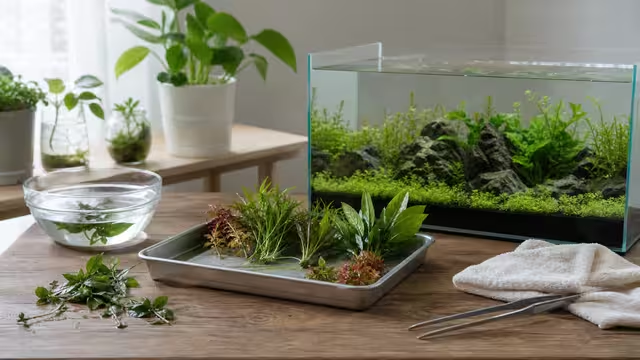
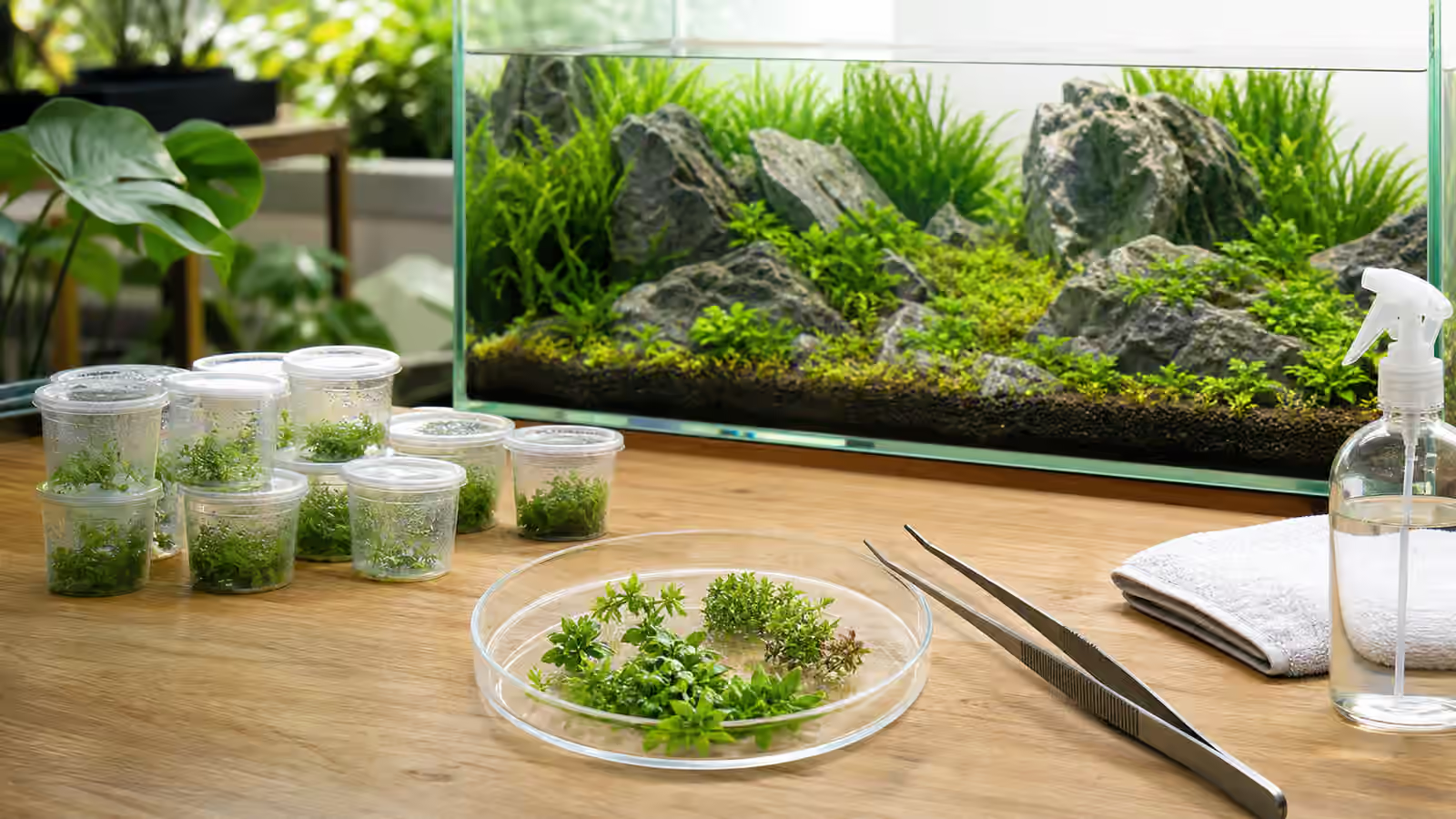
The gel or medium around tissue culture roots should be removed before planting. It can cloud water, collect in the substrate, and decay where you cannot easily reach it. Rinsing does not need to be violent. Use clean water in a shallow container and separate the plant mass gradually with fingers or tweezers. Swirl, loosen, and rinse again until the roots and crowns are visible.
This is a good moment to slow down. Tiny plants are easy to crush when you are trying to make them look perfect. A few traces of gel are less serious than tearing every root off a delicate cup. The goal is a clean enough plant that can be handled and placed without burying a mass of nutrient medium in the substrate.
Inspect as you rinse. Tissue culture often reduces common pest surprises, but it does not remove the need for observation. Look for mushy portions, broken crowns, plant pieces that are too small to anchor, and species that arrived in weaker condition than expected. Plant Quarantine and Pest Inspection is still relevant because careful inspection is a habit, not a punishment for certain plant formats.
Portion Size Affects Survival
A tissue culture cup can be divided into many pieces, but there is a point where small becomes fragile. A microscopic tuft may float away, dry out during planting, or fail to gather enough light. A portion that is too large can trap gel, shade itself, or rot from the center. The right size depends on the plant and the aquascape, but the principle is steady: each portion should have enough living tissue to recover and enough space to grow.
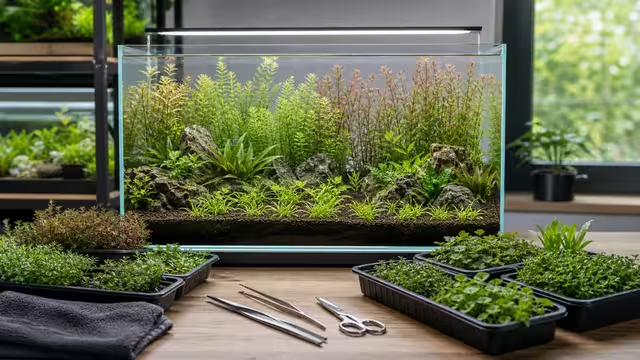
For foreground plants, small plugs can make a carpet spread more evenly than one dense clump. Still, each plug needs contact with the substrate. If the roots are barely touching and the leaves are floating, the plant is not planted. Use tweezers to push roots into the substrate at a shallow angle, then release gently so the substrate closes around them. Carpeting Plants Reality Check is worth reading before assuming every cup will become a lawn.
For stem or rosette tissue cultures, be more conservative. A rosette plant with one weak crown should not be shredded into decorative confetti. A stem plant needs nodes and growing tips. If you cannot tell where the plant’s structure begins and ends, plant larger portions and let the plant strengthen before future trimming. The first planting is about establishment, not maximum multiplication.
Keep Plants Wet While You Work
Tissue culture planting can take longer than expected. A cup that looked tiny on the shelf becomes dozens of wet little decisions on the table. During that time, roots and leaves can dry. Keep portions in a shallow dish of water or under a damp towel while you work. If the tank is partly drained for planting, mist exposed areas lightly and avoid leaving delicate leaves in dry air under a hot light.
This is especially important during dry starts. A dry start can help some foreground plants root before flooding, but it is not simply a way to ignore water. Humidity, air exchange, mold risk, substrate moisture, and plant choice all matter. Dry Start Method Planning gives the broader decision framework. Tissue culture can work well in a dry start because the plant portions are small and clean, but they still need steady conditions.
For a flooded start, expect some floating. Even careful planting may release a few portions when the tank fills, the filter starts, or an animal later explores. Do not respond by stabbing the substrate repeatedly. Turn down strong flow during initial planting if needed, replant loose pieces gently, and let the system settle.
Light, Nutrients, And The Small Plant Problem
Tiny plants have a problem that large potted plants sometimes hide: they do not have much stored mass. They can be shaded by hardscape, dislodged by flow, or overwhelmed by algae before they fill in. At the same time, blasting them with intense light can create algae pressure faster than they can use it. A moderate, stable light schedule is usually kinder than treating tissue culture like a race.
Nutrients should match the setup. A new active substrate may provide root-zone nutrients, but water-column plants still need access to what they use. An inert substrate may need root tabs for heavy root feeders later. Liquid fertilizer can help, but overdosing to force growth rarely solves planting weakness. Fertilizing Aquatic Plants Without Guesswork and Root Tabs and Root Feeders help separate plant needs from impulse dosing.
CO2 can support demanding tissue culture carpets, but unstable CO2 can create its own problems. A low-tech tank can still use tissue culture plants when species and expectations fit the system. CO2 vs Low-Tech Planted Tanks is a better starting point than buying the most delicate cup and hoping the format makes it easy.
The First Weeks After Planting
Some tissue culture plants melt after planting. That does not always mean the cup was bad. The plant may be changing from production conditions to aquarium conditions, from gel support to substrate support, or from high humidity to submerged flow. Watch for new growth from the base or tips before declaring failure.
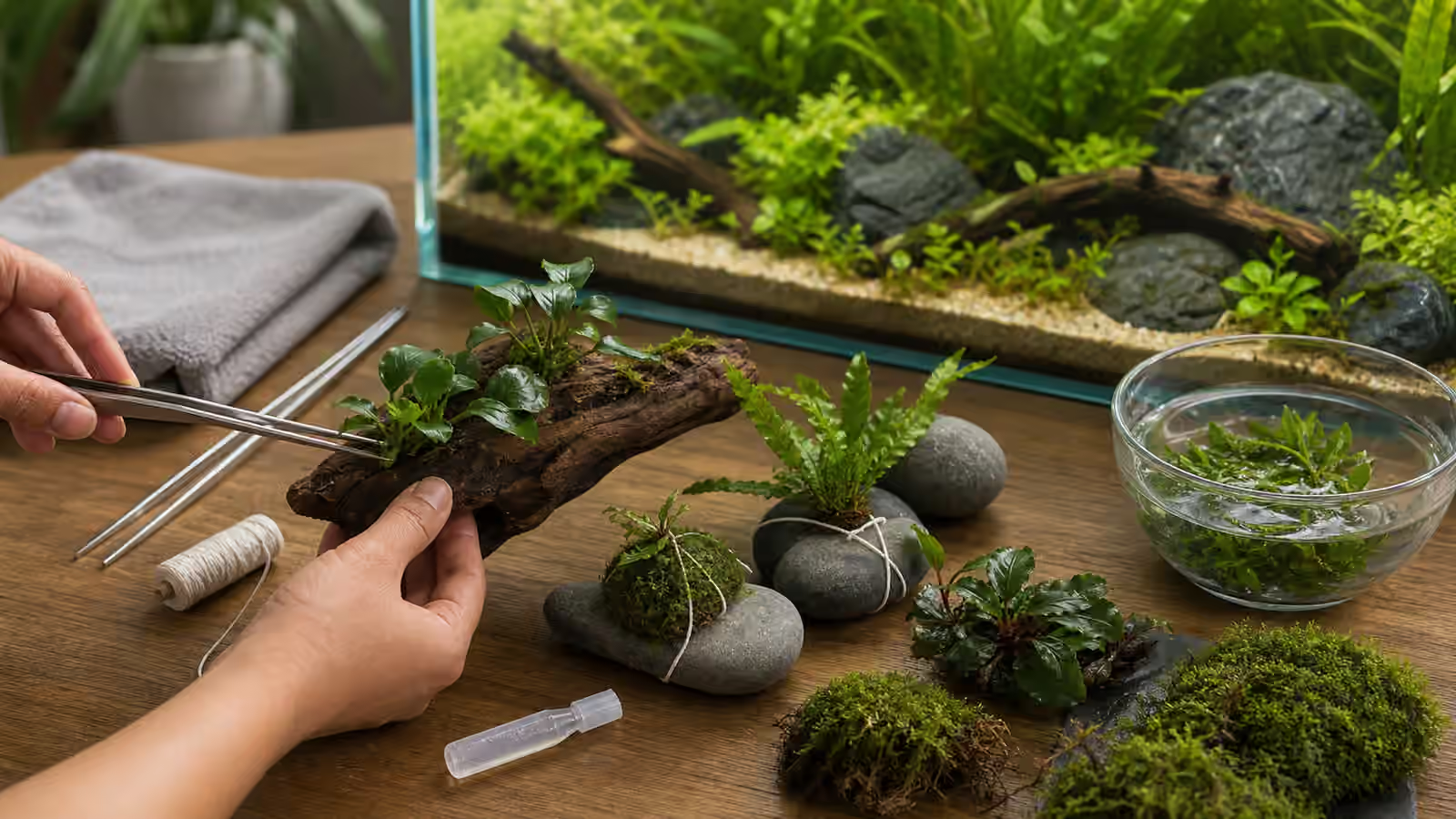
Remove decaying portions before they foul the tank, but do not uproot every plant to inspect it. In a new aquascape, repeated disturbance can do more harm than the original melt. Use gentle tweezers, a small siphon, or a pipette to remove loose debris. Keep water changes steady and the photoperiod reasonable. If algae appears, read it as feedback about light, plant mass, flow, and nutrients rather than proof that tissue culture was a mistake.
The scale of tissue culture also affects livestock timing. Tiny foreground plugs and newly adapting plantlets do not make a tank biologically mature. They are part of the plant plan, not permission to rush animals. Plant Before Fish: A Kinder Setup Plan and Cycling a Planted Aquarium Before Animals keep the living sequence in the right order.
When Tissue Culture Is The Right Choice
Tissue culture is useful when you need many small portions, want to reduce visible hitchhiker risk, or are planting a detailed foreground. It can be especially appealing for aquascapes where pots would be too bulky or where a plant is rarely available in another form. It also helps when you want to build a layout patiently from young growth instead of forcing mature clumps into place.
It is less useful when you need immediate height, instant shade, or robust plant mass in a brand-new tank. In those cases, established stems, potted background plants, or floating plants may stabilize the system faster. Planting Density for New Aquascapes can help you mix formats instead of relying on one plant type to do every job.
The best tissue culture planting feels unglamorous. Rinse thoroughly, divide thoughtfully, plant gently, keep conditions steady, and wait for the plant to show its aquarium form. The cup is only the beginning. The real success is when those small pieces stop looking like product and start behaving like part of the aquascape.