Small planted tanks are appealing because they fit desks, shelves, and apartments. They are also easy to overstock. Less water means faster changes, less dilution, fewer swimming options, and fewer ways for animals to avoid each other.
Stocking a small tank well is an exercise in saying no. The best choice may be shrimp, snails, a single suitable fish, or no animals at all while the plants grow.
Why Small Tanks Are Unforgiving
A pinch of extra food matters more. A dead leaf pile matters more. A heater error matters more. Evaporation can shift minerals quickly. Maintenance delays show up fast. This does not make small tanks impossible, but it makes restraint part of the design.
Plants help stabilize the system, but they do not create infinite capacity. Dense plant mass can even reduce open swimming space if livestock needs room.
Ask These Questions
| Question | What It Protects |
|---|---|
| What is the adult size? | Avoids buying juveniles that outgrow the tank. |
| Does it need a group? | Prevents lonely or stressed schooling animals. |
| How active is it? | Protects swimming behavior. |
| What is the bioload? | Keeps waste realistic for volume and filter. |
| Is the tank mature? | Protects sensitive animals from unstable starts. |
Better Small-Tank Thinking
Choose one main livestock idea, then design around it. A shrimp tank, a snail-focused planted jar where legal and appropriate, or a single suitable fish tank is easier to manage than a tiny community with conflicting needs.
Avoid buying animals to solve algae. Most so-called cleanup animals produce waste and have their own care requirements.
Common Mistakes
- Treating store labels as complete care guidance.
- Mixing several species in a nano tank.
- Buying juveniles that will not stay small.
- Adding animals before the tank is cycled and stable.
- Choosing fish because the aquascape needs motion.
Related Fondsites Path
- Nano Tank Reality Check for volume and stability.
- Stocking Caution Checker for structured questions.
- Schooling Fish and Space Reality for group species.
Try This Next
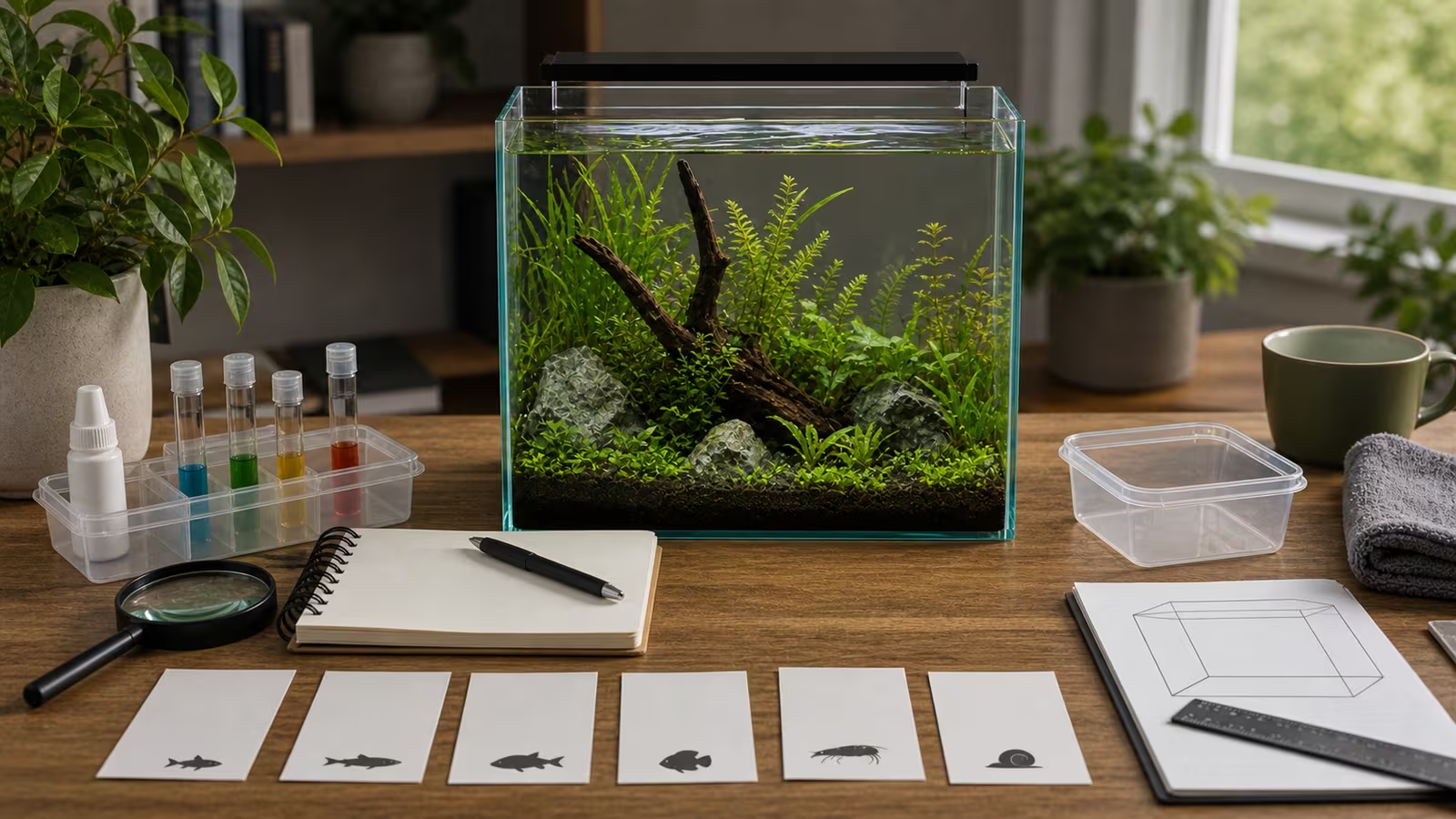
Make a stocking plan with one species or group as the priority. If you add a second animal, explain exactly why it fits the same water, space, behavior, and maintenance limits.