Root tabs are simple enough to seem self-explanatory: push a nutrient tablet into the substrate and plants grow better. In practice, they work best when the aquarist knows which plants are likely to use them, what the substrate already provides, and how to place them without turning maintenance into a nutrient leak. They are useful tools, not universal medicine for every yellow leaf.
The planted tank already receives nutrients from several places. Fish food becomes waste. Liquid fertilizer feeds the water column. Active aquasoil may release nutrients early in its life. Plain sand or gravel may contribute very little on its own. Plant roots, water-column uptake, light, carbon, and trimming all interact. Root tabs make sense when a rooted plant is growing in a substrate that does not supply enough of what the roots need.
Which Plants Actually Care
Some aquarium plants feed heavily through roots. Cryptocoryne, sword plants, many rosette plants, lilies, and similar rooted species often benefit when nutrients are available in the substrate. In plain sand or gravel, these plants may survive but stall, especially after their stored energy is used. A root tab placed near the root zone can support steadier growth.
Other plants care less about substrate feeding. Anubias, Java fern, many mosses, and floating plants take much of what they need from the water column. Burying root tabs under an Anubias tied to driftwood does not solve much because the plant is not rooted there in the first place. Stems vary. Some stems root strongly and use substrate nutrients, while others respond more quickly to water-column fertilizer and consistent trimming.
This is why plant selection matters before fertilizing. Beginner Aquarium Plants That Forgive Mistakes helps sort hardy plant habits, and Substrate for Aquatic Plants explains the bed those roots are entering. Root tabs should answer a real plant-and-substrate mismatch, not a vague feeling that the tank needs more products.
Placement Is The Skill
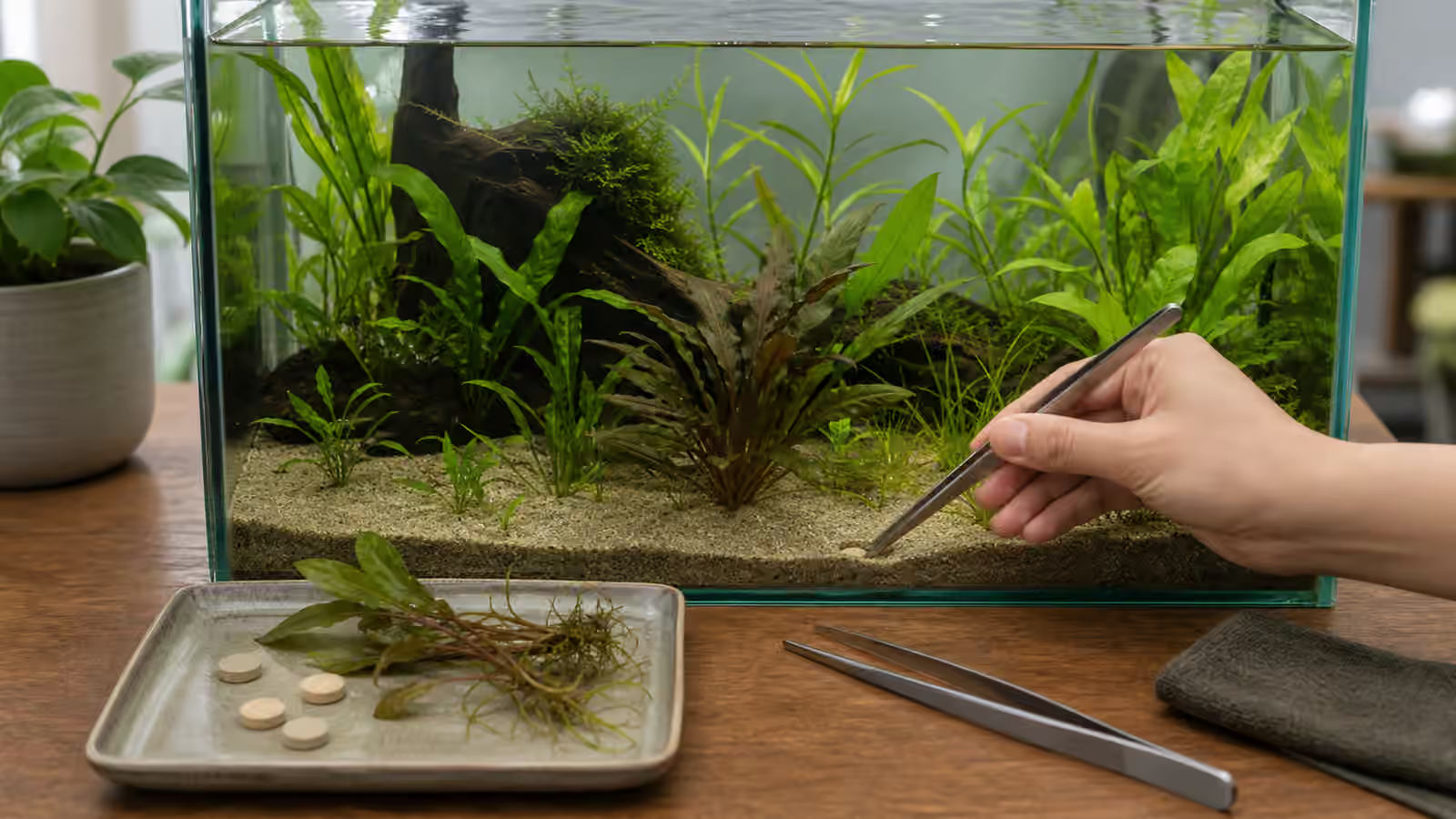
A root tab belongs under the substrate, close enough to roots that the plant can use it and deep enough that it does not dissolve directly into the water column. In a fine substrate, tweezers can push a tab down near the plant crown without uprooting the plant. In coarse gravel, tabs may break down into open gaps more easily, so placement and coverage matter. If a tab is exposed, remove or rebury it promptly according to the situation and product behavior.
Avoid placing tabs directly against delicate crowns or rhizomes. A rooted plant needs access, not a tablet pressed into its growing point. For newly planted crypts or swords, it can be better to let the plant settle briefly before disturbing the area again, unless the substrate is completely inert and the plant clearly needs root nutrition from the start.
Spacing should follow plant mass. One small crypt does not need the same amount as a dense group of heavy root feeders. More tabs are not automatically better. Excess nutrients can escape into the water, especially when livestock dig, plants are uprooted, or the aquarist repeatedly rearranges the substrate. A measured plan is easier to interpret than a bed full of hidden tablets.
Root Tabs And Liquid Fertilizer Are Not Enemies
Root tabs and liquid fertilizer serve different access routes. Root tabs support plants feeding through the substrate. Liquid fertilizer supports plants taking nutrients from the water column. Many planted tanks use both, but the amount and frequency depend on plant choices, light level, CO2, livestock load, and water-change rhythm.
The mistake is using one form to avoid thinking about the other. If a tank is mostly floaters, moss, and rhizome plants, root tabs are unlikely to carry the system. If a tank is full of rooted rosettes in inert sand, liquid fertilizer alone may not reach the root zone efficiently enough for the aquarist’s goals. Fertilizing Aquatic Plants Without Overdoing It gives the broader nutrient framework.
Keep the plan readable. Add root tabs on a schedule you can remember. Record where they went. Avoid changing liquid fertilizer, light, CO2, and root tabs all in the same week unless there is a clear reason. Plant response takes time, and too many changes make every result ambiguous.
Substrate Disturbance Releases More Than Roots
Root tabs become messiest when plants are uprooted soon after placement. Pulling a rooted plant can bring substrate nutrients into the water column, cloud the tank, and scatter fragments. This is another reason to plan plant placement before burying fertilizer. If you know a plant is experimental and may move next week, delay the tab or use a less disruptive approach.
During a rescape, assume old tabs may be present even if you forgot them. Work slowly, siphon visible debris, and avoid grinding the substrate into the water. A tank with buried nutrients is not fragile when handled with care, but it can become messy when treated like dry potting soil. Rescape Without Crashing the Tank covers the larger disturbance problem.
Livestock can complicate the picture. Digging fish, burrowing snails, and curious shrimp may expose softened tabs. In tanks with active substrate foragers, choose placement carefully and inspect after maintenance. If tabs repeatedly surface, the tank may need a different product form, deeper placement, or a changed plant layout.
Read New Growth, Not A Single Old Leaf
Root nutrition usually shows itself in new leaves, stronger crowns, and steadier recovery over weeks. Old damaged leaves may not repair. A sword plant that has already produced weak leaves may drop them while new growth improves. A crypt may melt after a move and then recover from the root system. That can make the first weeks after root tabs look mixed.
Do not diagnose from one yellow leaf. Look at the plant as a whole. Is the crown firm? Are roots anchoring? Is new growth smaller, larger, pale, distorted, or clean? Are algae patterns changing? Is light appropriate? Is the tank stocked and fed in a way that already supplies nutrients? Plant signs need context.
If root tabs appear to help, keep the routine steady rather than increasing immediately. If they do not help, ask whether the plant is truly a root feeder, whether the substrate is compacted, whether light is limiting growth, whether CO2 expectations are realistic, and whether the plant is still transitioning. Plant Melt and Recovery After Planting is the better lens when new plants are simply adjusting.
A Quiet Tool For The Right Plant
Root tabs are at their best when almost nothing dramatic happens. A rooted plant in plain substrate grows more steadily. The aquarist knows where nutrients were placed. The water does not cloud. Livestock behave normally. The plant bed remains stable enough that tablets stay buried and roots can do their work.
That quiet success is easy to miss because it is not a quick fix. It is substrate care matched to plant habit. Used with restraint, root tabs let rooted plants draw food where they naturally search for it. Used randomly, they become another hidden variable in a tank that already has enough variables. The difference is not the tablet. It is the aquarist’s patience with placement, observation, and timing.