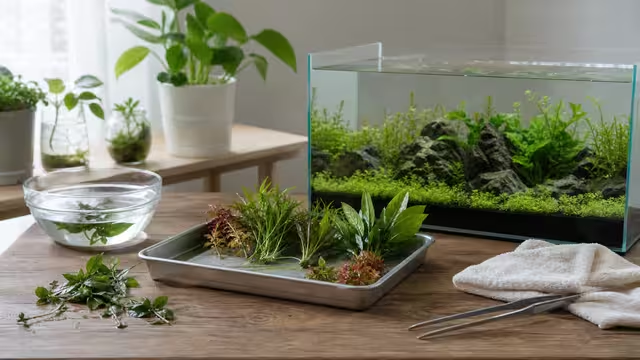
A new aquascape with too few plants is hard to balance. Light falls on bare substrate, nutrients wait for algae, and every struggling plant seems to carry the whole system. A new aquascape packed without thought has its own problems. Crowded stems shade each other, melting leaves collect in hidden pockets, foreground plants are buried under taller neighbors, and the first trim becomes a rescue operation.
Planting density is therefore not a contest to use the most plants or the fewest plants. It is the practical decision of giving the tank enough healthy plant mass to begin well while leaving room for growth, flow, tool access, and livestock welfare later. Plant Before Fish: A Kinder Setup Plan explains why plants often come before animals. This guide explains how much plant presence that plan really needs.
Plant Mass Is Biological Help
Healthy growing plants help a new aquarium by taking up nutrients, shading surfaces, slowing some algae opportunities, and giving the aquarist visible feedback. Fast-growing stems can show within days whether light, carbon, and nutrients are roughly working. Floating plants can buffer a bright start if they are controlled. Background plants can make the tank feel less empty while slower feature plants establish.
This does not mean plants replace cycling. A planted tank still needs beneficial bacteria and evidence before animals are added. Cycling a Planted Aquarium Before Animals keeps that boundary clear. Plant mass supports the system, but it does not give permission to ignore ammonia, nitrite, filter maturity, or animal behavior.
The useful phrase is healthy plant mass. A pile of damaged, melting, mismatched plants is not the same as density. If the tank is filled with species that cannot live under the chosen light or water conditions, the aquarist has bought future decay. Choose plants that suit the system and give them room to convert from purchase form to aquarium form. Emersed-Grown Aquarium Plants and the Transition to Water explains why this adjustment matters.
Use Fast Plants Without Letting Them Own The Layout
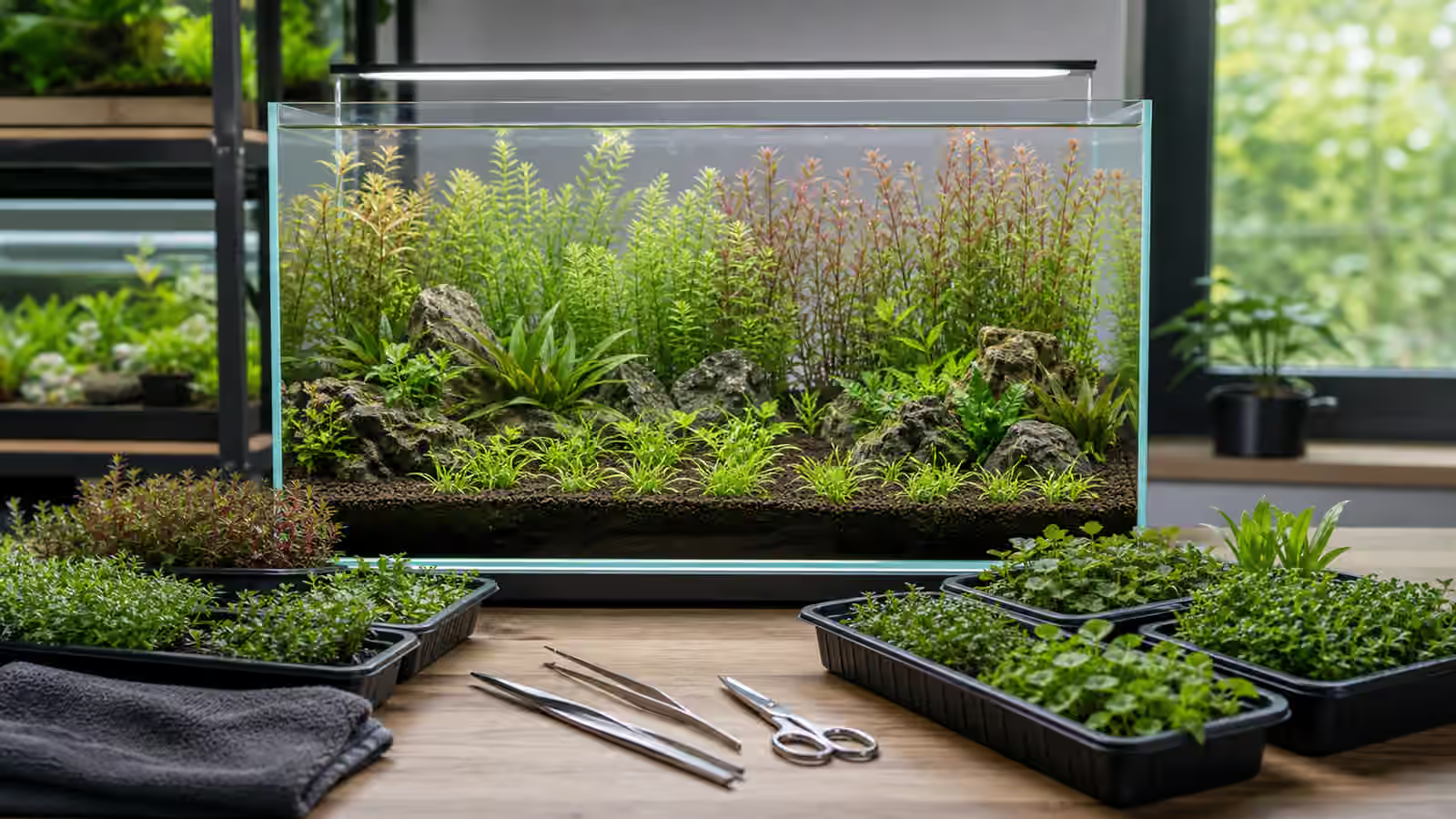
Fast-growing stems are useful in new tanks because they establish quickly and give algae less empty real estate. They can be planted in the background, behind wood, or in temporary groups that will later be reduced. The mistake is letting temporary helper plants determine the entire aquascape. If every inch behind the hardscape becomes a dense wall of stems, lower leaves may rot, flow may weaken, and the scape may lose depth.
Plant stems with enough spacing for light to reach lower nodes. That spacing can be closer than a mature display would use, but it should not be a solid wad. Trim and replant tops once the stems are actively growing, not every time one leaf looks imperfect. Stem Plants, Trimming, and Bushy Growth gives the maintenance side of that decision.
Temporary density is a valid strategy when it is honest. You may plant extra easy stems at setup to stabilize the tank, then remove some later as slower plants fill in. That is different from pretending every plant is a permanent design choice. The aquascape should have a future shape in mind even when setup day includes helper plants.
Leave Maintenance Lanes
Dense planting fails when human hands cannot care for it. You need space to clean the front glass, reach the filter intake, trim stems, lift decaying leaves, and siphon loose debris without uprooting half the tank. A planting plan that looks lush but blocks every lane becomes frustrating quickly.
Maintenance lanes do not have to be obvious bare strips. They can be small spaces behind stones, open foreground areas, or removable plant groups attached to wood. The important part is that tools can enter without crushing plants or frightening animals. Hiding Equipment Without Hurting Flow uses the same principle: visual density should not bury the working parts of the aquarium.
Think about adult plant size. A rosette plant that looks modest in a cup may become wide enough to shade a foreground. A stem group that looks thin on day one may become a hedge. Moss that looks like a light accent can become a debris trap if it is placed where scissors cannot reach. Density should be designed for the second month, not only the first photograph.
Foreground Density Needs Patience
Foreground plants tempt aquarists to overplant because empty front substrate looks unfinished. Carpeting plants, small rosettes, and tissue culture portions often need time to root and spread. Cramming them too tightly can create shaded centers and melt. Planting them too sparsely can leave bare substrate under strong light. The middle path is to place enough portions that the plant can claim the area, while preserving small spaces for light, flow, and cleaning.
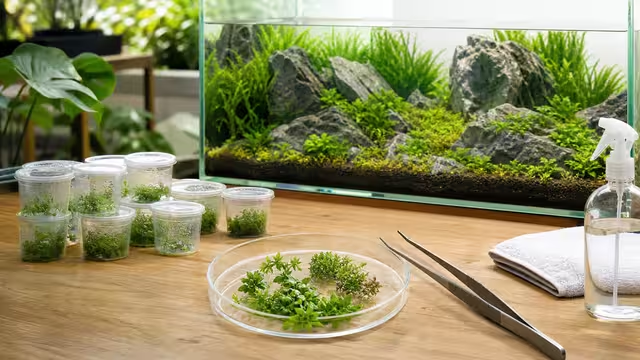
Tissue Culture Plants in Planted Aquariums is especially relevant because tissue culture cups can be divided into many small pieces. The temptation is to stretch one cup across a large foreground beyond what the plant can handle. Another temptation is to press the whole cup into one dense patch. Both choices can work against establishment.
Open foregrounds are also legitimate. A planted tank does not need to carpet every visible surface. Sand paths, small clearings, and low plant borders can make the aquascape easier to read and maintain. Open Sand Paths and Foreground Space in Aquascapes covers that design choice in more detail.
Match Density To Light And CO2
High light with low plant mass is one of the classic routes to algae frustration. High light over dense but unhealthy plant mass is not much better. The more light you run, the more the tank depends on plants being able to use that light. CO2, nutrients, flow, and plant selection all become more important as intensity rises.
Low-tech tanks can still be planted generously, but the plant list should reflect slower carbon availability. Hardy stems, epiphytes, floating plants, mosses, and moderate-light rosettes may be more forgiving than demanding carpets under bright light without CO2. CO2 vs Low-Tech Planted Tanks helps set those expectations before density becomes a purchase spree.
Do not use density as an excuse to overpower the tank. If plants are newly planted, still melting, or not yet rooted, a long bright photoperiod may feed algae faster than plant growth. Start with a restrained light schedule and adjust from evidence. Photoperiod and Timer Setup is more useful than guessing day by day.
Plant In Groups With Different Jobs
A planted aquascape reads better when density has structure. Background stems can provide height and nutrient uptake. Midground plants can transition from hardscape to open space. Epiphytes can soften wood and stone without occupying substrate. Foreground plants can define scale. Floating plants can shade and absorb nutrients if they are kept under control.
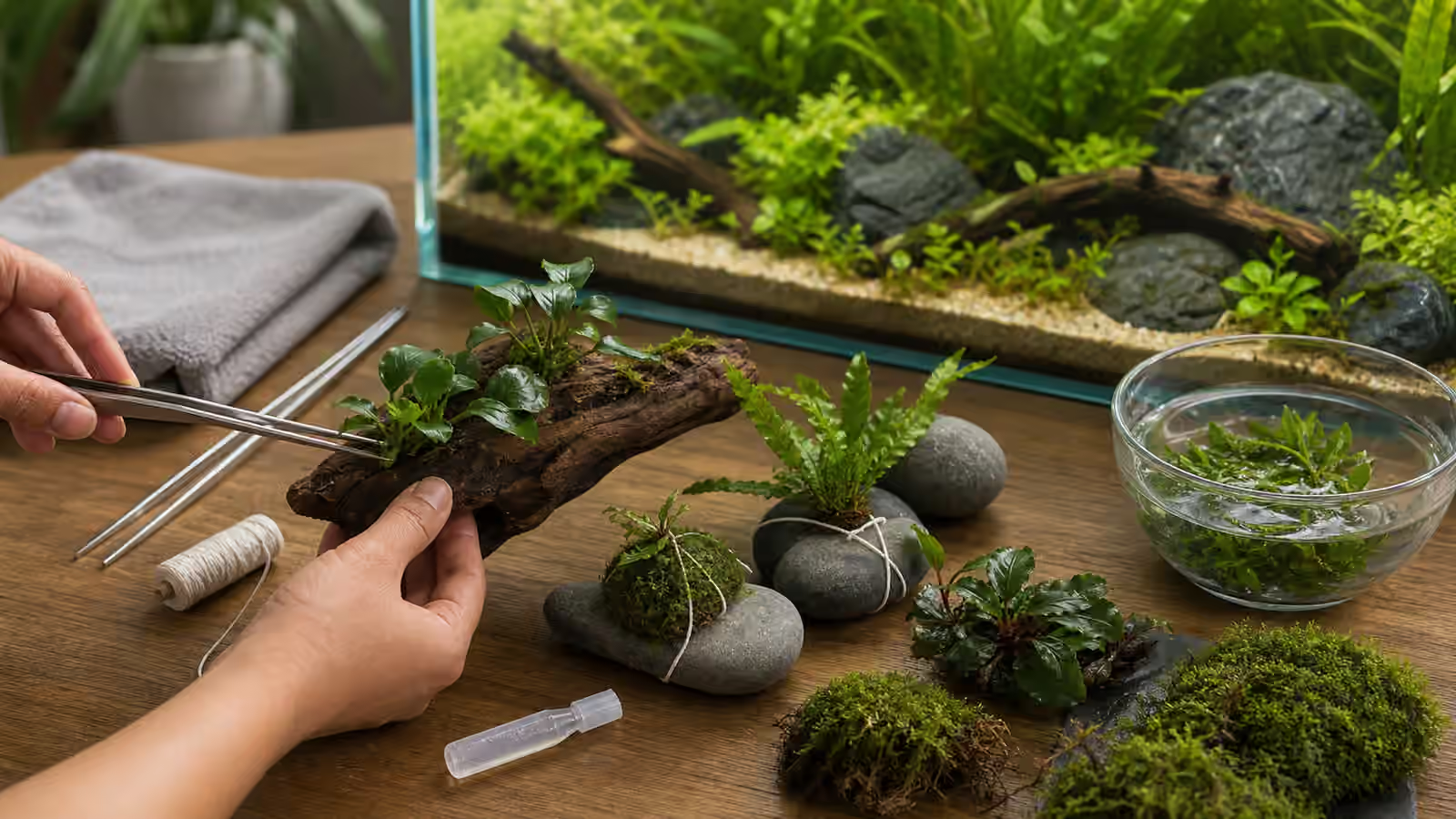
This is not a rulebook for plant shopping. It is a way to avoid buying many species that all compete for the same space. Five different midground rosettes in a tiny tank may look varied in the store and chaotic in the aquarium. Three well-chosen plant jobs can look calmer and be easier to maintain. Background Plant Planning goes deeper on height, while Attaching Epiphytes to Wood and Rock helps with plants that do not belong buried in the substrate.
Use repetition. A group of one plant species often looks more intentional than single stems scattered everywhere. Repetition also makes maintenance easier because you learn how that plant grows in that location. Density becomes readable when plants are grouped by role instead of sprinkled evenly through the tank.
Adjust Rather Than Rebuild
The first planting is a draft. Some plants will thrive, some will melt, some will outgrow their place, and some will reveal that the light or flow is different from what you expected. The answer is usually adjustment, not a full rescape. Trim the fastest plants, remove decaying leaves, move a struggling plant only when the location is clearly wrong, and keep notes.
Rescape Without Crashing the Tank is relevant because overreacting to density problems can disturb substrate, filter bacteria, and livestock. A new tank benefits from steady hands. Every plant does not need to be perfect for the system to mature.
The right density is visible in how the tank ages. Plants have room to put on new growth. Debris can be removed. Flow reaches the corners. The foreground does not vanish under the background. Animals, when added responsibly, have open water, cover, and clean surfaces. A planted aquascape starts as a layout, but density is what decides whether that layout becomes a manageable living system.