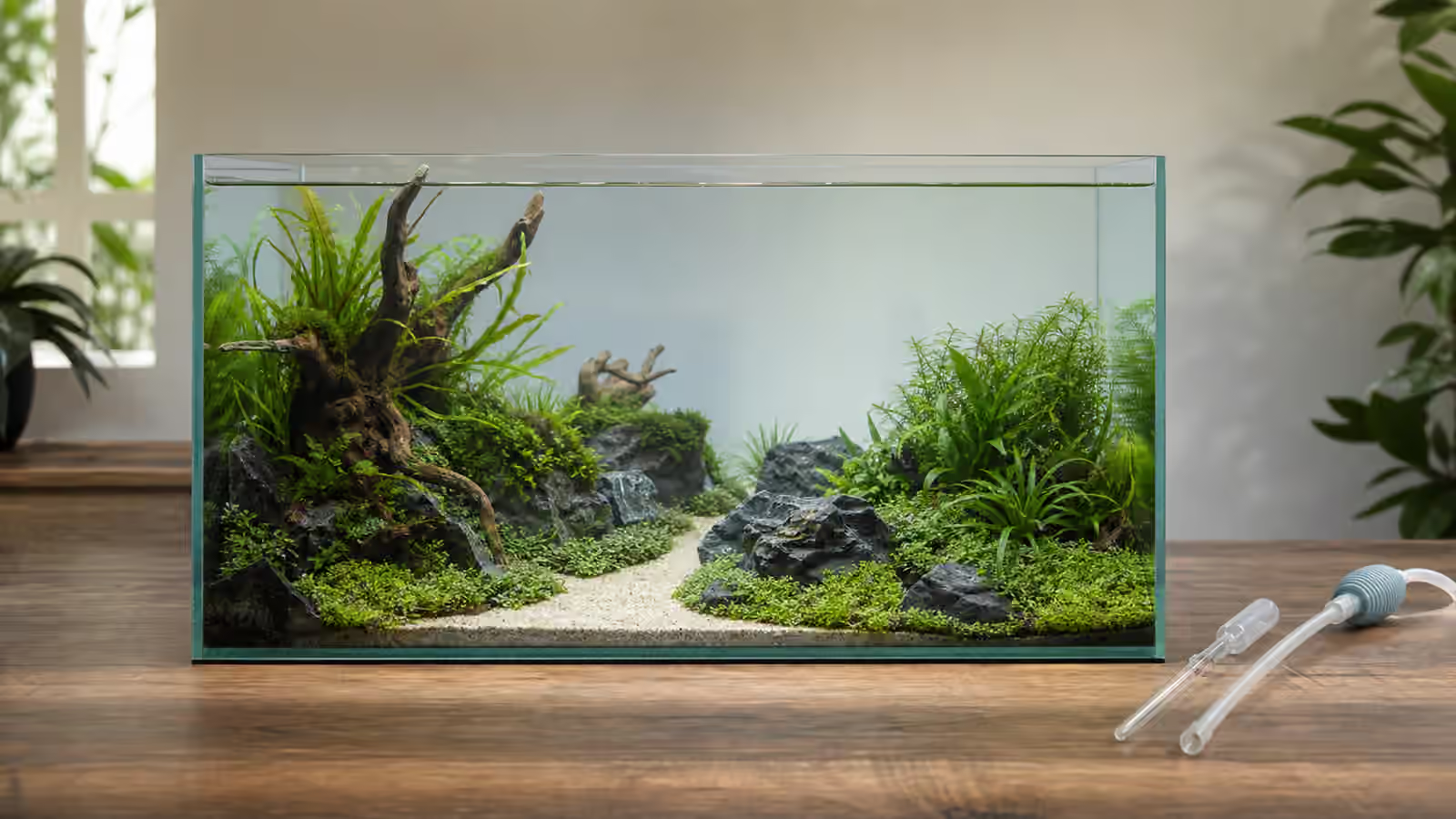
Open sand paths look simple because they are made from absence. A pale strip through a planted aquascape can suggest depth, give small fish visible swimming room, and make the plant groups feel more deliberate. The same open space can also become the dirtiest part of the tank if it is designed like a photograph rather than a living surface.
Negative space in an aquarium is not empty in the usual sense. Water moves across it, fish feed over it, snails cross it, plant fragments settle on it, and substrate grains migrate into it. A path that looks crisp on setup day will soften unless the layout gives it physical edges and the keeper maintains it. Aquascape Composition Rules That Actually Help introduces open space as a design tool. This guide treats it as a maintenance surface.
Decide What The Space Is Doing
A sand path should have a job. It might pull the eye toward a focal stone, divide two plant masses, create a foreground clearing, or keep the front glass from feeling crowded. If the path has no job, it often becomes a pale shape that fights the aquascape. The viewer notices the substrate more than the living scene.
The job affects the shape. A path that suggests distance usually narrows toward the back and bends slightly rather than running straight down the center like a road. A foreground clearing may be wider and calmer, giving the plants a place to breathe. A small gap between stone groups can be enough in a nano tank. Depth and Perspective in Small Aquascapes is useful here because the goal is visual depth without crowding the animals or the maintenance tools.
Think from the main viewing angle, then think from above. From the front, the path may look elegant. From above, it may be a skinny strip you cannot clean, a pocket behind stones where debris will collect, or a direct line into the filter intake. A path should be visible enough to read and reachable enough to maintain.
Choose Materials That Age Together
Pale sand beside dark aquasoil creates contrast, but contrast also reveals migration. A few dark grains on white sand are more visible than a whole dirty corner in a dark substrate tank. This does not mean pale sand is a mistake. It means the aquarist has accepted a visible maintenance surface.
Grain size matters. Very fine sand can compact, move in current, and cloud if disturbed. Coarser decorative gravel may trap debris between grains. Sharp or rough materials can be unsuitable for bottom-dwelling animals or delicate barbels. Use aquarium-appropriate substrate and consider the livestock before the color. Substrate for Aquatic Plants covers the broader material decision.
Mixed substrates should have some kind of edge. Stones, wood roots, planted borders, or a slight height change can slow migration. They will not freeze the design forever. Snails, fish, water changes, and planting work will still move grains. The point is not permanent perfection. The point is giving the layout enough structure that small corrections are possible.
Build Edges Before Planting
A common mistake is pouring sand into a finished planted tank and hoping the line stays clean. Edges work better when they are part of the hardscape from the beginning. Stones can hold back a slope. Wood can create a natural boundary. Low plants can soften the edge, but they should not be the only wall between sand and aquasoil if the height difference is steep.
The edge should look natural from the front and practical from the top. If a stone wall creates a beautiful border but traps waste behind it, the path will age badly. If plant roots are expected to hold a vertical bank on day one, the edge may collapse before the plants establish. The dry layout stage is the right time to test these questions. Hardscape Layout Basics for Planted Tanks treats stability and cleaning access as design decisions, not chores added later.
Planting along the edge requires restraint. Foreground plants can creep into the sand and make the path feel older, but they can also erase it. Carpeting plants are especially good at ignoring your drawing. If the path is important, leave a service margin so you can trim runners or lift stray pieces without tearing up the whole foreground. Carpeting Plants Reality Check pairs naturally with any open foreground plan.
Flow Decides Where Debris Lands
Open sand often reveals the tank’s flow pattern. Debris lands where current slows, where hardscape blocks movement, or where feeding happens. If every water change requires cleaning the same dirty pocket, the path is not the only issue. Filter direction, plant density, hardscape shape, and feeding habits are all involved.
Good flow does not mean blasting the path clean. Strong current can push sand into plants, expose roots, and exhaust livestock. A gentle pattern that keeps fine debris moving toward an accessible front corner may be better than trying to keep every grain spotless. Filter Flow and Surface Agitation gives a more complete flow framework.
During maintenance, use a light touch. Hover the siphon above the sand to lift debris without swallowing the whole path. A pipette, turkey baster, or small hose can move mulm from corners before a water change. Gravel Vacuuming Around Planted Substrate explains why planted tanks are cleaned differently from bare decorative gravel tanks.
Livestock Changes The Surface
Animals interact with open space. Some fish sift sand, some dig, some avoid open bright areas, and some use clearings for feeding. Shrimp and snails graze over surfaces and may leave small trails through fine debris. None of this is wrong. It means the aquascape belongs to living animals, not only to the camera.
Choose open areas with behavior in mind. A timid fish may need plant cover near the clearing rather than a bright exposed runway. Bottom dwellers need substrate that suits their bodies, not only the layout’s color scheme. A tank with digging species may not keep a crisp path without constant correction, and constant correction may stress animals or uproot plants.
Feeding also matters. Food dropped onto pale sand is easy to see, which is useful, but it can also encourage overfeeding because the keeper enjoys watching animals gather in the open. Feeding Without Polluting the Tank is relevant because uneaten food on sand becomes visible waste, not hidden waste.
Let The Path Mature
The most natural sand paths are not sterile white lines. A little plant shadow, a few stray grains, and slight softening at the edges can make the aquascape feel lived in. The trick is knowing the difference between mature and neglected. Mature has shape, access, and intention. Neglected has compacted debris, buried plant crowns, algae mats, and no easy way to clean without destroying the layout.
Take photos from the same angle every week during the first month. You will see where the path widens, narrows, dirties, or disappears. The Aquascape Photo Journal is especially helpful for open foregrounds because daily viewing makes slow migration hard to notice.
An open path is successful when it still helps the tank after maintenance day, feeding day, and trimming day. It should make the aquascape easier to read and easier to care for. If it only looks good immediately after being brushed into place, redesign the edge, change the flow, or accept a softer foreground. The best negative space in a planted aquarium is not empty. It is room for the whole system to work.