KH, GH, and pH are aquarium terms that often arrive before they are useful. A beginner buys a test kit, sees numbers, compares them with tank photos online, and begins chasing a version of perfect water that may not match the animals, plants, or source water in front of them. In a planted aquarium, these measurements matter, but they matter most as a stability story.
KH is commonly used as a practical measure of carbonate buffering. It helps resist sudden pH swings. GH describes general hardness, which is tied to dissolved minerals such as calcium and magnesium. pH describes how acidic or basic the water is. Each number says something different. None of them should be treated as a decoration to tune for aesthetics.
The Source Water Comes First
The easiest water to maintain is usually the water you understand. Before adjusting a planted tank, test the water that comes from the tap or from the purified source you plan to use. Let tap water sit as your normal routine requires, condition it if needed, and compare source readings with tank readings. That comparison tells you whether the aquarium is drifting or whether it is simply reflecting the water you put in.
Dechlorinator and Source Water Basics is the natural starting point because chlorine, chloramine, and source consistency matter before fine adjustment. If the water is unsafe to add untreated, the KH and GH conversation does not replace conditioner. If the source varies seasonally, your records matter more than any single reading.
Some aquarists use reverse osmosis water with remineralizer. That can be useful for sensitive livestock or for escaping very inconsistent source water, but it adds responsibility. Pure water without appropriate remineralization is not automatically safe for animals or plants. Remineralized water should be mixed carefully and consistently, not guessed by memory while filling a bucket.
KH And pH Stability
KH affects how resistant the water is to pH movement. Water with very low KH can change pH more easily when acids are introduced through biological activity, active substrate, driftwood, leaf litter, or CO2. Water with higher KH tends to resist that movement. This is useful knowledge because many planted tank problems are caused less by a specific pH value and more by unstable change.
This does not mean high KH is always better. Some plants and animals are adapted to softer water. Some aquascapes use active substrates that intentionally lower KH and influence pH. The point is to understand the direction of the system. If an active substrate is trying to buffer downward while water changes keep adding high-KH tap water, the tank may swing and exhaust the substrate faster than expected.
CO2 adds another layer. Injected CO2 lowers pH while it is present in the water, and pH can rise again when CO2 is off. That daily movement is not the same as a mysterious crash, but it still requires care. CO2 Tuning for Stable Planted Tanks belongs beside this topic because livestock comfort, gas exchange, and consistent timing matter more than forcing a chart to match a fantasy tank.
GH And Living Tissue
GH is often easier to respect once you think about bodies. Fish, shrimp, snails, and plants use dissolved minerals in different ways. Snails need minerals for shells. Shrimp keepers pay close attention to mineral balance because molting and osmoregulation can be sensitive. Plants need calcium and magnesium in usable amounts, though they also respond to light, CO2, macro nutrients, trace nutrients, and substrate conditions.
Low GH can show up as livestock stress or plant deficiencies, but symptoms overlap with many other causes. High GH can be fine for some animals and wrong for others. The answer is not to force every planted tank into soft water or hard water. The answer is to match livestock choices to water you can keep stable, then adjust only when there is a real reason.
Shrimp Tank Basics for Planted Aquariums is a good example of why this matters. Shrimp are not decorations added after the scape looks finished. They are animals with water requirements. If your source water is far from what a species needs, choose different livestock or learn a careful remineralized-water routine before buying them.
Rock, Substrate, Wood, And Drift
Hardscape and substrate can change readings. Some stones may raise hardness or alkalinity. Active substrate may lower KH and pH for a time. Driftwood and botanicals may contribute tannins and organic acids, although their effect depends on the water’s buffering and the amount of material. None of this is mysterious if you test patiently.
When a new stone is suspect, soak it separately and test the water over time. This does not prove every long-term behavior, but it gives better information than dropping unknown material into a stocked tank. Driftwood, Rocks, and Substrate: What to Check First treats hardscape as part of water planning rather than as a purely visual choice.
Active substrates deserve special restraint. They are popular because they can support plant roots and influence water chemistry, but they are not magic soil. Large water changes with mismatched source water can create shifts. Disturbing deep layers can release debris. Root tabs, heavy planting, and maintenance choices still matter. Substrate for Aquatic Plants gives the broader planting context.
Testing Without Chasing
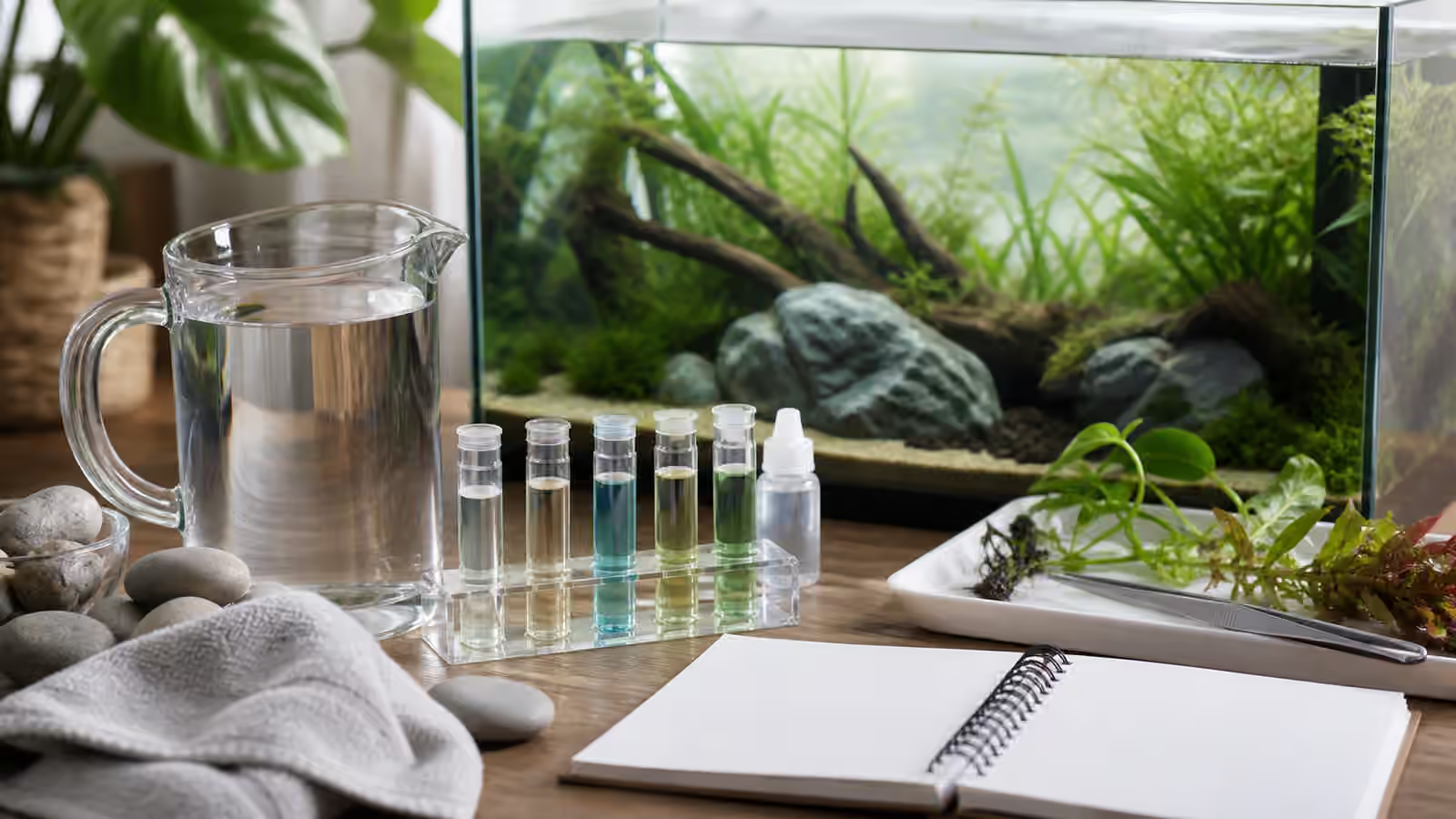
Testing is useful when it changes your decisions. A notebook that shows source KH, source GH, tank KH, tank GH, pH before lights, pH near the end of the photoperiod, water-change dates, and livestock additions can reveal patterns. A random test done after a stressful forum post usually reveals only anxiety.
Use the same test method carefully each time. Rinse vials according to the kit instructions, count drops consistently, and replace expired reagents. Readings are not sacred if the method is sloppy. Water Testing for Aquascapes is worth revisiting because ammonia and nitrite safety still matter more urgently than polishing hardness numbers.
Avoid chasing pH with quick-fix bottles. Rapid pH movement can be harder on animals than a stable value outside an idealized chart. Many pH products change numbers temporarily without addressing KH, source water, substrate, CO2, or organics. If you need to change the system, change the underlying water plan slowly and deliberately.
Water Changes And Top-Off
Water changes import the chemistry of new water. Top-off only replaces evaporated water. That distinction is central. When water evaporates, minerals stay behind. If you repeatedly top off with hard tap water, GH and KH may creep upward. Evaporation, Top-Off, and Minerals explains why many keepers use purified water for top-off even when they use prepared tap water for actual water changes.
Water-change size should match the goal. A routine moderate change with prepared, temperature-matched water can keep a tank steady. A huge emergency change with very different KH, GH, pH, or temperature can create a new problem while solving another. Emergencies happen, but routine work should not feel like an emergency.
New aquascapes benefit from a written water recipe. The recipe may be as simple as conditioned tap water at a consistent temperature. It may include a measured remineralizer. It may specify a blend. Whatever it is, write it down. A stable planted tank is much easier to keep when water preparation is repeatable.
Choosing Livestock Around Reality
The kindest water chemistry plan often starts with livestock selection. If your source water is moderately hard and stable, many common aquarium animals may fit better than delicate soft-water specialists. If your water is soft and low-buffered, choose with that in mind or learn buffering and remineralization before buying animals that need more minerals. Matching the tank to reality is not settling. It is responsible design.
Plants also adapt within limits. Many common aquarium plants tolerate a range of water when light, nutrients, CO2 expectations, and maintenance are reasonable. Sensitive plants may have narrower preferences, but beginners usually get more success from stable basics than from chemistry perfection. Beginner Aquarium Plants That Forgive Real Life is a useful reminder that plant choice can reduce pressure.
KH, GH, and pH are not enemies. They are vocabulary for understanding why a tank behaves the way it does. Once you know your source water, your substrate, your hardscape, and your livestock goals, the numbers become practical. They tell you when to hold steady, when to adjust slowly, and when to choose a different animal rather than forcing the water into a shape you cannot maintain.