Food becomes waste whether animals eat it or not. In a planted tank, overfeeding can drive ammonia, nitrite, nitrate, algae, cloudy water, snail blooms, and filter mess. It is one of the easiest problems to create and one of the easiest to prevent.
Feeding well means matching food type, portion, frequency, and cleanup to the animals actually living in the tank. It also means resisting the emotional part of feeding. Fish learn routines. Shrimp gather where food appears. Snails arrive like evidence. The tank can look hungry even when the water is already carrying more food waste than the system can process.
A good feeding routine is calm, visible, and adjustable. You should be able to explain what went in, who ate it, what was left, and what changed in the tank afterward. If the answer is “I pinched some in because they looked excited,” the routine is not yet giving you useful information.
Start With The Livestock List
Before changing food, write down who actually lives in the aquarium. A community tank may include fast surface feeders, shy midwater fish, bottom dwellers, shrimp, snails, fry, and animals with very different mouth sizes. A feeding plan that works for one group can quietly fail another.
Look at three things: diet, feeding zone, and speed. Diet tells you what kind of food belongs in the plan. Feeding zone tells you whether food should float, sink, cling, or be target fed. Speed tells you whether some animals are being outcompeted before they ever reach the food.
Do not use “cleanup crew” as a feeding strategy. Snails, shrimp, and bottom feeders can help consume suitable food, but they also produce waste and have their own care needs. If they are surviving only on leftovers, the main feeding method may be messy or unfair.
Start Smaller Than You Think
Most beginners feed too much because food disappears into plants, substrate, filters, or snails. Watch what animals actually consume. If food hits the substrate and stays there, the portion or method needs work.
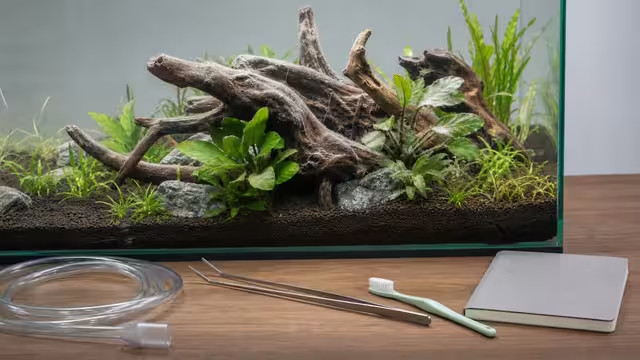
A feeding dish, tweezers, target feeding, or smaller pinch can make waste easier to see and remove.
Start with a portion you can observe from start to finish. For flake or small floating food, that may mean several tiny additions instead of one dramatic pinch. For pellets or wafers, it may mean breaking the portion down, watching who gets access, and removing what remains. For shrimp foods, it may mean using a dish so leftovers do not disappear under plants and wood.
The right portion is not a fixed universal number. It depends on species, age, temperature, stocking level, plant mass, filtration, and feeding frequency. The practical beginner rule is visibility: if you cannot tell where the food went, you are not feeding with enough control.
Measure Until Your Eye Learns
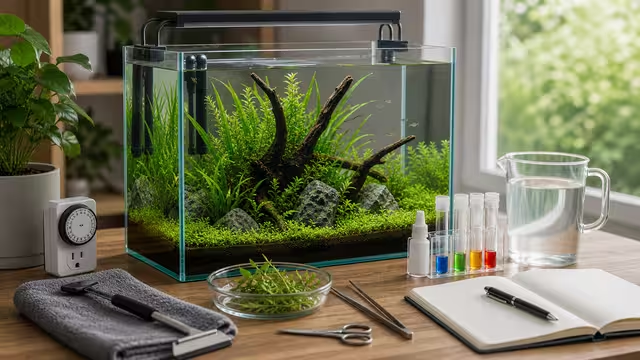
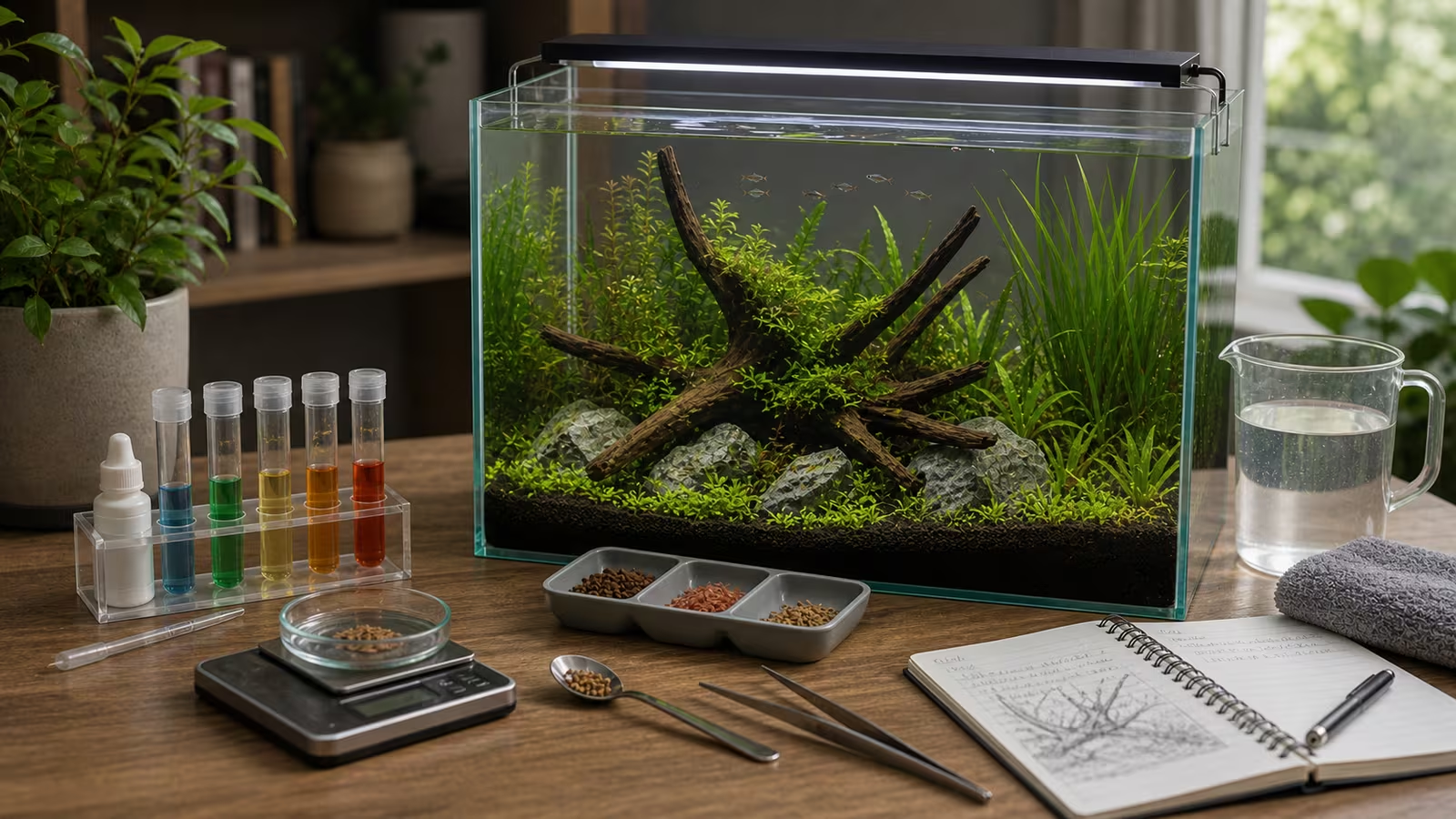
Guessing is unreliable at first. Use a tiny spoon, feeding ring, tweezers, pill organizer, small cup, or pre-portioned container for a week. The goal is not to turn the hobby into laboratory work. The goal is to train your eye so a “small pinch” means the same thing on a busy Tuesday as it does on a careful Sunday.
Pre-measuring helps families and roommates too. If more than one person feeds the tank, unlabeled food containers can double or triple the ration without anyone noticing. A simple “today” compartment or written feeding log prevents accidental generosity.
For tanks with children involved, make the feeding job specific. “Drop this one portion in the ring” is safer than “give the fish some food.” The more exciting the animals are, the more boring the portion control should be.
Watch The First Two Minutes
The first two minutes after feeding tell you a lot. Active fish should find food quickly. Shy fish may need food delivered away from bullies. Bottom feeders may not get anything if surface fish intercept every sinking pellet. Shrimp may ignore a food they do not recognize, then swarm it later after it softens.
Do not walk away immediately. Stay long enough to notice who eats, who hides, who spits food out, who is pushed away, and where leftovers land. A feeding routine that looks fine from across the room may be failing one species or polluting one back corner.
If food collects in one dead zone, adjust flow, feeding location, or portion size. If food disappears behind hardscape, feed in a more visible place. If the same fish monopolizes every bite, split the feeding across two locations or use a method that gives slower animals a chance.
Read The Tank After Feeding
The tank reports feeding habits. Cloudiness, leftover food, rising nitrate, pest-snail population growth, algae increase, and debris pockets can all point to excess. Thin fish, aggression at feeding, or animals being outcompeted can point to poor distribution or unsuitable food.
The report may show up hours or days later. A tank does not need visible leftovers to be overfed. Fine particles can settle into moss, carpeting plants, stem thickets, filter intakes, and substrate gaps. Snails may find them before you do. Algae may respond before the keeper connects the pattern.
Use a simple signal table:
| Signal | What It May Suggest |
|---|---|
| Food remains after feeding | Portion too large, food type unsuitable, or feeding zone wrong. |
| Fish spit food repeatedly | Size, texture, freshness, or diet mismatch may be involved. |
| Snail population jumps | Extra edible waste is reaching the tank. |
| Nitrate rises faster than usual | Food and stocking may exceed the maintenance rhythm. |
| Cloudiness follows feeding | Fine food, overfeeding, or filtration limits may be showing. |
| One animal stays thin | Competition or diet mismatch may be hidden by group feeding. |
These signals are not a diagnosis by themselves, but they tell you where to look. Feeding is connected to water changes, filtration, plant growth, stocking, and algae pressure.
Feeding Methods
| Method | Useful For |
|---|---|
| Tiny surface portions | Active fish that feed in open water. |
| Sinking pellets or wafers | Bottom feeders, if the species and portion fit. |
| Feeding dish | Shrimp and snails where leftovers should be visible. |
| Target feeding | Preventing shy animals from being outcompeted. |
Each method has a failure mode. Tiny surface portions can become too frequent because they feel harmless. Sinking foods can vanish behind hardscape. Feeding dishes can become dirty if they are ignored. Target feeding can overfavor one animal if you keep rewarding the boldest one.
Choose the method that lets you see both success and leftovers. The best feeding method is not the one that gets the most food into the aquarium. It is the one that gets appropriate food to the intended animals with the least hidden waste.
Match Food Texture To The Tank
Food texture affects pollution. Fine powders can feed fry or tiny animals, but they also spread everywhere. Large wafers are convenient, but they can sit too long. Soft gels and vegetables can be useful for some species, but they need removal timing. Freeze-dried foods may float, expand, or break apart differently than expected.
Introduce new foods one at a time. Watch whether animals recognize them, whether pieces drift into plants, and whether the tank looks dirtier afterward. If a food is nutritionally appropriate but physically messy, change the method before abandoning it. A feeding ring, dish, smaller amount, soaking, or target placement may solve the problem.
Freshness matters too. Old food can lose appeal and encourage overfeeding because animals ignore it. Store food dry, closed, and away from heat. Do not keep ten open containers unless the tank genuinely needs that variety and you can use them while they are still good.
Bottom Feeders, Shrimp, And Snails
Bottom dwellers are often underfed in tanks where surface fish intercept everything. They are also often overfed because keepers add sinking food “just in case” after already feeding the whole tank. Watch the actual animals. A proper plan may include feeding surface fish first in one area, then placing sinking food after the initial rush has passed, or feeding after lights dim if the species is more active then.
Shrimp and snails make leftovers visible, but they are not magic waste disposal. If shrimp drag food under wood and leave it there, the tank still carries the load. If snails multiply rapidly, that is often a feeding signal. If bottom feeders leave a wafer untouched for a long time, remove it and rethink the food, timing, or portion.
Vegetables and gels need discipline. Use pieces that are easy to remove. Set a timer if needed. Do not leave food in the tank because “someone might find it later” unless that is an intentional species-appropriate practice you understand.
Feeding And Plants
Plants can use some nutrients that come from livestock waste, but planted does not mean pollution-proof. Excess food can still create ammonia risk, nitrate accumulation, algae pressure, oxygen demand, and filter sludge. Fast-growing plants can help buffer the system; they cannot make reckless feeding harmless.
Dense plants also hide waste. Moss, carpeting plants, stem clusters, and leaf litter can catch particles. During maintenance, gently inspect the areas where food tends to land. If the siphon pulls up old food from the same spot every week, the feeding method needs to change.
A planted tank often looks better when feeding is boring. Less waste means clearer water, less algae pressure, fewer debris pockets, and less temptation to deep-clean the substrate.
A One-Week Feeding Reset
If you suspect overfeeding, do not make ten changes at once. Run a one-week feeding reset:
| Day | Action |
|---|---|
| Day 1 | Record current food types, portions, frequency, and visible leftovers. |
| Day 2 | Feed a smaller measured portion and watch the full feeding. |
| Day 3 | Check for leftovers in plants, substrate, and behind hardscape. |
| Day 4 | Adjust placement so slower animals are not outcompeted. |
| Day 5 | Test or review water-quality signals if feeding has been a problem. |
| Day 6 | Remove any persistent debris pockets during normal maintenance. |
| Day 7 | Decide the new baseline portion and write it down. |
This reset should feel uneventful. You are not starving the tank; you are finding the amount the tank can actually process. If any animal is losing condition, being bullied away from food, or has special dietary needs, adjust with species-specific care rather than simply reducing everything.
When More Food Is Actually Needed
Not every feeding problem is overfeeding. Thin animals, weak growth in juveniles, aggression at meals, shy fish staying hidden, or bottom feeders never reaching food can mean the feeding plan is unfair or inadequate. The answer may be better distribution, different food size, more appropriate food, calmer tankmates, or a separate feeding spot.
Avoid solving underfeeding by dumping food everywhere. Feed with intent. If one shy fish needs help, target that animal. If bottom dwellers need food after the surface rush, adjust timing. If a species needs roughage, protein, grazing time, or specialized food, plan for that rather than relying on scraps.
Feeding enough and feeding cleanly are not opposites. A good routine can do both.
Maintenance Around Feeding
Feeding and maintenance should support each other. If the tank is fed heavily, water changes, filter care, and debris removal must match that load. If you prefer a lower-maintenance tank, the feeding routine needs restraint. There is no free version where extra food disappears without becoming part of the system.
During water changes, look where food travels. Check under the feeding ring, behind wood, around plant bases, below filter outlets, and in corners with weak flow. If you always find the same kind of debris, the feeding plan is giving you instructions.
For vacation care, pre-measured portions matter even more. A caretaker who feeds from an open container may accidentally undo months of steady water quality in a few days.
Common Mistakes
- Feeding because fish beg at the glass.
- Assuming cleanup animals remove waste without adding waste.
- Leaving vegetables or gels too long.
- Feeding many foods without tracking response.
- Ignoring hidden food behind hardscape.
- Feeding the whole tank again because one shy animal missed the first round.
- Using oversized wafers because they are easier to handle.
- Letting multiple people feed without a shared log or pre-measured portions.
- Reducing food blindly when the real issue is competition or unsuitable food.
- Forgetting that fine food can pollute even when no large pieces remain.
Related Fondsites Path
- Water Change Rhythm for Planted Tanks for dilution and cleanup.
- Snails in Planted Tanks for population signals.
- Algae Diagnosis Guide when feeding drives algae pressure.
- Vacation Care for Planted Tanks for pre-measured caretaker portions.
- Beginner Mistakes and Reset Plan if feeding is part of a wider recovery.
Try This Next
For one week, stop guessing. Pre-measure each feeding, watch the first two minutes, remove visible leftovers, and write down one tank signal afterward. If animals finish the food cleanly and water-quality signals improve, you have found a better baseline. If one animal misses out, adjust distribution instead of simply adding more food.