Evaporation removes water, not minerals. When water leaves the tank as vapor, dissolved minerals and waste stay behind. If you top off with mineral-rich water over and over, hardness can creep upward, especially in small tanks.
Top-off and water changes are related maintenance tasks, but they are not the same task. One restores the waterline. The other removes part of the old aquarium water and replaces it with prepared new water. Confusing those two jobs is one of the easiest ways to make a planted tank drift quietly away from the conditions you thought you were keeping.
This matters most in tanks where small changes become large percentages: nano aquariums, open-top aquascapes, shrimp tanks, warm rooms, tanks with fans, and setups with sensitive livestock. A little evaporation is normal. Untracked evaporation plus casual top-off can become a hidden water-chemistry change.
The Simple Evaporation Model
Imagine a tank as water plus everything dissolved in it. When water evaporates, the water leaves, but minerals, salts, nitrate, and other dissolved material mostly remain. The tank looks lower, but the remaining water can become more concentrated.
If you replace that lost water with more mineral-rich water, you may add minerals on top of minerals that never left. Do that repeatedly, and the aquarium can drift harder or more concentrated than the source water alone would suggest. The change may be slow enough that fish keep behaving normally while plants, shrimp, snails, or algae pressure start telling a different story.
The idea is not to fear every cup of tap water. The idea is to know what job you are doing. Top-off replaces evaporated water. Water changes export part of the dissolved load. Testing and observation tell you whether the routine is staying stable.
Top-Off Versus Water Change
Top-off restores the waterline. It does not remove nitrate, dissolved organics, or accumulated minerals. A water change removes some old water and replaces it with prepared new water. Both may be needed.
In open-top tanks, warm rooms, fans, and bright lights can increase evaporation. Nano tanks show the effect faster because the same lost cup is a larger percentage of the system.
A good routine uses both tasks intentionally:
| Task | What It Does | What It Does Not Do |
|---|---|---|
| Top-off | Restores the water level lost to evaporation. | Does not export nitrate, waste, or concentrated minerals. |
| Water change | Removes some old tank water and replaces it. | Does not automatically correct poor source-water choices. |
| Testing | Shows whether the routine is drifting. | Does not fix the tank by itself. |
| Marking the waterline | Makes evaporation visible early. | Does not replace a maintenance schedule. |
If the tank is low on Tuesday and water-change day is Saturday, top-off may be the right Tuesday action. If the tank has rising nitrate or accumulating dissolved solids, topping off alone will not solve that. You need removal, not just refill.
What Changes When Water Drops
A falling waterline changes more than appearance. Filter outlets may splash more, heaters may sit closer to exposure, surface agitation may increase, and floating plants may bunch around equipment. In small tanks, the same lost water can change temperature stability, concentration, and equipment behavior quickly.
Evaporation can also hide inside the layout. Floating plants, rimmed tanks, dark backgrounds, and tall hardscape can make the waterline harder to see. A tank may be lower than it looks from the couch. During maintenance, check from the side and look at equipment depth, not only the front display.
Room conditions matter too. Dry winter air, air conditioning, fans, heat waves, open lids, and strong lighting can all increase evaporation. A tank that loses little water in spring may need more attention during a hot, dry week or while you are traveling.
What Water Should Top Off?
Many keepers use purified or RO water for top-off to avoid adding more minerals as evaporation concentrates the tank. Others use tap water when their source and livestock make that reasonable. The right answer depends on source water, tank goals, and animals.
Do not use untreated chlorinated water if your source requires conditioner.
The safest beginner framing is this: top-off water should replace the water that evaporated without surprising the tank. For many aquariums, that points toward low-mineral purified water for top-off and properly prepared source water for scheduled water changes. But there are exceptions, and the details depend on the animals, plants, source water, and mineral strategy.
Avoid switching water sources casually. If you have been topping off one way and the tank is stable, test and plan before making a sudden change. Shrimp tanks, snail-heavy tanks, active substrates, remineralized RO setups, and soft-water species can react badly when the keeper starts chasing numbers without understanding the system.
Useful questions:
- What are your source water GH and KH, if those matter for your livestock?
- Does your tap water contain chlorine or chloramine that needs treatment?
- Are you using RO, distilled, or remineralized water already?
- Is an active substrate buffering the tank?
- Are you keeping animals that need a narrower mineral range?
- Are you topping off often enough for drift to matter?
If those questions feel unfamiliar, do not panic. It means the next step is learning and testing, not guessing.
Minerals, Hardness, And TDS In Plain Language
Aquarium keepers often talk about GH, KH, pH, and TDS. They are related but not interchangeable.
| Term | Plain Meaning |
|---|---|
| GH | General hardness, often tied to calcium and magnesium. |
| KH | Carbonate hardness or alkalinity, tied to buffering capacity. |
| pH | How acidic or basic the water is. |
| TDS | Total dissolved solids, a broad conductivity-based signal of dissolved material. |
TDS can show that concentration is changing, but it does not tell you exactly what is dissolved. GH and KH can matter a lot for shrimp, snails, plants, and pH stability, but target ranges depend on species and setup. Do not chase a number from a random chart without matching it to your actual livestock and water source.
For many beginners, the practical move is simple: learn what your tap water roughly looks like, keep a consistent water-change routine, mark the waterline, and avoid repeated hard-water top-offs in tanks where mineral concentration matters.
Nano Tanks And Shrimp Tanks Need Extra Attention
Small tanks exaggerate maintenance choices. A cup of evaporated water in a large aquarium may be a minor visual change. The same cup in a nano tank may be a meaningful percentage. If the tank is open-top, warm, or fan-cooled, the effect can stack up quickly.
Shrimp tanks deserve extra caution because many shrimp are sensitive to rapid mineral and osmotic changes. Stability often matters as much as the exact target. A tank that swings from repeated evaporation, rushed top-off, and irregular water changes can stress animals even when the keeper is trying to help.
Top off small tanks slowly. Avoid dumping cold or untreated water directly onto livestock, delicate plants, or substrate. If you are adding a meaningful volume, pour gently, use a cup or drip method, and match temperature reasonably. The point is not ceremony; it is preventing a small system from receiving a sudden shock.
Watch The Waterline
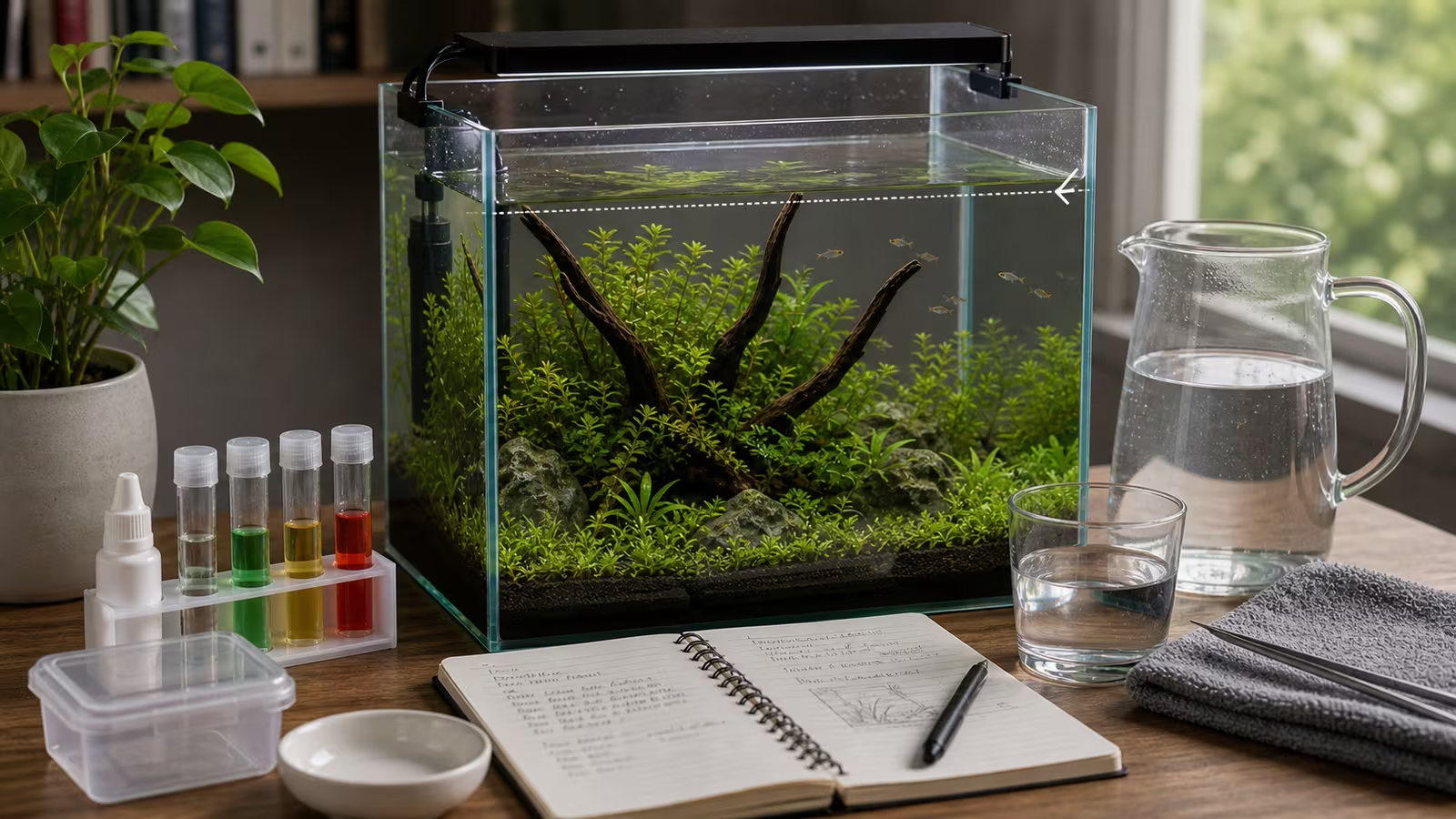
A marked waterline helps you notice evaporation before it becomes a big swing. Lids can reduce evaporation but may affect heat and gas exchange. Floating plants can hide the waterline, so check deliberately.
Pick a reference point that does not make the display ugly: the bottom edge of a rim, a small removable mark on the outside glass, a piece of tape on the side, or the water level relative to the filter outlet. Use the same reference every time. If multiple people help with the tank, make the mark obvious enough that they do not guess.
Track the first week instead of assuming. Write down how much water the tank loses between maintenance days. Then repeat during a different season or room condition. You may discover that the tank is stable most of the year but loses water quickly when the heat runs, a fan points at the surface, or the lid is removed for floating plants.
Waterline tracking is also useful for vacation care. A caretaker should not need to interpret aquarium chemistry. They can understand “top off to this mark with this prepared water if it drops below this point” far more reliably than a paragraph about hardness.
Build A Top-Off Routine
Make top-off easy enough that you do it before the tank is visibly stressed. Keep the right water available, label it if other people live in the home, and store it where it cannot be confused with fertilizer, cleaning water, or untreated tap water.
A simple routine can look like this:
| Step | Habit |
|---|---|
| Check | Look at the marked waterline during feeding or lights-on inspection. |
| Prepare | Use the planned top-off water, treated if needed for your source. |
| Add slowly | Pour gently away from animals and loose substrate. |
| Confirm | Make sure filter outlets, heaters, and intakes sit correctly afterward. |
| Record | Note unusual evaporation or a source-water change. |
If the tank needs top-off every day, ask why. Maybe the tank is open-top and that is expected. Maybe a fan is running. Maybe the room is dry. Maybe there is a slow leak. Frequent top-off is not automatically bad, but it should be understood.
Do Not Use Top-Off To Hide Maintenance Debt
Topping off can make the aquarium look full again while the water still carries the same accumulated waste. That is useful when the only problem is evaporated water. It is misleading when the tank also needs export.
If nitrate is rising, debris is building up, algae is increasing, or the filter is collecting sludge, topping off is not the maintenance answer. It may be part of the week, but water changes, feeding control, plant trimming, and debris removal still matter.
This is especially important in tanks that look clear. Clear water can still be chemically or biologically stressed. A full waterline is not proof of a healthy maintenance rhythm.
Common Scenarios
If an open-top nano tank loses water every few days, mark the line and plan frequent gentle top-offs. Consider whether a partial lid, different room placement, or reduced surface airflow would help without overheating the tank or reducing gas exchange too much.
If a shrimp tank has gradually rising TDS or hardness, review the top-off source and water-change routine before changing minerals aggressively. Repeated hard-water top-offs are one possible cause, but food, fertilizers, substrate, rocks, remineralizers, and source water can also contribute.
If a heater or filter intake becomes exposed during the week, the top-off interval is too long or the equipment placement needs review. Do not wait until equipment is partly out of the water to act.
If floating plants hide the waterline, clear a small viewing gap or use a side reference mark. Floaters are useful, but they should not prevent basic inspection.
If you are leaving town, prepare top-off water and instructions in advance. Do not ask a caretaker to choose between tap, RO, distilled, and remineralized water unless they already understand your system.
Change Mineral Strategy Slowly
Sometimes a tank really does need a different mineral approach. Maybe the source water is very hard, the livestock plan changed, an active substrate is exhausted, or shrimp breeding goals require more precision. Make that change deliberately.
Test first. Write down the current routine. Decide what you are trying to change and why. Adjust through planned water changes or controlled top-offs rather than sudden large swings unless an emergency requires immediate action. Watch livestock behavior, molting, snail shells, plant response, and water clarity after changes.
The most common beginner mistake is not having imperfect water. It is changing water strategy so often that the tank never gets stability.
Common Mistakes
- Treating top-off as a substitute for water changes.
- Topping off repeatedly with hard tap water in a sensitive shrimp tank.
- Ignoring evaporation in open-top nano tanks.
- Letting heaters or filter intakes become exposed.
- Changing mineral strategy without testing.
- Using TDS as if it identifies exactly what is dissolved.
- Pouring a large top-off volume quickly into a small tank.
- Letting floating plants hide a low waterline.
- Asking a vacation caretaker to improvise water chemistry.
- Chasing a target number without matching it to livestock and source water.
Related Fondsites Path
- Dechlorinator and Source Water Basics for input water.
- Shrimp Tank Basics for mineral sensitivity.
- Water Change Rhythm for Planted Tanks for removal, not just refill.
- Vacation Care for Planted Tanks for top-off planning while away.
- Heater, Thermometer, and Electrical Safety for keeping equipment safely submerged.
Try This Next
Mark the normal waterline with a tiny removable mark or reference point. Track how much top-off the tank needs in one week, what water you used, and whether GH, KH, or TDS are drifting in a way that matters for your livestock. Then decide whether your current top-off source and water-change rhythm make sense.