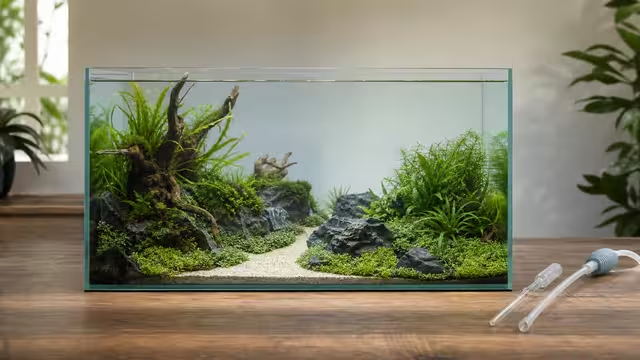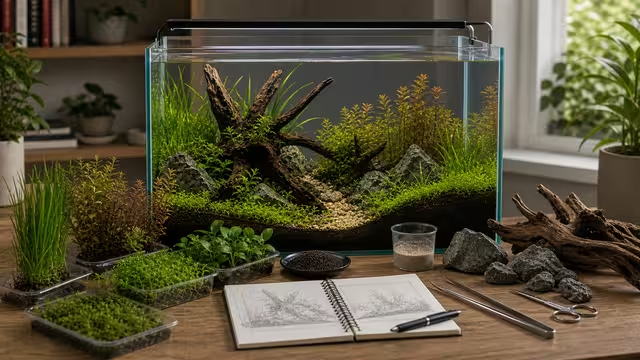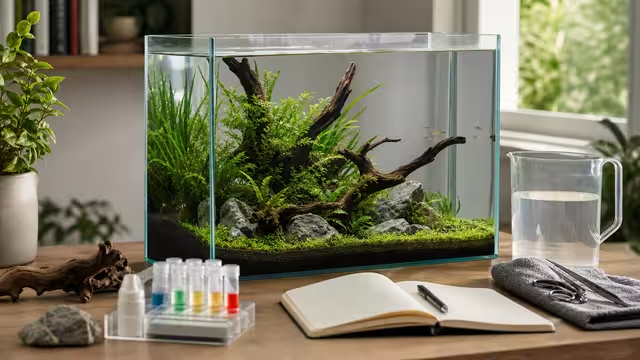
Small aquascapes do not fail because they are small. They fail when every object is asked to be important at the same distance from the glass. A nano tank can feel deep when the layout gives the eye a path to travel. It can also feel cramped when rocks, wood, plants, equipment, and livestock all press against the front pane with no quiet space between them.
Depth is not a trick for photographs only. A tank with clear perspective is easier to maintain because planting zones, swimming room, flow paths, and cleaning access are easier to read. The same layout choices that make a small aquascape look larger can also make it calmer for the animals that live there. The goal is not to fake a giant landscape. The goal is to use the limited footprint with intention.
Start With The Viewing Angle
Before moving substrate or stone, decide where the tank will usually be viewed from. Many aquascapes are built as if the viewer is centered and standing, then placed on a desk where the viewer is seated and slightly to one side. That mismatch changes everything. A stone that looked dramatic from above may block the whole midground from the chair. A path that seemed centered may disappear behind wood.
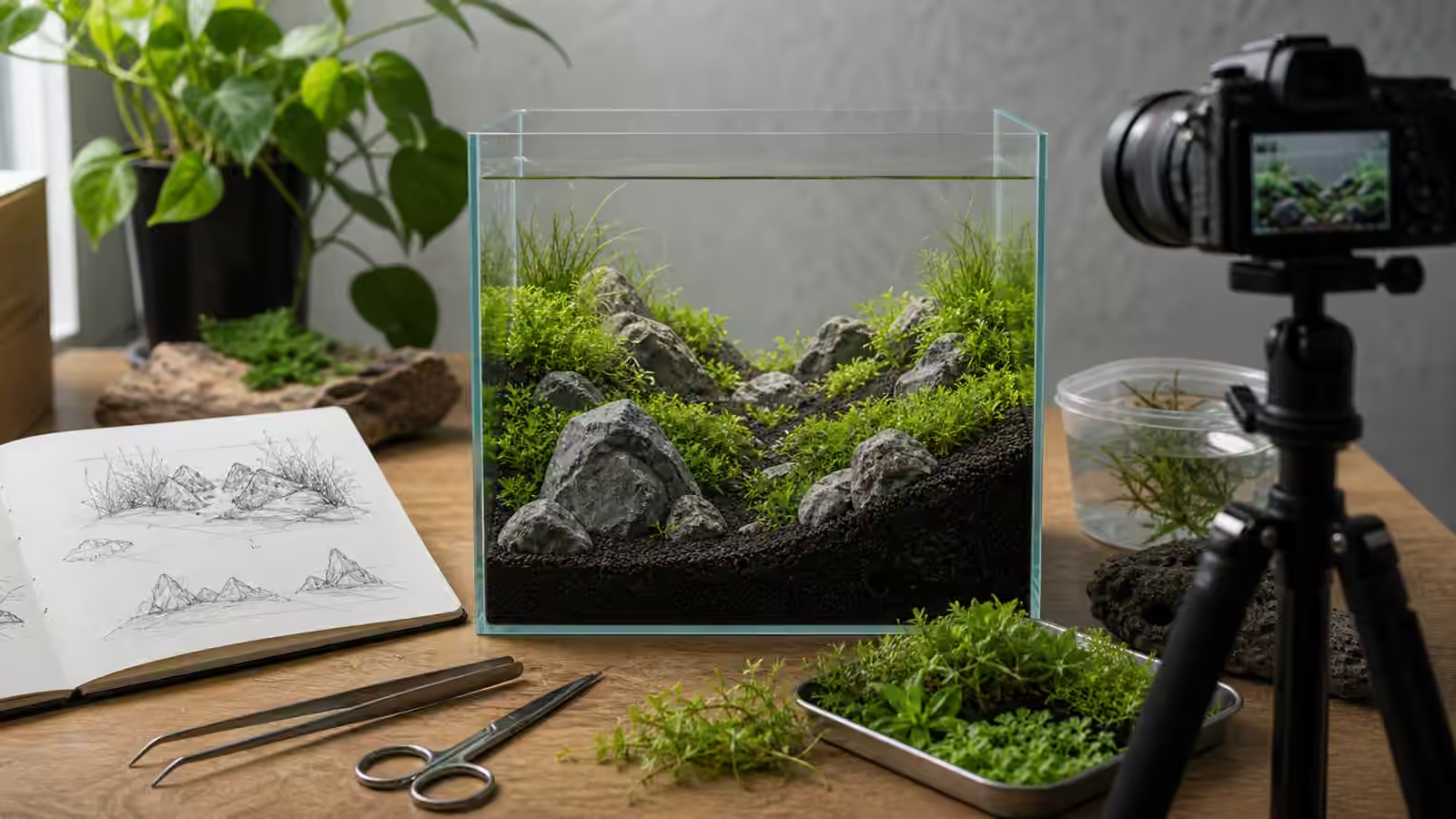
Photograph the dry layout from the real viewing position. This is the cheapest composition tool in the hobby. The camera flattens the scene, which makes confusing shapes easier to see. If the photograph reads as a wall of equal objects, the eye in the room will probably feel the same. This habit builds on Aquascape Composition Rules That Actually Help , where focal point and negative space are treated as maintenance tools, not just art terms.
The main viewing angle does not mean every other angle can be ignored. A tank near a walkway, sofa, or kitchen counter may need side views that do not look like unfinished backs. Still, one angle should lead. When every side gets equal priority, a small tank often becomes crowded because the aquascaper tries to hide all structure from all directions at once.
Slope Gives The Eye Somewhere To Go
Substrate slope is one of the most reliable ways to create depth, but it must be practical. A gentle rise from front to back gives plants more root depth behind the foreground and makes the rear of the tank feel farther away. A diagonal rise can lead the eye toward a focal point. A low foreground creates visual breathing room and keeps the front glass easier to clean.
The problem is that slopes move. Fish, shrimp, siphons, planting tools, and gravity all work against dramatic banks. Hardscape can hold some grade, plant roots can help over time, and careful maintenance can preserve the shape, but a beginner should not build a cliff that needs constant repair. A slope that settles into a still-attractive form is better than a steep photograph that collapses after the first water change.
Use depth, not just height. A tall mound pressed against the front glass can look bulky rather than deep. A lower foreground, midground transition, and slightly raised background usually read better in a small tank. If you want a path, let it narrow as it moves back. If you want an island, leave enough open water around it that the viewer can understand where the island ends.
Scale Changes Need Consistency
Forced perspective works when larger textures sit nearer the viewer and finer textures sit farther back. Larger foreground stones, smaller background stones, broad leaves near the front, and finer leaves behind can all help a tank feel deeper. The effect breaks when scale changes are random. One huge background rock or one giant leaf at the rear can pull the back wall forward again.
Plant texture is especially useful because plants grow. Fine stems or small-leaved plants in the background can make the rear feel more distant, but only if they are trimmed before they become a solid hedge against the glass. A broad Anubias leaf near the front can create a convincing foreground, but too many broad leaves everywhere flatten the layout. The plant list should support the perspective, not fight it.
Livestock scale matters too. A school of active fish that needs long swimming room will make a tiny layout feel tense if the tank is not suitable for them. Small shrimp or snails may fit the visual scale better, but their needs still come first. The stocking caution in Stocking Caution for Small Tanks should stay in charge even when a photograph would look good with more motion.
Negative Space Is Not Empty
Open foreground sand, a clear channel between stones, or a patch of visible substrate can make a small aquarium feel intentional. Beginners often fill every visible gap because the tank looks unfinished on day one. Then plants grow, moss thickens, floaters shade the surface, and the layout loses its shape. The space that felt empty at setup becomes the space that saves the composition later.
Negative space also protects maintenance. A clear front edge lets you wipe glass without shredding leaves. A path lets debris travel where you can see it. A gap behind hardscape may let water move instead of leaving a dead corner. The same open area that gives the eye rest can give the siphon, scraper, and trimming scissors room to work.
If the tank feels too bare, ask whether it is truly empty or simply young. New plants are small because they need room to become established plants. A foreground carpet, moss pad, or stem group can double or triple in visual mass. Designing for the mature tank is part of the patience described in Planted Aquarium Without Panic . A tank that looks slightly restrained at the beginning often ages better than one that looks finished immediately.
Hide The Back Without Building A Wall
Background planting is not the same as blocking the rear glass with a single green sheet. A small tank can gain depth from layered plant heights, but it loses depth when the back becomes a flat hedge. Stagger stems. Leave small pockets where hardscape or darker shadows show through. Use midground plants to bridge the transition from open foreground to taller background instead of making three rigid bands.
Equipment complicates this choice. Filters, heaters, intakes, and tubing often sit at the back, and hiding them is tempting. Do not block flow or make maintenance impossible for the sake of a cleaner photograph. A plant screen that can be trimmed is better than a tangled jungle around an intake. The layout should let you remove a sponge guard, check a heater, or clean a tube without dismantling the aquascape.
Dark backgrounds can help equipment recede, but they do not solve crowding. If a black filter intake is still the dominant shape, use plant placement, hardscape angle, and viewing distance to reduce its importance. The eye accepts practical equipment more easily when the rest of the composition has a clear focal point.
Photograph To Learn, Not To Perform
Taking progress photos is useful because it reveals flattening before your eye adapts to it. Photograph the tank after planting, after the first trim, and after a month of growth. Compare whether the main shape is clearer or more confused. If the layout loses depth, the answer is usually not to buy more hardscape. It is often to trim, thin, open a sightline, lower a foreground mass, or remove a competing piece.
Use the camera gently. A tank that only looks deep from a low, close, carefully cropped photo may still feel crowded in the room. The photograph should help you edit the real tank, not replace it. Aquascape Photo Journal is useful here because it treats pictures as records of growth and decisions rather than as proof that every stage must be display-ready.
Depth in a small aquascape comes from restraint repeated in several places: one leading focal shape, a manageable slope, controlled scale, open space, layered planting, and equipment that does not dominate the view. None of those moves makes the tank larger. Together they make the tank easier to read, and an easy-to-read tank is usually easier to care for.