Cloudy water in a new planted aquarium can make a careful setup feel as if it has already failed. The glass was clean, the hardscape looked balanced, the substrate was sloped, and then the tank turned milky, gray, dusty, or faintly green after filling. The useful response is not embarrassment or a full reset. Cloudiness is a clue, and different kinds of cloudiness point to different causes.
The first question is whether the tank has animals in it. A fishless planted tank with cloudy water gives you time to observe, test, and correct the cause without livestock paying for the experiment. A stocked tank needs more caution because poor oxygen, ammonia, nitrite, temperature swings, and panic maintenance can harm animals faster than the haze itself. That is why Aquascape Studio keeps returning to the slower order in Plant Before Fish Plan and Cycling a Planted Aquarium Before Animals .
Dust From The Setup
Some cloudy water is simply suspended dust. New substrate, crushed planting soil, fine sand, rock powder, disturbed mulm, and bits of dry hardscape can turn a fresh fill hazy. This kind of cloudiness often appears immediately or during the first hours after filling. It may look tan, gray, or white, and the water may clear from the top down as heavier particles settle or the filter catches them.
Dust is common when substrate was poured too quickly, when water was added directly onto the slope, or when plants were pushed into loose soil after the tank was filled. It can also happen after a rescape, especially if rooted plants were pulled hard. The response is patience, gentle filtration, and careful mechanical cleanup. Do not keep stirring the bottom to prove that it is dusty. Every disturbance restarts the cloud.
A polishing pad or fine mechanical media can help, but it should be used without choking the filter or replacing the biological media that protects the cycle. Filter Media Maintenance Without Losing the Cycle is the safer companion here because many beginners try to solve cloudiness by aggressively washing everything. Rinsing a clogged pad in removed tank water is different from scrubbing the whole filter under untreated tap water and losing the bacterial stability you were trying to build.
Dust also teaches filling technique. The next water change should be slower, with water poured onto a plate, bag, sponge, or hardscape surface rather than into the substrate. If the tank has a steep slope, refill in a way that does not dig a trench down the front glass. Clarity improves faster when you stop creating new suspended particles.
The White Bacterial Bloom
A white or milky haze that appears after the first day or two is often described as a bacterial bloom. In plain terms, the new aquarium has a lot of available dissolved organics and not yet enough stable biological structure to process them quietly. Free-floating bacteria multiply, the water looks cloudy, and the aquarist feels tempted to tear the tank apart.
The bloom itself is not proof that the cycle has finished or failed. It is a sign that the system is young and changing. The important evidence is still ammonia, nitrite, nitrate trend, smell, livestock behavior if animals are present, and whether decaying material is feeding the bloom. The Nitrogen Cycle Without Mystery is useful because it separates visible water clarity from the invisible nitrogen process.
Look for fuel. Melting plant leaves, excess food, a buried dead root mass, decomposing tissue-culture gel, or a piece of questionable wood can keep the bloom going. Remove obvious decay with tweezers or a siphon. Do not remove every living plant because a few leaves are transitioning. Plants often shed old growth after planting, and Plant Melt and Recovery After Planting explains why that does not always mean the plant is doomed.
Avoid dramatic overcorrection. Large repeated water changes can help when tests show unsafe water, but endless changes done only because the water looks imperfect can keep a new tank unstable. Chemical clarifiers may clump particles, but they do not replace source control, testing, oxygen, and time. A bloom that is mild, fishless, and not accompanied by unsafe test results often clears as the tank matures and excess organics are reduced.
Not All Cloudiness Is The Same As Green Water
Green water is its own problem. It has a green tint because suspended algae are multiplying in the water column. A white bacterial bloom may look milky under room light, while green water usually becomes more obvious when viewed through a white cup or against a pale background. The distinction matters because the causes and responses differ.
Diagnose Green Water covers that path directly. Green water tends to point toward light intensity, long photoperiods, nutrient imbalance, direct sun, immature tanks, or excess organics. White haze more often points toward suspended dust or bacterial bloom. A tank can have more than one issue, but naming the strongest pattern prevents random treatments.
The cup test is simple. Take a sample in a clear container and view it in natural light against a white surface. Dust may settle. Bacterial bloom often stays pale and cloudy. Green water stays tinted. This is not a laboratory result, but it slows the urge to buy a cure for the wrong problem.
Filter And Flow Clues
Cloudiness that lingers in dead corners may reveal weak circulation. If one side of the tank stays hazy while the other clears, water may not be moving through the plant mass, around hardscape, or toward the intake. In a planted aquascape, this often happens when the filter outlet is blocked by tall stems, a floating plant mat, or a hardscape wall built for looks but not flow.
Watch the tank after feeding a tiny test amount in a stocked aquarium or after gently disturbing a small patch of harmless settled dust in a fishless system. Particles should move predictably rather than spin in one corner. Filter Flow and Surface Agitation gives a better framework for adjusting outlets without blasting fish, shrimp, or delicate plants.
Surface condition matters too. A still surface with a film can reduce gas exchange, and bacterial blooms may consume oxygen. If livestock are present and breathing hard near the surface, this is no longer a cosmetic water-clarity problem. Increase safe aeration or surface movement, check temperature, test the water, and avoid adding more food.
When To Wait And When To Act
Waiting is appropriate when the tank is fishless, water tests are controlled, no chemical accident happened, equipment is running, and the cloudiness is mild enough that you can observe the system. During that period, remove decaying leaves, keep the photoperiod conservative, avoid feeding an empty tank except for an intentional cycling plan, and let the filter work.
Action is appropriate when tests show ammonia or nitrite at unsafe levels for stocked animals, when livestock show distress, when water smells rotten, when a filter has stopped, when an intake is clogged, or when a new material is clearly breaking down. A water change is a tool in that situation, not a confession of failure. Water Change Rhythm for Planted Tanks helps keep that tool measured instead of frantic.
Also act when the cause is obvious and removable. A rotting plant bunch should come out. A handful of dusty substrate sitting on top of the hardscape can be siphoned. A clogged prefilter sponge can be rinsed in removed tank water. Correct the cause closest to the problem before rebuilding the aquarium around a vague fear.
Clarity As A Record
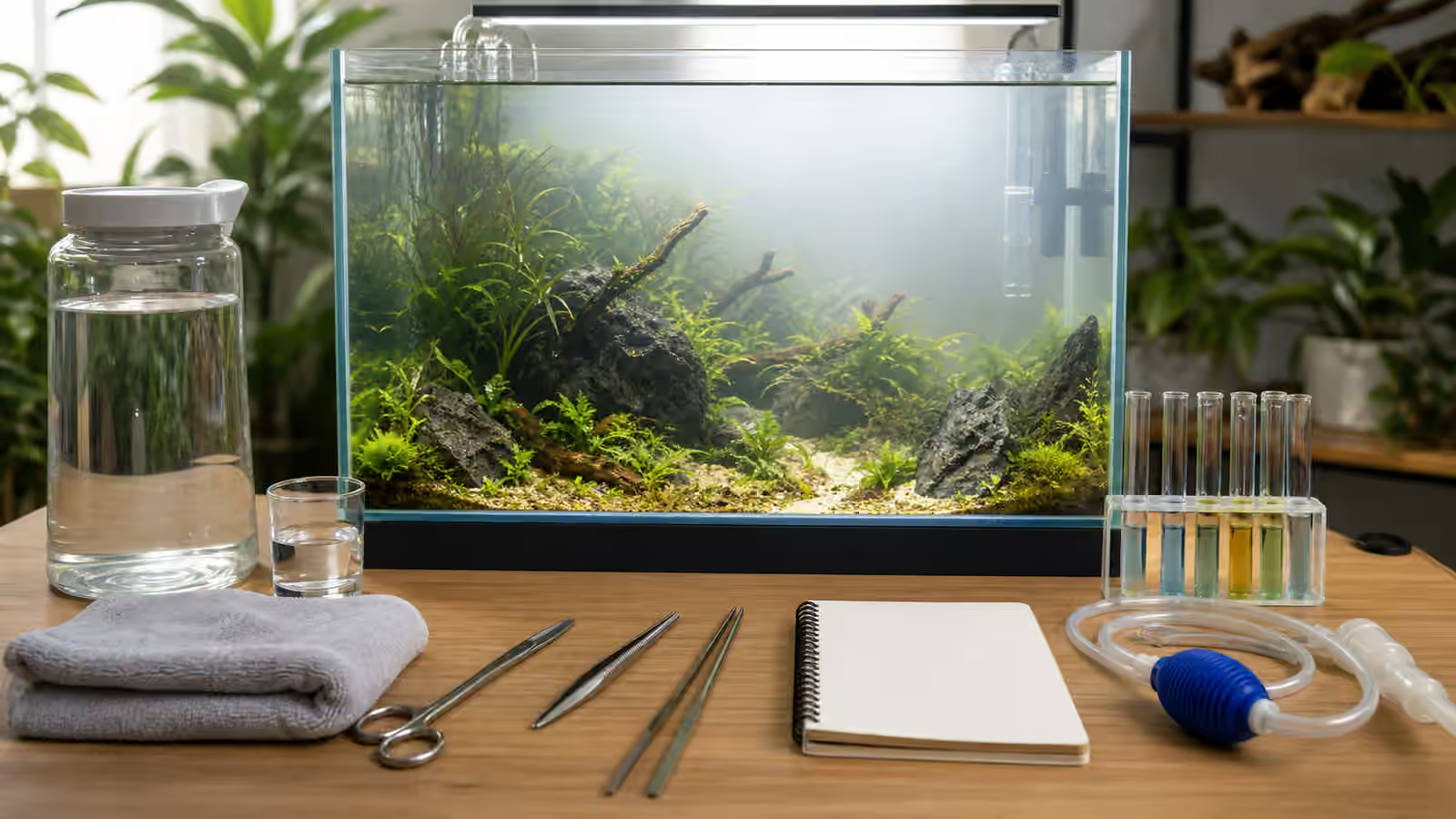
Cloudy water becomes easier to handle when you record the timing. Note the fill date, substrate used, plant additions, water-change dates, test results, filter maintenance, photoperiod, and when the haze appeared. A photo taken from the same angle each day can show whether the tank is clearing even when your eyes are impatient.
The goal is not perfectly clear water at every minute of a tank’s first week. The goal is stable water that becomes clearer for understandable reasons. New aquascapes are full of transitions: plants adapting, bacteria colonizing, dust settling, wood soaking, and the aquarist learning the room. Cloudiness asks for evidence. Once you know which evidence matters, the response becomes smaller, calmer, and much more likely to work.