The phrase cleanup crew is convenient, but it can quietly distort the way aquarists think about animals. Snails, shrimp, and algae-grazing fish are not maintenance equipment. They are living residents with temperature needs, water-parameter needs, food needs, social needs, adult sizes, waste output, and vulnerability to unstable tanks. They may help with certain surfaces, but they do not cancel the aquarist’s responsibility.
In a planted tank, the best cleanup crew expectation is modest. Grazers can make small daily differences. They can pick at soft algae, biofilm, uneaten particles, or decaying plant edges depending on the species. They cannot fix too much light, chronic overfeeding, poor flow, an uncycled filter, overcrowding, or a plant plan that is melting faster than it grows. Algae Prevention Basics starts with the causes because animals should not be asked to live inside a problem you could reduce.
Start With The Mess Source
Before adding any animal, identify what you want cleaned. Brown dust on new surfaces, green film on glass, hair algae, leftover food, dead plant leaves, surface film, and detritus behind wood are different problems. No animal handles all of them, and some problems are not appropriate food at all. A fish that nibbles algae may ignore the type of algae in your tank. A snail that grazes film may not solve long strands. Shrimp may clean delicate surfaces but still need supplemental feeding and stable water.
If the mess comes from overfeeding, feed less and remove leftovers. If it comes from intense light over weak plant mass, adjust the photoperiod and plant health. If it gathers in one still corner, change flow. If plants are melting, trim decay and improve establishment. Feeding Without Polluting the Tank , Light Balance for Aquatic Plants , and Filter Flow and Surface Agitation are often more useful than another livestock purchase.
This is not anti-animal. It is pro-animal. A stable tank with small grazing tasks is a much better home than a struggling tank where animals are added because the aquarist wants a result by morning.
Snails Report The Tank
Snails are often treated as pests or janitors, but in planted aquariums they are also reporters. A sudden population boom can reveal excess food or decaying plant matter. A few visible snails grazing glass and leaves may be part of a normal tank. The number matters less than the pattern and the cause.
Snails in Planted Tanks covers the subject directly. The expectation piece is simple: snails produce waste while eating waste-adjacent material. They do not erase nutrients from the system. They turn some material into snail growth, movement, and waste that the filter and maintenance routine still need to handle.
Snail species also differ. Some stay small, some reproduce readily, some need special feeding, some may disturb delicate foregrounds, and some are restricted or discouraged in certain places because release can harm local ecosystems. Invasive Species Disposal and Local Regulations for Aquarium Plants and Animals are part of responsible keeping. Never release unwanted aquarium animals or plants outdoors.
Shrimp Need Stability More Than Scraps
Freshwater shrimp are excellent grazers in the right tank, but they are not a beginner shortcut around cycling, water changes, or careful acclimation. They spend much of their time picking through surfaces, which makes them visible and appealing. That same constant contact with surfaces means they are exposed to water instability, residues, and poor maintenance.
Shrimp may graze biofilm, soft algae, and fine food particles. They still need appropriate water parameters, safe minerals, hiding places, stable temperature, intake protection, and food that meets their needs. A tank with no visible algae is not automatically well-fed for shrimp, and a tank with lots of algae is not automatically safe. Shrimp Tank Basics is the better starting guide than a cleanup fantasy.
Avoid adding shrimp to a brand-new tank because biofilm appeared on wood. Biofilm on New Wood, Stone, and Leaves explains why early film is common and often temporary. Let the tank mature, test the water, and decide whether shrimp fit the whole environment, not one visible surface.
Algae-Grazing Fish Are Still Fish
Fish sold for algae control are often misunderstood. Some species only graze certain algae when young. Some become too large for small aquariums. Some need groups, high oxygen, strong flow, mature surfaces, driftwood, vegetables, protein, or more space than a nano tank can provide. A fish cannot be reduced to a job title.
This matters because many planted-tank algae problems happen in small, young, brightly lit systems. Those are often the wrong systems for the fish marketed as solutions. Stocking Caution for Small Tanks and Schooling Fish and Space Reality keep the decision grounded in adult size and behavior rather than the label on a store tank.
If an algae-grazing fish genuinely fits the aquarium, feed and care for it as a complete animal. Do not starve it in the hope that hunger will make it clean harder. Do not add one to a tank with unsafe water because the glass has algae. The algae problem is yours to diagnose; the fish’s welfare is yours to protect.
The Maintenance Crew Is You
The real cleanup system is a combination of plant health, restrained feeding, appropriate stocking, good flow, water changes, filter care, trimming, and observation. Animals can participate in that system. They cannot replace it. A planted tank with no snails or shrimp can be clean if the keeper understands inputs and outputs. A planted tank packed with grazers can still be dirty if food, light, and waste are out of balance.
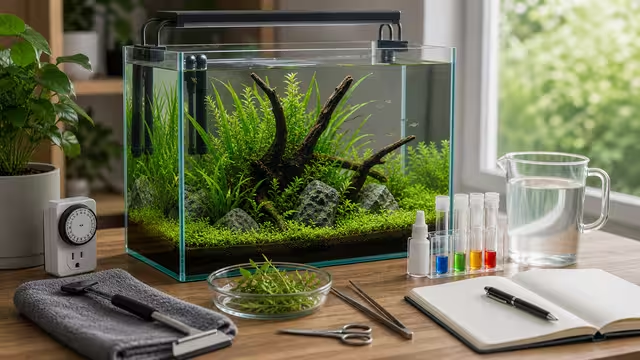
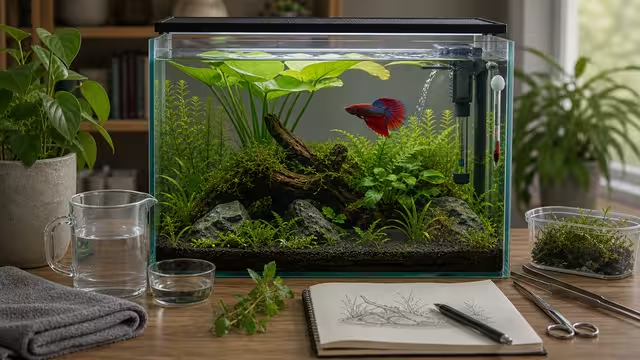
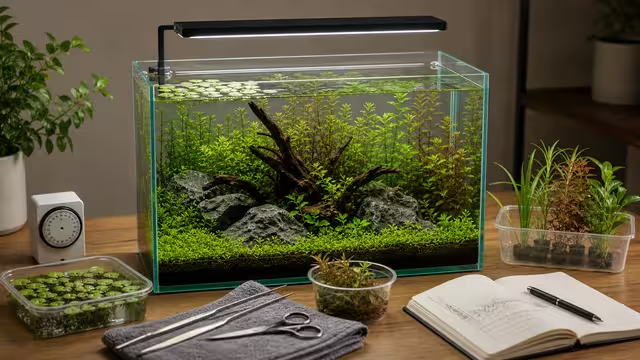
This is why a feeding dish, siphon, algae pad, plant scissors, and test kit belong in the same mental picture as livestock. Tools are tools. Animals are animals. Use tools for maintenance and choose animals for homes you can provide. Maintenance Day Checklist gives the recurring rhythm that keeps cleanup from becoming a livestock problem.
Observation is the quiet skill. If snails gather on one melting plant, inspect the plant. If shrimp avoid an area, consider flow, oxygen, aggression, or water quality. If algae returns immediately after cleaning, look at light and nutrients. The animals are not failing at their job. They are showing you the limits of the system.
Choosing A Resident, Not A Fix
A good cleanup crew decision begins with the question: would I keep this animal if the tank already looked clean? If the answer is no, pause. Research the animal’s adult size, group needs, temperature range, water parameters, diet, behavior, lifespan, and compatibility. Decide whether the tank can support those needs after the algae patch is gone.
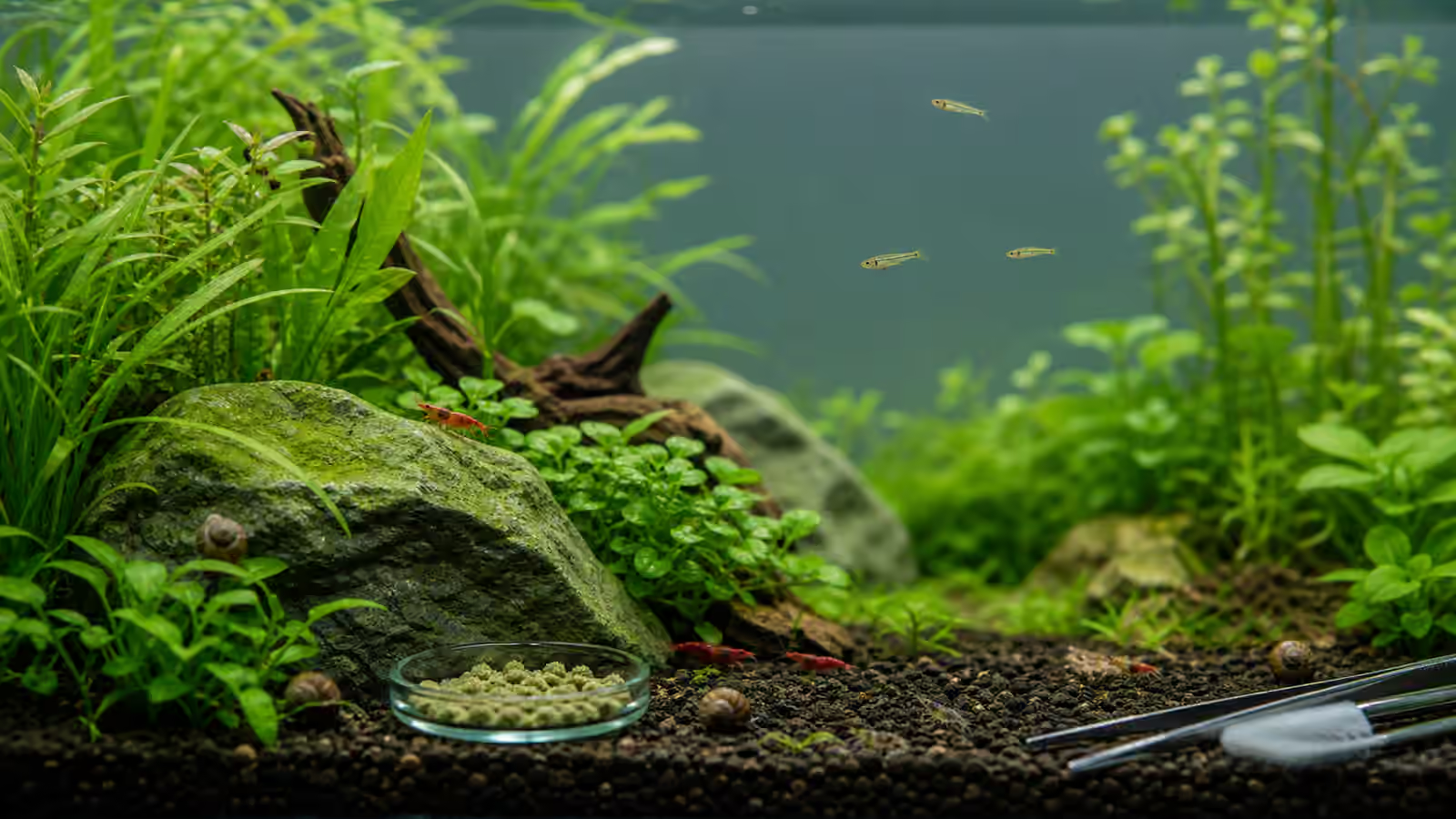
When the animal fits, it can become one of the pleasures of a planted aquarium. Snails tracing leaves, shrimp picking through moss, and small fish grazing calmly on hardscape make the tank feel alive at a fine scale. That is different from hiring them to hide a maintenance problem. The planted tank works best when every resident has a life in the design, not just a task.