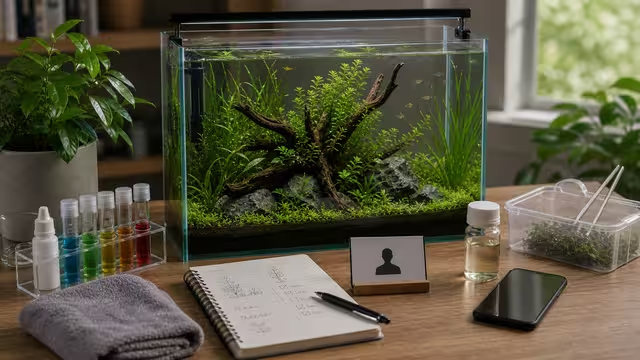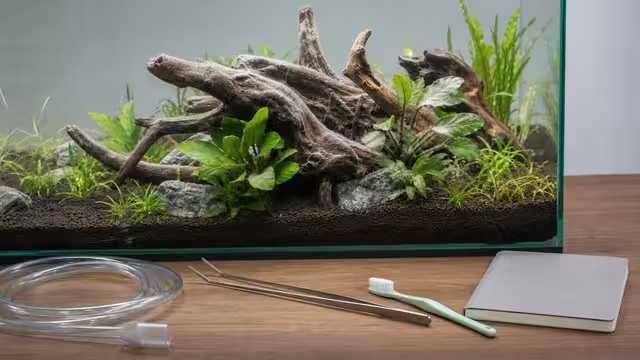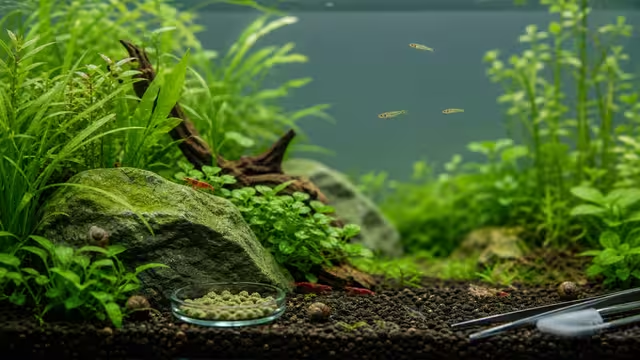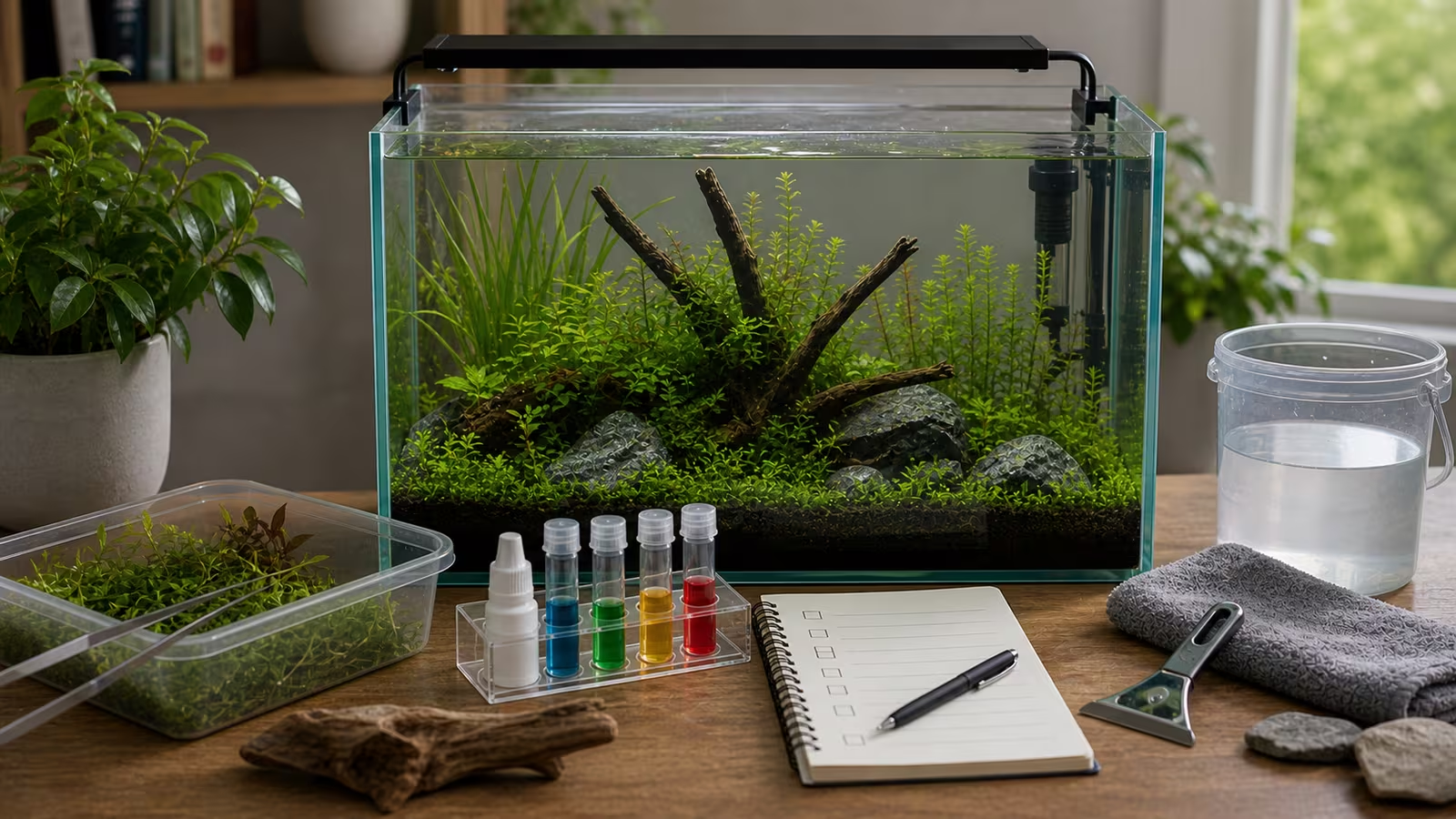
Almost every planted aquarium keeper makes early mistakes. Too much light, too many animals, too little testing, a rushed cycle, weak plant choices, overfeeding, or constant tinkering can make the tank feel like a failure. The best response is rarely a total teardown.
The tank may look like a mess, but it is still a living system. Filter bacteria, plant roots, livestock, substrate, and hardscape have already started forming relationships. A dramatic teardown can erase the few stable parts that were helping. A calm reset protects what is working while removing the causes one at a time.
This guide is for the common beginner moment when the aquarium feels embarrassing: algae on the glass, plants melting, water not quite clear, fish begging at the front, floaters everywhere, a drawer full of products, and no confidence about what to do next. The reset is not a punishment. It is a way to slow the tank down enough that you can understand it again.
First, Sort Emergency From Annoyance
Not every ugly aquarium is an emergency. Brown diatoms in a young tank, melting leaves on newly planted crypts, green dust on glass, and stems reaching for light can be frustrating without being immediately dangerous. Gasping fish, unsafe ammonia or nitrite, heat failure, electrical smell, leaking seams, severe illness, or sudden deaths are different. Those deserve immediate stabilization and qualified help.
The first reset question is simple: is anything alive in immediate danger? If yes, focus on water safety, temperature, oxygen, electrical safety, and escalation. If no, the best move is usually to gather evidence before touching more equipment.
Write down what you can observe without fixing anything yet:
| Question | Why It Matters |
|---|---|
| How old is the tank? | New tanks often go through unstable stages that mature tanks do not. |
| What are ammonia, nitrite, and nitrate? | Water tests separate visual mess from animal-risk problems. |
| How long are lights on? | Too much light is one of the easiest algae accelerators. |
| What and how much are you feeding? | Food becomes waste quickly in a small system. |
| What changed in the last two weeks? | Most problems have a recent trigger or delayed response. |
This pause can feel unproductive, but it prevents the worst reset mistake: treating every symptom with a different product before you know the cause.
Stop Adding Variables
The first reset step is to stop buying new plants, livestock, fertilizers, chemicals, and equipment for a moment. Write down the current tank size, livestock, light schedule, water-change routine, test results, source water, feeding, and recent changes.
You cannot fix what you keep changing.
That sentence is worth taking literally. If you reduce light, add algae treatment, change fertilizer, replace filter media, add floating plants, change food, and rearrange the hardscape in the same weekend, the tank might improve, worsen, or look the same, but you will not know why. A reset should make the aquarium easier to read.
Give yourself a short buying pause. For seven days, buy only emergency necessities: dechlorinator, test supplies, a heater replacement if the old one failed, safe food, or equipment required to protect livestock. Do not buy more animals to “balance” the tank. Do not buy algae eaters as cleanup staff. Do not buy five fertilizers because each product page promises a different cure.
If you already bought products, put them away unless you understand exactly what they do and why the tank needs them. A beginner reset is not about proving every purchase was useful. It is about protecting the aquarium from your uncertainty.
Make A Clear Tank Snapshot
Before you change anything, take a full-tank photo and a few close-ups. Photograph algae zones, melting plants, filter outlet position, surface condition, stocking density, and any equipment you are unsure about. Then write a plain-language snapshot:
“Twenty-gallon tank, eight weeks old, light on nine hours, no CO2, fed twice daily, water changed when it looks dirty, hair algae on front right wood, crypts melting, fish active, no test results yet.”
That snapshot is not for judgment. It gives the reset a starting line. In two weeks, you can compare the tank against evidence instead of memory.
If you ask for help from a local shop, club, or experienced keeper, this snapshot makes the conversation better. People can reason from tank size, age, test results, light schedule, livestock, and photos. Without those details, advice often becomes generic and overconfident.
Stabilize The Basics
Confirm the tank is cycled or address cycling problems. Reduce excessive light. Remove dead plant matter. Feed less if food remains. Resume moderate water changes. Clean visible algae manually without sterilizing the whole tank. Check filter flow and temperature.
Do not deep-clean substrate, replace all media, add chemicals, and rescape on the same day unless there is an emergency that requires it.
Stabilization means making the tank safer and more predictable, not making it look finished by tonight. Start with the quiet basics:
- Test water before and after meaningful changes.
- Keep the filter running and avoid replacing all media.
- Make sure the heater and thermometer agree with the livestock needs.
- Shorten an excessive light schedule gradually to a reasonable range.
- Remove loose decaying leaves and uneaten food.
- Clean glass and visible algae by hand before reaching for chemicals.
- Perform modest water changes with conditioned water on a repeatable schedule.
Manual cleanup is underrated. Removing algae with a scraper, toothbrush, siphon, or fingers does not solve the cause, but it lowers the load while you adjust the system. The key is restraint. You are not trying to sterilize the tank. You are making room for plants and filter bacteria to keep doing their work.
The Seven-Day Reset Plan
A reset feels calmer when it has a schedule. Use this as a starting point and adjust for urgent livestock needs.
| Day | Action |
|---|---|
| Day 1 | Photograph the tank, test water, remove uneaten food and dead plant matter, confirm equipment. |
| Day 2 | Set a reasonable light schedule and stop extra feeding or dosing experiments. |
| Day 3 | Do a moderate water change if tests or routine support it; clean glass and obvious algae manually. |
| Day 4 | Observe livestock behavior, filter flow, surface movement, and plant condition without changing more. |
| Day 5 | Trim only plants that are rotting, blocking flow, or shading everything. |
| Day 6 | Retest key water parameters and compare with the first entry. |
| Day 7 | Decide on one next adjustment, not five. |
The exact days matter less than the rhythm: observe, stabilize, wait, then decide. A planted tank needs time to reveal whether a change helped. If you change the plan every morning, the aquarium never gets a stable signal.
Decide What Must Change
Some problems are design problems. A tiny tank may be overstocked. A high-light plant list may not fit a low-tech setup. A sunny window may be driving algae. A stand may be unsafe. A reset should include honest decisions, not just cosmetic cleanup.
This is the hard part because design problems often cost pride, money, or convenience. A reset may reveal that the tank is too small for the animals you wanted, the light is too strong for your maintenance routine, the plant list was chosen from advanced aquascapes, or the aquarium sits in a sunny place that keeps pushing algae. None of that means the hobby failed. It means the plan needs to match reality.
Separate problems into three groups:
| Problem Type | Example | Reset Response |
|---|---|---|
| Habit problem | Overfeeding, irregular water changes, changing products constantly. | Build a simple routine and track it. |
| Equipment problem | Unsafe stand, unreliable heater, weak flow, no timer. | Fix the support system before cosmetic goals. |
| Design problem | Overstocking, demanding plants, too much light, poor location. | Change the plan, not just the symptoms. |
Habit problems are often the cheapest to repair. Equipment problems should be handled before they create risk. Design problems require the most honesty. If a plant constantly melts because the tank cannot meet its needs, replacing it with another demanding plant is not a reset. It is a repeat.
Common Beginner Scenarios
If algae is spreading, reduce the number of variables first. Check light duration, feeding, plant mass, water changes, and whether the tank is new. Manually remove what you can. Add plant mass if the tank is underplanted, but do not use animals as the first algae-control tool. Algae eaters have their own care needs and waste load.
If plants are melting, look for timing. Newly planted crypts, tissue-culture plants, or plants moved from one set of conditions to another may shed old leaves while adapting. Remove rotting tissue, watch for new growth, and make sure the basics are stable. If every new leaf is weak, pale, or distorted, then look deeper at light, nutrients, substrate, and species choice.
If the water is cloudy, do not assume one cause. New-tank bacterial blooms, disturbed substrate, overfeeding, insufficient filtration, and algae blooms look and behave differently. Test water and review recent changes. Avoid dumping clarifiers into a tank with livestock risk until you understand whether the issue is cosmetic or tied to water quality.
If livestock seems cramped or stressed, be honest about adult size, group needs, hiding places, flow, temperature, and aggression. A reset may mean rehoming, upgrading, or simplifying. That decision can feel disappointing, but it is better than trying to medicate a stocking problem.
If maintenance feels impossible, shrink the routine. A tank that requires perfection will not stay stable in a normal week. Choose hardier plants, moderate light, simpler stocking, easier water-change access, and a layout that can tolerate growth between trims.
What To Leave Alone
Resetting also means deciding what not to disturb. Do not replace all filter media just because it looks dirty. Rinse reusable media gently in removed tank water or follow equipment guidance, but preserve the biological filter. Do not tear apart the substrate unless there is a specific reason. Do not remove every plant because some leaves are melting. Do not empty the tank because the front glass has algae.
Stable surfaces are valuable. Filter media, hardscape, substrate, plant roots, and even established biofilm are part of the aquarium’s support system. Beginners often try to clean the tank back to a sterile display, then wonder why the system reacts badly. Clean enough to restore function and visibility. Leave enough life in place for recovery.
Build A Routine That Prevents The Repeat
After the first reset week, turn the lessons into a routine. Pick a maintenance day. Test what you need to test. Change a reasonable amount of water. Trim plants before they block flow or shade the whole layout. Clean glass before algae becomes emotionally overwhelming. Feed portions that disappear quickly. Take one weekly photo.
The routine should be simple enough to survive a busy week:
- Lights on a timer.
- Food measured by habit, not by guilt.
- Water changes scheduled before the tank looks desperate.
- Plant trimming done in small sessions.
- Product changes written down.
- New livestock delayed until the tank is stable.
Good routines make planted tanks feel less mysterious. They turn the aquarium from a set of emergencies into a system you can read.
When A Reset Is Not Enough
Sometimes the correct next step is escalation. Call for experienced help if animals are dying, gasping, injured, severely ill, or exposed to unsafe water. Get appropriate help for electrical smell, flooding, cracked glass, unstable support, or source-water contamination. Ask a knowledgeable local keeper or shop for region-specific water and livestock guidance when the tank keeps resisting generic advice.
Escalation is not a sign that you are bad at aquariums. It is responsible care. A beginner who asks for help with good notes, photos, test results, and a timeline is already doing one of the most important parts of the hobby.
Common Mistakes
- Tearing down the tank before testing water.
- Buying algae-eating animals as a fix.
- Changing five products at once.
- Replacing all filter media during a cleanup.
- Feeling embarrassed and ignoring the tank longer.
- Scrubbing every surface until the biological filter is disrupted.
- Treating plant melt, algae, cloudy water, and stocking stress as one problem with one cure.
- Adding stronger light to “help plants” before the tank has enough nutrients, flow, or plant mass to use it.
- Asking for advice without a timeline, photos, water tests, or recent-change notes.
Related Fondsites Path
- Algae Diagnosis Guide for triage.
- Maintenance Day Checklist for order.
- When to Call a Specialist for escalation.
- Aquascape Photo Journal for comparing the reset with real evidence.
- Water Testing for Aquascapes for separating visual problems from water-quality risks.
Try This Next
Write a seven-day reset plan with only three changes: water test, light adjustment, and manual cleanup. Take a full-tank photo before the first change, then review evidence before changing anything else. If the tank is safer and easier to read after a week, choose the next single adjustment from evidence, not panic.