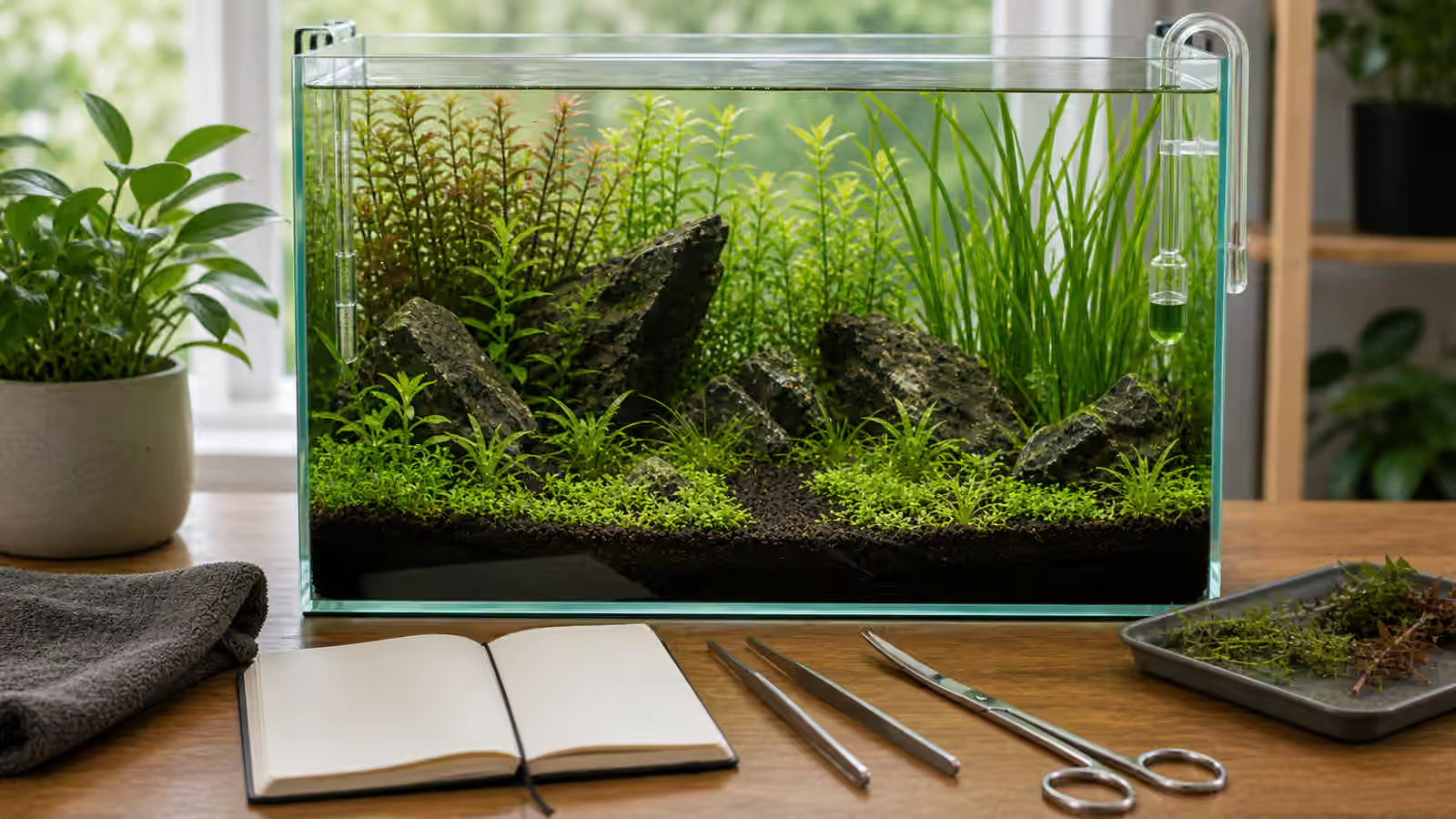
Background plants do more than hide the back glass. They set the tank’s apparent height, frame the hardscape, soften equipment, absorb nutrients, and decide how much open water remains. When they are chosen casually, they can turn a careful layout into a green wall that blocks flow, traps debris, shades foreground plants, and makes every trim feel overdue.
A planted aquascape needs the background to do a job without taking over the entire aquarium. Tall stems, grasses, rosettes, and broad leaves all create different kinds of backdrop. Some grow fast and demand trimming. Some creep by runners. Some cast heavy shade. Some look graceful for a week and then flatten the intended composition. Planning the background before planting keeps height from becoming a weekly surprise.
Height Needs A Reason
Tall plants are tempting because they make a new tank look full quickly. Full is not always the same as composed. In a small tank, a background that reaches the surface across the entire back can make the aquascape feel shallower, not deeper. The viewer sees a flat curtain instead of a layered scene. Fish may lose swimming room, foreground plants may be shaded, and equipment access may become annoying.
Start by asking what the background is supposed to frame. If the hardscape has a strong stone peak, background plants can support it by rising behind or beside it. If the layout uses an open path, the background can leave a lighter area behind the path so the eye has somewhere to travel. If the tank is meant to feel calm and low, the background may be only a partial planting rather than a full hedge.
Aquascape Composition Rules That Actually Help is useful here because it treats rules as clarity tools. Background plants should make the design easier to read. They should not be added only because an empty back corner makes the aquarist impatient during the first week.
Choose Growth Habit Before Color
Color is often the first attraction. Red stems, bright green grasses, and dark crypt leaves all look appealing in photographs. Growth habit matters more for daily life. A fast stem plant may need frequent trimming and replanting to stay dense. Vallisneria-like plants may send runners where the aquarist did not intend. Large sword plants can outgrow small tanks. Fine stems can collect debris if flow is weak.
The right plant is the one whose ordinary behavior fits the tank. A low-tech aquarium with modest light may do better with slower, forgiving background choices than with demanding red stems that need stronger light, CO2, and careful nutrients. A high-energy CO2 tank can support faster plants, but it also requires the trimming routine to keep up. CO2 Tuning for Stable Planted Tanks matters if the background depends on injected carbon to hold its form.
Think about leaf shape too. Fine leaves create texture and movement. Broad leaves create mass and shade. Ribbon leaves can draw the eye upward. Dense tiny stems can make a strong hedge but may look heavy if trimmed into a block. Mixing every texture in the background usually creates noise. A few deliberate groups read better than a row of unrelated specimens.
Leave Flow Corridors
Background plants can quietly ruin circulation. As stems thicken and leaves reach the surface, water may stop moving behind them. Debris collects. Lower leaves decay. Filter intakes clog. Surface flow gets redirected. The aquarist sees algae or melting and blames fertilizer when the back of the tank has simply become a stagnant pocket.
Leave water paths around equipment and behind dense groups. This does not mean the back must look empty. It means that water can move through and around the planting. Trim lower leaves when appropriate, thin overcrowded stems, and avoid planting so tightly against the back glass that cleaning and flow become impossible. Filter Flow and Surface Agitation gives the practical signs of a tank that is moving water well.
Equipment hiding should also be honest. Plants can soften the view of a heater, intake, or diffuser, but they should not block it from working or make it impossible to inspect. Hiding Equipment Without Hurting Flow is the more direct guide. A background that hides a clogged intake is not successful design.
Plant In Groups You Can Maintain
A readable background is usually planted in groups rather than scattered single stems. Groups let the viewer understand the layout, and they let the aquarist maintain one section at a time. If every stem species is mixed through every corner, trimming becomes confusing. You cannot easily tell which plant is declining, which one is shading others, and which one is causing debris.
Group planting also makes propagation easier. Stem plants can be topped, replanted, or thinned in one area without disturbing the whole tank. Runners can be redirected before they invade the foreground. A tall rosette can be given a defined zone rather than allowed to shade the entire aquascape. Maintenance becomes editing, not rescue.
Stem Plants and Trimming Rhythm helps with this habit. The background should be designed for repeated trimming from the beginning. If a plant only looks good when it is never cut, it may not be the right plant for the place where it is being used.
Use Backgrounds To Create Depth
Depth in aquascaping often comes from scale changes. Smaller leaves behind larger foreground leaves can make the tank feel deeper. Taller plants behind lower stones can create a sense of distance. Open space in front of a background group can make the tank feel larger than a solid wall of plants pressed against the glass.
The background can also be uneven. A high group on one side, a lower group near the center, and a darker mass behind hardscape may feel more natural than a straight horizontal line. The top of the planting should be considered as part of the composition. If every stem is cut to the same height, the tank can start to look like a hedge. If every stem is left to reach the surface, it can look neglected.
Depth and Perspective in Small Aquascapes expands this idea. In a small tank especially, the background has to earn its space. It should suggest distance, not just occupy the last few inches of substrate.
Plan For The Surface
Many background plants eventually reach the surface. That can be beautiful when leaves trail gently or stems emerge in a controlled way, but it can also block light, reduce gas exchange, and trap floating debris. A plant that looks airy at purchase size may become a surface mat after several weeks.
Decide whether reaching the surface is part of the plan. If it is, make sure the livestock still have open water, the filter can move the surface, and floating plants do not combine with background growth to cover everything. If it is not, set a trimming rhythm before the plant is already doubled over. Waiting until the whole surface is shaded makes the trim more dramatic and the recovery harder to read.
Plant choice again matters. Some background plants tolerate topping and replanting. Some look better when runners are thinned. Some resent constant cutting. Buying a plant without understanding its response to trimming is a common reason backgrounds become frustrating.
A Background That Supports The Tank
A good background planting eventually feels inevitable. It hides what should recede, frames what should be noticed, leaves space where livestock need space, and allows the aquarist to reach equipment and glass. It grows, but it does not ambush the tank. It needs trimming, but not constant emergency pruning.
That result comes from restraint at the start. Choose fewer species. Group them clearly. Leave flow corridors. Match growth speed to the maintenance routine. Let the background serve the aquascape instead of asking the aquascape to survive whatever the background becomes. In planted tanks, the back row is never just scenery. It is living structure, and living structure needs a plan.