The cheapest planted aquarium is not always the least expensive one. A bargain tank on weak furniture, poor lighting, no test kit, and unsuitable livestock can become a chain of replacements and losses. A good budget starts with the system the animals and plants need, then trims the nonessential parts.
That sounds less exciting than choosing a dramatic piece of wood or a rare carpeting plant, but it is the difference between a tank that becomes calmer every week and a tank that keeps asking for rescue purchases. The best beginner budget is not the smallest pile of gear. It is the shortest path to stability.
Budgeting also helps you avoid buying a beautiful plant or fish before the tank can support it. A planted aquarium has a habit of making every item look independent: a light, a filter, a substrate, a bottle of fertilizer, a heater, a net. In practice, they are a connected system. Spend too much on one visible piece and the quiet support pieces get squeezed. Spend carefully, and even a modest setup can look intentional, healthy, and satisfying.
Start With The Tank You Can Maintain
Before making a shopping list, decide what kind of tank you can realistically maintain for the next year. A small desk aquarium may seem cheaper, but very small water volumes can punish beginner mistakes quickly. A larger aquarium may cost more upfront, but it can be easier to stabilize, easier to plant generously, and less likely to swing after one missed top-off or overfeeding.
The right answer depends on the room, floor support, available water-change routine, budget, and livestock goals. A tank that fits your real week is better than a dream setup that depends on heroic maintenance every Sunday night.
Ask three questions before you price anything:
- Where can the filled tank sit safely without sunlight, vibration, or awkward access?
- How much water can you comfortably change and carry on a normal maintenance day?
- What plants and animals are you trying to keep, and do they match a beginner system?
Those questions prevent expensive reversals. Moving a filled aquarium is not casual. Replacing an unsafe stand is frustrating. Rehoming fish because the tank was planned around a photo instead of adult size is avoidable.
Must-Have Categories
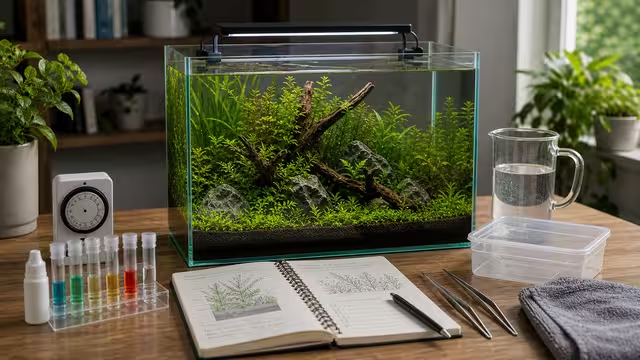
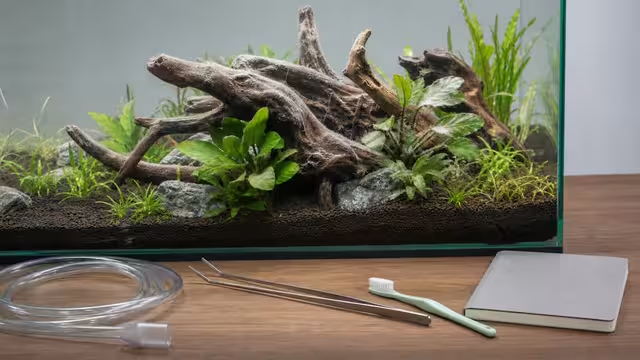
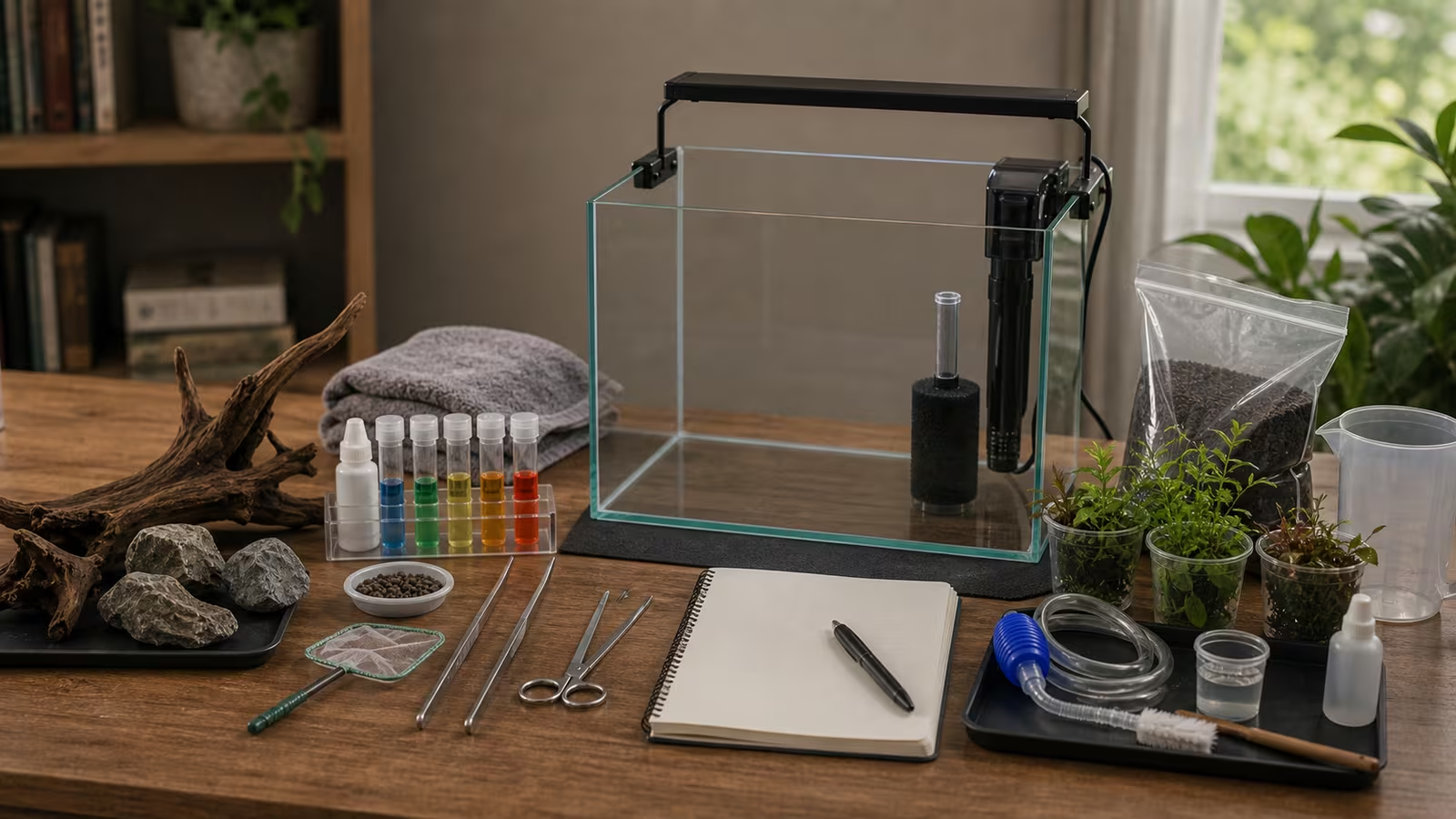
A beginner budget usually includes the tank, proper stand or support, filter, heater if needed, thermometer, light, substrate, hardscape, plants, conditioner if needed, test kit, net, bucket, siphon, towels, food, and safe power setup.
Livestock is not the first purchase. The system comes first.
Think of these as stability categories rather than shopping categories:
| Category | What It Protects |
|---|---|
| Safe support | Keeps the full aquarium level, stable, and away from furniture failure. |
| Water movement and filtration | Gives beneficial bacteria surfaces and keeps dead zones from building up. |
| Heat and temperature awareness | Keeps livestock within a suitable range when the room changes. |
| Dechlorination and testing | Turns guesses into care decisions before animals pay the price. |
| Light matched to plants | Supports growth without pushing algae faster than the tank can respond. |
| Maintenance tools | Makes water changes, trimming, and cleanup easy enough to repeat. |
The most boring items are often the ones that save the tank. A dedicated bucket, a simple siphon, a thermometer, and a reliable test kit will never look like the hero of the aquascape, but they are what let you understand the aquarium when it stops looking like the sales photo.
Build The Budget In Passes
A useful budget has passes, not one chaotic cart. The first pass is the non-negotiable system: tank, stand, filter, heater if needed, light, dechlorinator, test kit, safe electrical setup, and maintenance tools. The second pass is the planted layout: substrate, hardscape, and enough plant mass to make the aquarium feel alive from the start. The third pass is livestock, food, quarantine or acclimation supplies, and the extra care items that match the species.
This order protects you from the common mistake of spending the “fun” money before the basic system is ready. It also gives you natural pause points. You can buy the dry setup, assemble and leak-test it, plant it, cycle it, then add animals later. That slower rhythm gives the budget time to recover and gives the tank time to prove itself.
If the total feels too high, do not start by deleting safety and testing. Shrink the ambition instead. Choose a simpler low-tech plant list. Use fewer species. Pick one strong hardscape piece instead of five. Delay livestock. A smaller stable plan beats a glamorous unstable plan.
Where To Save
You can save money in places where patience and taste matter more than specifications. Common hardy plants from local hobbyists, simple hardscape, plain backgrounds, basic tools, and modest lights can all work well when matched to the tank. A low-tech aquascape can be beautiful precisely because it does not try to imitate a high-light contest layout on a beginner budget.
Used equipment can be sensible, especially tanks, stands, filters, and lights from careful hobbyists. Inspect before trusting. Check glass seams, chips, cracks, stand swelling, missing filter parts, salt creep, rust, electrical cords, and whether replacement media or parts are still available. A cheap used tank that needs a new light, new impeller, new lid, and emergency stand is not cheap anymore.
Plants are another place to spend intelligently. A small number of rare plants can make the budget feel special, but a new tank often benefits more from a larger mass of forgiving growers. Healthy stems, floaters used responsibly, epiphytes, crypts, and other beginner plants can fill space, compete with algae, and give you material to trim and replant.
Where Not To Save
Do not save money by gambling on support, heat, water safety, or animal needs. A filled aquarium is heavy. Furniture that bows, wobbles, or swells is not a bargain. A heater with a poor reputation, a mystery electrical strip near water, or a missing drip loop can turn a hobby budget into a household problem.
Do not save money by buying animals that “might work” in the tank you have. Adult size, group size, temperament, temperature, flow preference, and waste load all affect the budget. A fish that was inexpensive at the store can require a larger tank, stronger filtration, more food, special cover, or a different stocking plan.
Do not save money by skipping source-water basics. If your tap water is treated with chlorine or chloramine, conditioner is not optional. If your setup is new, testing is not optional. If livestock is already present and something looks wrong, testing is the fastest way to stop guessing.
Nice-To-Haves
Special aquascaping tools, premium glassware, CO2, high-end lights, rare plants, decorative cabinets, and elaborate dosing systems can wait. Buy them when they solve a real problem, not because a finished tank photo included them.
There is nothing wrong with beautiful equipment. The trap is buying it before you know what kind of keeper you are. Some people love trimming stems, dialing in fertilizer, and tuning equipment. Other people want a calm green tank that asks for a steady water change and a little pruning. Your first setup should reveal your habits before it demands expensive upgrades.
CO2 is the classic example. It can be excellent in the right tank, but it brings regulators, tubing, diffusers, refill planning, monitoring, and livestock safety decisions. If your budget cannot comfortably include the complete system and the attention it requires, choose plants that do not need it yet.
Premium lights are similar. Stronger light can expose weak planting density, inconsistent fertilizer, poor flow, and unstable CO2. A moderate light that matches beginner plants may produce a better tank than an impressive light that pushes algae faster than you can learn.
Recurring Costs
Food, fertilizer, conditioner, test refills, replacement media, bulbs or parts, electricity, livestock care, and plant replacements all add up. A small monthly cost matters more than a dramatic one-time purchase if the tank will run for years.
Recurring costs also include the mistakes you are likely to make. New planted tanks sometimes need extra plants after melt, replacement suction cups, a second timer, a better bucket, a quarantine container, or a different food. Leave a margin for learning. If the setup consumes the entire budget on day one, every small problem becomes stressful.
The quiet recurring cost is attention. A tank that needs elaborate weekly work has a maintenance cost even if no money changes hands. If your schedule is crowded, budget for simplicity: moderate light, hardy plants, conservative stocking, easy access, and tools that make water changes clean.
A Practical Starter Budget Shape
Instead of chasing a universal price, shape the budget by priority. Actual prices change by region, store, season, used-market luck, and brand, so the ratios matter more than a fixed number.
For a beginner low-tech planted tank, a sensible order often looks like this:
| Priority | Budget Thought |
|---|---|
| Foundation | Tank, safe support, power safety, and leak confidence come first. |
| Life support | Filter, heater if needed, thermometer, conditioner, test kit, and maintenance tools. |
| Plant support | Light, substrate choice, hardscape, and enough beginner plants to start with mass. |
| Livestock plan | Animals, food, acclimation supplies, and any species-specific needs after cycling. |
| Aesthetic upgrades | Specialty tools, premium glassware, rare plants, cabinets, and display refinements. |
If you have to delay something, delay the final two categories first. An aquarium can sit planted and cycling while you wait. It should not sit stocked while you scramble for a test kit or safer support.
Budget For The First Ninety Days
The first ninety days are where many planted tanks become more expensive than expected. Plants adapt or melt. Algae tests your light schedule. The aquarist learns how much water changing actually fits the room. The filter may need a sponge prefilter, the outlet may need a safer strip placement, and the original plant list may need more fast growers.
Plan a small reserve for this period. Do not treat every reserve dollar as permission to buy more animals. Use it for stability: extra plants, test refills, a timer, better trimming scissors, a replacement heater if the first one behaves strangely, or a quarantine setup if your stocking plan needs one.
A ninety-day view also slows down impulse livestock purchases. Let the tank prove that water parameters, plant growth, and maintenance rhythm are steady. Then spend on animals with the confidence that the system was built for them.
Make The Display Feel Intentional Without Overspending
Budget tanks look cheapest when they look accidental. You can make a modest setup feel designed by choosing one clear composition idea. Maybe the hardscape leans left. Maybe the tallest plants stay in the back corner. Maybe the path of open substrate curves toward one stone. Restraint is free.
Repeating a few plant types often looks better than buying one of everything. A cluster of the same stem plant can create background mass. Several small epiphytes attached to one piece of wood can look cohesive. A single calm background can make an ordinary rimmed tank feel cleaner.
Avoid spending money to fix every empty space in the first week. Planted aquariums grow. A sparse layout with healthy plant choices can become balanced after trimming and replanting. A crowded layout with mismatched plants can become expensive clutter.
Common Mistakes
- Spending heavily on hardscape while skipping a test kit.
- Buying a tank before knowing where it can safely sit.
- Choosing demanding plants to “save money” on CO2.
- Forgetting recurring costs.
- Buying livestock with the leftover budget instead of planning for care.
- Treating used equipment as safe without inspection.
- Buying a powerful light because it was on sale, then fighting algae in a low-tech tank.
- Forgetting basic room logistics: hose reach, bucket storage, towel access, and safe power routing.
- Spending the reserve before the tank has survived its first month.
Related Fondsites Path
- Tank Size Reality Check for size planning.
- CO2 Versus Low-Tech Planted Tanks for equipment scope.
- Beginner Mistakes and Reset Plan if early purchases went sideways.
- Low-Tech Planted Tank Setup for a budget-friendly planted path.
- Water Testing for Aquascapes for spending on evidence before guesswork.
Try This Next
Make two budgets: a stable low-tech tank and the dream version. Start with the stable version unless every extra item has a maintenance reason. Then add a small ninety-day reserve and decide what you will delay until the planted system is cycled, growing, and easy to maintain.