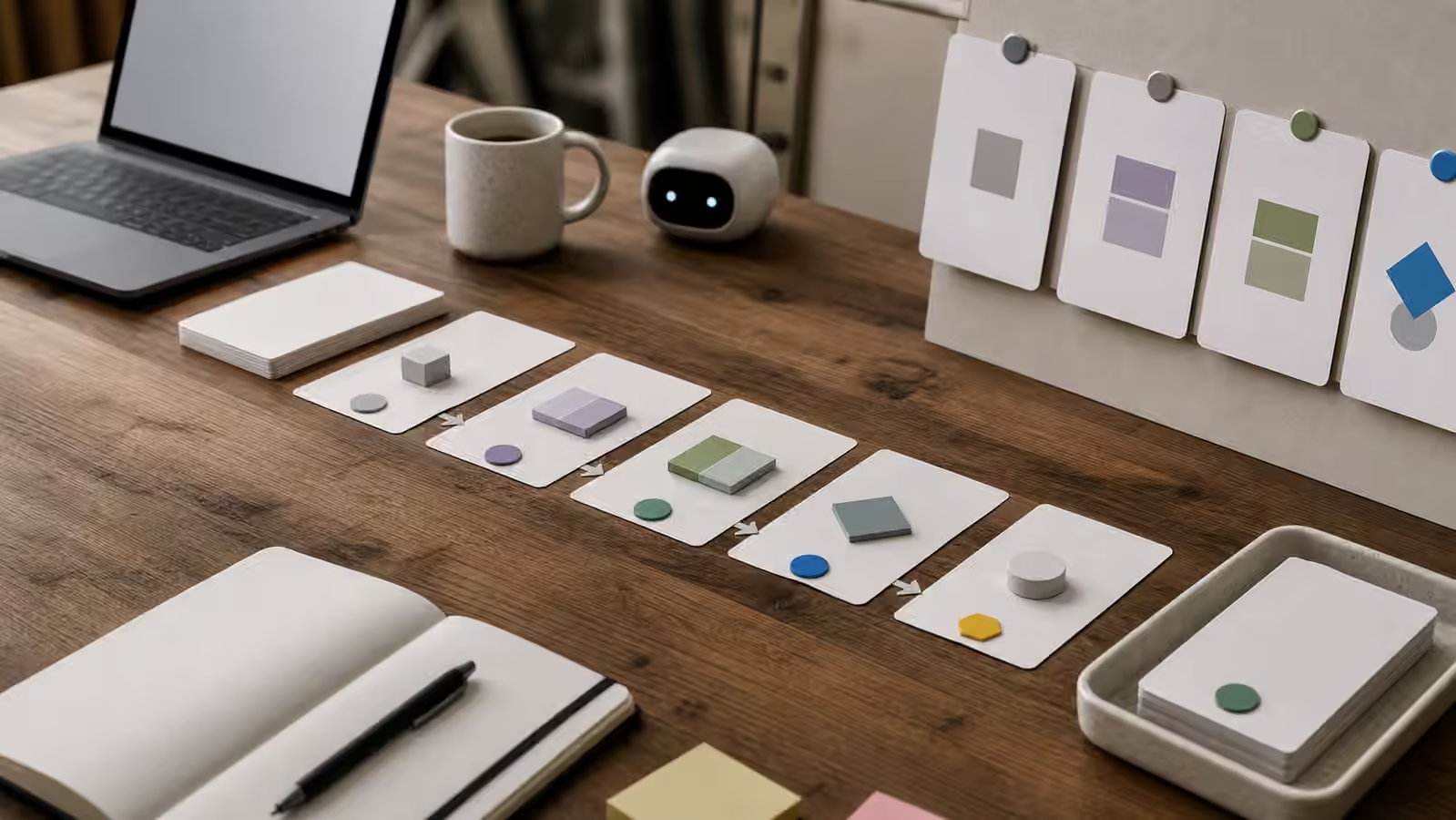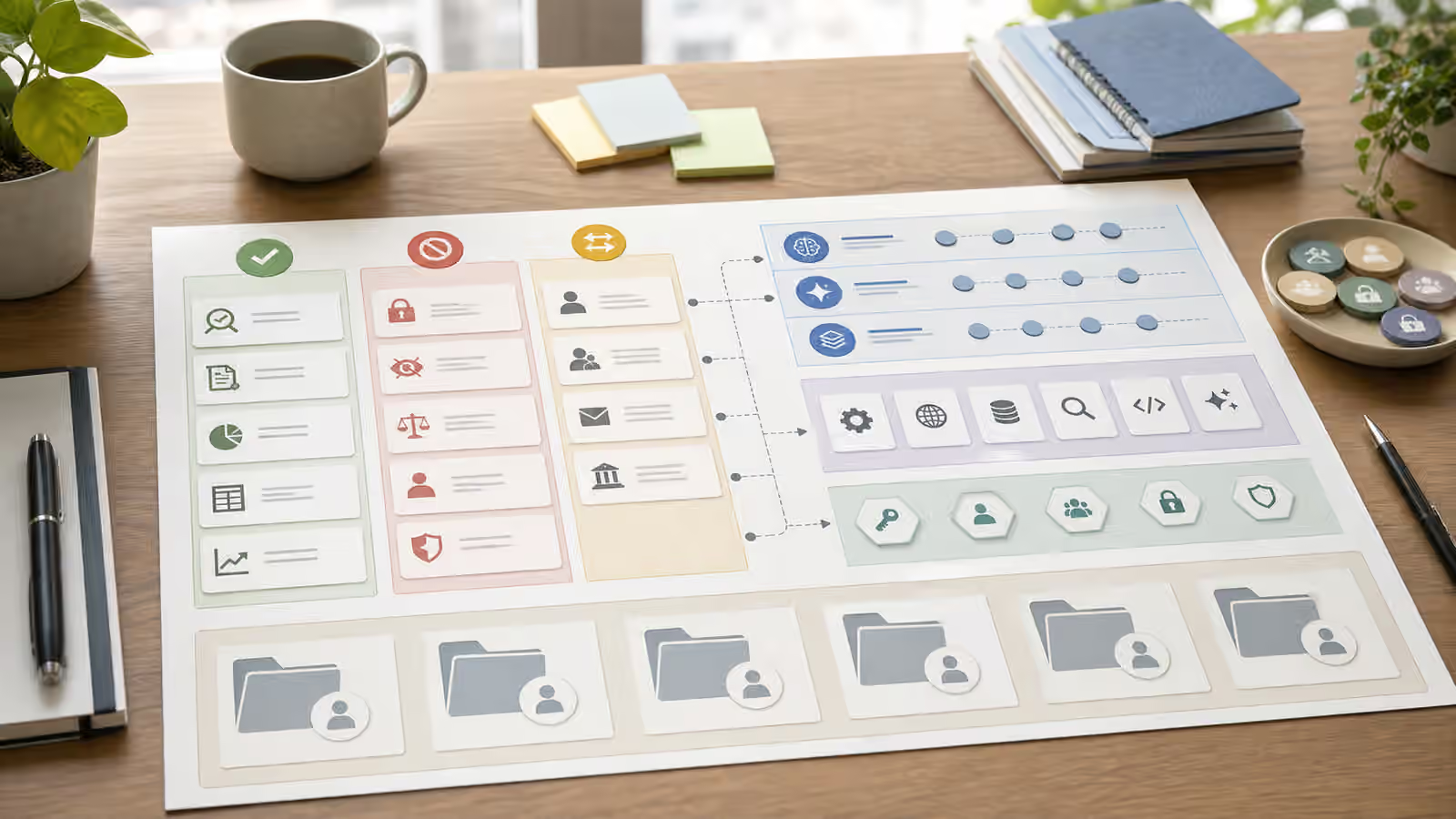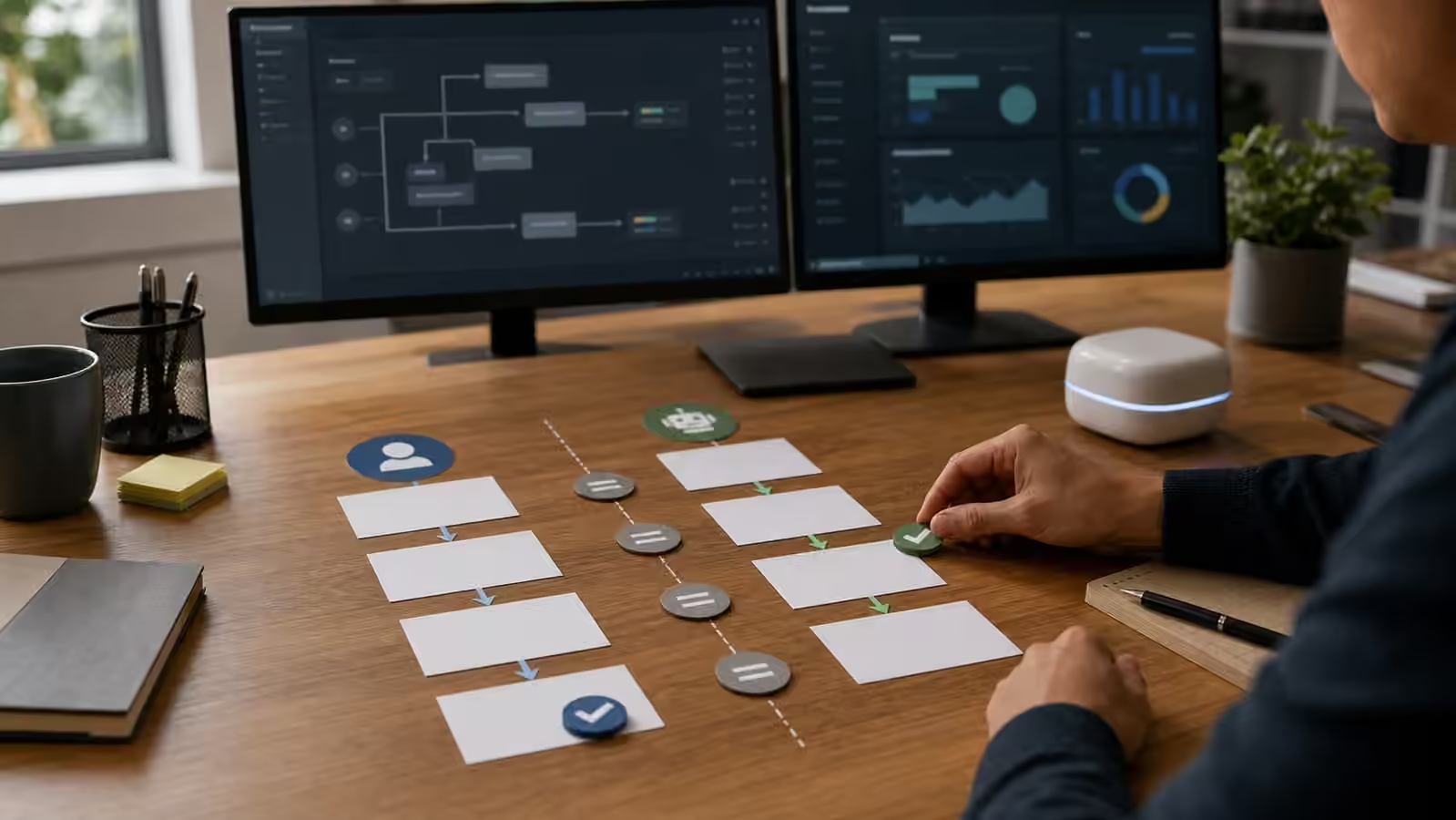
Shadow mode is the quietest way to learn whether an AI agent is ready for real authority. The agent receives work that resembles live work, follows the same sources, and prepares the same kind of output a production delegate would prepare, but it does not make the decision, send the message, update the record, merge the change, or trigger the downstream action. A person or established process continues to do the real work while the agent’s proposed path is compared beside it.
This is not the same as a demo. A demo shows that an agent can perform an attractive version of a task under favorable conditions. Shadow mode asks a harder question: when the agent sits beside the real workflow, does it notice the same evidence, stop at the same boundaries, produce a useful artifact, and make review easier rather than heavier? It also differs from AI Agent Dry Runs , which rehearse a workflow in a preview or simulated environment. Shadow mode keeps the real workflow visible while withholding authority from the agent.
That distinction matters because many agent failures only appear when the surrounding work is messy. The request is incomplete. The source has an outdated page near the current one. A customer record has an exception. A repository has unrelated local changes. A browser session lands on a new interface. A reviewer cares about a detail that the initial task did not mention. Shadow mode gives the team a way to see those frictions before the agent can create side effects.
Choose Work That Teaches The Workflow
A useful shadow pilot begins with a narrow class of work. The task should be common enough to produce repeated examples, but not so trivial that success proves little. If an agent can summarize clean meeting notes, that may be useful, but it does not prove readiness for customer replies, release preparation, code review, or account updates. The pilot should include the ordinary exceptions that make the workflow worth studying.
The best first tasks are often draft-producing tasks. The agent can prepare a support response, triage a ticket, propose a code patch, summarize a research folder, assemble a handoff packet, or recommend a routing decision without executing it. The real worker still completes the task. The agent’s output becomes evidence about whether the workflow could later accept more delegation.
AI Agent Workflow Discovery is a natural starting point here. Discovery identifies the path work already takes. Shadow mode checks whether the agent can travel that path without being given the keys. If discovery says a task depends on three source systems, two common exceptions, and one reviewer judgment, the shadow pilot should include those realities rather than a cleaned-up version.
Compare Path, Not Only Output
The easiest shadow comparison is final-answer comparison. Did the agent’s draft look like the human’s draft? Did it route the ticket to the same category? Did it identify the same file or source? That comparison is useful, but incomplete. Two outputs may look similar while one rests on weak evidence. Two outputs may differ because the agent found a better source, or because it misunderstood the assignment. The path matters.
A strong shadow pilot compares what the agent inspected, what it ignored, when it asked for help, where it stopped, and which uncertainty survived into the handoff. If the agent produced a reply, which policy source controlled the answer? If it proposed a code change, which files did it touch and which tests did it run or skip? If it routed a case, which fields mattered? If it disagreed with the human path, was the disagreement explainable?
This is where AI Agent Observability becomes more than operational plumbing. The trace lets the pilot study the agent’s work without trusting its summary of itself. A shadow run should leave enough evidence to determine whether the agent’s decision was grounded, lucky, cautious, or confused.
Keep The Human Workflow Honest Too
Shadow mode is not only an exam for the agent. It is also a mirror for the existing process. A human may be right for reasons that are never written down. A review queue may depend on private habits. A policy may be current only because one person knows which page is obsolete. A form may require a field that the runbook never explains. The agent’s confusion can expose a real documentation gap.
That does not mean the agent should be blamed for every mismatch. Sometimes the human outcome is better because the human used context the agent was never allowed to see. Sometimes the agent is worse because its tool is too broad or too vague. Sometimes the agent is better because it consistently checks a source that people skip when rushed. Shadow mode is valuable because it separates those cases.
The comparison should be written with care. A shadow pilot that simply counts matches and misses can reward shallow imitation. The real question is whether the agent’s path is acceptable for the authority it might later receive. If the human changed a record based on a phone call that the agent could not access, the mismatch is not a model failure. It is a context boundary. If the agent recommended an action without the policy source the human used, that is a grounding problem.
Decide What Authority Would Change
A shadow pilot should be connected to an authority ladder. The agent is not merely being observed for curiosity. The team is trying to decide what, if anything, it may safely do next. The next step might be no authority at all, a better draft lane, a narrower task, a stronger tool contract, or a move from shadow mode into supervised execution.
AI Agent Permissions frames this as the ladder from read to act. Shadow mode usually sits between read-only exploration and draft-only authority. The agent can inspect sources and produce a proposed artifact, but it cannot commit the artifact to the world. If the pilot succeeds, the next permission should still be specific. It may allow the agent to create draft tickets, open pull requests for review, prepare approved-form submissions, or update a staging record. It should not jump from shadow comparison to broad autonomy.
The pilot should name what would have happened if the agent had authority. This is especially important when the agent’s output looks plausible. A support draft is one thing if it sits in a review queue. It is another if it is sent to a customer. A code patch is one thing if it opens a pull request. It is another if it deploys. A routing decision is one thing if it suggests a queue. It is another if it moves work away from the owner who would notice an exception.
Measure Review Burden, Not Just Accuracy
An agent can be mostly correct and still not worth deploying if it creates too much review work. Shadow mode should measure how long reviewers need to inspect the artifact, what evidence they need to reopen, which corrections repeat, and whether the agent’s handoff makes acceptance easier.
This connects to Human Review for AI Agents . The handoff is not decorative. It is the surface where shadow work becomes usable learning. A reviewer should be able to see the assignment, the proposed result, the source path, the unresolved uncertainty, and the difference from the human path. If the reviewer has to reconstruct the whole run, the agent may be saving execution time while adding review time.
Review burden also reveals where the pilot needs better structure. If reviewers repeatedly ask whether a source is current, the agent needs stronger source labels. If reviewers keep checking whether private data was included, the workflow needs a clearer data boundary. If reviewers accept the output but rewrite the tone every time, the issue may belong in AI Agent Style Guides rather than in the model lane.
Let Mismatches Become Design Work
The most useful shadow pilots produce a repair list. The agent needs a narrower tool. The task intake needs one more field. The knowledge base needs source roles. The reviewer needs a better comparison view. The prompt needs an explicit stop condition. The runbook needs to say what to do when a required source is missing. These are design findings, not mere scores.
The team should avoid treating shadow mode as a ceremony that ends with a confident launch announcement. A good outcome may be a smaller workflow. It may be a decision to keep the agent in draft mode. It may be a new evaluation set based on real mismatches. It may be a stronger approval scope. AI Agent Change Management matters because the pilot is itself evidence for changing the system around the agent.
Shadow mode is mature when it can say no without drama. The agent may not be ready. The workflow may not be documented enough. The source systems may not return inspectable evidence. The review queue may be too thin. Those findings are valuable because they prevent authority from arriving before the surrounding system can hold it.
The practical promise of shadow mode is not that it proves an agent will never fail. It proves something narrower and more useful: under real workflow pressure, with authority withheld, the agent’s path can be compared, criticized, and improved. That is the work that makes later delegation less like a leap and more like an earned handoff.